


Commercial Storefront Glass And Property Image
Why Property Image Matters
Every commercial building communicates something.
Some properties project professionalism, investment, and stability. Others appear neglected, outdated, or disconnected from the market around them.
Those impressions form quickly.
Before a lease is discussed, before a customer enters the space, and before a visitor reaches the front door, people begin evaluating what they see.
Storefront glass often plays a central role in that process.
Because the storefront occupies one of the most visible portions of a building, it becomes part of the property’s identity. The condition, appearance, and design of the glass system can influence how the entire asset is perceived.
Buildings Compete For Attention
Commercial real estate operates within a competitive environment.
Retail centers compete for shoppers.
Office buildings compete for tenants.
Medical properties compete for providers.
Mixed-use developments compete for visibility.
As a result, appearance becomes more than an architectural concern.
Exterior presentation helps determine how effectively a property stands out within its market.
A modern storefront can create visual interest. By contrast, aging glass systems may reduce curb appeal even when interior spaces remain well maintained.
For many owners, property image becomes part of a broader strategy to remain competitive.
First Impressions Shape Perception
People tend to form opinions before gathering all the facts.
That reality applies to commercial buildings as much as it does to people.
Clean glass, modern framing systems, and strong visibility often create a sense of confidence. Meanwhile, dated storefronts can make a property appear older than it actually is.
Although first impressions are not everything, they frequently influence how visitors, tenants, and investors view the asset.
Factors That Commonly Influence Perception
Visual Element | Potential Impact |
Clear glass | Professional appearance |
Modern storefront systems | Contemporary image |
Natural light | Open, inviting atmosphere |
Consistent design | Stronger visual identity |
Well-maintained exteriors | Confidence in ownership |
Updated facades | Improved market positioning |
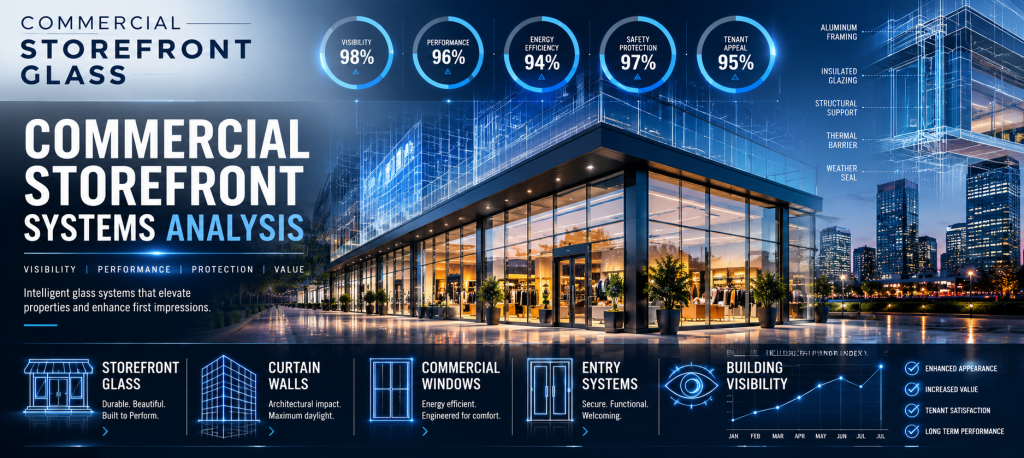
Together, these elements contribute to how a building is experienced from the street.
Tenant Decisions Often Begin Outside
Prospective tenants rarely start with square footage.
Exterior appearance usually enters the evaluation process first.
A well-presented property can signal active ownership and ongoing investment. Consequently, prospective occupants may approach the leasing conversation with a more favorable impression.
Different industries respond to different visual cues.
Retail tenants often focus on visibility.
Professional offices may value appearance and branding opportunities.
Healthcare providers frequently prioritize a welcoming environment.
Despite those differences, presentation remains important across nearly every property type.
Customer Confidence Starts At The Storefront
Consumers make assumptions based on appearance.
A bright, modern storefront often suggests professionalism. On the other hand, neglected exteriors may create questions about the business operating inside.
That relationship becomes particularly important in customer-facing industries.
Restaurants, retail stores, financial institutions, medical practices, and service businesses all benefit when storefronts support positive first impressions.
Because trust frequently develops through small signals, visual presentation can influence customer comfort before any interaction occurs.
In many cases, the storefront becomes the first conversation a building has with the public.
Modernization Can Change Market Position
Not every improvement requires a complete redevelopment project.
Sometimes, strategic exterior upgrades can significantly alter how a property is perceived.
Storefront modernization often becomes part of:
- Property repositioning
- Tenant attraction efforts
- Retail center improvements
- Office building upgrades
- Mixed-use redevelopment projects
Unlike many infrastructure improvements, storefront changes are immediately visible.
For that reason, owners frequently view glass upgrades as a practical way to refresh aging properties.
Property Image Changes Across The Country
Location influences expectations.
Throughout major urban centers, contemporary storefront systems often help properties compete for attention. In suburban markets, visibility and accessibility may receive greater emphasis. Coastal regions frequently balance appearance with environmental durability.
Climate can also influence perception.
Buildings located in high-growth Sun Belt markets often reflect different architectural trends than properties operating in older northern cities.
Because expectations vary by region, successful storefront design should align with both local conditions and market preferences.
Appearance And Performance Work Together
Property image extends beyond aesthetics.
Energy efficiency can influence modernization efforts.
Natural light may improve tenant satisfaction.
Visibility often supports leasing performance.
Security considerations affect user experience.
As a result, storefront systems contribute to both appearance and functionality.
The strongest commercial properties rarely separate those objectives. Instead, they use storefront design to support business goals while improving how the building is perceived.
Commercial Storefront Glass Influences More Than Appearance
Property image affects leasing, customer experience, market positioning, and long-term competitiveness.
For that reason, storefront glass should be viewed as more than an exterior material.
When properly integrated into a commercial property strategy, the storefront becomes a visible reflection of ownership, investment, and long-term planning.
That influence begins at the curb and extends throughout the life of the asset.