


Future Building Trends
Commercial Buildings Are Entering A New Era
Commercial real estate has always evolved.
Architectural styles change.
Technology advances.
Tenant expectations shift.
Economic conditions influence development.
Today’s transformation feels different.
Building performance is becoming more important.
Operational efficiency is receiving greater attention.
Customer experience continues shaping design decisions.
Meanwhile, property owners are looking beyond appearance and focusing on how buildings perform over decades rather than years.
As a result, the future of commercial buildings will be defined by adaptability, efficiency, visibility, and long-term value.
The Buildings Of Tomorrow Will Work Harder
Commercial properties once focused primarily on occupancy.
Modern buildings are expected to accomplish much more.
Owners want stronger performance.
Tenants expect better environments.
Investors seek long-term resilience.
Developers prioritize flexibility.
Because expectations continue increasing, future buildings will be evaluated through a wider range of performance metrics.
Emerging Priorities
- Energy efficiency
- Occupant experience
- Operational flexibility
- Long-term durability
- Environmental performance
- Property competitiveness
These factors are already influencing development decisions across the country.
Daylighting Will Continue Expanding
Natural light remains one of the most desirable features in commercial real estate.
Employees prefer brighter environments.
Customers respond positively to open spaces.
Tenants often seek buildings that feel more comfortable and inviting.
Consequently, daylighting will likely remain a major design priority.
Future storefront systems and glazing technologies will increasingly focus on maximizing natural light while supporting broader building performance objectives.
This balance will continue shaping commercial architecture.
Energy Performance Will Become More Important
Operating costs influence profitability.
Utility expenses affect ownership decisions.
Environmental standards continue evolving.
Because of these realities, energy performance will remain a major driver of modernization and development activity.
Areas Receiving Increased Attention
Focus Area | Why It Matters |
Building envelope performance | Operational efficiency |
Glazing technologies | Energy management |
Exterior systems | Long-term performance |
Daylighting strategies | Occupant experience |
Modernization efforts | Property competitiveness |
Sustainability initiatives | Future compliance |
Performance-driven design is becoming increasingly common throughout commercial real estate.
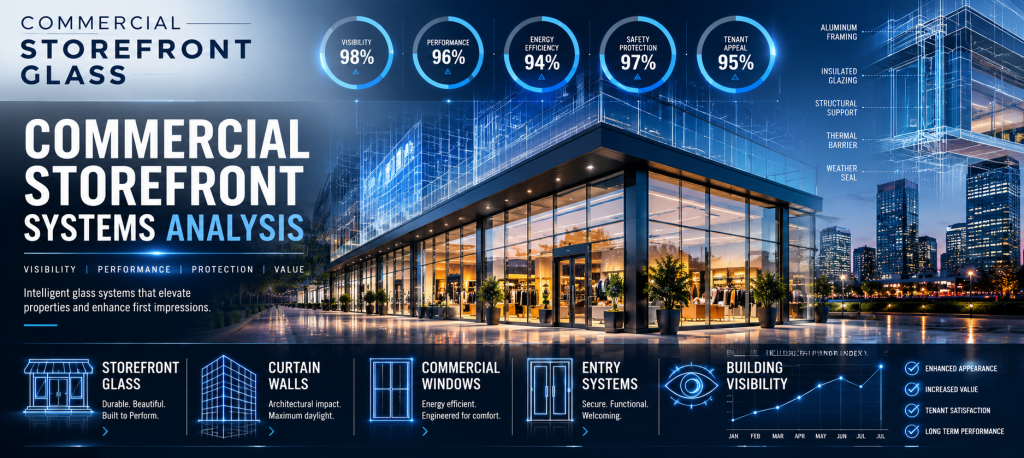
Storefront Systems Will Become Strategic Assets
Commercial storefronts have traditionally been viewed as architectural features.
That perspective is changing.
Visibility influences leasing performance.
Customer experience affects tenant success.
Building performance impacts ownership costs.
Because storefront systems contribute to each of these areas, they are increasingly viewed as business assets rather than simple building components.
Future developments will likely place greater emphasis on how storefront systems support broader property objectives.
Flexibility Will Define Long-Term Value
Commercial markets rarely remain static.
Tenant requirements evolve.
Consumer behavior changes.
Industries adapt.
Properties capable of responding to these changes often remain competitive longer.
As a result, flexibility is becoming one of the most valuable characteristics in commercial development.
Future buildings will increasingly prioritize adaptable layouts, versatile storefront systems, and modernization-friendly design strategies.
This shift supports long-term property performance.
Property Repositioning Will Become More Common
Many commercial buildings already exist.
New construction remains important.
However, existing properties represent a significant portion of future opportunities.
Ownership groups frequently find it more practical to improve an asset than replace it entirely.
Because of this, property repositioning will likely continue accelerating.
Common Repositioning Objectives
- Improve tenant attraction
- Increase leasing competitiveness
- Modernize building appearance
- Enhance customer experience
- Improve building performance
- Strengthen long-term value
Exterior improvements often play a central role in these efforts.
Technology Will Influence Commercial Design
Building systems are becoming increasingly sophisticated.
Data influences decision-making.
Performance monitoring continues advancing.
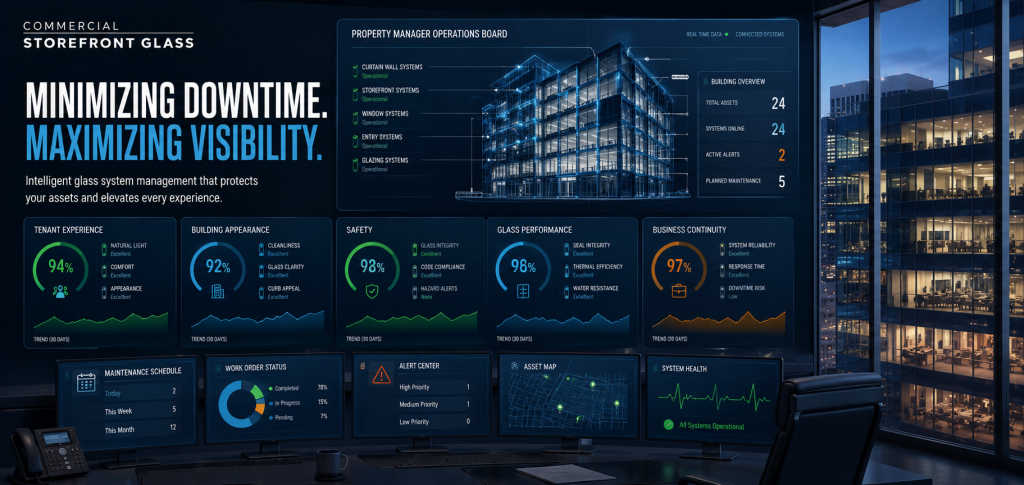
Operational visibility is improving.
Although technology will not replace strong design fundamentals, it will continue shaping how commercial properties are managed and maintained.
This evolution is expected to affect both new construction and existing buildings undergoing modernization.
Tenant Expectations Will Continue Rising
Businesses evaluate properties differently than previous generations.
Comfort matters.
Natural light matters.
Building quality matters.
Operational efficiency matters.
Because workplace and retail expectations continue advancing, future buildings will need to provide more than basic functionality.
Successful properties will likely focus on experience as much as infrastructure.
That trend is already visible across many commercial markets.
Sustainability Will Influence Development
Environmental considerations are becoming part of mainstream commercial real estate planning.
Investors evaluate efficiency.
Occupants value responsible development.
Ownership groups consider long-term operating performance.
Consequently, sustainability initiatives will continue influencing decisions related to storefront systems, glazing technologies, building envelopes, and modernization projects.
The objective extends beyond compliance.
Many owners view sustainability as a long-term business strategy.
Exterior Design Will Remain Critical
Digital commerce continues growing.
Remote work influences office markets.
Consumer behavior keeps changing.
Despite these shifts, physical properties still depend on first impressions.
Visibility remains important.
Architecture shapes perception.
Storefront systems influence customer engagement.
For these reasons, facade design will continue playing a significant role in commercial success.
Future buildings may look different, but exterior presentation will remain a competitive advantage.
Key Trends Shaping Commercial Buildings
Better Building Performance
Owners increasingly prioritize efficiency, durability, and long-term operational outcomes.
Stronger Customer Experience
Retail environments continue focusing on engagement, visibility, and comfort.
Smarter Modernization
Property improvements are becoming more strategic and data-driven.
Greater Flexibility
Buildings must adapt to changing tenants, industries, and market conditions.
Enhanced Sustainability
Environmental performance continues influencing development priorities.
Long-Term Asset Value
Commercial properties are increasingly evaluated through a lifecycle perspective.
The Future Belongs To Adaptable Properties
Commercial real estate is constantly changing.
Market expectations evolve.
Technology advances.
Tenant priorities shift.
Meanwhile, ownership groups must protect value while preparing for what comes next.
Future building trends reflect that challenge.
Rather than focusing solely on construction, tomorrow’s commercial properties will emphasize performance, flexibility, modernization, customer experience, and long-term competitiveness.
When building performance, storefront systems, energy efficiency, property repositioning, and tenant attraction work together, commercial assets become better equipped to succeed in an increasingly dynamic marketplace.