


Retail Facade Design
The Storefront Is Often The First Advertisement
Customers notice a building before they enter it.
Visitors form opinions within seconds.
Tenants evaluate presentation immediately.
Investors assess appearance long before reviewing financials.
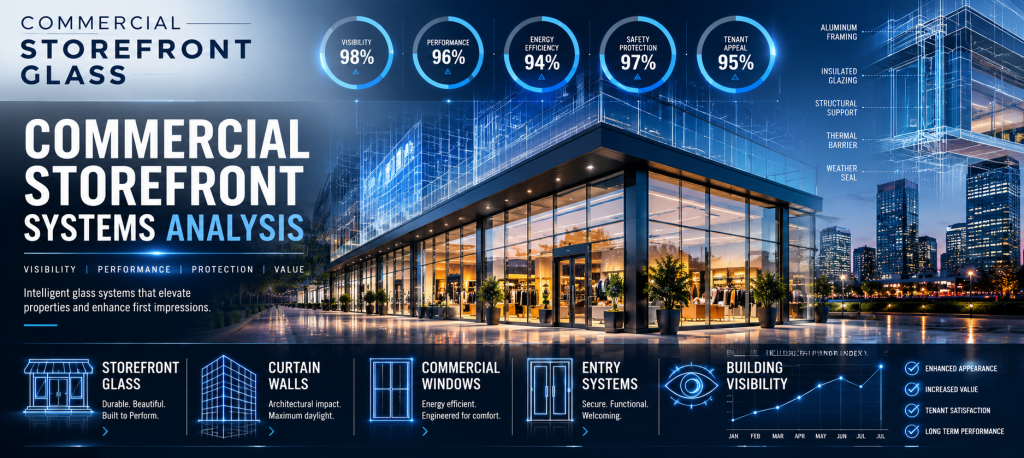
Because of this, retail facade design plays a critical role in commercial real estate.
A well-designed facade can improve visibility, strengthen brand perception, support leasing efforts, and create a better customer experience. Meanwhile, outdated exteriors may reduce engagement and weaken a property’s competitive position.
For many commercial properties, the facade becomes the first conversation the building has with the public.
The six elements of a retail facade
A storefront facade is more than glass. Step through each element to see what it does and the design choices that make it work.
Glass is the facade’s shop window. Clear, low-iron or low-reflectance glass shows merchandise best; large lites with slim frames read as modern.
Design tips
- Keep the bottom of the glass low so displays are visible from the sidewalk.
- Use low-E with high visible light so products are not tinted.
- Plan display lighting so the glass does not mirror the street at night.
The entrance is where the facade becomes an experience. Recessed entries give shelter and draw people in; flush entries maximize floor space.
Design tips
- Make the door obvious from a distance with framing, color or a canopy.
- Meet accessibility rules for width, threshold and opening force.
- Use automatic doors where carts or heavy traffic are expected.
Most centers set a sign band above the storefront. Its height, lighting and materials should be planned with the storefront head so signs do not cover glass or need awkward supports.
Design tips
- Check landlord sign criteria before designing.
- Leave structure and power behind the sign band.
- Keep transom glass clear of sign brackets.
Canopies and awnings shade the glass, cut glare and give shoppers shelter. They also reduce solar heat on south and west facades.
Design tips
- Size projections to shade summer sun on the glass.
- Coordinate drainage so water does not run down the storefront.
- Use canopies to mark the entrance.
Frame color sets the tone: clear anodized reads classic, black reads modern, custom colors carry the brand.
Retail glass is a target. Laminated glass, attached security film, stronger locks and grilles inside the glass protect stores without making them look closed.
Designing a retail facade? Read these next
Guides for owners, retailers and architects planning a new or updated storefront.
Retail Facades Influence Customer Behavior
People naturally respond to visual environments.
Open storefronts attract attention.
Natural light creates comfort.
Transparency encourages interaction.
Strong architectural presentation builds confidence.
As a result, facade design often affects how customers engage with a property long before a purchase decision occurs.
Common Objectives
- Improve visibility
- Increase foot traffic
- Strengthen customer engagement
- Support tenant success
- Enhance property image
- Create memorable experiences
These goals frequently influence exterior design decisions.
Visibility Drives Awareness
Businesses cannot benefit from customers who never notice them.
Street-level exposure matters.
Clear sightlines improve awareness.
Storefront presentation supports recognition.
Because visibility plays such an important role in retail environments, facade design often focuses on creating stronger visual connections between the business and the surrounding community.
Visibility Factors
Element | Potential Impact |
Transparency | Customer engagement |
Lighting | Increased awareness |
Signage integration | Brand recognition |
Architectural design | Stronger identity |
Street presence | Improved exposure |
Exterior presentation | Better perception |
Each component contributes to the overall effectiveness of the property.
Customer Experience Starts Outside
Retail environments are designed to attract people.
However, customer experience begins before visitors cross the threshold.
Exterior appearance influences expectations.
Building condition affects perception.
Architectural quality can create confidence.
Because of these factors, facade design frequently becomes part of a broader customer experience strategy.
An inviting storefront often encourages exploration. Likewise, well-maintained exteriors can make businesses feel more established and trustworthy.
That relationship continues influencing retail development across the country.
Architecture Supports Brand Identity
Commercial properties communicate constantly.
Design sends signals.
Materials influence perception.
Presentation shapes expectations.
Consequently, retail facade design often supports branding objectives as much as functional goals.
Modern storefront systems can reinforce contemporary brands. Historic facades may support authenticity. High-end developments often emphasize architectural distinction.
Each approach helps create a unique identity within the marketplace.
Tenant Attraction Depends On Presentation
Retail tenants evaluate multiple factors when selecting locations.
Traffic counts matter.
Demographics matter.
Property appearance matters as well.
Because businesses rely on customer engagement, exterior presentation often becomes part of the leasing conversation.
A modern facade can strengthen competitiveness. Updated storefront systems may support tenant attraction. Exterior improvements frequently help ownership groups position properties more effectively within the market.
For this reason, facade investments often contribute to leasing performance.
Retail Development Continues Evolving
Consumer expectations change over time.
Shopping behaviors adapt.
Commercial districts transform.
Architectural trends shift.
As a result, retail facade design continues evolving alongside the marketplace.
Many newer developments prioritize:
- Transparency
- Walkability
- Customer interaction
- Architectural character
- Outdoor engagement
- Modern aesthetics
These trends frequently shape both new construction and redevelopment projects.
Property Repositioning Often Starts At The Exterior
Commercial buildings rarely remain static.
Ownership groups pursue upgrades.
Developers modernize aging assets.
Investors seek stronger market positioning.
Because the facade remains highly visible, exterior improvements often become a central part of repositioning strategies.
Common Repositioning Goals
- Improve property image
- Attract stronger tenants
- Increase customer traffic
- Enhance visibility
- Support modernization
- Strengthen long-term value
Many successful transformations begin with improvements people can immediately see.
Street-Level Engagement Creates Opportunity
Retail properties depend on interaction.
Pedestrian traffic supports businesses.
Visibility encourages exploration.
Accessible environments improve engagement.
Because storefront systems connect interior spaces to the public realm, facade design frequently influences how active and inviting a property feels.
This connection remains especially important in mixed-use developments, shopping districts, entertainment corridors, and urban commercial environments.
Modernization Frequently Includes Facade Upgrades
Commercial properties must remain competitive.
Older exteriors can eventually appear dated.
Customer expectations continue rising.
Market competition creates pressure to evolve.
Therefore, modernization efforts often include facade improvements designed to strengthen visibility, customer experience, and overall property performance.
These upgrades frequently support broader ownership objectives while improving the public-facing image of the asset.
Key Elements Of Successful Retail Facade Design
Visibility
Strong storefront presentation helps businesses attract attention and engage potential customers.
Customer Experience
Exterior environments influence comfort, perception, and first impressions.
Architectural Identity
Design helps differentiate properties within competitive commercial markets.
Tenant Attraction
Modern facades can improve leasing performance and support occupancy goals.
Property Repositioning
Exterior upgrades often play a significant role in redevelopment and modernization strategies.
Long-Term Value
Well-designed facades contribute to competitiveness, market perception, and asset performance.
Great Retail Spaces Begin With Great First Impressions
Commercial success rarely starts at the cash register.
Awareness comes first.
Perception follows.
Customer engagement develops over time.
Meanwhile, retail facade design helps shape each stage of that process.
Visibility supports discovery.
Architecture influences expectations.
Storefront systems create connections between businesses and the people they serve.
When customer experience, branding, modernization, leasing performance, and architectural design work together, retail facades become far more than exterior walls.
They become active contributors to commercial success.
Retail facade design: common questions
What makes a good retail facade?
Clear display glass, an obvious and accessible entrance, a well-planned sign band, shade where the sun is strong and finishes that match the brand.
How much glass should a retail storefront have?
As much as the structure, energy code and security allow. Many retailers want glass from a low bulkhead up to the sign band across most of the frontage.
Do landlords control storefront design?
Often yes. Shopping centers usually have design criteria for storefront finishes, signs and canopies.
How can a facade be secure without looking closed?
Use laminated glass or anchored security film, strong locks and interior grilles that are hidden during business hours.
Where this fits in your storefront project
Every storefront moves through the same five stages: repair, deciding whether to repair or replace, upgrading, replacing and installing new. Pick the stage that matches where you are.
Repair
Fix what is broken. Broken glass, doors, frames, hardware, leaks and emergencies.
Repair vs Replace
Decide what makes sense. Damage, cost, building age, energy, safety and code.
Upgrade
Improve performance. Better glass, security, energy savings, access and appearance.
Replacement
Replace the whole system. Tear-out, full replacement, remodels and modernization.
Installation
Build something new. New construction, tenant build-outs and new storefronts.
Is the frame itself the problem?
When the frame is bent, leaking, not thermally broken or past its service life, upgrading the glass alone will not fix it. See what a full replacement involves.