



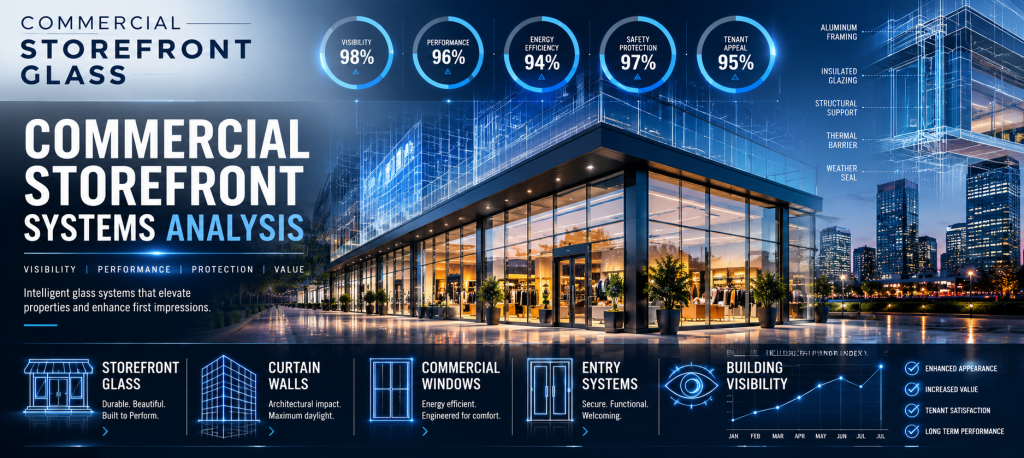
Storefront Systems
The Most Visible Part Of Many Commercial Properties
Few building components influence perception more than a storefront system.
Customers notice it first.
Tenants evaluate its appearance.
Investors assess its condition.
Property owners depend on its performance.
Because storefront systems sit at the intersection of architecture, customer experience, visibility, and building performance, they often become one of the most important elements of a commercial property.
A well-designed system can improve first impressions, support leasing goals, and contribute to long-term asset value. Meanwhile, aging storefronts may affect modernization efforts, tenant attraction, and overall property image.
As a result, storefront systems play a larger role in commercial real estate than many people realize.
What Is A Storefront System?
A storefront system is the ground-level glazing and framing assembly commonly found in commercial buildings.
Retail centers use them extensively.
Restaurants rely on them for visibility.
Office buildings frequently incorporate them into entrances and public-facing areas.
Mixed-use developments often use storefront systems to activate pedestrian environments.
Although designs vary, the primary objective remains consistent.
The system creates a connection between the building and the surrounding environment.
More Than Glass And Frames
Many people think storefront systems are simply windows and doors.
The reality is far more complex.
Visibility matters.
Security matters.
Weather protection matters.
Customer experience matters.
Each storefront system contributes to the larger building envelope while helping define how people interact with the property.
Consequently, these systems often influence multiple aspects of building performance simultaneously.
Why Storefront Systems Matter
Commercial properties compete for attention.
Businesses compete for customers.
Developments compete for tenants.
Because of that competition, exterior presentation frequently becomes a strategic advantage.
Common Benefits
- Stronger street-level visibility
- Improved customer engagement
- Enhanced property image
- Better tenant attraction
- Increased natural light
- Support for modernization efforts
These benefits help explain why storefront upgrades remain common throughout commercial real estate.
Customer Experience Starts Outside
Visitors often form opinions before entering a building.
Exterior appearance creates expectations.
Transparency encourages interaction.
Natural light contributes to comfort.
Open sightlines improve awareness.
For these reasons, storefront systems frequently become part of the customer experience itself.
A welcoming facade can make a property feel active and inviting. Likewise, modern storefront design often helps businesses establish stronger connections with the public.
That relationship is especially important in retail environments.
Visibility Influences Commercial Performance
Street-level exposure matters.
Pedestrian traffic creates opportunity.
Open storefronts improve awareness.
Product displays benefit from transparency.
Because visibility plays such an important role in commercial environments, storefront systems are often designed to maximize engagement without sacrificing functionality.
Visibility Objectives
Goal | Potential Benefit |
Increase exposure | Improve awareness |
Enhance presentation | Strengthen perception |
Improve transparency | Encourage engagement |
Support branding | Build recognition |
Create openness | Improve customer comfort |
Strengthen identity | Differentiate the property |
The most successful systems balance visibility with broader ownership objectives.
Storefront Systems Support Leasing Performance
Commercial tenants evaluate more than location.
Property appearance matters.
Building quality matters.
Customer experience matters.
As a result, storefront condition can influence leasing conversations.
A modern facade may improve competitiveness. Updated storefront systems can support property repositioning efforts. Exterior improvements often help create stronger first impressions during tenant tours.
Because of these factors, storefront upgrades frequently become part of broader leasing strategies.
Building Performance Is Part Of The Conversation
Storefront systems contribute to more than aesthetics.
Environmental exposure affects performance.
Weather influences durability.
Energy efficiency can become a consideration.
Building envelope performance often depends on how exterior systems work together.
Consequently, storefront planning frequently involves operational objectives as well as design goals.
This connection has become increasingly important as commercial properties pursue modernization initiatives.
Different Properties Have Different Needs
No universal storefront solution exists.
Retail centers often prioritize visibility.
Office buildings may emphasize professional presentation.
Hospitality properties focus heavily on guest experience.
Mixed-use developments balance multiple objectives simultaneously.
Therefore, storefront systems are typically designed around the specific goals of the property rather than a single industry standard.
That flexibility helps explain their widespread use across commercial real estate.
Modernization Frequently Starts At The Facade
Commercial buildings evolve over time.
Customer expectations change.
Architectural trends shift.
Tenant requirements continue advancing.
Many ownership groups respond through exterior building upgrades.
Because storefront systems are highly visible, they often become one of the first areas targeted during modernization efforts.
Common Modernization Goals
- Improve property image
- Support tenant attraction
- Increase visibility
- Enhance customer experience
- Strengthen leasing performance
- Improve long-term value
These objectives continue driving investment throughout commercial markets.
Storefront Systems Influence Property Value
Exterior presentation affects perception.
Building quality influences competitiveness.
Modernization supports long-term positioning.
Because storefront systems contribute to each of these areas, they often play a role in overall asset value.
A well-maintained facade can strengthen market appeal. Likewise, strategic upgrades may improve how a property is viewed by tenants, customers, and investors.
Viewed through that perspective, storefront systems become more than building components.
They become business assets.
Key Considerations For Commercial Properties
Visibility
Open storefronts help businesses engage with customers and strengthen street-level presence.
Customer Experience
Exterior presentation often shapes first impressions and influences perception.
Building Performance
Environmental exposure, durability, and operational goals all contribute to storefront planning.
Modernization
Upgrades frequently support repositioning efforts and long-term competitiveness.
Leasing Performance
Property presentation can influence tenant attraction and occupancy goals.
Asset Value
Storefront systems contribute to the broader perception and performance of commercial properties.
The Storefront Is Often The First Conversation A Building Has
Commercial properties communicate constantly.
Customers notice appearance.
Tenants evaluate quality.
Investors assess potential.
Meanwhile, storefront systems help shape those perceptions every day.
For that reason, successful storefront design rarely focuses on glass alone.
Visibility matters.
Performance matters.
Modernization matters.
Customer experience matters.
When these elements work together, storefront systems can support stronger property performance, improved leasing outcomes, enhanced visibility, and long-term commercial value.