


Material Matchups
Commercial storefront systems are made up of dozens of interconnected components.
Glass affects visibility, security, and energy performance.
Frames influence maintenance requirements and long-term costs.
Building envelope decisions impact durability, modernization efforts, and tenant experience.
The material matchups below explore how different systems perform across commercial environments, helping property owners, developers, architects, facility managers, and investors better understand the tradeoffs behind common commercial glazing decisions.
Available Matchups
Tempered Glass vs Laminated Glass
Storefront Security And Building Performance
Explore how two of the most common safety glazing materials differ in break resistance, occupant protection, visibility, security, and long-term commercial performance.

Impact Glass vs Standard Glass
Building Envelope Performance And Weather Protection
Compare how different glazing systems respond to weather exposure, environmental pressures, storm events, and long-term building envelope demands.
Aluminum Frames vs Steel Frames
Facade Maintenance And Long-Term Costs
Examine how frame selection influences durability, maintenance planning, lifecycle costs, modernization efforts, and exterior building performance.
Curtain Walls vs Storefront Systems
Retail Facade Design And Commercial Glass Systems
Understand the differences between two widely used commercial glazing approaches and how each supports visibility, architectural goals, tenant attraction, and exterior building upgrades.
Insulated Glass vs Single Pane Glass
Storefront Energy Efficiency And Operating Costs
Analyze how glass configuration affects energy performance, thermal comfort, operating expenses, daylighting, and long-term property value.
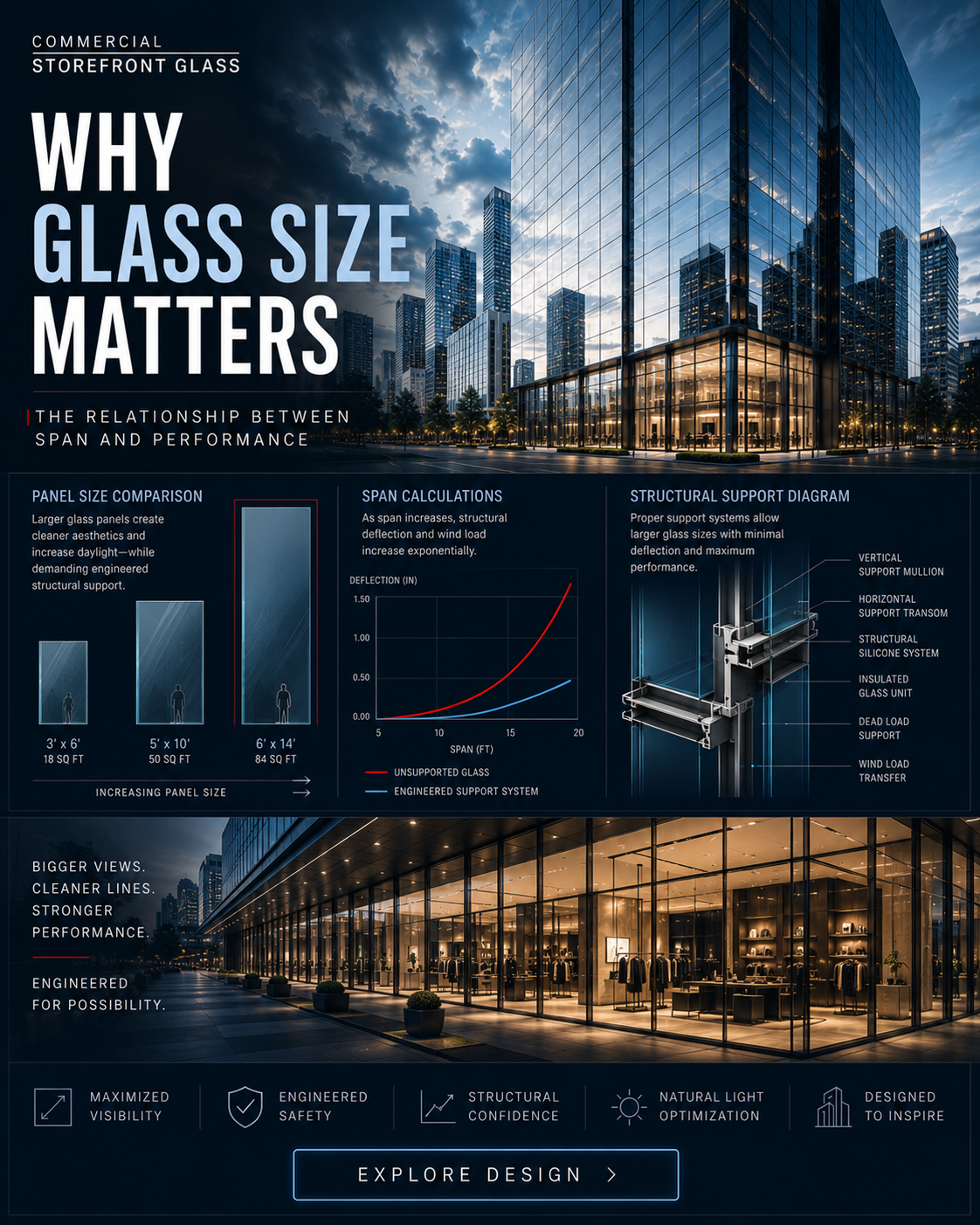
Why Material Selection Matters
Commercial properties rarely succeed because of a single design decision.
Performance comes from the way systems work together.
Security depends on more than locks.
Energy efficiency involves more than insulation.
Maintenance costs extend beyond cleaning.
Every storefront system represents a series of choices that affect how the building performs over time.
Those decisions often influence:
- Property image
- Tenant attraction
- Customer experience
- Building performance
- Security planning
- Energy efficiency
- Modernization efforts
- Long-term maintenance costs
- Leasing performance
- Operating expenses
Because of that reality, understanding material tradeoffs becomes an important part of commercial property ownership.
What These Comparisons Explore
Each matchup evaluates materials through a commercial real estate perspective rather than a product-sales perspective.
Topics include:
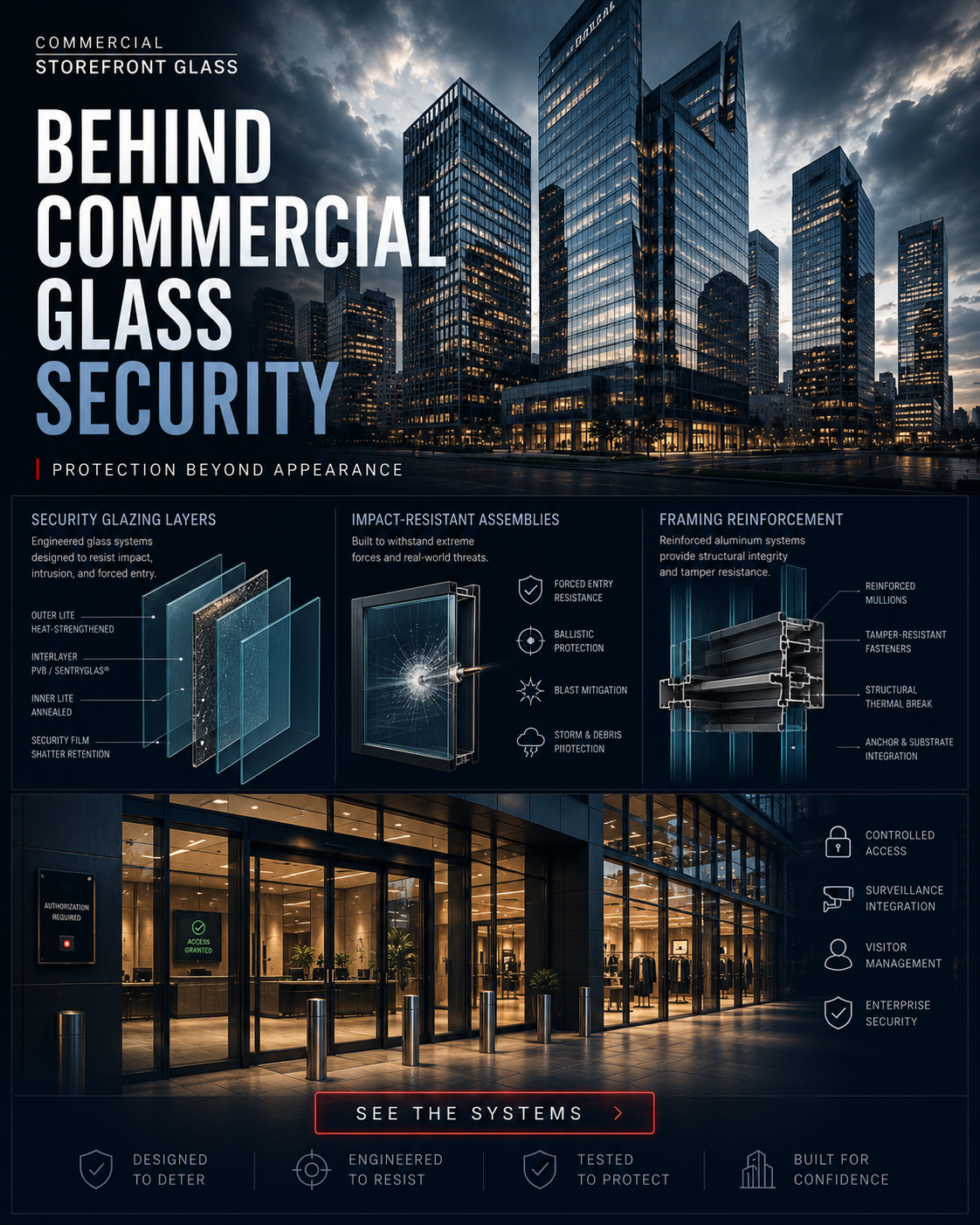
Building Performance
How different systems respond to weather, environmental exposure, and long-term operational demands.
Security And Protection
How materials contribute to occupant safety, risk management, and storefront security.
Energy And Efficiency
How commercial glass systems influence energy use, thermal comfort, and operating costs.
Maintenance And Lifecycle Costs
How ownership costs evolve over time through repairs, upkeep, modernization, and replacement planning.
Architecture And Design
How materials affect retail facade design, architectural glazing, customer visibility, and property image.
Modernization And Repositioning
How system selection supports exterior building upgrades, commercial facade renovation, and property repositioning efforts.
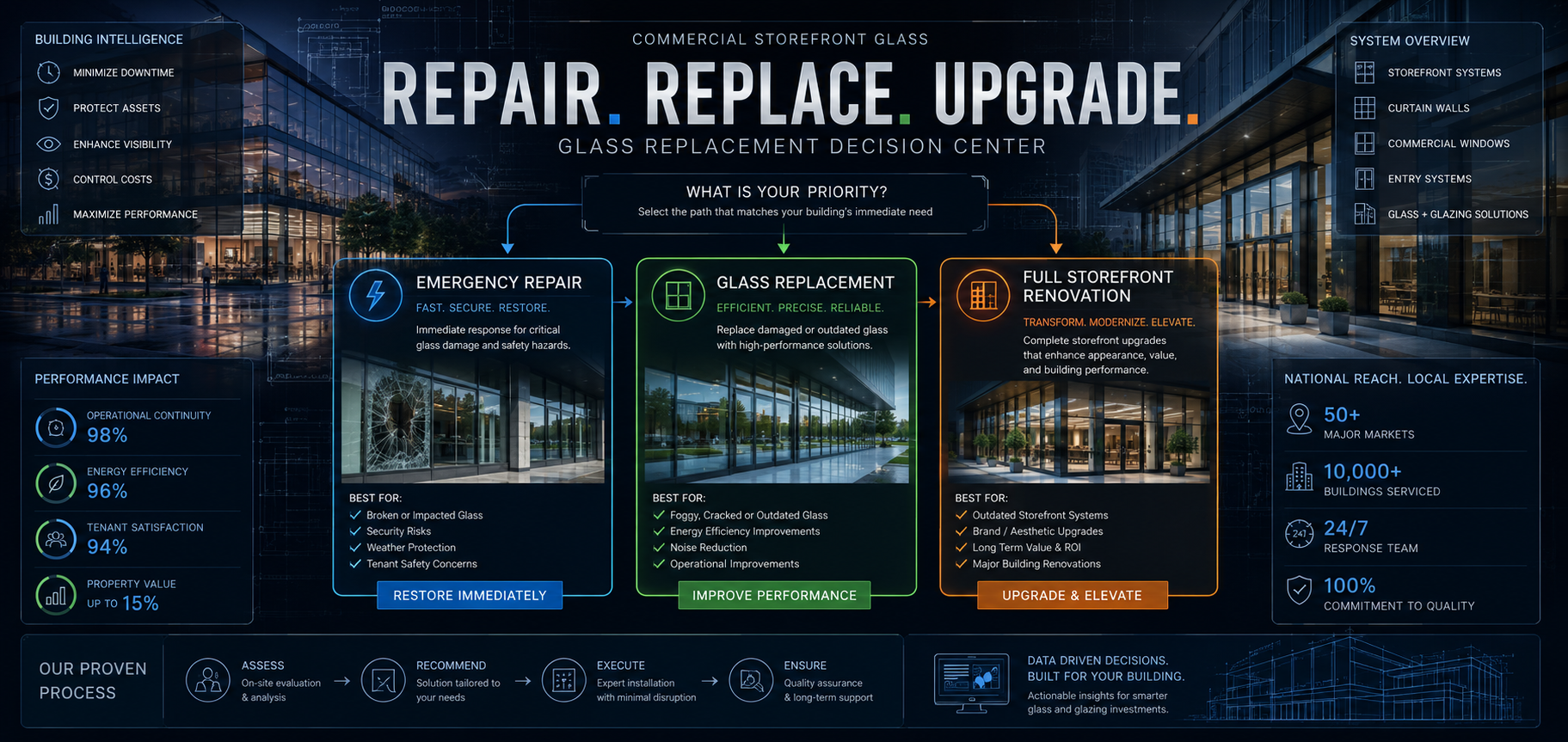
Material Decisions Are Rarely Universal
A system that performs well in Miami may face different challenges in Denver.
A retail property often prioritizes different outcomes than a medical office building.
Urban mixed-use developments may have different goals than suburban shopping centers.
Because environmental conditions, tenant expectations, and ownership objectives vary significantly, commercial material selection should always be evaluated within the context of the building itself.
The goal is not finding a universally perfect solution.
The objective is finding the right solution for the property.
Commercial Buildings Are Long-Term Investments
Storefront systems influence far more than appearance.
Materials affect maintenance.
Performance impacts operating costs.
Design shapes customer perception.
Security influences confidence.
Energy efficiency contributes to long-term value.
The following material matchups explore how those factors intersect across modern commercial properties and why seemingly simple decisions often carry significant consequences over the life of a building.