


Commercial Storefront Glass

Curtain Walls vs Storefront Systems — Retail Facade Design And Commercial Glass Systems

Similar Appearance. Different Purposes.

At first glance, curtain walls and storefront systems can appear remarkably similar.

Both use large areas of glass.

Both contribute to modern architecture.

Both influence how commercial properties are perceived.

Yet despite those similarities, the two systems are designed for very different applications.

One typically serves as part of a larger building envelope strategy.

The other often focuses on ground-level visibility and tenant engagement.

As a result, architects, developers, property owners, and facility managers frequently evaluate curtain walls and storefront systems through different lenses.

Understanding those differences is important when planning commercial developments, facade renovations, exterior building upgrades, and modernization projects.

Commercial Storefront Glass

Commercial Facades Shape First Impressions

A building begins communicating before anyone enters.

Customers notice appearance.

Tenants evaluate presentation.

Investors assess property condition.

Visitors form opinions within seconds.

Because exterior appearance influences perception, retail facade design has become an increasingly important part of commercial real estate strategy.

Storefront systems and curtain walls both contribute to that goal.

However, they often do so in different ways.

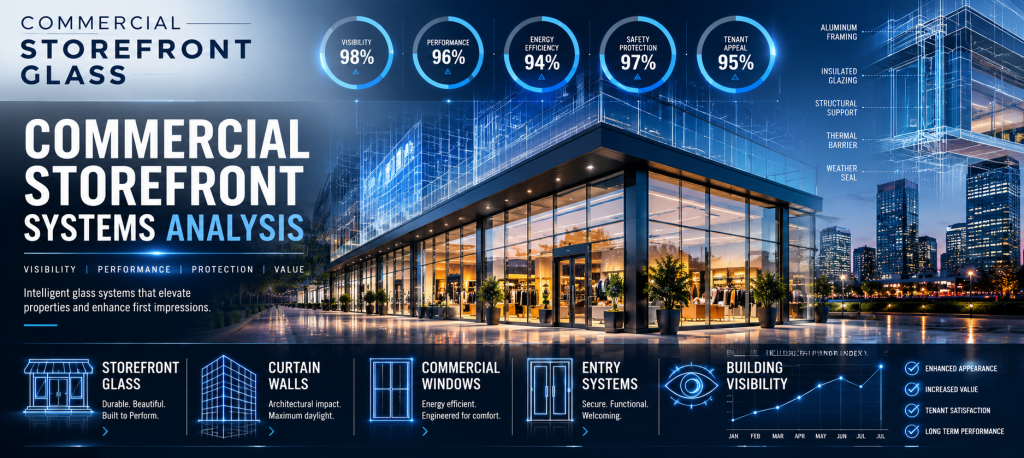
Understanding Storefront Systems

Storefront systems are commonly found at street level.

Retail centers.

Restaurants.

Mixed-use developments.

Shopping districts.

Commercial corridors.

These systems are designed to create visibility, accessibility, and interaction between interior spaces and the surrounding environment.

Large glass areas help businesses showcase products, services, and activity.

Consequently, storefront systems often play a major role in customer experience and tenant attraction.

Common Characteristics

  • Ground-level applications
  • Strong visibility
  • Customer engagement
  • Retail-focused environments
  • Tenant-friendly design
  • Flexible commercial use

Because storefront systems directly influence how people interact with a property, they frequently become central components of retail facade design.
Commercial Storefront Glass

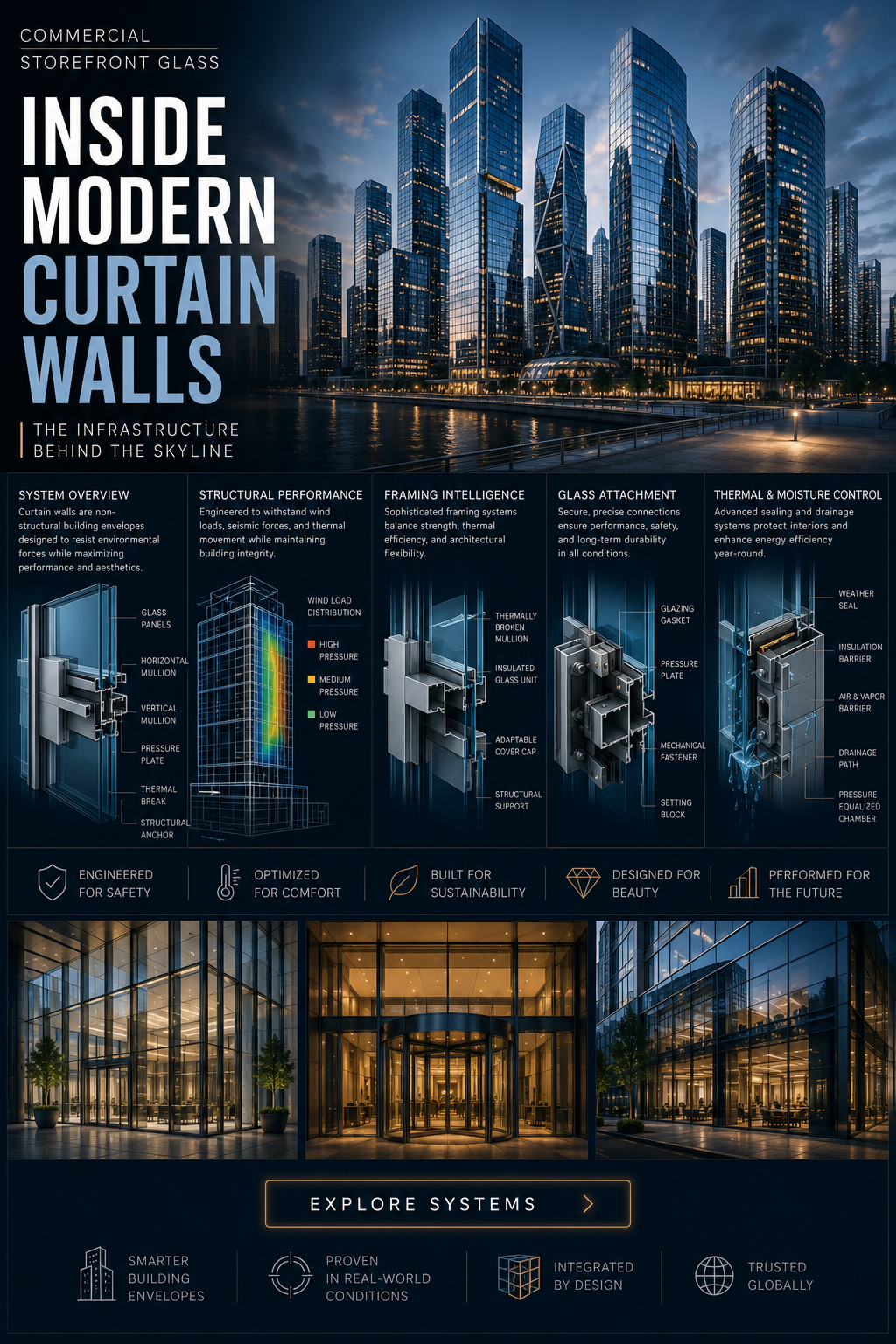
Understanding Curtain Walls

Curtain walls typically serve a different purpose.

Rather than focusing exclusively on street-level interaction, curtain walls often support larger portions of a building’s exterior.

Office towers.

Institutional facilities.

Corporate campuses.

Mixed-use developments.

Large-scale commercial properties.

These systems contribute to the overall appearance and performance of the building envelope while creating a distinctive architectural identity.

As a result, curtain walls frequently become major elements of contemporary commercial design.

Common Characteristics

  • Large-scale exterior applications
  • Architectural flexibility
  • Modern building aesthetics
  • Extensive glazing areas
  • Building envelope integration
  • High-visibility commercial design

Their role often extends beyond retail environments into broader architectural objectives.
Commercial Storefront Glass

Design Goals Often Determine The Choice

The decision between curtain walls and storefront systems is rarely based on appearance alone.

Project goals matter.

Building size matters.

Tenant needs matter.

Customer interaction matters.

Architectural intent matters.

Typical Priorities

Objective

Storefront Systems

Curtain Walls

Retail visibility

Strong focus

Secondary focus

Customer engagement

High priority

Moderate priority

Building identity

Important

Major priority

Ground-floor activity

Primary role

Supporting role

Commercial glass systems

Common

Common

Architectural expression

Moderate

Extensive

The strongest solution often depends on how the property will function.

Retail Facade Design Begins At Street Level

Retail environments rely on visibility.

Businesses want exposure.

Customers want accessibility.

Commercial properties benefit from engagement.

Because storefront systems help create direct visual connections between businesses and the public realm, they often become central elements of successful retail environments.

Shopping centers frequently use storefront systems to strengthen tenant presentation. Mixed-use developments often rely on them to activate pedestrian corridors. Restaurants, hospitality properties, and service-oriented businesses commonly prioritize visibility and accessibility as well.

Those priorities naturally align with storefront-focused design.
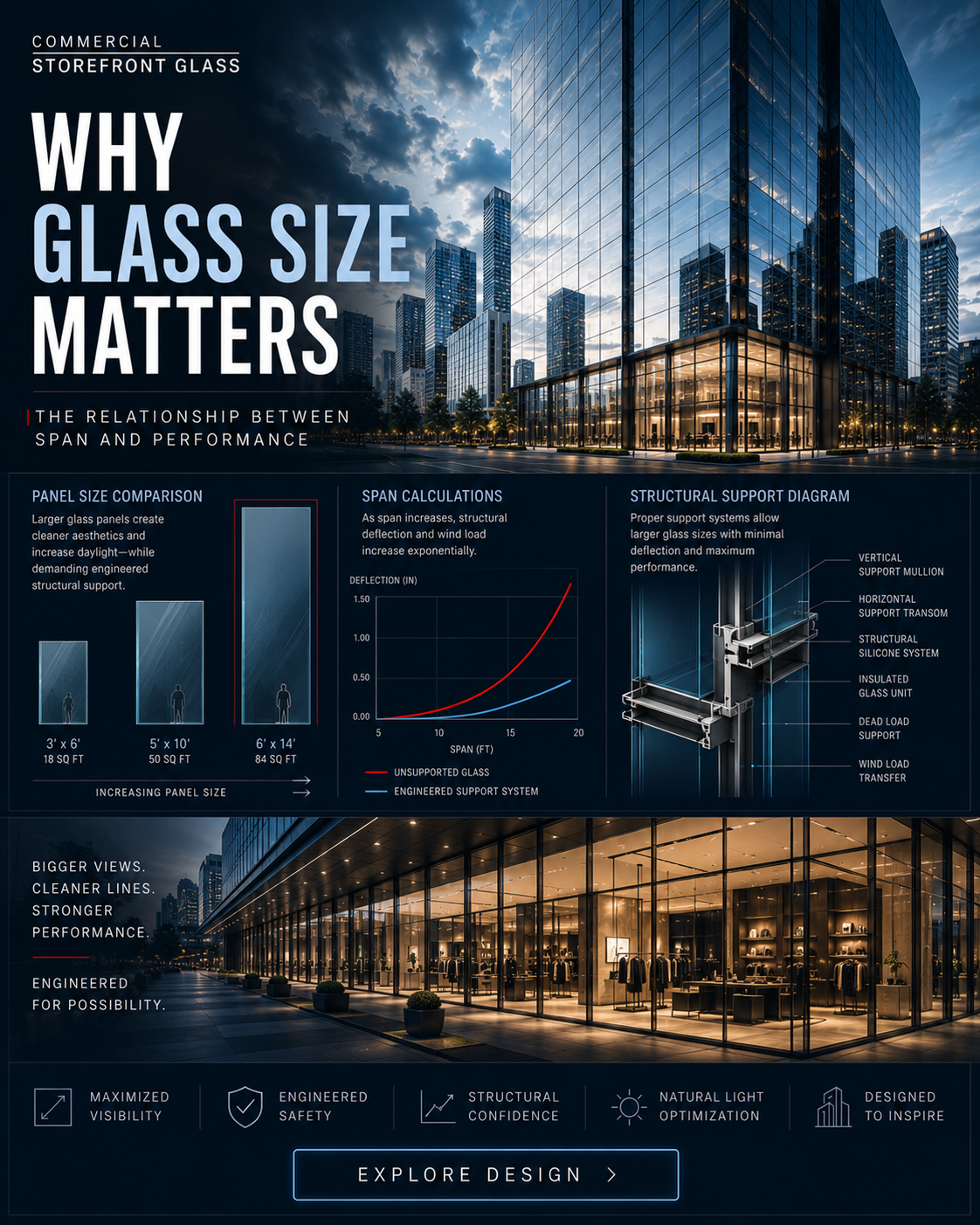
Commercial Storefront Glass

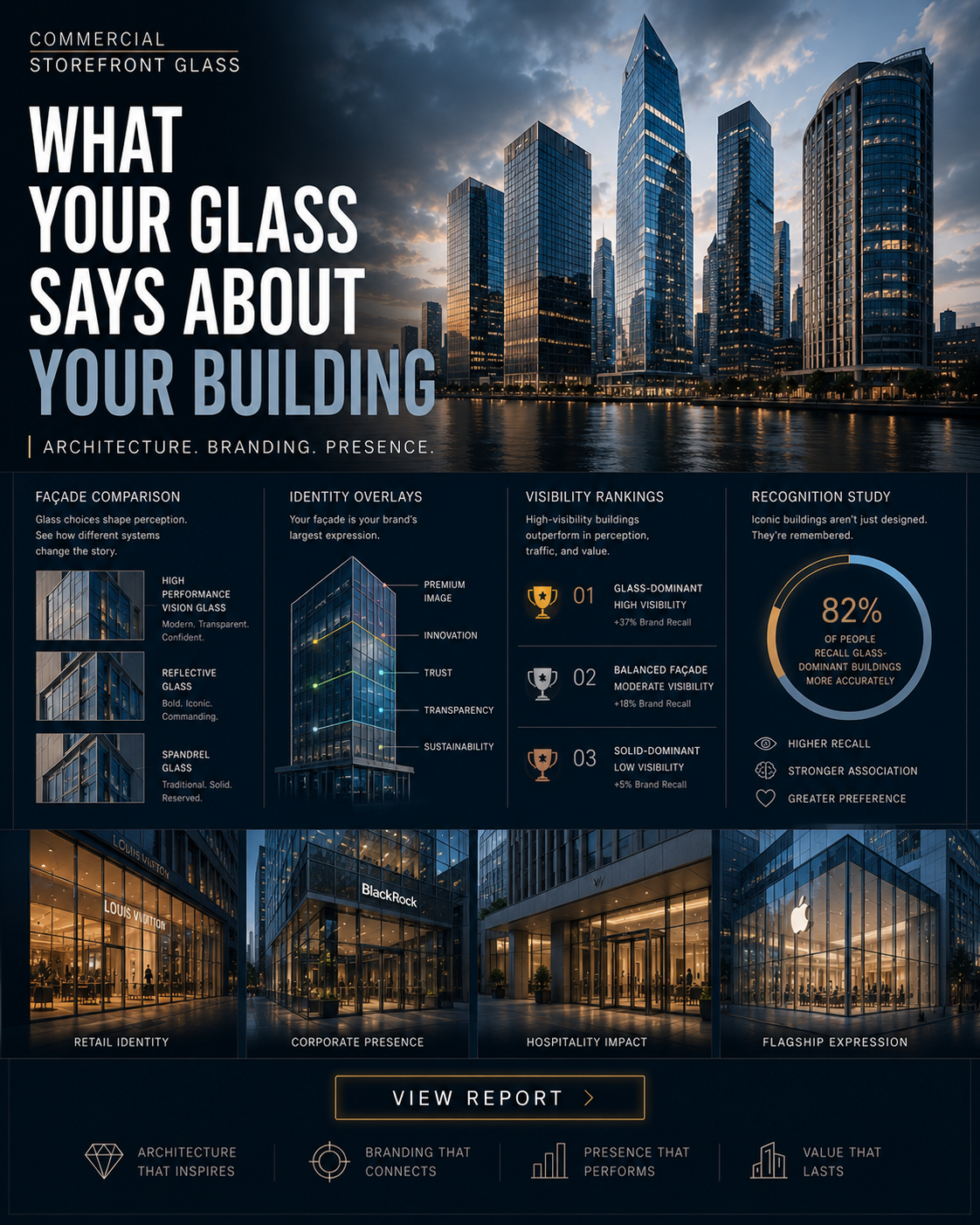
Curtain Walls Often Support Larger Architectural Goals

Many commercial properties require more than retail visibility.

Corporate headquarters seek identity.

Office towers pursue distinction.

Developers aim to create memorable architecture.

Under those circumstances, curtain walls frequently become part of a broader design strategy.

Architectural glazing helps shape the visual character of the building. Large exterior glass surfaces can reinforce a contemporary appearance. Building envelope integration often contributes to overall project performance.

As a result, curtain walls are commonly associated with large-scale architectural expression.

Modernization Frequently Includes Facade Upgrades

Commercial buildings evolve over time.

Older properties pursue repositioning.

Retail centers undergo renovation.

Office buildings seek modernization.

Exterior upgrades often become part of those efforts.

Because facades remain highly visible, improvements can significantly influence how a property is perceived.

Common Modernization Objectives

  • Improve property image
  • Support tenant attraction
  • Increase visibility
  • Strengthen leasing performance
  • Modernize aging assets
  • Enhance architectural appeal

Storefront systems and curtain walls may both support these goals depending on the nature of the project.
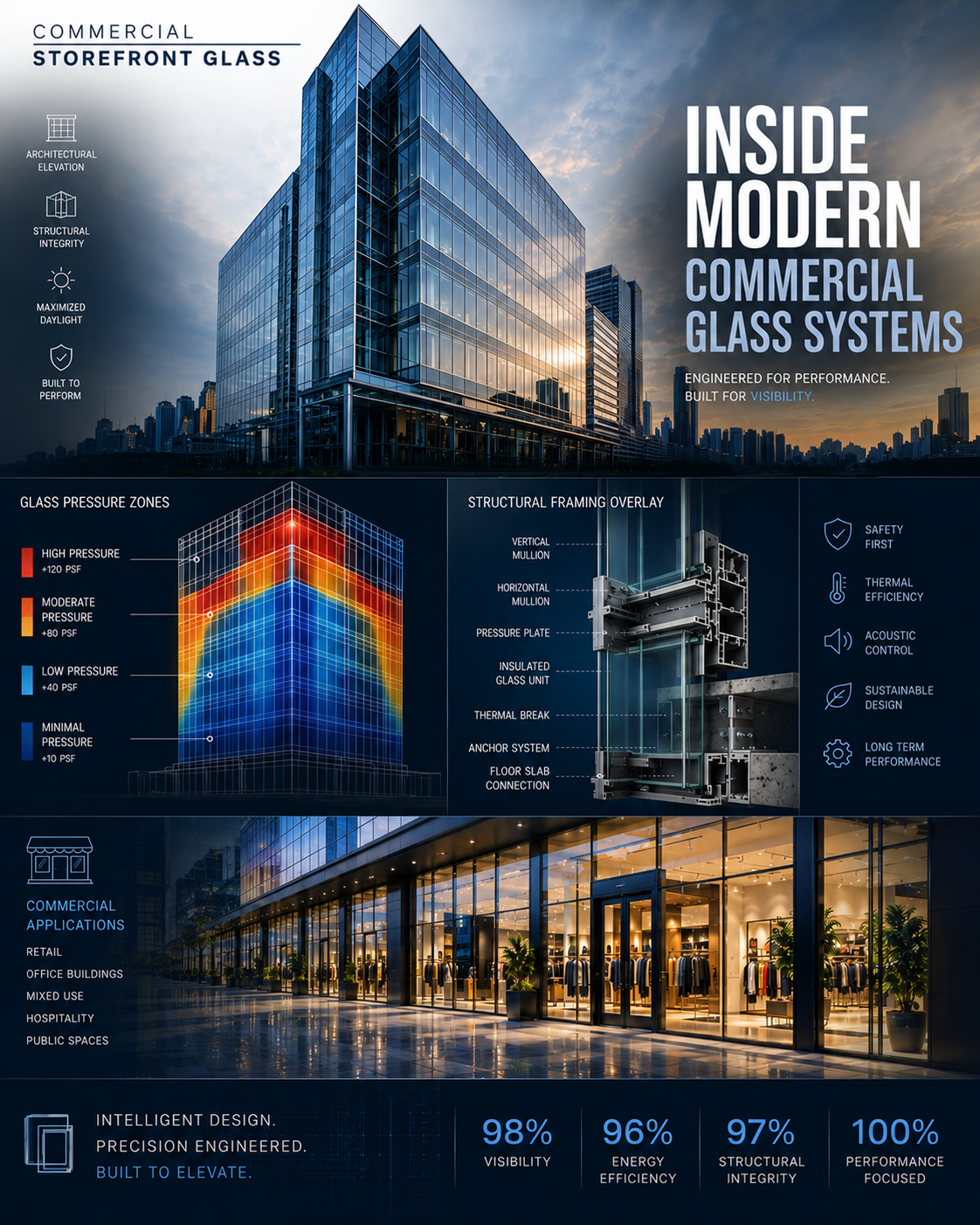
Commercial Storefront Glass

Commercial Glass Systems Influence Tenant Experience

Glass affects more than appearance.

Natural light enters through glazing systems.

Views connect occupants to the surrounding environment.

Open sightlines contribute to comfort.

Customer experience often begins before a visitor crosses the threshold.

Because of those factors, commercial glass systems frequently play an important role in leasing performance and tenant satisfaction.

Whether the project utilizes storefront systems or curtain walls, glazing often contributes to both functional and experiential outcomes.

Property Repositioning Relies On Visibility

Commercial real estate remains competitive.

New developments enter the market.

Tenant expectations continue evolving.

Customer preferences change.

Property owners often respond through repositioning efforts.

Visible facade improvements frequently become one of the most effective ways to influence perception.

Retail properties may emphasize storefront enhancements. Larger commercial developments may pursue more extensive facade modernization. In either case, exterior upgrades often support broader business objectives.

That connection helps explain why facade systems remain such an important investment category.

Comparing Curtain Walls And Storefront Systems

Storefront Systems

  • Street-level visibility
  • Customer engagement
  • Retail-focused design
  • Tenant attraction
  • Flexible commercial applications
  • Strong pedestrian interaction

Curtain Walls

  • Large-scale architectural expression
  • Building envelope integration
  • Extensive glazing systems
  • Modern commercial aesthetics
  • Corporate and institutional applications
  • Strong visual identity

Both systems contribute value.

The difference lies in how each supports the goals of the property.

Retail Facade Design Depends On Project Objectives

Commercial properties rarely succeed through architecture alone.

Visibility influences customer awareness.

Design shapes perception.

Modernization affects competitiveness.

Tenant experience supports leasing performance.

Curtain walls and storefront systems each address those objectives differently.

Viewed through that perspective, the comparison becomes less about choosing a superior system and more about selecting the approach that best aligns with the property’s design goals, modernization strategy, commercial function, and long-term vision.

For many projects, the right answer depends on how retail facade design, commercial glass systems, building performance, and property image intersect within the built environment.