

Commercial Storefront Glass

Impact Glass vs Standard Glass — Building Envelope Performance And Weather Protection

Weather Is One Of The Biggest Forces Acting On Commercial Buildings

Commercial properties face environmental pressure every day.

Wind affects exterior systems.

Rain tests building envelopes.

Temperature changes influence materials.

Storm events expose weaknesses.

Over time, those conditions can influence maintenance requirements, operating costs, modernization decisions, and long-term property performance.

As a result, weather protection remains an important consideration when evaluating commercial glazing systems.

One of the most common comparisons involves impact glass and standard glass.

Both serve important roles within commercial construction. However, they are designed with different performance objectives in mind.

Understanding those differences begins with understanding the building envelope itself.
Commercial Storefront Glass

What Is The Building Envelope?

The building envelope represents the physical separation between indoor and outdoor environments.

Exterior walls.

Roof systems.

Windows.

Storefronts.

Architectural glazing.

Together, these components help regulate comfort, manage environmental exposure, and protect interior spaces.

When envelope systems perform effectively, buildings operate more efficiently and occupants experience greater comfort. When weaknesses develop, weather can begin affecting both performance and long-term maintenance requirements.

Because glazing occupies a large portion of many commercial facades, glass often plays a significant role in overall envelope performance.

Understanding Standard Glass

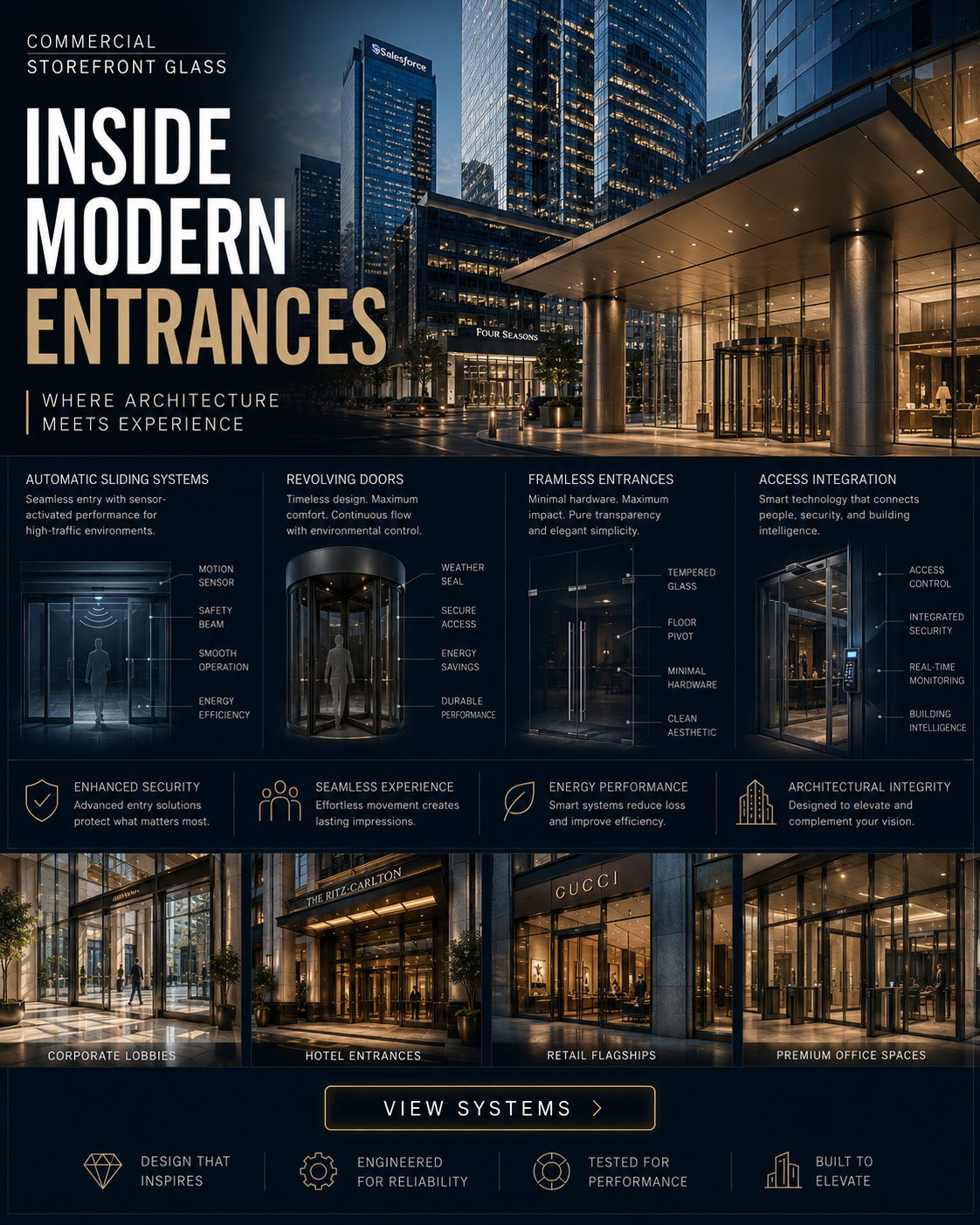
Standard commercial glass remains widely used throughout commercial construction.

Office buildings.

Retail centers.

Hospitality properties.

Mixed-use developments.

In many situations, standard glazing provides excellent visibility, natural light, and architectural flexibility.
Commercial Storefront Glass

Common Characteristics

  • Strong visual clarity
  • Broad commercial use
  • Modern appearance
  • Daylighting benefits
  • Architectural versatility
  • Cost-effective applications

For many commercial environments, standard glass successfully supports everyday operational needs.

The discussion changes when weather exposure becomes a larger consideration.

Understanding Impact Glass

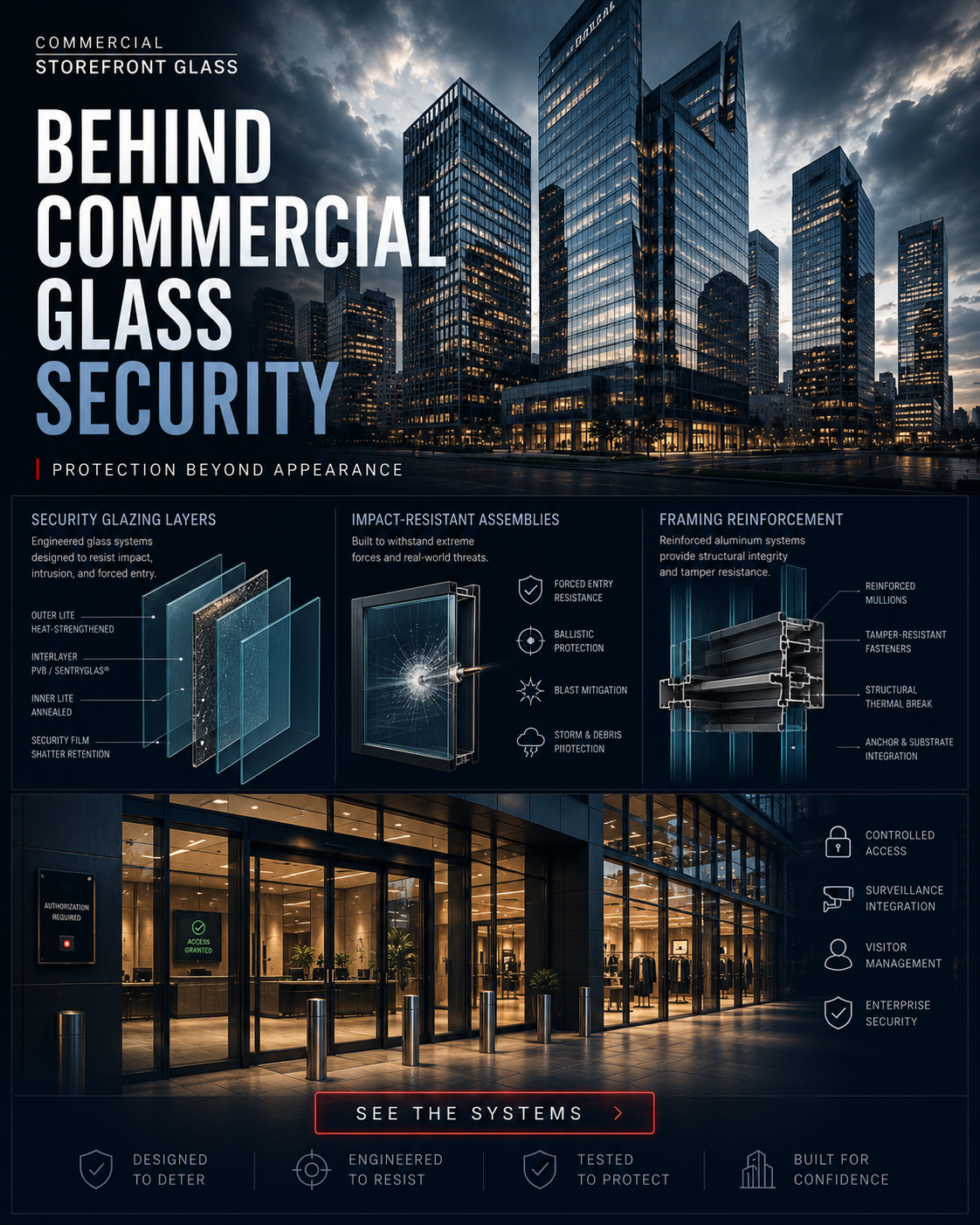
Impact glass is designed to address additional environmental challenges.

Rather than focusing solely on visibility and appearance, these systems often emphasize protection and resilience.

Multiple layers work together to help the glazing remain intact when exposed to significant forces.

As a result, impact glass frequently becomes part of discussions involving severe weather, risk management, and long-term building protection.

The objective is not simply preventing breakage.

The goal often involves maintaining the integrity of the building envelope during challenging conditions.

Standard glass is often evaluated for everyday performance. Impact glass is frequently evaluated for extreme conditions.
Commercial Storefront Glass

Weather Protection Shapes Material Decisions

Commercial buildings operate in dramatically different climates.

Properties in Miami face different pressures than those in Phoenix.

Coastal markets experience different challenges than inland cities.

Storm-prone regions often prioritize different performance outcomes than areas with milder conditions.

Because of those differences, weather protection can become a major factor during planning and modernization efforts.

Common Environmental Considerations

Condition

Potential Concern

High winds

Envelope stress

Severe storms

Building protection

Flying debris

Exterior impact

Heavy rainfall

Water management

Coastal exposure

Long-term durability

Temperature extremes

Material performance

Glazing systems often become part of broader strategies for managing these conditions.
Commercial Storefront Glass

Building Envelope Performance Depends On System Integrity

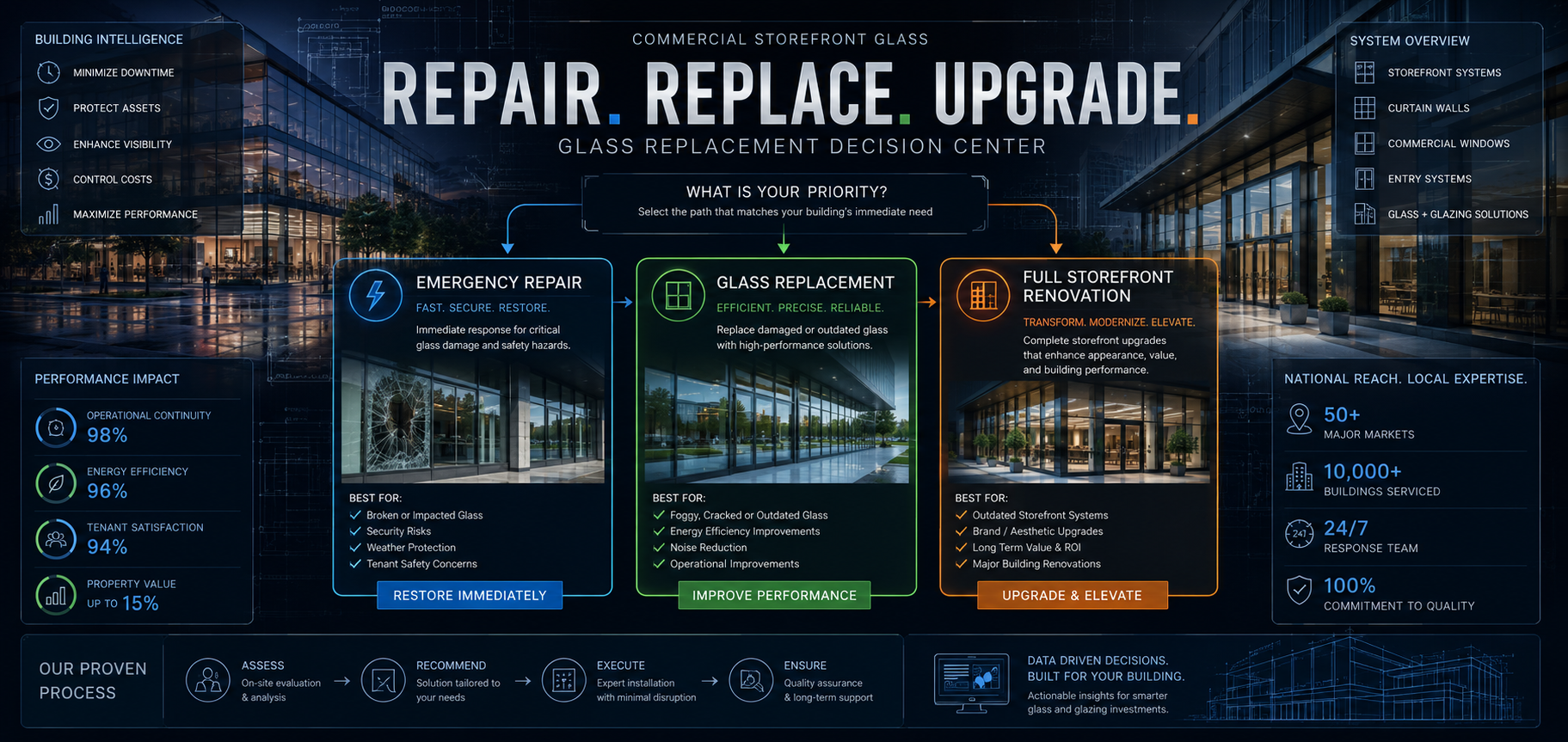
Commercial properties function best when envelope components work together.

Glass alone cannot determine performance.

Frames matter.

Installation matters.

Maintenance matters.

Overall system design matters.

Nevertheless, glazing remains one of the most visible and important parts of the envelope.

When exterior systems remain intact, buildings are often better positioned to manage environmental exposure. Consequently, owners frequently evaluate how glazing choices contribute to long-term performance goals.

That evaluation becomes increasingly important in regions exposed to severe weather events.

Different Properties Have Different Risk Profiles

Not every commercial property faces the same level of environmental exposure.

Retail centers operate differently than hospitals.

Office buildings have different priorities than hospitality properties.

Mixed-use developments often balance multiple objectives simultaneously.

Because risk varies from project to project, glazing decisions frequently reflect the specific conditions surrounding the asset.

One property may prioritize visibility and aesthetics.

Another may place greater emphasis on weather resilience and long-term protection.

Both approaches can be appropriate depending on the situation.
Commercial Storefront Glass

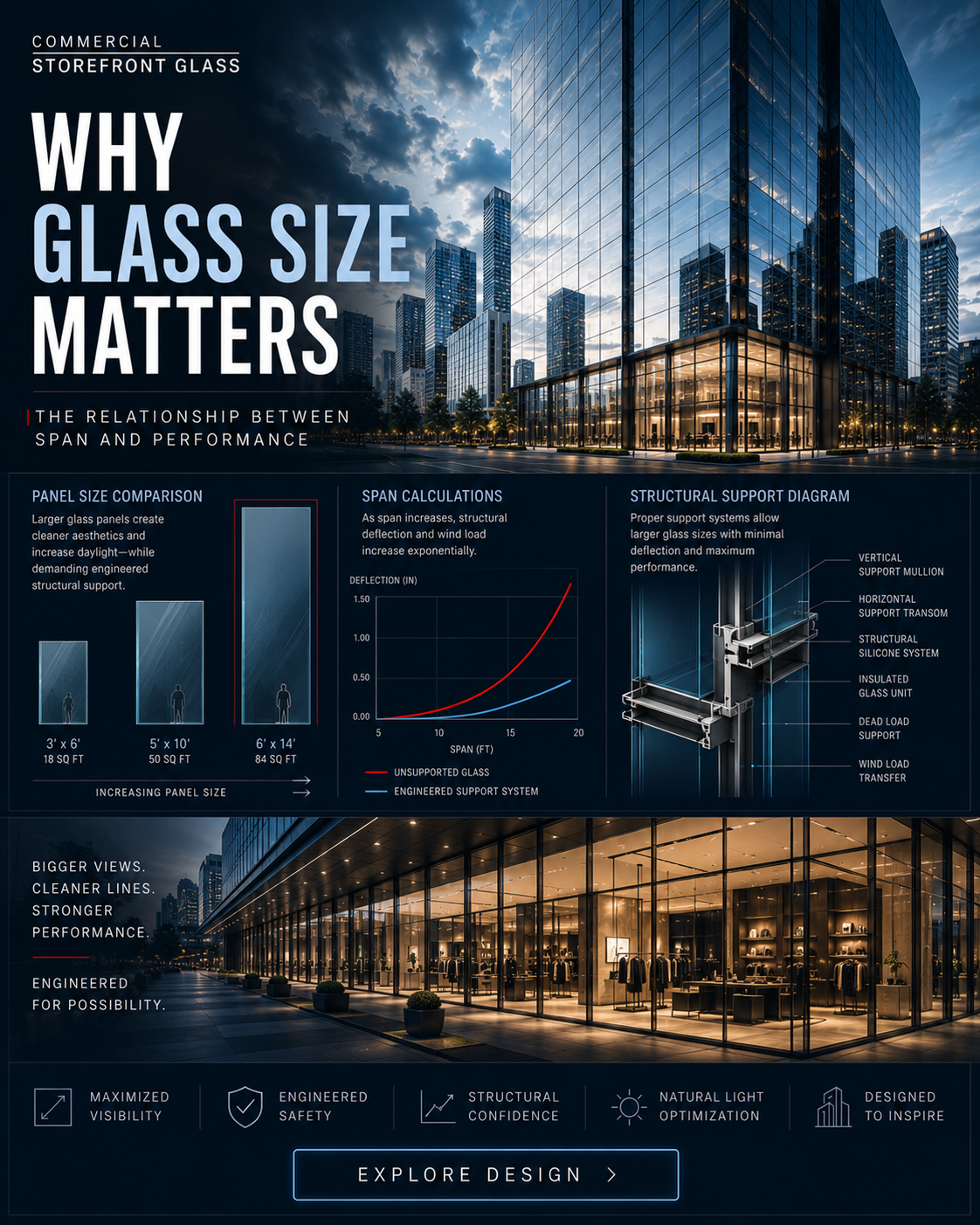
Modernization Often Includes Envelope Improvements

Commercial properties evolve over time.

Exterior systems age.

Performance expectations increase.

Building standards continue advancing.

As a result, modernization projects frequently include envelope-related improvements.

Property owners often evaluate:

  • Building performance
  • Weather protection
  • Long-term durability
  • Operating efficiency
  • Tenant expectations
  • Risk management

Glazing upgrades frequently become part of those conversations because they influence both appearance and performance.

Energy Efficiency And Weather Protection Are Connected

Many owners view weather protection and energy performance as separate discussions.

In reality, they often overlap.

Exterior systems influence indoor comfort.

Envelope performance affects operational efficiency.

Environmental exposure impacts long-term building behavior.

Consequently, glazing decisions frequently support multiple objectives simultaneously.

A system designed to improve resilience may also contribute to broader building performance goals.

That relationship continues driving interest in higher-performing commercial glass systems.

Comparing Impact Glass And Standard Glass

Standard Glass

  • Strong visibility
  • Broad commercial use
  • Architectural flexibility
  • Natural light benefits
  • Cost-conscious applications
  • Everyday performance focus

Impact Glass

  • Enhanced weather protection
  • Building envelope support
  • Environmental resilience
  • Storm-related performance
  • Risk management advantages
  • Long-term protection focus

Both systems contribute value.

The difference lies in how each responds to environmental pressure.

Building Envelope Performance Is A Long-Term Consideration

Commercial properties rarely make glazing decisions based on appearance alone.

Weather exposure influences planning.

Risk affects investment decisions.

Maintenance requirements impact ownership costs.

Long-term performance shapes modernization strategies.

Impact glass and standard glass address those concerns differently.

Viewed through that perspective, the comparison becomes less about selecting a universally superior option and more about understanding which solution aligns with the building’s environment, performance goals, and long-term ownership objectives.

For many commercial properties, the answer depends on how weather protection, building envelope performance, durability, and asset value intersect over time.