


Insulated Glass vs Single Pane Glass — Storefront Energy Efficiency And Operating Costs
Energy Performance Starts At The Exterior
Commercial properties consume energy every day.
Heating systems operate during winter.
Cooling systems work throughout the summer.
Lighting contributes to operational expenses.
Occupants expect comfortable environments regardless of outdoor conditions.
As a result, energy efficiency has become a major consideration for property owners, developers, architects, and facility managers.
Many factors influence building performance.
Mechanical systems matter.
Insulation matters.
Building design matters.
However, storefront systems and commercial glass assemblies often play a significant role because they form part of the building envelope.
One of the most common comparisons involves insulated glass and single pane glass.
While both provide visibility and natural light, they perform differently when energy efficiency and operating costs become priorities.
The Building Envelope Influences Energy Use
Commercial buildings are constantly interacting with the outside environment.
Sunlight enters through glass.
Outdoor temperatures affect interior comfort.
Weather conditions influence operational demands.
The building envelope helps manage those interactions.
Storefront systems, windows, facades, and glazing assemblies all contribute to how efficiently a property performs.
Because glass often occupies a large percentage of exterior surfaces, glazing decisions can influence long-term energy outcomes.
That reality has made storefront energy efficiency an increasingly important topic throughout commercial real estate.
Understanding Single Pane Glass
Single pane glass consists of one layer of glazing.
Historically, it appeared throughout a wide variety of commercial buildings.
Many older retail centers, office properties, and storefront systems still contain single pane assemblies today.
Common Characteristics
- Simple construction
- Strong visibility
- Natural daylight access
- Broad historical use
- Lower installation complexity
- Common in older buildings
For many years, single pane glass represented the standard approach to commercial glazing.
Modern performance expectations have changed the conversation.
Understanding Insulated Glass
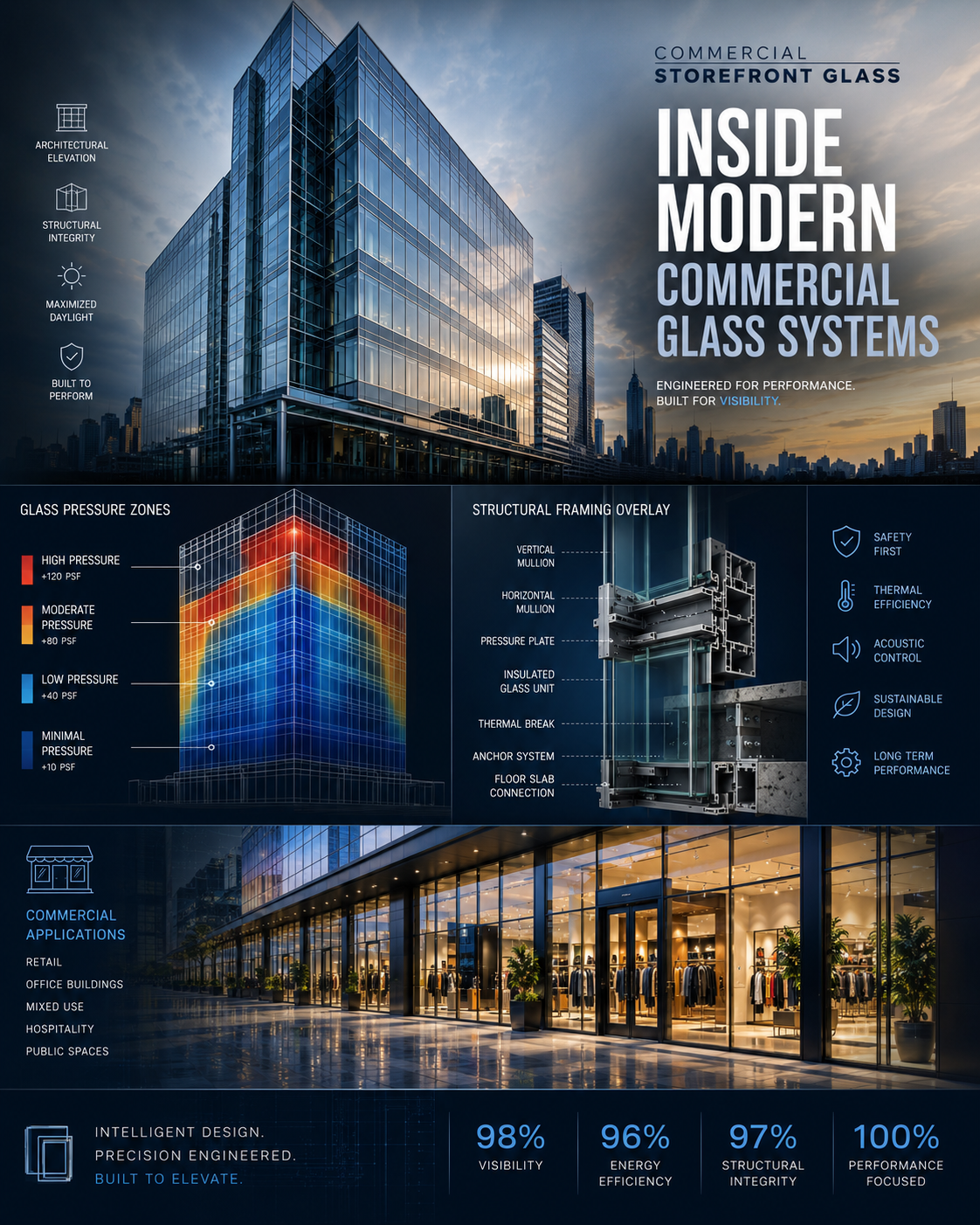
Insulated glass uses multiple panes separated by an air or gas-filled space.
Rather than relying on a single layer, the assembly is designed to improve thermal performance.
As a result, insulated glass frequently becomes part of discussions involving energy efficiency, modernization, and long-term operating costs.
Commercial properties often utilize insulated glazing as part of broader building performance strategies.
The objective extends beyond appearance.
The focus often centers on comfort, efficiency, and lifecycle value.
Single pane glass primarily provides visibility. Insulated glass often contributes to both visibility and energy performance.
Energy Efficiency Has Become A Competitive Advantage
Commercial properties compete in multiple ways.
Location matters.
Appearance matters.
Tenant experience matters.
Operating costs matter too.
As energy expenses continue influencing ownership decisions, efficient building systems often become increasingly attractive.
Storefront systems are part of that equation.
Properties that manage environmental conditions effectively may experience benefits that extend beyond utility costs alone.
Consequently, energy efficiency frequently becomes part of larger modernization and property repositioning strategies.
Operating Costs Affect Long-Term Ownership
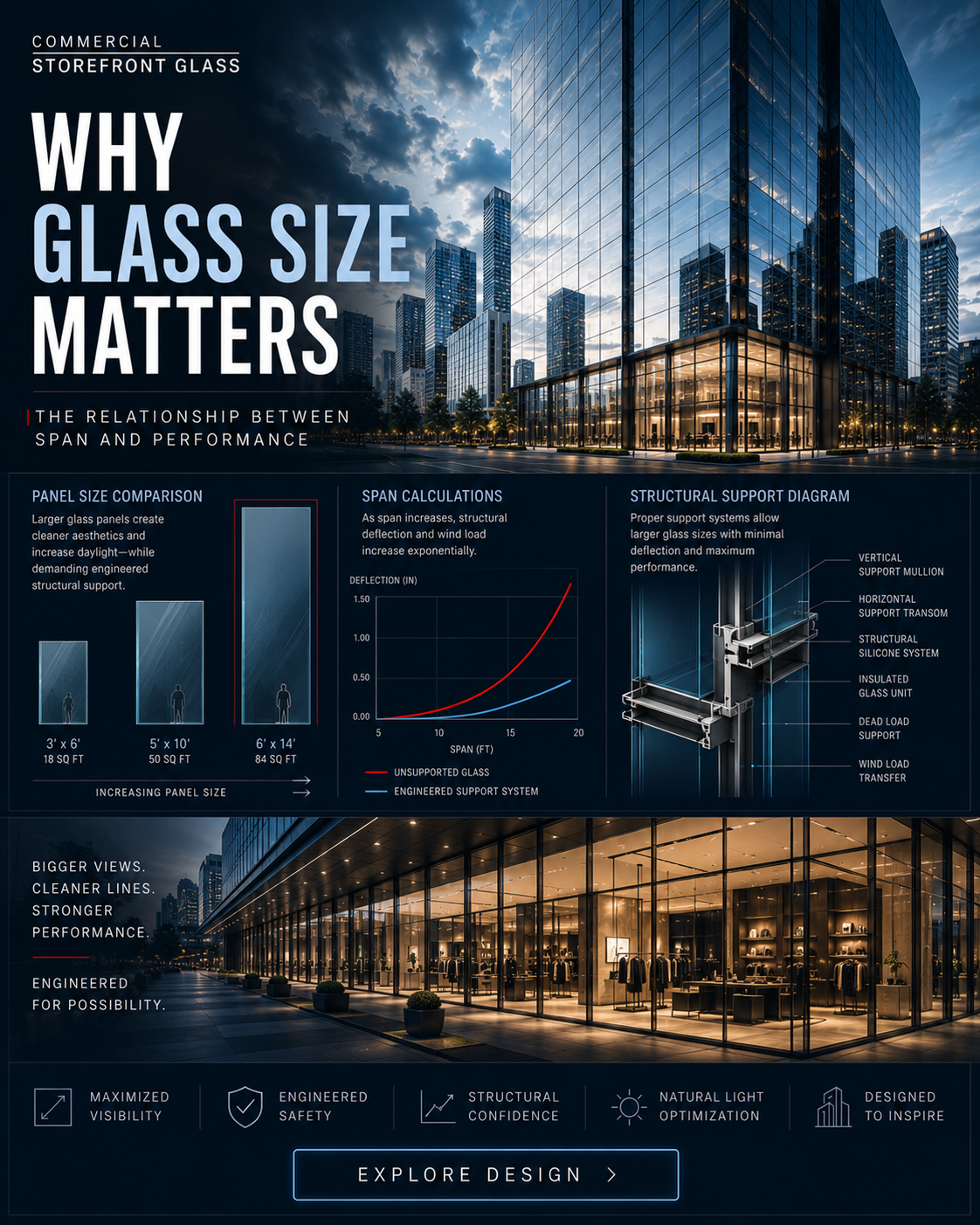
Commercial real estate is typically evaluated over years rather than months.
Small operational differences can accumulate over time.
Utility expenses impact budgets.
Efficiency influences financial performance.
Because of those realities, operating costs often become a major consideration during renovation and modernization projects.
Factors That Influence Operating Costs
- Heating demand
- Cooling demand
- Occupant comfort
- Building performance
- Maintenance planning
- Modernization objectives
Glazing systems may contribute to each of these areas.
As a result, storefront energy efficiency often receives significant attention during capital planning discussions.
Daylighting Remains Important
Commercial buildings benefit from natural light.
Employees appreciate bright environments.
Customers respond positively to open spaces.
Retail properties often rely on visibility and transparency.
Both insulated glass and single pane glass support daylighting objectives.
The difference typically involves how those goals interact with broader building performance requirements.
Successful commercial design often seeks a balance between visibility, comfort, and operational efficiency.
That balance has become increasingly important as tenant expectations continue evolving.
Tenant Expectations Continue Rising
Businesses evaluate commercial space differently than they once did.
Comfort matters.
Natural light matters.
Environmental performance matters.
Operating efficiency matters.
Because tenants increasingly consider workplace quality when evaluating properties, energy performance can influence leasing outcomes.
Consequently, storefront systems are often viewed as part of the tenant experience rather than purely architectural elements.
That shift continues shaping modernization efforts across many commercial markets.
Older Buildings Often Pursue Modernization
Many commercial properties were constructed under different performance standards.
Energy expectations have changed.
Technology has evolved.
Ownership priorities continue advancing.
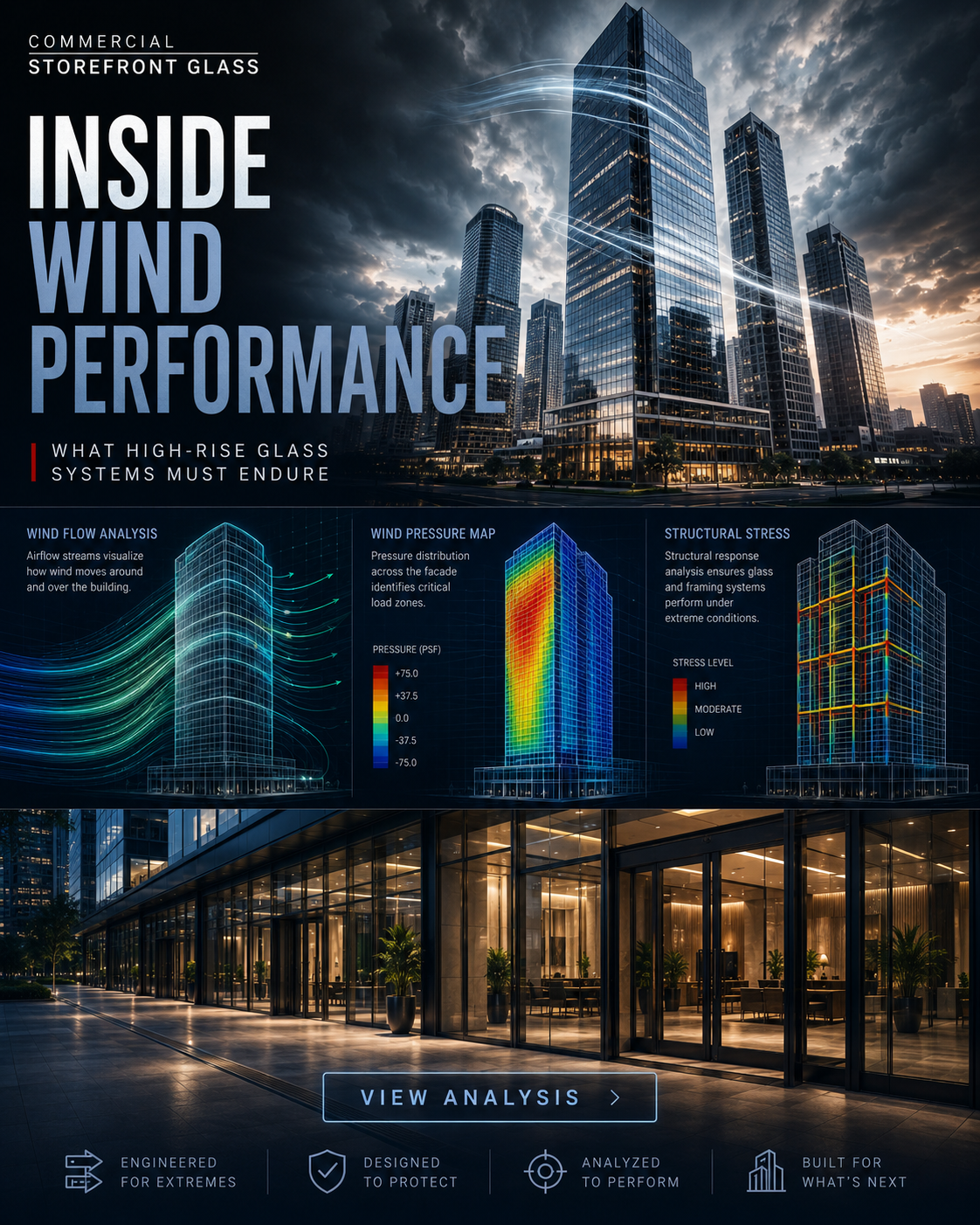
As a result, modernization projects frequently evaluate storefront systems and glazing assemblies.
Common Modernization Goals
- Improve energy efficiency
- Reduce operating costs
- Support tenant attraction
- Increase property value
- Enhance building performance
- Strengthen leasing competitiveness
Commercial glass systems often become a visible part of those improvements.
Property Repositioning Frequently Includes Energy Upgrades
Commercial assets rarely remain static.
Retail centers evolve.
Office properties adapt.
Mixed-use developments expand.
Ownership groups often pursue repositioning strategies to remain competitive.
Energy performance frequently supports those efforts.
Exterior upgrades can improve appearance while contributing to broader operational goals. Building envelope improvements may strengthen both performance and perception.
That connection explains why energy-efficient glazing continues gaining attention across commercial real estate.
Comparing Insulated Glass And Single Pane Glass
Single Pane Glass
- Simple construction
- Strong visibility
- Natural daylight access
- Historical commercial use
- Common in older properties
- Basic glazing approach
Insulated Glass
- Multi-pane construction
- Improved thermal performance
- Energy efficiency focus
- Enhanced occupant comfort
- Modern building applications
- Long-term operating considerations
Both systems provide value.
The difference lies in how they contribute to building performance over time.
Storefront Energy Efficiency Is A Long-Term Decision
Commercial properties are long-term investments.
Operating costs influence ownership strategies.
Energy performance affects competitiveness.
Tenant expectations continue evolving.
Modernization efforts shape future value.
Insulated glass and single pane glass address those priorities differently.
Viewed through that perspective, the comparison becomes less about selecting a universally superior material and more about understanding which solution aligns best with the property’s performance goals, operational objectives, modernization plans, and long-term ownership strategy.
For many commercial buildings, the right answer depends on how energy efficiency, operating costs, occupant comfort, and building performance intersect over the life of the asset.