


Commercial Storefront Glass

Storefront Systems vs Residential Windows — Visibility, Customer Experience, And Building Performance

Two Systems Built For Completely Different Outcomes

Glass appears in both commercial and residential construction.

Beyond that similarity, the objectives begin to separate quickly.

A storefront system is designed to support business activity.

Residential windows are designed to support everyday living.

One helps attract customers.

The other helps create comfortable interior spaces.

Commercial properties focus on visibility, tenant attraction, customer engagement, and property performance. Homes prioritize privacy, comfort, natural light, and personal lifestyle preferences.

Because the goals are different, the systems themselves often evolve in very different ways.
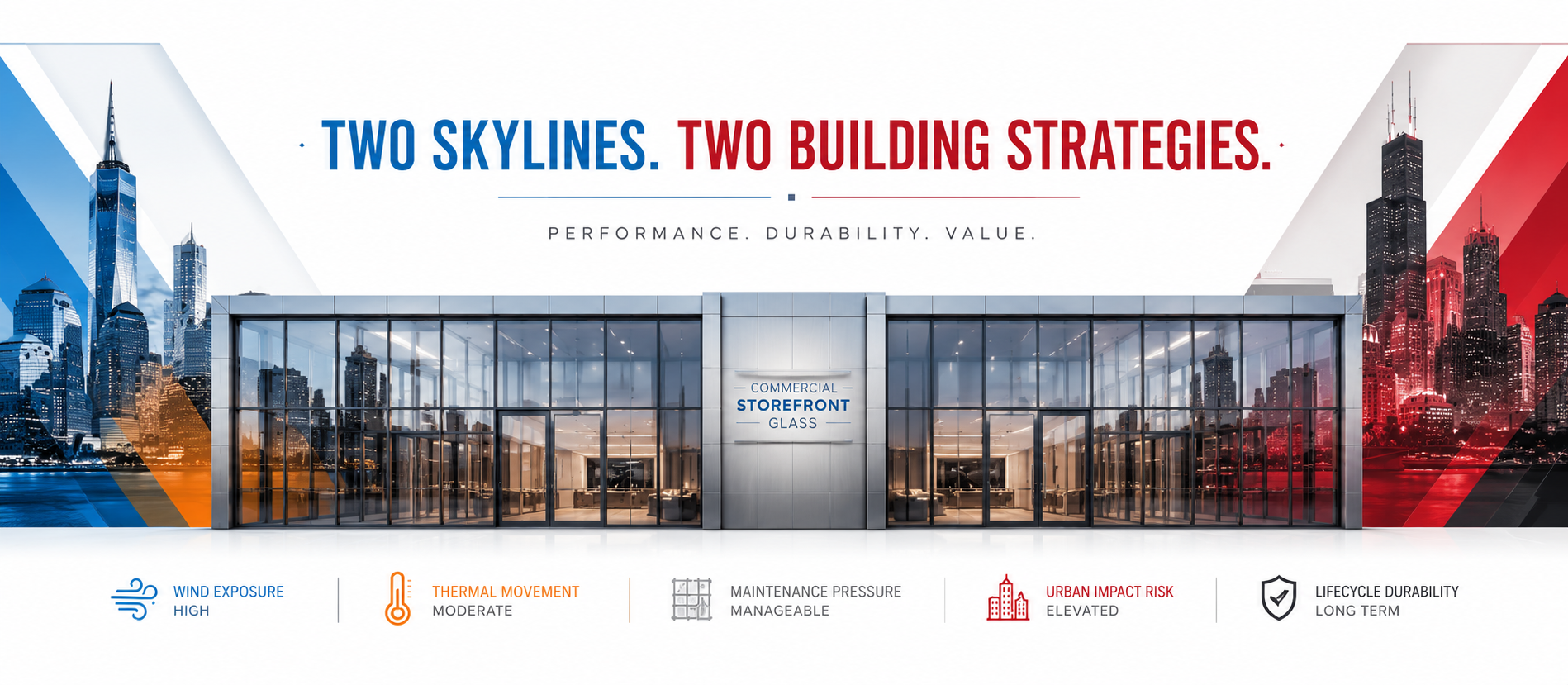
new york city vs chicago — building envelope performance and architectural glazing commercial storefront glass (4)

Visibility Drives Commercial Success

Many businesses depend on being seen.

Retail centers compete for attention.

Restaurants benefit from transparency.

Mixed-use developments thrive on pedestrian engagement.

As a result, storefront systems are frequently designed to create strong visual connections between interior spaces and the public realm.

Common Visibility Objectives

  • Increase customer awareness
  • Improve street-level presence
  • Support tenant success
  • Enhance property image
  • Encourage foot traffic
  • Strengthen brand perception

These priorities rarely exist in residential construction.

Most homeowners are not trying to attract customers through their windows.

Privacy Shapes Residential Design

Families often want the opposite experience.

Comfort matters.

Security matters.

Personal space matters.

Rather than maximizing exposure, residential windows frequently balance natural light with privacy.

Neighborhood conditions may influence placement.

Views can affect design decisions.

Lifestyle preferences often shape outcomes.

For this reason, residential windows typically serve a different purpose than commercial storefront systems.

Customer Experience Begins Before The Door Opens

First impressions influence behavior.

Exterior presentation affects perception.

Transparency creates openness.

Natural light contributes to comfort.

Consequently, storefront systems often become part of the customer experience itself.

Visitors frequently evaluate a business before entering.

Potential customers notice activity inside.

Pedestrians respond to inviting environments.

That relationship makes storefront systems an important part of commercial property strategy.

Residential windows rarely carry that responsibility.

Building Performance Means Different Things

The term building performance is used across both industries.

The measurement criteria often differ.

Commercial properties may evaluate:

  • Leasing performance
  • Tenant attraction
  • Customer engagement
  • Property image
  • Occupancy competitiveness
  • Long-term asset value

Homeowners usually focus on:

  • Comfort
  • Energy efficiency
  • Maintenance requirements
  • Lifestyle preferences
  • Indoor environment quality
  • Personal satisfaction

Neither approach is wrong.

Each reflects a different ownership model.
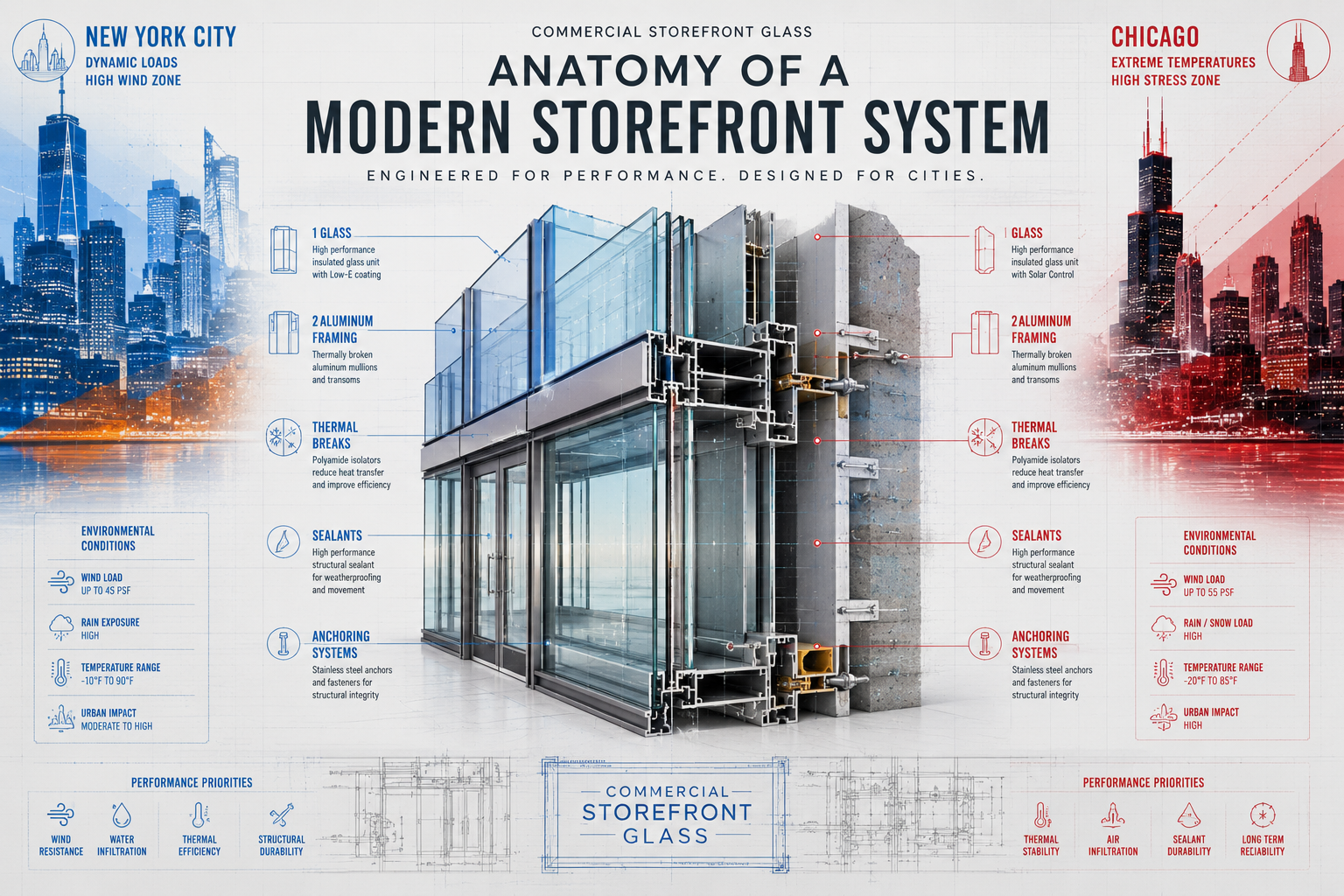
new york city vs chicago — building envelope performance and architectural glazing commercial storefront glass (2)

Scale Influences Design Decisions

Commercial storefront systems are often significantly larger than residential windows.

Retail properties may feature entire walls of glass.

Office buildings frequently incorporate expansive entrances.

Urban developments often rely on floor-to-ceiling glazing.

Greater visibility supports business objectives.

Larger openings create stronger connections with surrounding environments.

Residential construction generally operates at a different scale.

Individual rooms drive design decisions rather than customer-facing activities.

This distinction influences both appearance and performance expectations.

Leasing Performance Has No Residential Equivalent

Commercial properties function as income-producing assets.

Occupancy affects revenue.

Tenant retention influences stability.

Market perception impacts competitiveness.

Because storefront systems contribute to each of these factors, they often become part of broader leasing strategies.

Commercial Property Goals

Objective

Business Impact

Visibility

Customer awareness

Presentation

Property image

Transparency

Engagement

Modernization

Competitiveness

Tenant attraction

Occupancy

Customer experience

Business performance

Residential windows are not typically evaluated using these metrics.

The ownership objectives are entirely different.

Modernization Strategies Follow Different Paths

Commercial buildings evolve to remain competitive.

Retail centers pursue repositioning.

Office properties attract new tenants.

Mixed-use developments adapt to changing markets.

Storefront systems often play a central role in these efforts because they create immediate visual impact.

Meanwhile, residential window projects are usually driven by comfort, maintenance, aesthetics, or energy performance.

The motivations may appear similar on the surface.

The underlying objectives are fundamentally different.

Property Value Is Viewed Through Different Lenses

Commercial real estate often measures success through performance.

Revenue matters.

Occupancy matters.

Tenant quality matters.

Market competitiveness matters.

Consequently, storefront improvements are frequently evaluated as investments.

Residential ownership follows a different framework.

Lifestyle benefits matter.

Daily living matters.

Personal enjoyment matters.

Future resale value remains important, but quality of life often becomes the primary consideration.

That distinction shapes decision-making throughout the ownership cycle.

commercial storefront glass los angeles vs san francisco — tenant improvements and exterior building upgrades (3)

Building Activation Only Exists In Commercial Real Estate

Few concepts illustrate the difference more clearly than building activation.

Retail properties want activity.

Restaurants seek visibility.

Entertainment venues encourage interaction.

Mixed-use developments benefit from engagement.

Storefront systems help make those goals possible.

A residential property rarely needs to activate its surroundings.

The purpose is living, not attracting customers.

Because the objectives differ, the design priorities often move in opposite directions.

Key Differences At A Glance

Storefront Systems

  • Customer engagement
  • Street-level visibility
  • Tenant attraction
  • Property image
  • Leasing performance
  • Business activity

Residential Windows

  • Privacy
  • Comfort
  • Natural light
  • Energy efficiency
  • Lifestyle needs
  • Everyday living

The materials may look similar.

The mission behind them is completely different.

Purpose Determines Performance

Successful commercial properties are designed around business objectives.

Successful homes are designed around personal needs.

Visibility creates value in one environment.

Privacy creates value in the other.

Customer experience shapes storefront design.

Comfort influences residential decisions.

Understanding these differences helps explain why storefront systems and residential windows operate under completely different performance expectations.

Although both rely on glass, the outcomes they are designed to achieve could not be more different.