




Tenant Improvement Glass
Commercial Spaces Evolve As Tenants Change
Few commercial spaces remain unchanged forever.
Businesses grow.
Industries evolve.
Tenant needs shift over time.
As occupants move in and out of commercial properties, the space often requires modifications to support new operational goals.
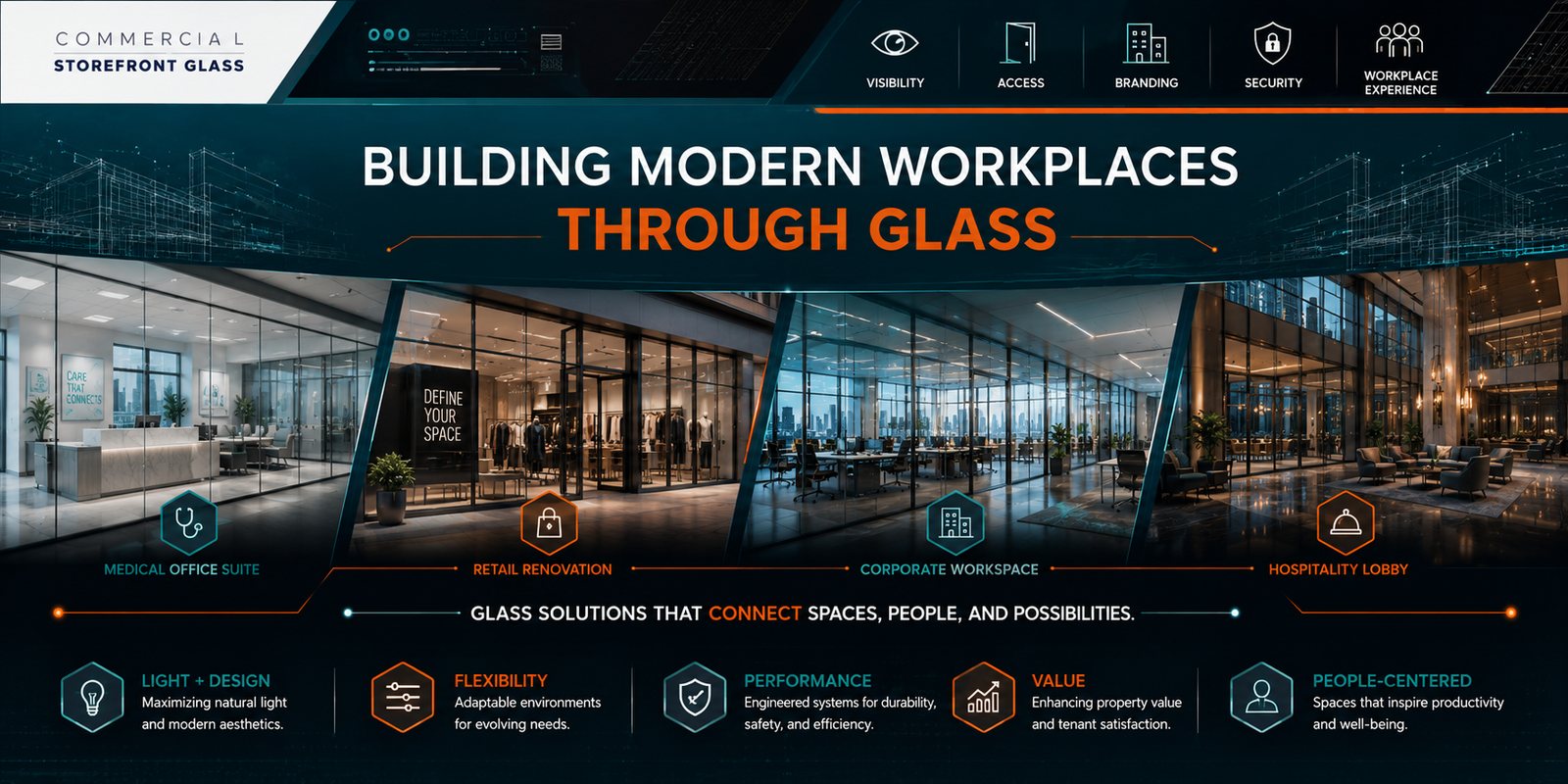
Tenant improvement glass helps transform commercial environments through storefront upgrades, interior glazing systems, entry modifications, and architectural improvements designed to align the property with new tenant requirements.
- Tenant Improvement Contractors
- Tenant Improvement Construction
- Tenant Improvement Build Outs
- Tenant Improvement Remodeling
- Tenant Improvement Renovations
- Commercial Tenant Improvement Services
- Office Tenant Improvement Contractor
These projects play an important role in leasing performance, property modernization, and long-term asset value.
Every Tenant Uses Space Differently
A law firm operates differently than a technology company.
A restaurant has different needs than a medical office.
Retailers prioritize visibility.
Professional offices often focus on workplace functionality.
- Retail Tenant Improvement Contractor
- Restaurant Tenant Improvement Contractor
- Medical Office Tenant Improvements
- Industrial Tenant Improvement Contractor
- Warehouse Tenant Improvements
- Tenant Improvement Allowance Guide
- Tenant Improvement Glass & Storefront Systems
- Tenant Improvement Project Planning
Because every tenant approaches space differently, glass systems frequently become part of the customization process.
Modern glazing solutions help create environments that better support how businesses operate.

Storefront Improvements For New Tenants
Many tenant improvement projects begin at the storefront.
Exterior presentation influences perception.
Brand identity often shapes design decisions.
Customer engagement depends on visibility.
As a result, incoming tenants frequently request storefront modifications designed to improve both appearance and functionality.
Updated storefront systems can help create stronger connections between the business and the surrounding community.
Interior Glass Systems
Tenant improvements often extend beyond the exterior.
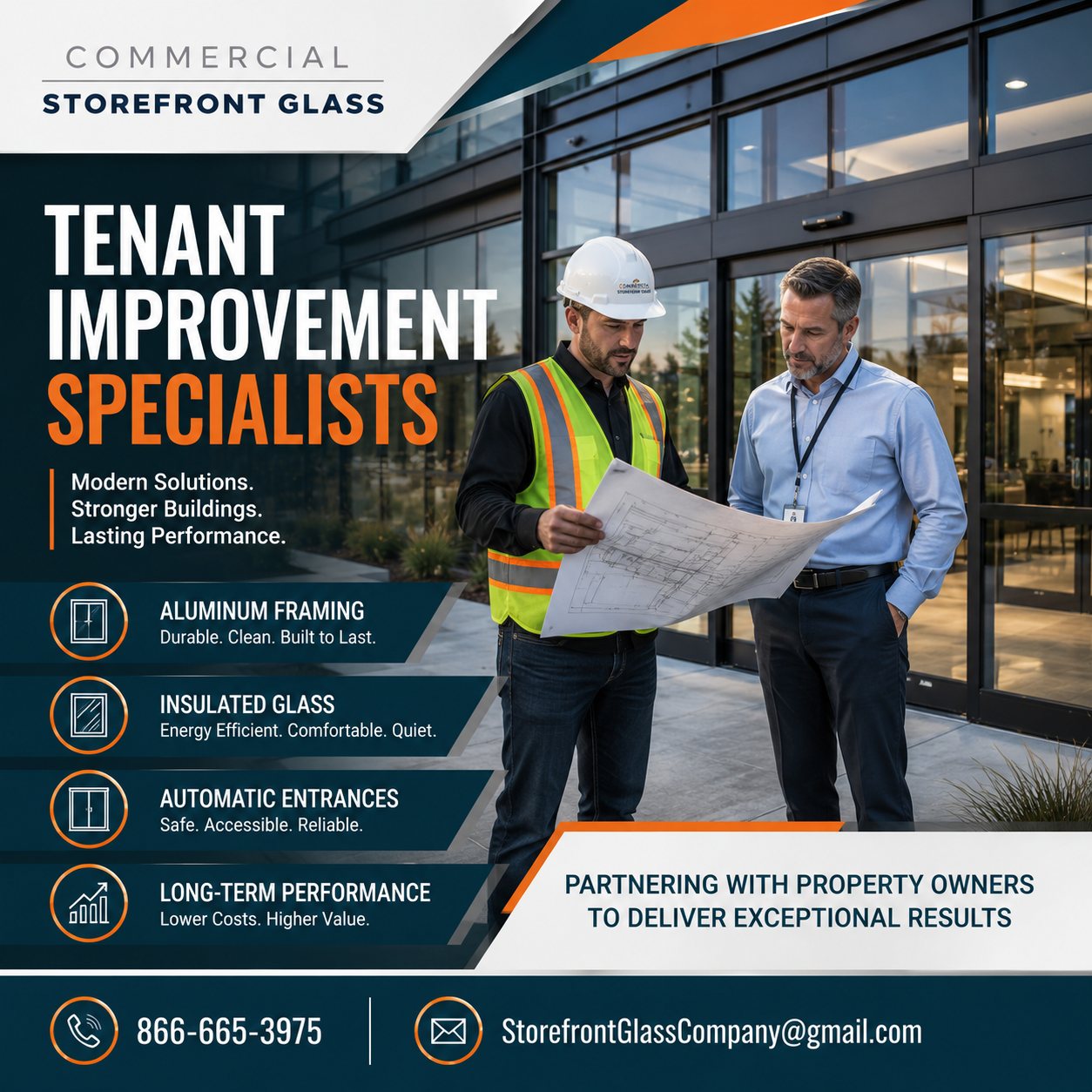
Modern workplaces increasingly rely on glass to create open and collaborative environments.
Natural light improves workplace quality.
Flexible layouts support evolving business needs.
Common Interior Applications
- Glass office fronts
- Conference room glass
- Interior glass partitions
- Reception areas
- Collaboration spaces
- Private office systems
These solutions help create contemporary environments while maintaining openness throughout the space.
Office Tenant Improvements
Professional office environments continue evolving.
Employee expectations change.
Workplace design priorities shift.
Organizations often seek brighter and more flexible spaces.
- Commercial Office Renovation
- Commercial Office Remodel
- Commercial Office Build Out
- Office Build Out Contractor
- Commercial Interior Renovation
- Commercial Space Renovation
- Office Space Renovation
Glass systems help support these objectives while contributing to a modern and professional appearance.
Many office improvement projects incorporate both storefront upgrades and interior glazing enhancements.
Retail Tenant Improvements
Retail businesses compete heavily for customer attention.
Visibility influences engagement.
Storefront presentation affects perception.
- Commercial Property Modernization
- Commercial Building Renovation
- Retail Store Build Out
- Restaurant Build Out Contractor
- Commercial Interior Construction
- Office Expansion Contractor
- Commercial Leasehold Improvements
- Commercial Space Conversion
Tenant improvement projects often focus on creating stronger customer experiences through updated storefront systems and improved exterior design.
These upgrades frequently become part of broader leasing and repositioning strategies.

Restaurant Build-Outs
Restaurants often require extensive customization.
Customer experience drives many design decisions.
Exterior visibility remains important.
Interior atmosphere influences perception.
- Office Reconfiguration
- Office Demolition & Rebuild
- Commercial Space Planning
- Office Relocation Renovations
- Corporate Office Upgrades
- Spec Suite Build Outs
- Medical Office Renovations
- Dental Office Build Outs
Glass systems can help create inviting dining environments while supporting natural light and street-level engagement.
Many restaurant build-outs incorporate storefront modifications as part of the overall concept.
Healthcare And Professional Services
Medical offices, healthcare facilities, and professional service providers often require specialized layouts.
Patient experience matters.
Privacy remains important.
Functionality influences design decisions.
Tenant improvement glass helps create environments that balance openness with operational requirements.

Supporting Leasing Performance
Vacant space creates challenges for property owners.
New tenants create opportunities.
The ability to adapt a property often influences leasing success.
- Veterinary Clinic Renovations
- Fitness Center Build Outs
- Hotel Lobby Renovations
- Bank Branch Renovations
- Retail Store Renovations
- Restaurant Renovations
- Commercial Building Repositioning
Because glass systems offer flexibility and visual impact, they frequently become an important part of tenant improvement projects.
Modernized spaces can help attract stronger tenants while supporting long-term occupancy goals.
Property Modernization And Repositioning
Tenant improvements often contribute to larger property objectives.
Building owners pursue modernization efforts.
Commercial properties evolve alongside changing market demands.
Exterior upgrades improve perception.
Interior improvements enhance functionality.
Together, these investments help support broader repositioning strategies.

Common Tenant Improvement Goals
- Improve leasing competitiveness
- Support new tenant requirements
- Modernize commercial spaces
- Enhance customer experience
- Increase workplace quality
- Improve property perception
These objectives frequently influence both design and construction decisions.
Flexibility Supports Long-Term Value
Commercial properties that adapt successfully often remain competitive longer.
Tenant expectations continue evolving.
Business models change.
Work environments develop new requirements.
Flexible glazing solutions help support future modifications while contributing to the long-term usefulness of the property.
Many ownership groups view tenant improvements as investments in future leasing opportunities.
Building Better Spaces For Future Occupants
Tenant improvement glass helps transform commercial environments to meet changing business needs.
Storefront systems improve visibility.
Interior glazing supports workplace quality.
Architectural upgrades contribute to modernization efforts.
Whether the project involves office space, retail environments, restaurants, healthcare facilities, professional services, or mixed-use developments, tenant improvement glass helps create spaces that support tenant success while strengthening long-term property performance.


