

Commercial Storefront Glass

Repair

Fast, reliable repairs for all types of commercial glass and storefronts.

Replacement

High-quality glass replacement for safety, security, and efficiency.

Installation

Professional installation for new construction and renovation projects.

Commercial Office Renovation

Commercial office renovation is one of the most effective ways for property owners, tenants, and developers to modernize existing buildings, improve employee experience, and increase the long-term value of commercial real estate assets. Whether updating a small professional suite, renovating an aging office tower, reconfiguring a corporate headquarters, or repositioning a suburban office campus, office renovations allow commercial spaces to adapt to changing business needs and workplace expectations.

Today’s office buildings must support collaboration, technology, flexibility, and employee well-being while remaining efficient and financially competitive. Companies increasingly demand spaces that provide natural light, modern infrastructure, energy efficiency, and adaptable layouts. As a result, commercial office renovations have become a major focus for landlords, facility managers, asset managers, and business owners throughout the United States.

For developers, commercial property owners, architects, engineers, facility managers, property managers, commercial brokers, and general contractors, successful office renovations require thoughtful planning, careful coordination, and a long-term strategy that extends beyond cosmetic improvements.


What Is a Commercial Office Renovation?

A commercial office renovation involves upgrading, remodeling, or reconfiguring an existing office space to improve functionality, aesthetics, and building performance.

Renovation projects can range from minor interior updates to complete building transformations.

Common office renovation projects include:

  • Corporate headquarters remodels
  • Professional office build-outs
  • Multi-tenant office renovations
  • Executive suite modernization
  • Lobby renovations
  • Conference room upgrades
  • Medical office renovations
  • Coworking space conversions
  • Office campus improvements
  • Mixed-use office developments

Every project is designed to meet the operational requirements of tenants while supporting the long-term goals of the property owner.

Why Companies Renovate Office Space

Businesses renovate office environments for many different reasons.

Common motivations include:

Accommodating company growth

Supporting hybrid work models

Improving employee retention

Increasing collaboration

Modernizing outdated spaces

Attracting new tenants

Enhancing energy efficiency

Upgrading technology infrastructure

Improving accessibility

Increasing property value

Modern office environments must remain competitive in a rapidly changing commercial real estate market.

Office Layout and Space Planning

One of the primary goals of an office renovation is to optimize how people use the space.

Common office improvements include:

  • Reception areas
  • Executive offices
  • Open workstations
  • Conference rooms
  • Break rooms
  • Training facilities
  • Collaboration zones
  • Wellness rooms
  • Private offices
  • Flexible workspaces

Thoughtful space planning helps improve productivity, employee satisfaction, and operational efficiency.

Workplace Trends Driving Office Renovations

The modern workplace continues to evolve, influencing how office renovations are designed and constructed.

Current trends include:

  • Hybrid work environments
  • Flexible workstations
  • Shared collaboration areas
  • Technology-enabled meeting rooms
  • Employee wellness spaces
  • Touchless building systems
  • Multipurpose rooms
  • Enhanced acoustics
  • Sustainable materials
  • Future-ready infrastructure

These trends encourage companies to rethink how office spaces function on a daily basis.


Commercial Storefront Glass and Office Design

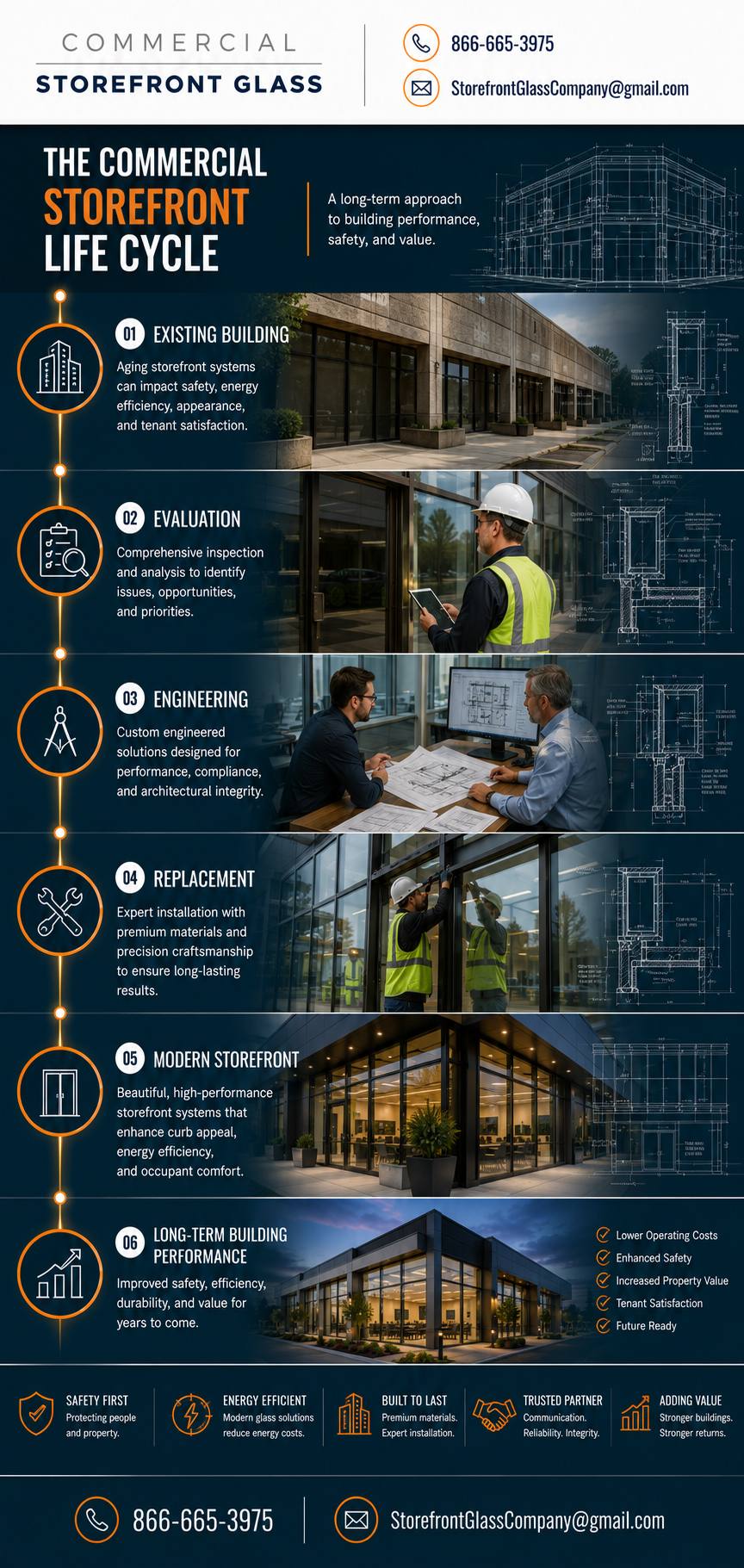
Commercial storefront glass is one of the most visible and influential components of modern office renovations. Exterior storefront systems and interior glazing contribute to aesthetics, energy performance, and employee experience.

Common office glazing systems include:

  • Aluminum storefront systems
  • Commercial entrances
  • Interior glass partitions
  • Conference-room glass
  • Reception-area glazing
  • Curtain walls
  • Insulated glass units
  • Safety glazing
  • Security glazing
  • Architectural glass systems

Large glass entrances and modern storefront systems improve natural daylight and create a welcoming first impression for employees and visitors. Interior glass walls promote collaboration while maintaining acoustic separation and privacy.

For many office properties, storefront modernization represents a major investment in both building performance and tenant attraction.

Building Infrastructure Improvements

Commercial office renovations frequently involve upgrades to major building systems.

Common infrastructure improvements include:

  • HVAC modernization
  • Electrical upgrades
  • Plumbing modifications
  • Fire protection systems
  • Building automation
  • Security systems
  • Access-control systems
  • Data infrastructure
  • Energy-efficient lighting
  • Indoor air-quality improvements

Modern infrastructure helps office buildings support changing technology requirements and improve long-term operational efficiency.

Lobby and Common Area Renovations

The lobby and common areas often define how tenants and visitors perceive an office building.

Popular improvements include:

Updated reception areas

Modern flooring and finishes

Digital directories

Collaborative seating areas

Architectural lighting

Decorative glass systems

Security upgrades

Elevator modernization

Enhanced wayfinding

Tenant amenities

These improvements can significantly increase tenant satisfaction and strengthen a building’s competitive position.

Renovating Occupied Office Buildings

Many office renovations take place while tenants continue to occupy portions of the building.

Successful renovation strategies often include:

  • Phased construction schedules
  • Weekend work
  • Night shifts
  • Temporary entrances
  • Dust containment systems
  • Noise management
  • Occupant communication
  • Temporary office relocations
  • Safety barriers
  • Detailed project sequencing

Careful planning helps minimize disruption and maintain productivity throughout the construction process.

Who Is Involved in an Office Renovation?

Commercial office renovations require coordination among numerous stakeholders.

Project teams commonly include:

  • Property owners
  • Developers
  • Asset managers
  • Facility managers
  • Property managers
  • Business owners
  • Commercial brokers
  • Architects
  • Engineers
  • Interior designers
  • General contractors
  • Specialty subcontractors

Clear communication between all parties is essential for keeping projects on budget and on schedule.


Important Planning Considerations

Before beginning an office renovation, project teams should evaluate several key factors.

Important considerations include:

  • Lease requirements
  • Employee growth projections
  • Budget limitations
  • Technology needs
  • Accessibility compliance
  • Energy-efficiency goals
  • Operational disruptions
  • Maintenance requirements
  • Security needs
  • Future expansion opportunities

Addressing these issues early reduces delays and helps avoid costly modifications later in the project.

Benefits of Commercial Office Renovation

Well-executed office renovations provide significant benefits for tenants and property owners alike.

Benefits include:

Improved employee productivity

Better tenant retention

Enhanced workplace culture

Increased operational efficiency

Lower operating costs

Improved energy performance

Higher lease values

Increased occupancy rates

Greater property value

Stronger long-term asset performance

These advantages help commercial office buildings remain competitive in evolving real estate markets.

Building the Office of the Future

Commercial office buildings continue to evolve as businesses adapt to new technologies, changing workplace expectations, and shifting economic conditions. Renovations allow existing properties to remain relevant without requiring entirely new construction.

For developers, property owners, facility managers, architects, engineers, commercial brokers, business owners, and general contractors, commercial office renovation represents an opportunity to improve building performance, strengthen tenant relationships, and create workplaces that support future growth.

Through thoughtful planning, modern infrastructure, commercial storefront glass, and strategic investment, office renovations continue shaping the future of commercial real estate across downtown business districts, suburban campuses, and mixed-use developments throughout the United States.