


Commercial Glass Entrances
Understanding Commercial Glass Entrances
Every commercial property has a front door.
Few building components receive more daily interaction.
Visitors encounter it first.
Employees use it repeatedly throughout the day.
Customers often form their initial impression before stepping inside.
Because of this visibility, commercial glass entrances play an important role in both building functionality and customer experience.
Across retail centers, office buildings, healthcare facilities, hospitality properties, universities, and mixed-use developments, entrance systems help shape how people interact with a property from the moment they arrive.

What Are Commercial Glass Entrances?
Commercial glass entrances are entry systems designed to provide access while contributing to the appearance and functionality of a building.
Glass serves as the primary visual element.
Framing systems provide structural support.
Hardware components allow daily operation.
Together, these elements create an entry experience that balances accessibility, visibility, durability, and architectural design.
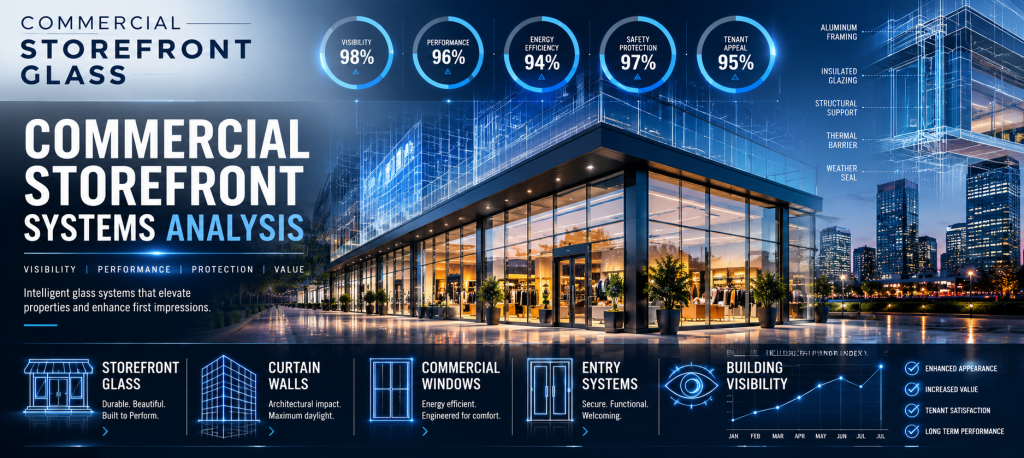
Most commercial properties incorporate entrance systems as part of a larger storefront or building facade.
First Impressions Begin At The Entrance
People notice entrances immediately.
A well-designed entry creates a welcoming appearance.
Visibility improves wayfinding.
Transparency helps connect exterior and interior environments.
For many businesses, the entrance represents the first physical interaction between the customer and the property.
That experience often influences perception before any service is provided.
Retail Entrance Systems
Retail properties depend heavily on customer engagement.
Foot traffic drives opportunity.
Visibility supports sales activity.
Convenient access improves the overall shopping experience.
Glass entrances help retailers create open and inviting storefronts while maintaining strong visual connections between interior spaces and surrounding pedestrian activity.
Many shopping centers view entrance design as a critical part of customer attraction strategies.
Office Building Entrances
Professional environments benefit from strong presentation.
Visitors evaluate building quality immediately.
Corporate image influences perception.
Architectural consistency helps strengthen branding.
Modern office developments frequently utilize glass entrances to create welcoming environments while supporting contemporary workplace design.
An attractive entry system often contributes to the overall identity of the property.
Healthcare Facility Entrances
Healthcare environments prioritize accessibility and comfort.
Patients frequently arrive under stressful circumstances.
Visitors need clear points of entry.
Medical campuses often incorporate extensive glazing to create brighter and more welcoming environments.
Well-designed entrance systems support both functionality and patient experience objectives.
Hospitality Property Applications
Guest experience begins long before check-in.
Arrival sets expectations.
Architectural presentation shapes perception.
Hotels and resorts frequently utilize glass entrances to create dramatic arrivals and visually appealing public spaces.
Transparency helps establish openness while contributing to a more inviting environment.
Universities And Institutional Buildings
Educational environments continue evolving.
Campus facilities frequently prioritize accessibility and visibility.
Students move through buildings throughout the day.
Visitors often rely on intuitive building navigation.
Commercial glass entrances help support those goals while contributing to a contemporary architectural appearance.
Many institutional projects incorporate extensive glazing throughout public-facing areas.
Integration With Storefront Systems
Entrance systems rarely function in isolation.
Most commercial properties integrate them into larger storefront assemblies.
Glass facades create visibility.
Entry doors provide access.
Architectural consistency strengthens overall appearance.
When designed together, storefronts and entrances help create a cohesive customer experience from the exterior to the interior environment.
Building Modernization And Entrance Upgrades
Properties must adapt to changing expectations.
Design trends evolve.
Customer preferences shift.
Ownership groups continue investing in visible improvements.
Entrance upgrades often become part of larger modernization efforts because they deliver immediate visual impact.
Improved access can enhance usability.
Updated aesthetics help strengthen property perception.
Many redevelopment projects prioritize entrances as part of broader facade improvements.
Commercial Properties And User Experience
Building performance extends beyond operations.
Occupant experience matters.
Customer convenience influences satisfaction.
Accessibility remains important.
Because entrances serve as the primary point of interaction with a property, they play a larger role than many people realize.
Successful systems help create a positive experience while supporting broader property objectives.
Commercial Glass Entrances Across Industries
Glass entrance systems support a wide variety of commercial property types:
- Retail Centers
- Office Buildings
- Healthcare Facilities
- Hospitality Properties
- Universities
- Corporate Campuses
- Airports & Transportation Facilities
- Government Buildings
- Mixed-Use Developments
- Redevelopment Projects
Each environment has unique requirements, yet the importance of accessibility, appearance, and user experience remains consistent.
The Value Of Commercial Glass Entrances
A commercial property is often judged before anyone enters the building.
Appearance influences perception.
Accessibility affects usability.
Design contributes to identity.
Glass entrance systems help bring those elements together while supporting the broader goals of the property.
Whether serving customers, employees, tenants, patients, students, or visitors, commercial glass entrances remain one of the most important features within the modern built environment.