

Commercial Storefront Glass

Repair

Fast, reliable repairs for all types of commercial glass and storefronts.

Replacement

High-quality glass replacement for safety, security, and efficiency.

Installation

Professional installation for new construction and renovation projects.

Industrial Tenant Improvement Contractor

Industrial tenant improvement contractors specialize in renovating, modernizing, and customizing warehouses, manufacturing plants, distribution centers, logistics facilities, flex spaces, and industrial campuses to meet the operational needs of tenants. As e-commerce, manufacturing, transportation, and supply-chain networks continue to expand throughout the Midwest and across the United States, industrial tenant improvements have become an essential part of commercial real estate development.

Unlike traditional office renovations, industrial projects must balance production requirements, warehouse operations, employee safety, equipment installation, and long-term facility performance. Whether converting an empty warehouse into a distribution center, building administrative offices within a manufacturing plant, or modernizing an industrial campus, industrial tenant improvement contractors coordinate complex construction projects while minimizing operational disruption.

For developers, industrial property owners, facility managers, property managers, logistics companies, manufacturers, architects, engineers, commercial brokers, business owners, and general contractors, experienced industrial tenant improvement contractors provide the expertise necessary to transform existing industrial space into productive, future-ready environments.


What Does an Industrial Tenant Improvement Contractor Do?

An industrial tenant improvement contractor manages the renovation and construction work required to customize industrial properties for specific business operations.

Typical responsibilities include:

  • Project planning
  • Budget development
  • Construction scheduling
  • Permit coordination
  • Site supervision
  • Trade management
  • Material procurement
  • Quality control
  • Safety oversight
  • Final inspections

Industrial projects often involve coordination between production teams, warehouse managers, engineers, and property owners to ensure that renovations align with operational goals.

Types of Industrial Tenant Improvement Projects

Industrial contractors work on a wide variety of commercial and manufacturing facilities.

Common project types include:

Warehouses

Distribution centers

Manufacturing plants

Logistics facilities

Flex spaces

Research and development facilities

Industrial office buildings

Cold storage facilities

Assembly plants

Industrial campuses

Each facility has unique requirements related to workflow, equipment, employee movement, and infrastructure.

Warehouse Office Build-Outs

Modern warehouses increasingly require administrative and support spaces integrated into daily operations.

Typical warehouse office improvements include:

  • Operations offices
  • Dispatch centers
  • Shipping departments
  • Human resources offices
  • Conference rooms
  • Employee break areas
  • Training facilities
  • Security offices
  • Quality-control departments
  • Executive suites

These spaces help improve communication between management teams and warehouse operations while supporting long-term growth.

Manufacturing Facility Improvements

Manufacturing environments often require specialized tenant improvements that support production efficiency and safety.

Common manufacturing improvements include:

  • Production management offices
  • Engineering departments
  • Equipment platforms
  • Employee support areas
  • Maintenance facilities
  • Tool rooms
  • Inventory-control spaces
  • Quality assurance departments
  • Supervisor offices
  • Training centers

Successful renovations must account for equipment layouts, production schedules, and future operational needs.


Distribution and Logistics Build-Outs

Distribution facilities rely on efficient workflows and reliable infrastructure.

Common logistics improvements include:

  • Shipping and receiving offices
  • Dispatch centers
  • Fleet-management offices
  • Security checkpoints
  • Driver support areas
  • Inventory management systems
  • Employee locker rooms
  • Conference facilities
  • Operations centers
  • Administrative offices

Industrial tenant improvement contractors help optimize these spaces to improve efficiency and reduce operational bottlenecks.

Commercial Storefront Glass and Industrial Office Design

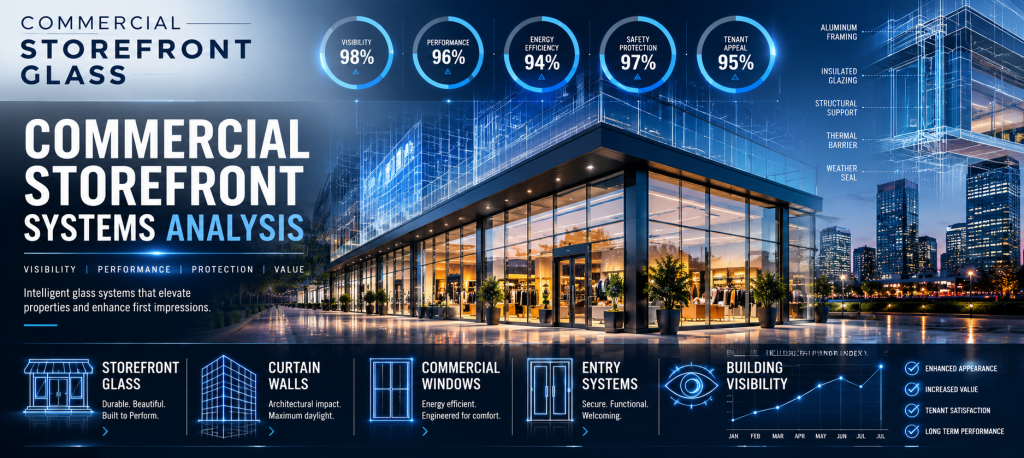
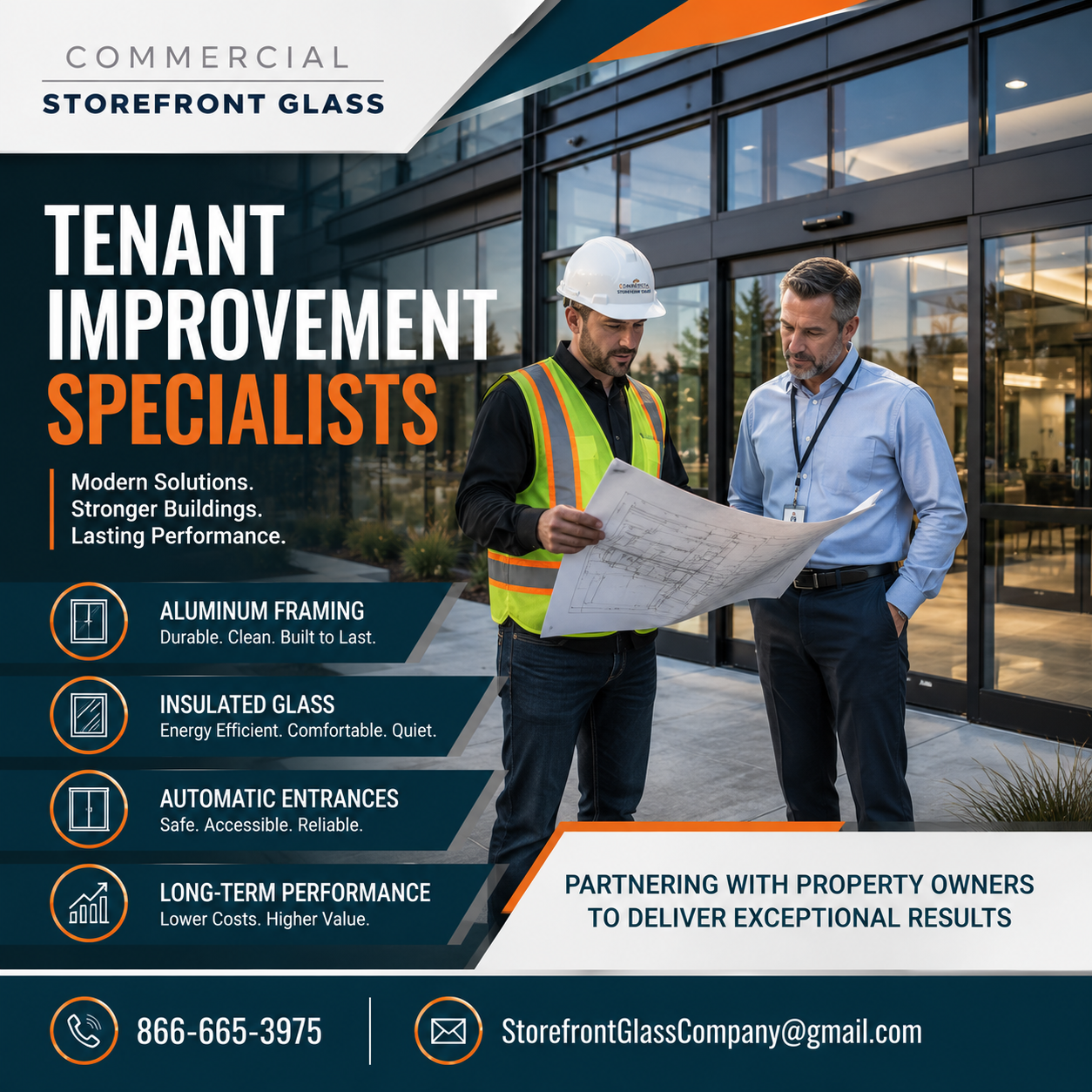
Commercial storefront glass has become an increasingly important feature within industrial office environments. Administrative offices, customer-facing areas, and employee spaces often incorporate architectural glass systems to create professional and modern work environments.

Common glazing applications include:

  • Aluminum storefront systems
  • Commercial entrance systems
  • Interior glass partitions
  • Reception-area glazing
  • Conference-room glass
  • Insulated glass units
  • Safety glazing
  • Security glazing
  • Architectural glass systems
  • Office observation windows

Modern storefront systems improve natural daylight, energy efficiency, and building appearance while strengthening the overall building envelope. Interior architectural glass creates open office environments that maintain visibility into warehouse and production operations while supporting privacy and collaboration.

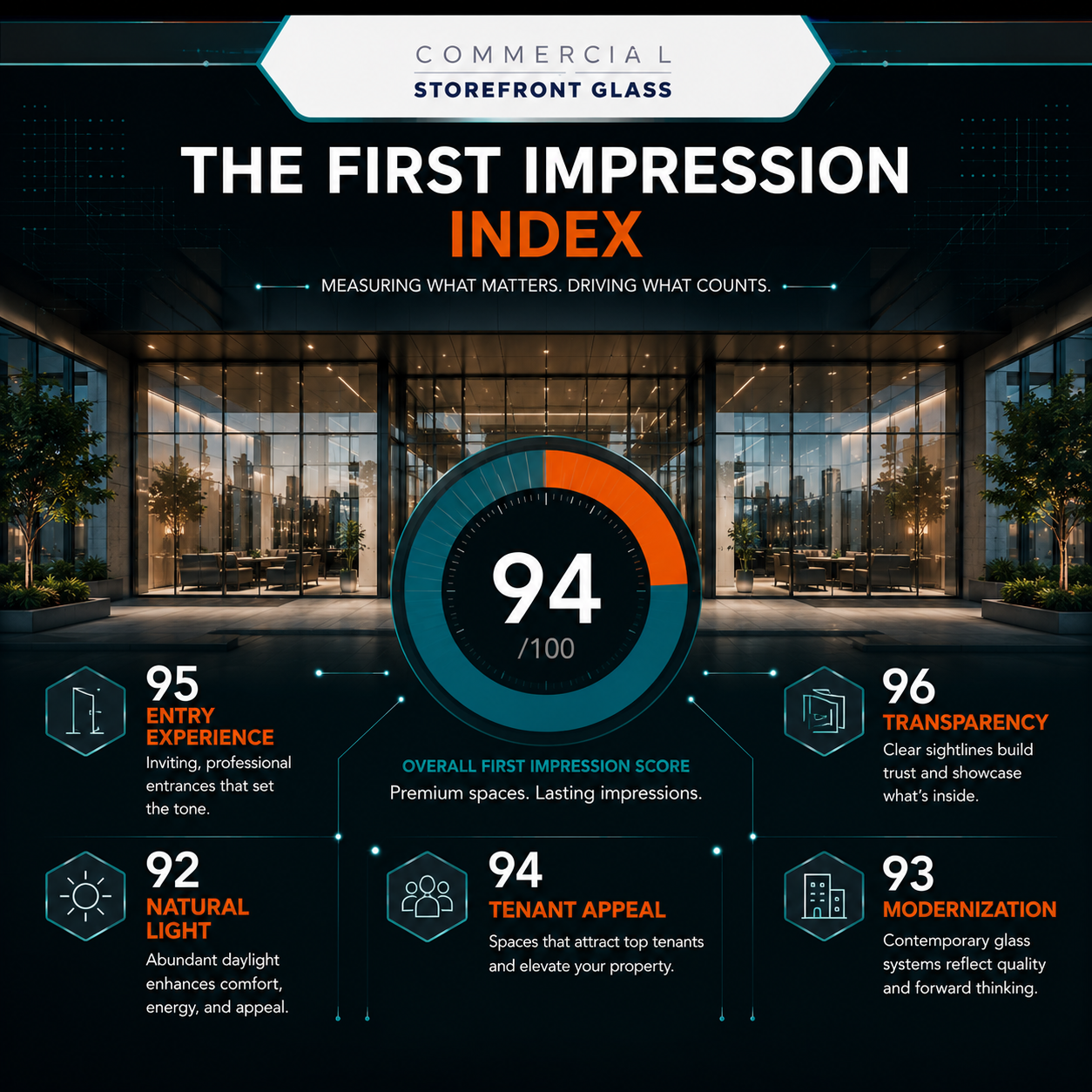
For many industrial properties, upgraded entrances and office spaces also improve employee experience and create a stronger impression for customers, vendors, and visitors.

Industrial Infrastructure and Building Systems

Industrial tenant improvements often require extensive upgrades to support specialized operations.

Common infrastructure improvements include:

  • HVAC modernization
  • Electrical upgrades
  • Plumbing modifications
  • Fire protection systems
  • Compressed air systems
  • Building automation
  • Security systems
  • Access-control systems
  • Energy-efficient lighting
  • Data and communications infrastructure

Modern infrastructure improves operational reliability while supporting future expansion and technological upgrades.

Renovating Occupied Industrial Facilities

Many industrial renovations occur while production lines, warehouses, and distribution centers remain operational.

Successful strategies often include:

Phased construction schedules

Weekend work

Night shifts

Temporary work areas

Dust containment

Noise management

Safety barriers

Occupant communication

Equipment protection

Detailed sequencing

These approaches help minimize disruption while maintaining business continuity throughout the construction process.

Who Hires Industrial Tenant Improvement Contractors?

Industrial contractors work with a broad range of clients across multiple industries.

Common clients include:

  • Industrial property owners
  • Manufacturers
  • Logistics companies
  • Distribution operators
  • Facility managers
  • Property managers
  • Asset managers
  • Commercial brokers
  • Investors
  • General contractors

Each stakeholder has different priorities related to productivity, safety, operating costs, and long-term asset value.


Important Considerations Before Starting an Industrial Renovation

Industrial projects require extensive planning and coordination before construction begins.

Key considerations include:

  • Production schedules
  • Warehouse workflows
  • Equipment requirements
  • Utility capacity
  • Employee safety
  • Accessibility standards
  • Energy efficiency goals
  • Security requirements
  • Maintenance planning
  • Future expansion opportunities

Addressing these factors early helps reduce delays and improve overall project performance.

Benefits of Professional Industrial Tenant Improvements

Well-executed industrial renovations provide long-term benefits for both tenants and property owners.

Benefits include:

  • Improved operational efficiency
  • Better employee productivity
  • Enhanced workplace safety
  • Lower operating costs
  • Increased energy performance
  • Greater space utilization
  • Modernized infrastructure
  • Increased property value
  • Improved tenant retention
  • Stronger long-term asset performance

These advantages help industrial facilities remain competitive in an increasingly complex economy.

Building the Future of Industrial Real Estate

Industrial buildings continue evolving as manufacturing, logistics, automation, and distribution networks expand throughout the country. Industrial tenant improvement contractors help property owners and businesses adapt existing facilities to meet changing operational requirements without the need for entirely new construction.

For developers, industrial property owners, facility managers, property managers, architects, engineers, commercial brokers, manufacturers, logistics companies, and general contractors, successful industrial tenant improvements require thoughtful planning, specialized infrastructure, and experienced construction management. Through warehouse office build-outs, commercial storefront glass, modern building systems, and coordinated project execution, industrial tenant improvement contractors continue shaping the future of industrial real estate across the United States.