


Commercial Storefront Glass

Commercial Glass Systems vs Residential Window Systems — Building Performance And Ownership Objectives

Similar Products. Different Business Models.

Glass is used in commercial and residential construction every day.

The ownership objectives behind those projects are rarely the same.

A retail center depends on customer visibility.

An office building focuses on tenant attraction.

A mixed-use development balances multiple forms of occupancy.

Meanwhile, homeowners typically prioritize comfort, privacy, views, and everyday living.

Because the purpose of the property changes, the way glass systems are evaluated changes as well.

What works for a residence may not align with the goals of a commercial asset.

Understanding that distinction helps explain why commercial glass systems and residential window systems often follow very different design, maintenance, and investment strategies.

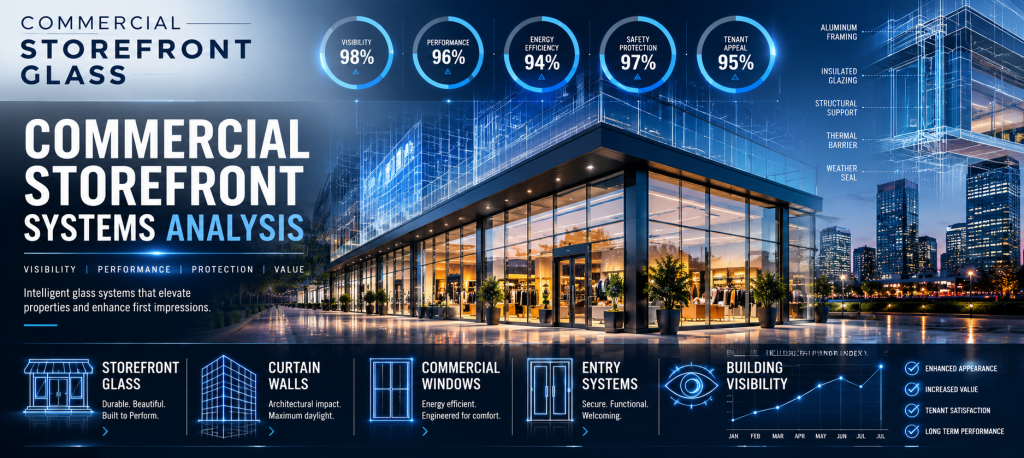
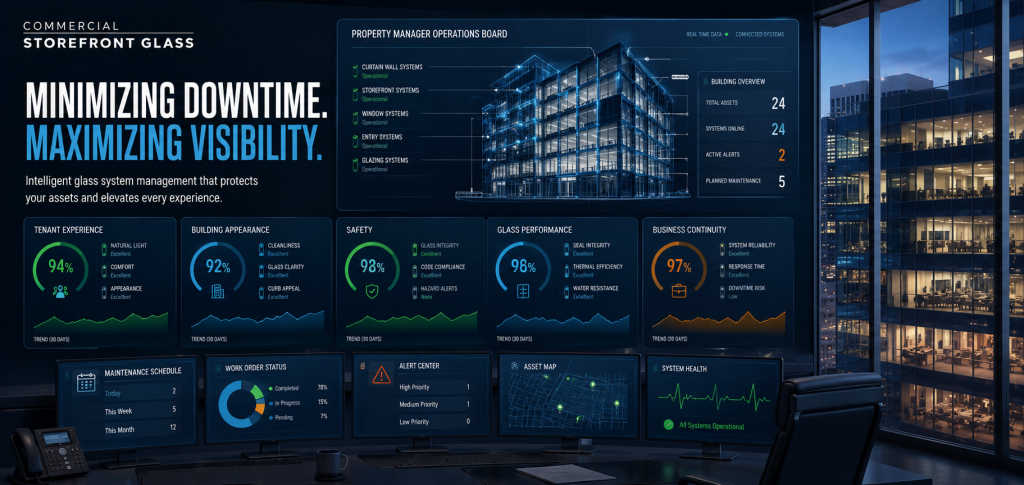
denver vs phoenix — storefront energy efficiency and commercial glass systems repair & replacement (11)

Commercial Buildings Operate As Assets

Most commercial properties are expected to generate value.

Revenue matters.

Occupancy matters.

Tenant retention influences performance.

Property image affects competitiveness.

As a result, glass systems are often evaluated through a business lens rather than a personal one.

Visibility can support leasing.

Natural light may improve tenant experience.

Exterior presentation frequently influences market perception.

Together, these factors contribute to overall property performance.

Common Commercial Objectives

  • Improve tenant attraction
  • Support leasing performance
  • Enhance visibility
  • Strengthen property image
  • Improve customer experience
  • Protect long-term value

These priorities frequently shape glazing decisions.

Residential Ownership Focuses On Living

A home serves a very different purpose.

Family needs influence decisions.

Comfort affects design choices.

Lifestyle preferences shape outcomes.

Rather than generating income, residential properties are designed to support everyday life.

Views often matter.

Privacy frequently becomes a priority.

Energy efficiency can influence purchasing decisions.

Those objectives create a different framework for evaluating window systems.

Building Performance Has Different Meanings

The phrase building performance appears throughout both industries.

The definition changes depending on the owner.

Commercial real estate often measures performance through operational outcomes.

Occupancy influences value.

Tenant satisfaction affects competitiveness.

Property perception can impact leasing activity.

Residential ownership usually focuses on a different set of goals.

Indoor comfort matters.

Maintenance requirements matter.

Long-term livability often becomes a central concern.

Because the desired outcomes differ, the systems frequently evolve in different ways.

Visibility Creates Opportunity In Commercial Real Estate

Many commercial properties depend on public interaction.

Retailers benefit from exposure.

Restaurants rely on awareness.

Mixed-use developments often thrive on street-level activity.

For these reasons, commercial glass systems frequently prioritize transparency and visibility.

Visibility Benefits

Commercial Properties

Residential Properties

Customer awareness

Privacy

Tenant attraction

Comfort

Property image

Personal preference

Street presence

Residential character

Customer engagement

Family needs

Leasing support

Everyday living

The same material can support completely different objectives.
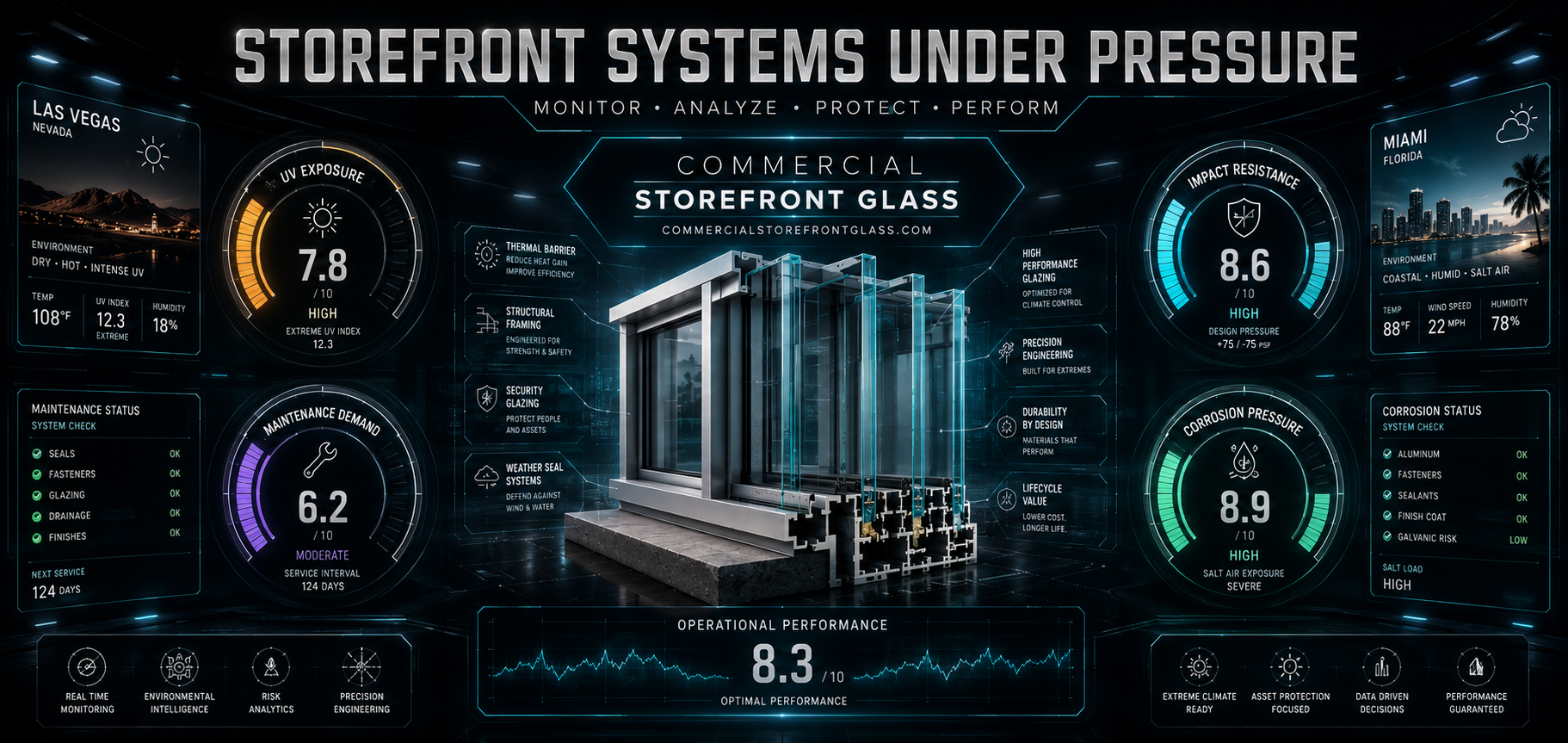
commercial glass replacement las vegas vs miami — storefront security and facade maintenance (1)

Customer Experience Influences Commercial Design

Visitors form opinions quickly.

Exterior presentation shapes perception.

Natural light often improves interior environments.

Transparency can create a more welcoming atmosphere.

Because customer experience contributes to business success, commercial glass systems are frequently designed with interaction in mind.

Residential window systems rarely carry that responsibility.

The focus is usually personal rather than public.

That distinction influences both design and performance expectations.

Lifecycle Planning Plays A Larger Role In Commercial Ownership

Property managers evaluate buildings differently than homeowners.

Maintenance schedules matter.

Capital planning influences decisions.

Future replacement costs affect long-term budgeting.

Commercial ownership frequently views glass systems through a lifecycle framework.

Questions often include:

  • How will the system perform over time?
  • What maintenance will be required?
  • How will future upgrades affect operations?
  • What impact could replacement have on tenants?

Residential projects may consider similar factors, but the analysis is typically less extensive.

Modernization Strategies Follow Different Paths

Commercial buildings evolve to remain competitive.

Retail centers pursue repositioning.

Office properties attract new tenants.

Mixed-use developments adapt to changing markets.

Consequently, glazing improvements are often tied to modernization efforts.

Residential upgrades usually emerge from different motivations.

Lifestyle changes may drive renovations.

Aesthetic preferences often influence decisions.

Comfort improvements frequently become the primary goal.

The work may appear similar from the outside.

The ownership objectives behind it are not.

Property Value Is Measured Differently

Commercial real estate functions as an investment asset.

Revenue generation matters.

Occupancy matters.

Competitiveness matters.

Because glass systems can influence these outcomes, ownership groups frequently evaluate them through a performance lens.

Homeowners often view value differently.

Quality of life influences decisions.

Personal enjoyment plays a larger role.

Long-term comfort frequently becomes just as important as future resale potential.

Those priorities shape how investments are made.

Scale Influences System Requirements

Commercial projects often involve larger openings.

Retail environments may use expansive storefront systems.

Office buildings frequently incorporate significant glazing areas.

Mixed-use developments can span entire city blocks.

Greater scale introduces additional considerations.

Maintenance planning becomes more important.

Performance expectations increase.

Long-term durability receives greater scrutiny.

Residential projects generally operate under a different set of requirements.
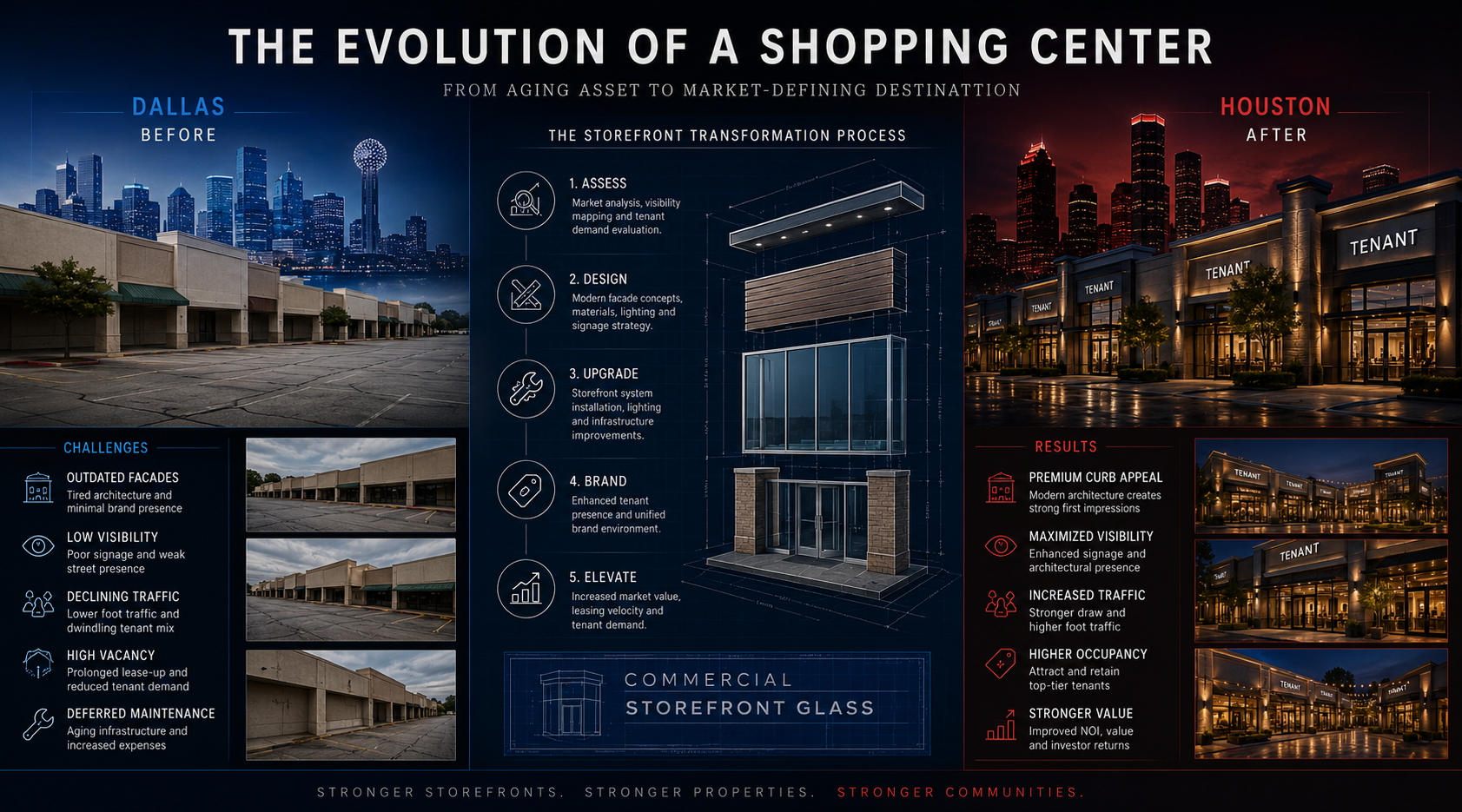
dallas vs houston — shopping center upgrades and property repositioning commercial storefront glass replacement (2)

Ownership Objectives Determine Design Priorities

A homeowner and a property manager rarely evaluate glass in the same way.

One may focus on comfort and views.

The other may focus on occupancy and asset value.

Neither perspective is wrong.

Each reflects the purpose of the property.

Because ownership goals influence decision-making, commercial and residential systems often arrive at different solutions even when using similar materials.

Key Differences At A Glance

Commercial Glass Systems

  • Tenant attraction
  • Leasing performance
  • Property image
  • Customer engagement
  • Building performance
  • Asset value

Residential Window Systems

  • Comfort
  • Privacy
  • Lifestyle quality
  • Energy efficiency
  • Personal preference
  • Daily living

The materials may appear similar.

The ownership objectives behind them are fundamentally different.

Purpose Ultimately Shapes Performance

Glass does more than allow light into a building.

Commercial systems help support visibility, tenant attraction, customer experience, and long-term asset performance.

Residential window systems are designed to improve comfort, privacy, and everyday living.

One contributes to business outcomes.

The other supports personal outcomes.

Understanding that distinction helps explain why commercial glass systems and residential window systems are often evaluated through completely different performance frameworks despite sharing many of the same materials and technologies.