




Architectural glass has become one of the defining features of modern commercial construction.
Skylines are shaped by it.
Building identities often depend on it.
Occupant experience is frequently influenced by it.
Across office towers, healthcare facilities, hospitality properties, universities, mixed-use developments, and retail environments, architectural glass helps create buildings that are both functional and visually distinctive.
What was once viewed primarily as a building material now plays a central role in design, modernization, and long-term property strategy.
- Tenant Improvement Contractors
- Tenant Improvement Construction
- Tenant Improvement Build Outs
- Tenant Improvement Remodeling
- Tenant Improvement Renovations
- Commercial Tenant Improvement Services
- Office Tenant Improvement Contractor
The General Contractor (GC) Perspective
How They Perceive It: The GC views architectural glass as a high-liability, zero-tolerance specialty trade defined by extended fabrication lead times and complex engineering handoffs. Unlike standard off-the-shelf storefront framing, architectural glass packages—such as point-supported spider fittings, structural glass fins, curved/bent panels, switchable smart glass, and heavy laminated glass guardrails—push structural tolerances to their absolute limit. To the GC, every custom panel represents a potential scheduling bottleneck: if a single oversized, triple-laminated, low-iron lite is miscut, scratched on-site, or fractures during crane hoisting, the lead time on a replacement from specialized tempering furnaces can stall the entire job for 6 to 12 weeks.
Decisions They Normally Make:
Treats custom architectural glass tolerances like standard framing trades: Assumes structural steel and concrete subcontractors will deliver rough openings within 1/8-inch tolerances, leading to field clashes when rigid, pre-drilled structural glass fittings arrive and fail to align with misaligned embeds.
Attempts to value-engineer low-iron (opti-white) glass back to standard clear float glass: Proposes swapping specified low-iron glass for standard clear glass to cut costs, unaware that thicker heavy glass (1/2″ to 3/4″ or multi-ply laminates) turns visibly green at the edges and distorts the architect’s intended interior color palette.
Defers crane, glass suction rig, and rigging logistics to the last minute: Fails to reserve high-capacity glass manipulators (e.g., vacuum lifters, spider cranes) and wide interior access routes early, resulting in site gridlock when multi-hundred-pound architectural panels cannot be safely transported to their installation point.
Decisions They SHOULD Make:
Mandate 3D Building Information Modeling (BIM) coordination and on-site laser scanning: Scan concrete slabs, structural steel, and curtain wall anchor embeds before releasing architectural glass fabrication tickets, verifying point-fitting coordinates and glass edge clearances down to the millimeter.
Pre-order critical attic stock for custom, long-lead panels: Budget for and fabricate spare lites of long-lead curved, patterned, or oversized structural panels during the primary production run to prevent a single accidental field fracture from blowing past the project’s critical completion date.
Enforce rigorous pre-installation trade coordination for smart and structural glass: Align the commercial glazing sub, electrical low-voltage trades, and structural steel erectors during pre-construction to establish exact raceways, transformer locations, and dead-load deflection limits for canopies, fins, and electrochromic panels.

The Commercial Tenant Perspective
How They Perceive It: The commercial tenant (high-end corporate headquarters, luxury retailer, flagship showroom, or upscale hospitality venue) perceives architectural glass as the defining centerpiece of their brand identity, interior prestige, and architectural statement. They view heavy glass feature walls, frameless glass stairs, backlit etched panels, and acoustic conference enclosures as physical manifestations of innovation, transparency, and high-end design. They are less focused on deflection engineering or inter-story drift; they care about visual perfection, uninterrupted light transmission, speech privacy, and creating a memorable space that impresses clients, investors, and top talent.
Decisions They Normally Make:
Selects heavy, frameless glass office fronts without acoustic interlayers: Prioritizes ultra-clean, minimalist frameless glass partitions for executive suites and boardrooms, only to realize later that standard monolithic tempered glass leaks sound, eliminating private client and executive confidentiality.
Overlooks maintenance, touch-points, and fingerprint upkeep: Installs massive, clear architectural glass entries or interior dividers without anti-fingerprint/oleophobic coatings or integrated push rails, forcing internal cleaning staff to battle constant smudges, streaks, and surface wear.
Omits integrated solar and glare management for statement glass: Demands oversized decorative glass atriums or floor-to-ceiling perimeter architectural features without evaluating interior solar glare, resulting in washed-out presentation screens, reflective hot spots, and uncomfortable occupant workstations.
Decisions They SHOULD Make:
Specify acoustic laminated glass (PVB/EVA acoustic interlayers) for interior partitions: Insist on multi-layer acoustic architectural glass (STC 38–42+) paired with drop-down perimeter acoustic door seals, retaining the open, light-filled aesthetic while ensuring complete conference room speech privacy.
Insist on low-iron glass with surface protection for high-visibility areas: Mandate low-iron glass for all feature stairs, display cases, glass fins, and decorative back-painted feature walls to eliminate the green edge cast, and apply factory-cured hydrophobic/oleophobic protective coatings to reduce daily maintenance.
Balance aesthetic transparency with functional privacy via switchable or etched glass: Incorporate gradient acid-etched patterns, switchable privacy smart glass (PDLC), or architectural fluted/reeded glass into conference rooms and executive areas to provide visual discretion while maintaining natural light flow across the floor plate.
- Retail Tenant Improvement Contractor
- Restaurant Tenant Improvement Contractor
- Medical Office Tenant Improvements
- Industrial Tenant Improvement Contractor
- Warehouse Tenant Improvements
- Tenant Improvement Allowance Guide
- Tenant Improvement Glass & Storefront Systems
- Tenant Improvement Project Planning
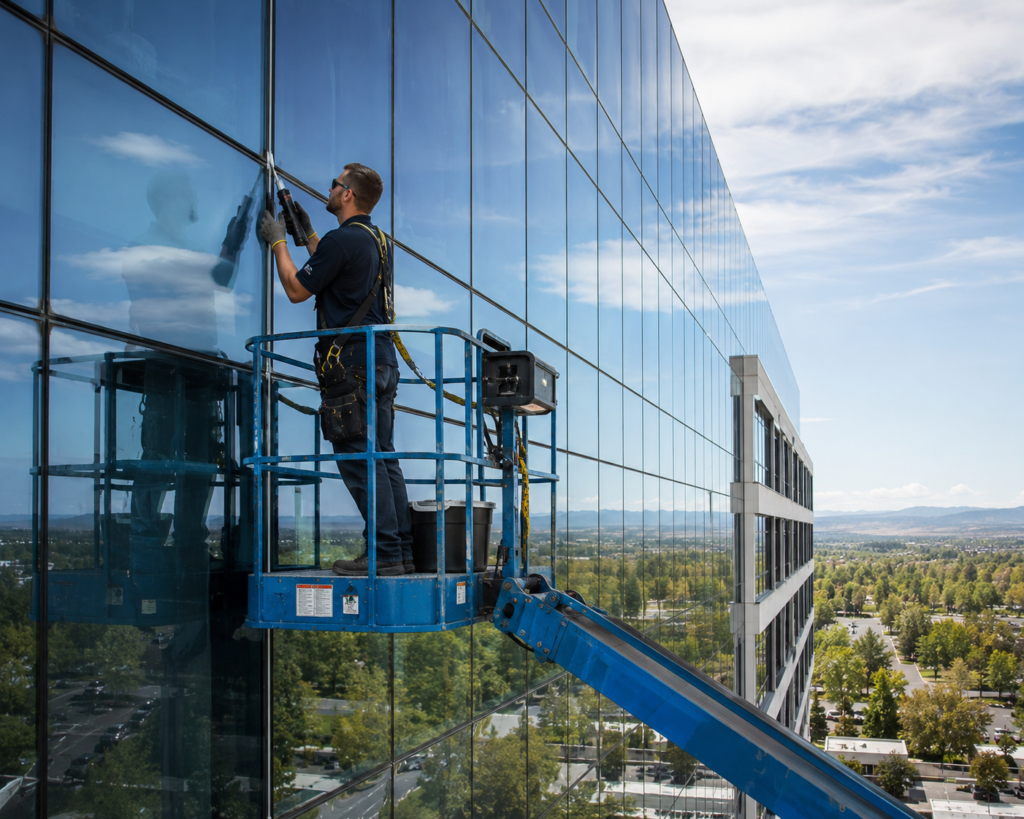
Large-scale curtain wall systems represent one of the most common architectural glass applications.
Office towers frequently rely on them.
Healthcare campuses incorporate them.
Hospitality properties often use them to strengthen guest experience.
Extensive glazing creates clean architectural lines while helping buildings establish a distinctive visual presence.
For many developments, the curtain wall becomes the face of the property.
- Commercial Property Modernization
- Commercial Building Renovation
- Retail Store Build Out
- Restaurant Build Out Contractor
- Commercial Interior Construction
- Office Expansion Contractor
- Commercial Leasehold Improvements
- Commercial Space Conversion
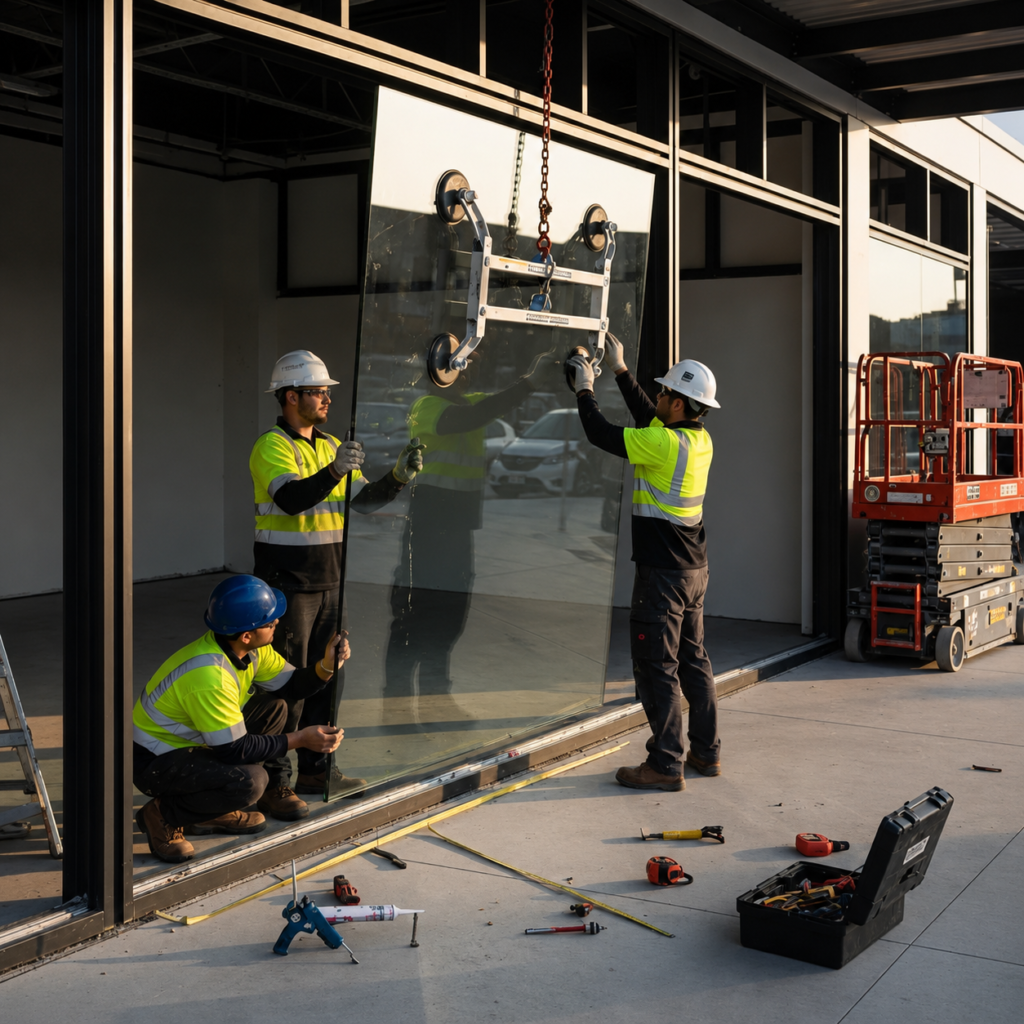
Street-level design influences customer engagement.
Visibility supports retail performance.
Exterior presentation affects perception.
Architectural storefront systems help businesses create inviting environments while contributing to broader property aesthetics.
Many mixed-use developments utilize storefront glazing to activate pedestrian spaces and improve the overall customer experience.
- Office Reconfiguration
- Office Demolition & Rebuild
- Commercial Space Planning
- Office Relocation Renovations
- Corporate Office Upgrades
- Spec Suite Build Outs
- Medical Office Renovations
- Dental Office Build Outs
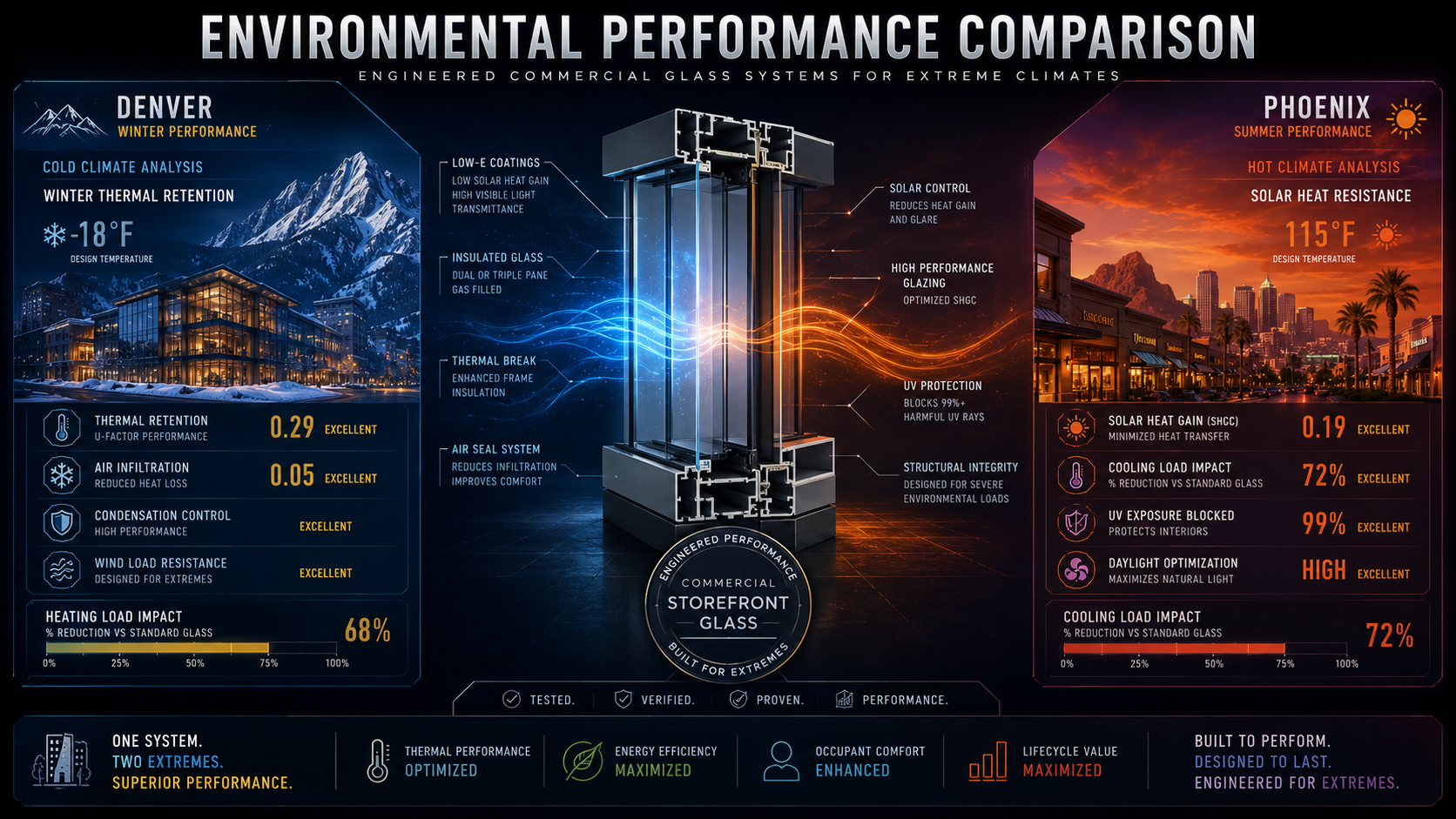
Different industries utilize architectural glass in different ways.
Office buildings often focus on workplace quality and tenant attraction.
Healthcare facilities emphasize comfort and modern design.
Hotels seek to enhance guest experience.
Retail properties prioritize visibility and engagement.
Universities frequently incorporate glass to create contemporary learning environments.
Despite those differences, the goal remains consistent: creating spaces that perform well while making a strong visual statement.
- Veterinary Clinic Renovations
- Fitness Center Build Outs
- Hotel Lobby Renovations
- Bank Branch Renovations
- Retail Store Renovations
- Restaurant Renovations
- Commercial Building Repositioning

New development increasingly relies on glazing as a core design element.
Mixed-use projects incorporate extensive glass facades.
Corporate campuses emphasize transparency and daylight.
Healthcare environments prioritize welcoming public spaces.
Hospitality developments utilize glazing to strengthen guest experiences.
Across nearly every property category, architectural glass remains central to contemporary development strategies.
