


San Rafael vs Palo Alto — Which Market Is Replacing More Commercial Glass?
Two Bay Area Markets Following Different Upgrade Cycles
Commercial glass replacement remains active throughout Northern California.
Yet replacement activity rarely follows the same pattern from one market to another.
Some properties modernize to improve customer experience.
Others invest to support tenant attraction and workplace performance.
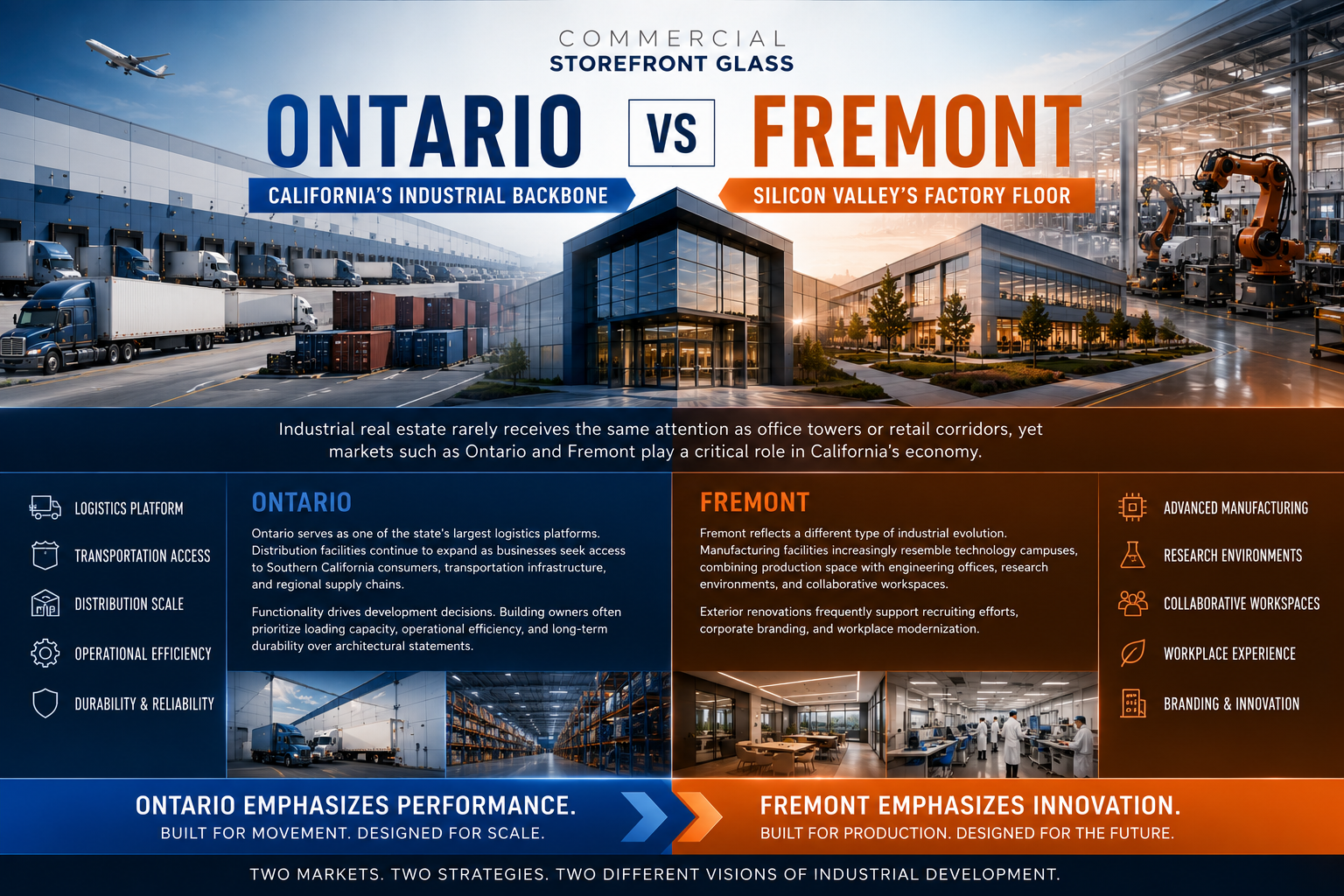
San Rafael and Palo Alto provide an interesting comparison because both continue upgrading commercial buildings while operating under very different economic conditions.
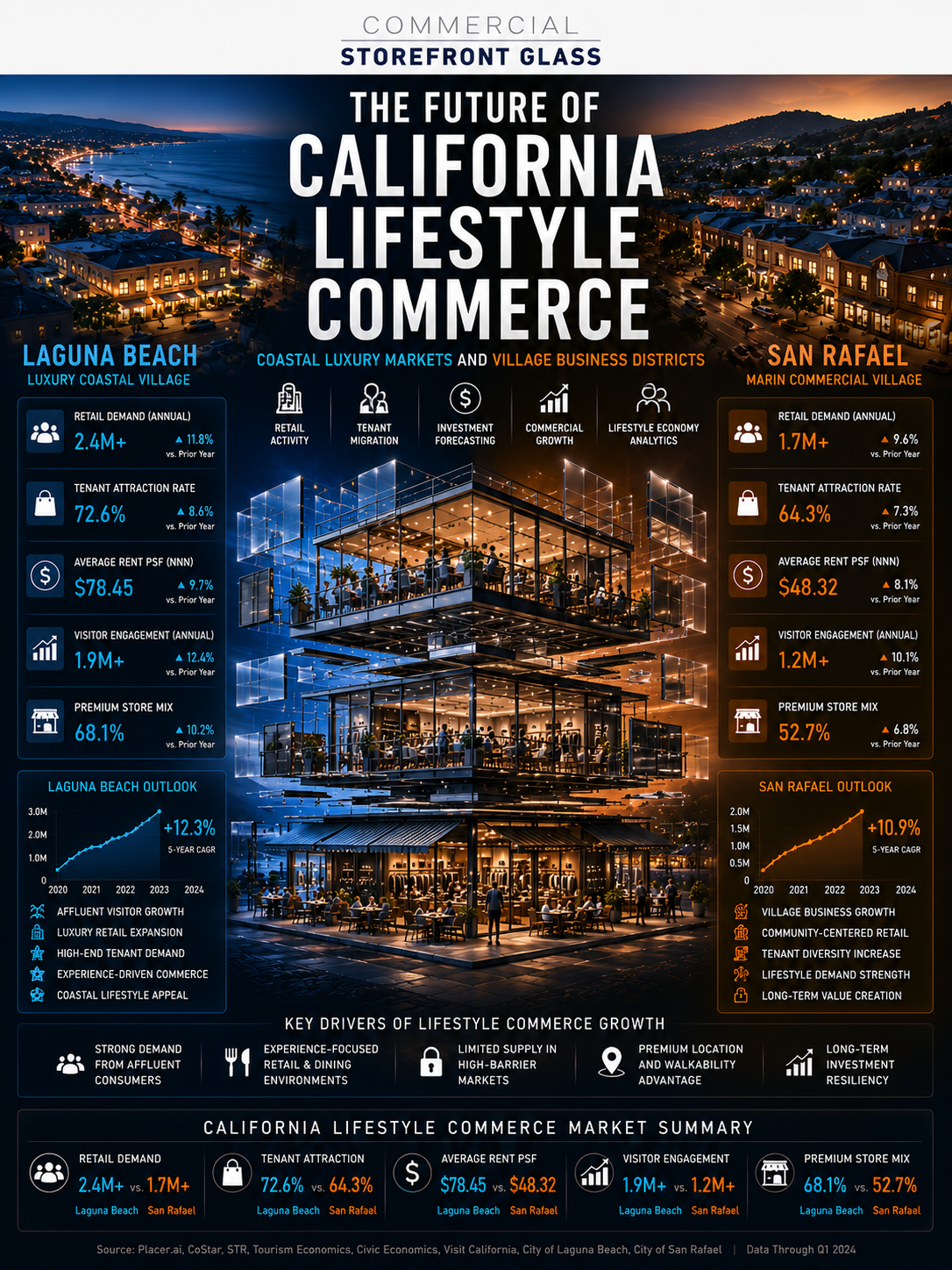
One serves as Marin County’s primary commercial center.
The other sits at the heart of Silicon Valley.
Those differences often influence how and why replacement projects occur.
Market Snapshot
San Rafael
- Marin County’s largest commercial hub
- Established retail corridors
- Medical and professional office concentration
- Downtown revitalization efforts
- Growing mixed-use development activity
Palo Alto
- Global technology center
- Research and innovation economy
- High-value office inventory
- University and startup influence
- Continuous workplace modernization
Commercial glass replacement remains active in both locations.
However, investment drivers frequently differ.
Why San Rafael Continues Replacing Commercial Glass
Property owners throughout San Rafael often focus on modernization.
Retail visibility remains important.
Customer experience influences leasing and occupancy decisions.
Exterior appearance can affect how businesses compete within established commercial districts.
Many replacement projects support goals such as:
- Storefront modernization
- Entry system upgrades
- Improved curb appeal
- Property repositioning
- Reduced maintenance requirements
Older buildings throughout Marin County continue creating opportunities for glazing improvements as ownership groups reinvest in existing assets.
Why Palo Alto Generates Ongoing Replacement Demand
Silicon Valley creates a different environment.
Technology companies continuously evaluate workplace quality.
Research organizations prioritize high-performance facilities.
Competition for talent influences real estate decisions.
Building owners often pursue glazing upgrades as part of broader modernization initiatives.
Common priorities include:
Focus Area | Typical Objective |
Energy Efficiency | Reduce operating costs |
Daylighting | Improve employee experience |
Building Image | Attract tenants and talent |
Sustainability | Support performance goals |
Modernization | Maintain competitiveness |
Commercial glass frequently becomes part of larger building improvement programs rather than a standalone project.
Aging Buildings Continue Driving Projects
Building age remains an important factor in both markets.
Older glazing systems eventually face predictable challenges.
Common reasons for replacement include:
- Seal failure
- Reduced energy performance
- Outdated appearance
- Increased maintenance costs
- Changing tenant expectations
Those issues affect retail, office, healthcare, and mixed-use properties alike.
As a result, replacement demand continues across a wide range of commercial assets.
Retail Visibility vs Workplace Performance
The most significant difference between these markets may involve the outcomes property owners are pursuing.
San Rafael
Customer-facing businesses often focus on visibility.
Storefront presentation influences first impressions.
Pedestrian activity supports many commercial districts.
Exterior modernization frequently helps properties remain competitive.
Palo Alto
Workplace quality often drives investment decisions.
Natural light supports employee experience.
Energy performance affects operating costs.
Modern environments help attract innovative companies and skilled talent.
Each market values commercial glass.
The objectives simply differ.
Which Market Is Replacing More Commercial Glass?
Palo Alto is likely generating more commercial glass replacement activity overall.
Silicon Valley continues attracting substantial commercial investment.
Office buildings regularly undergo modernization programs.
Research facilities frequently pursue performance upgrades.
Technology-driven workplaces often replace aging glazing systems to improve efficiency, sustainability, and tenant appeal.
San Rafael remains an active replacement market.
Retail properties continue modernizing storefronts.
Medical offices regularly upgrade aging facilities.
Mixed-use projects contribute additional demand throughout Marin County.
However, the scale of investment generally favors Palo Alto.
Higher property values, larger concentrations of Class A office space, and ongoing technology-sector growth create stronger long-term pressure for building upgrades.
As a result, Palo Alto likely leads in overall commercial glass replacement activity, while San Rafael continues generating steady demand through redevelopment, modernization, and customer-facing property improvements.
Market Characteristics Comparison
Category | San Rafael | Palo Alto |
Primary Driver | Commercial Services | Technology & Research |
Common Property Types | Retail, Medical, Mixed-Use | Office, Research, Campus |
Upgrade Focus | Visibility & Modernization | Performance & Workplace Quality |
Tenant Attraction Role | Customer Experience | Employee Experience |
Replacement Motivation | Property Image | Building Performance |
Commercial glass replacement remains one of the clearest indicators of reinvestment throughout both markets.
Studying where and why those projects occur provides insight into how Bay Area commercial real estate continues evolving.