


San Francisco vs San Mateo — Urban Skyline vs Peninsula Growth
How Commercial Storefront Glass Supports Two Distinct Commercial Landscapes
Only a short distance apart, San Francisco and San Mateo represent two very different models of commercial growth within the Bay Area. San Francisco is defined by its internationally recognized skyline, dense financial districts, historic commercial neighborhoods, and iconic high-rise architecture. San Mateo, located along the Peninsula, has steadily evolved into one of the region’s fastest-growing business centers, serving technology companies, healthcare providers, life sciences firms, hospitality developments, and professional office campuses.
From the perspective of commercial storefront glass, these neighboring cities create different opportunities while sharing the same demand for high-performance building systems. San Francisco emphasizes modernization within an established urban core, while San Mateo focuses on continued commercial expansion through new development, office renovations, and mixed-use construction.
Although each market serves different industries, both depend on commercial glazing to improve building performance, strengthen property values, attract tenants, and enhance the customer experience.
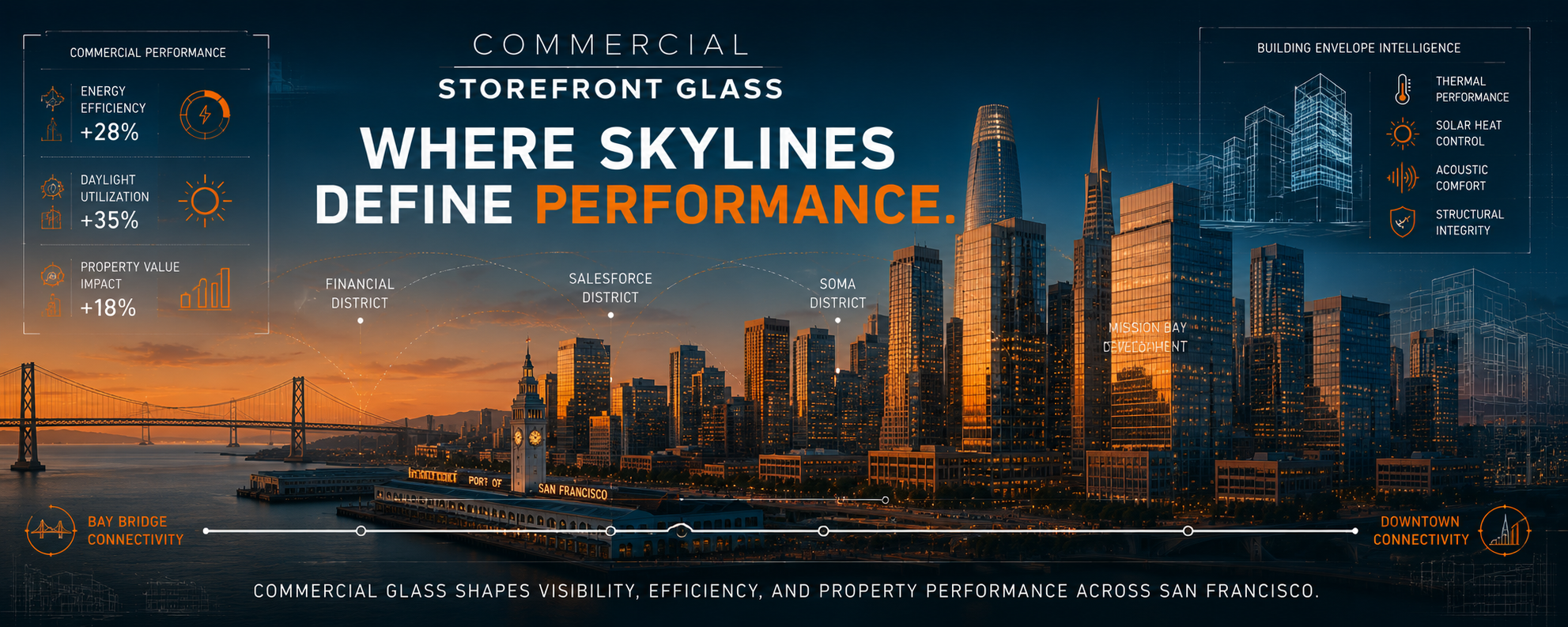
Iconic Skyline Towers vs Expanding Peninsula Business Districts
San Francisco’s commercial identity is built around skyscrapers, luxury hotels, corporate headquarters, retail districts, and mixed-use developments. Glass is often the defining architectural feature of these buildings, creating dramatic facades, premium entrances, expansive curtain walls, and welcoming lobbies that reflect the city’s global business reputation.
San Mateo presents a different type of commercial growth. Rather than vertical development concentrated in one downtown core, the city features expanding office campuses, technology headquarters, healthcare facilities, research centers, hospitality projects, and neighborhood commercial districts spread throughout the Peninsula.
Commercial storefront glass in San Mateo frequently supports campus-style developments where visibility, employee comfort, natural light, and energy performance become central design priorities.
For glazing contractors, both cities require precision installation, but the project environments differ considerably.
Commercial Growth Creates Different Glass Demands
Building age plays a major role in shaping commercial storefront opportunities.
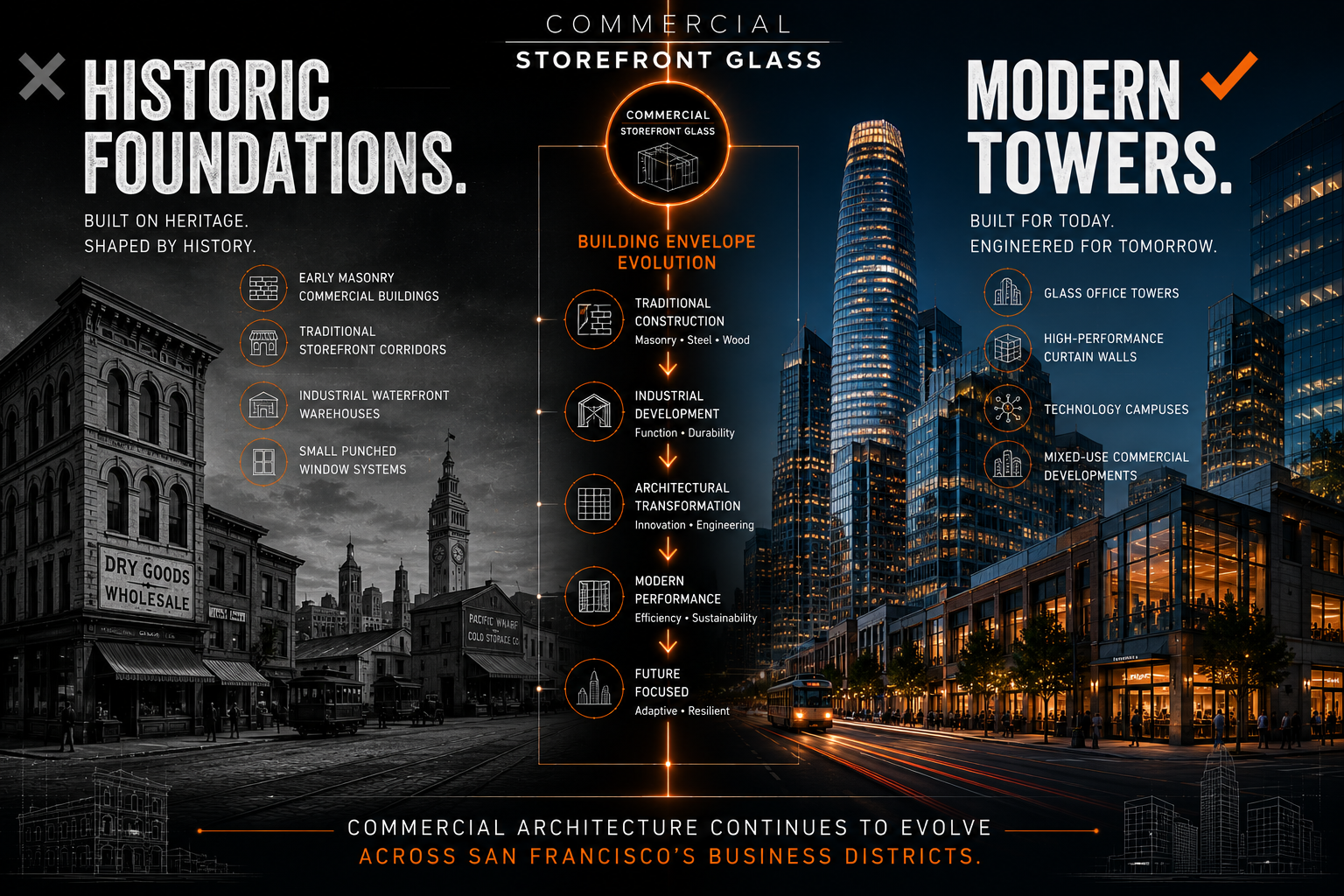
San Francisco contains one of California’s largest inventories of aging commercial buildings. Office towers, financial institutions, retail storefronts, and historic structures routinely undergo facade improvements, insulated glass replacement, entrance modernization, and curtain wall restoration to remain competitive.
Many renovations occur while buildings remain occupied, requiring careful coordination between contractors, tenants, and facility managers.
San Mateo’s commercial inventory includes a larger percentage of newer office buildings, corporate campuses, medical facilities, and recently developed mixed-use projects. However, even relatively modern buildings continue receiving glazing upgrades as businesses invest in energy efficiency, sustainability, tenant improvements, and workplace modernization.
As Peninsula development continues, storefront glass remains a visible investment in long-term commercial growth.
Technology Corridors Meet Financial Centers
The commercial economies of these cities reflect different business priorities.
San Francisco remains the West Coast’s financial center, home to investment firms, legal offices, consulting companies, hospitality properties, luxury retail, and corporate headquarters. These environments prioritize sophisticated architectural presentation alongside building performance.
San Mateo benefits from its central location between San Francisco and Silicon Valley. Technology firms, biotechnology companies, healthcare organizations, software developers, educational institutions, and professional service providers continue expanding throughout the Peninsula.
Commercial storefront systems in these buildings support collaboration, daylighting, employee wellness, and flexible workspace design while maintaining a professional appearance.
Although the industries differ, both cities rely on commercial glazing to strengthen business environments and attract long-term tenants.
Tenant Improvements Continue Reshaping Commercial Buildings
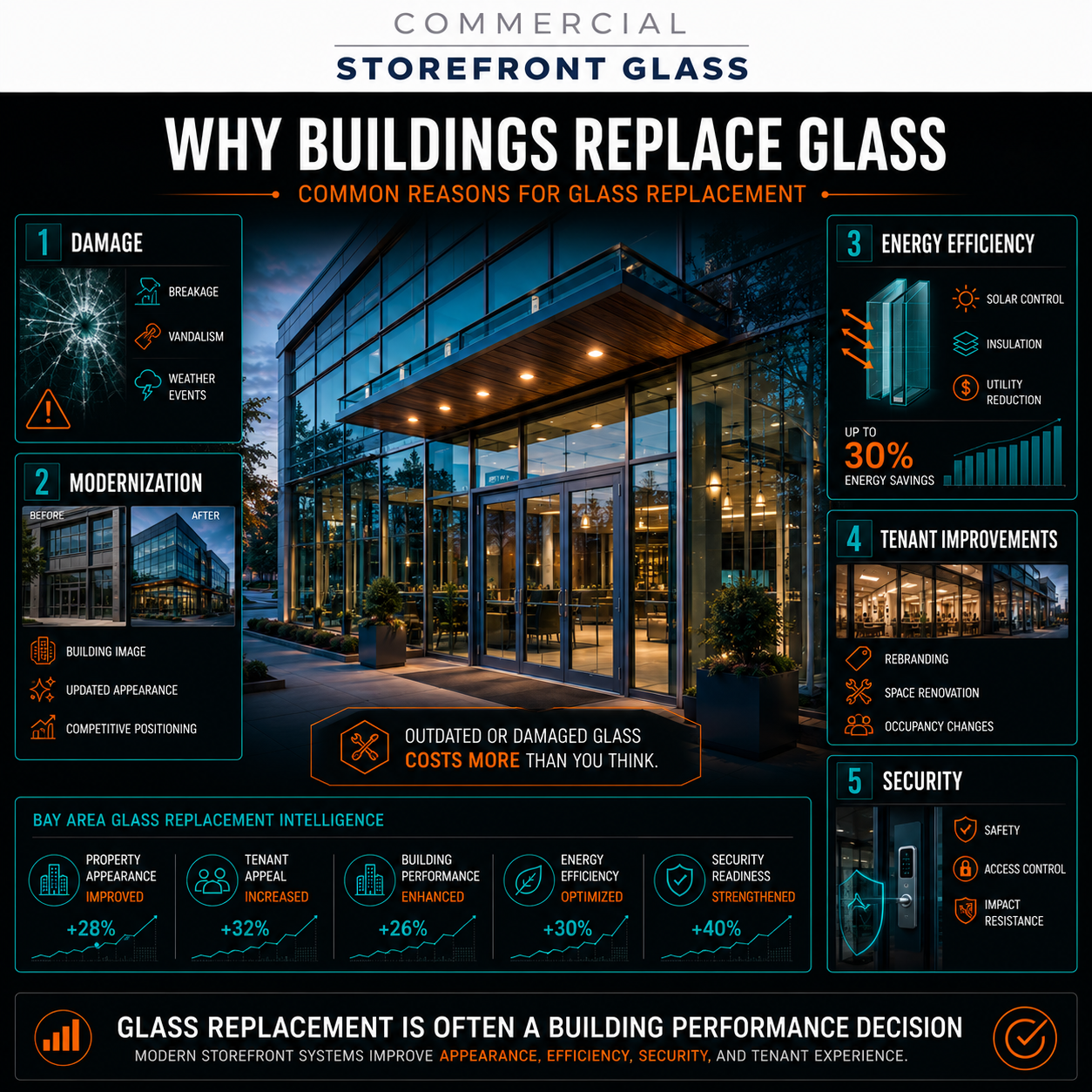
Tenant improvement projects remain one of the strongest drivers of commercial storefront glass installation.
In San Francisco, businesses regularly renovate office suites, executive spaces, financial institutions, restaurants, hotels, and retail storefronts. Interior glazing systems, conference rooms, frameless office partitions, and upgraded lobby entrances help buildings compete for tenants in a changing office market.
San Mateo experiences continuous tenant improvement activity driven by growing technology companies, healthcare providers, research organizations, and expanding professional firms. Flexible office layouts, collaborative workspaces, and energy-efficient renovations frequently include significant glass upgrades.
Commercial glazing contractors often participate throughout planning, engineering, fabrication, and installation, ensuring storefront systems integrate seamlessly with the overall renovation strategy.
Building Performance Extends Beyond Appearance
Today’s commercial storefront systems do far more than improve curb appeal.
Modern glazing reduces energy consumption, improves thermal comfort, increases natural daylight, enhances occupant wellness, strengthens security, and lowers long-term maintenance costs. High-performance insulated glass, thermally broken framing systems, laminated safety glazing, and advanced coatings have become standard components of commercial construction across both markets.
San Francisco’s dense urban environment places additional emphasis on noise reduction, weather resistance, and efficient building envelopes.
San Mateo’s newer developments often prioritize sustainability certifications, operational efficiency, and long-term lifecycle performance from the beginning of construction.
In both cities, storefront glass contributes directly to building value while supporting modern architectural goals.
General Contractors Build Different Types of Projects
Commercial glazing projects vary considerably between the two cities.
San Francisco contractors frequently navigate complex downtown logistics, occupied buildings, limited staging areas, street closures, crane operations, and strict construction schedules. High-rise modernization requires detailed coordination among multiple specialty trades.
San Mateo projects often involve campus expansions, new office developments, healthcare construction, hospitality properties, and mixed-use commercial buildings with more flexible construction environments.
Despite these differences, successful storefront installations always depend on engineering precision, fabrication quality, scheduling accuracy, and experienced field installation.
General contractors rely on commercial glazing specialists to maintain project timelines while delivering systems that perform for decades.
Visibility Shapes Commercial Success
Glass influences how businesses are perceived before customers ever enter the building.
San Francisco retailers, hotels, restaurants, financial institutions, and office towers depend on storefront systems that project professionalism while maximizing visibility along busy pedestrian corridors.
San Mateo businesses use commercial glazing to create welcoming campuses, modern office environments, healthcare facilities, and retail centers that support employee satisfaction and customer confidence.
Large storefront windows, elegant entrances, transparent facades, and modern architectural glazing help establish strong first impressions while contributing to overall property performance.
As commercial competition increases throughout the Bay Area, visibility continues becoming one of the most valuable advantages a building can offer.
Urban Skyline vs Peninsula Growth—Connected by Commercial Glass
San Francisco and San Mateo represent two complementary commercial markets within the Peninsula. One is defined by a world-famous skyline, historic financial districts, and landmark architecture. The other continues expanding through technology, healthcare, life sciences, hospitality, and office development.
Despite their different growth patterns, both rely on commercial storefront glass to modernize buildings, improve energy performance, enhance tenant experiences, and increase long-term property value.
Whether installing curtain wall systems on a downtown high-rise, replacing storefront entrances along a busy commercial corridor, or glazing a new Peninsula office campus, commercial storefront glass remains one of the most important investments in the success of every commercial property.
For property owners, developers, architects, facility managers, and general contractors, understanding the differences between these two commercial environments leads to smarter glazing decisions that support both immediate project goals and long-term building performance.