


Building Envelope Glass Systems
Understanding Building Envelope Glass Systems
Every commercial property relies on its building envelope.
Exterior systems separate indoor environments from outside conditions.
Long-term performance often depends on how those systems work together.
Among the most visible and influential components of the envelope is glass.
Modern glazing systems contribute to architectural identity, occupant experience, daylighting, modernization efforts, and overall building performance.
Across office towers, healthcare facilities, hospitality properties, universities, retail centers, industrial developments, and mixed-use projects, glass remains a critical part of the commercial building envelope.
What Is A Building Envelope?
The building envelope consists of the exterior systems that enclose a structure.
Walls provide separation.
Roof systems protect the interior.
Windows introduce daylight.
Glazing assemblies connect aesthetics with functionality.
Together, these components create the boundary between occupants and the surrounding environment.
Architects, developers, and ownership groups frequently view the envelope as one of the most important long-term investments within a property.
The Role Of Glass Within The Envelope
Few envelope components influence appearance as dramatically as glass.
Exterior facades establish first impressions.
Daylight enters through glazing systems.
Views connect occupants to the surrounding environment.
Transparency often becomes a defining architectural feature.
Because of these characteristics, glass plays both a visual and functional role within modern commercial buildings.
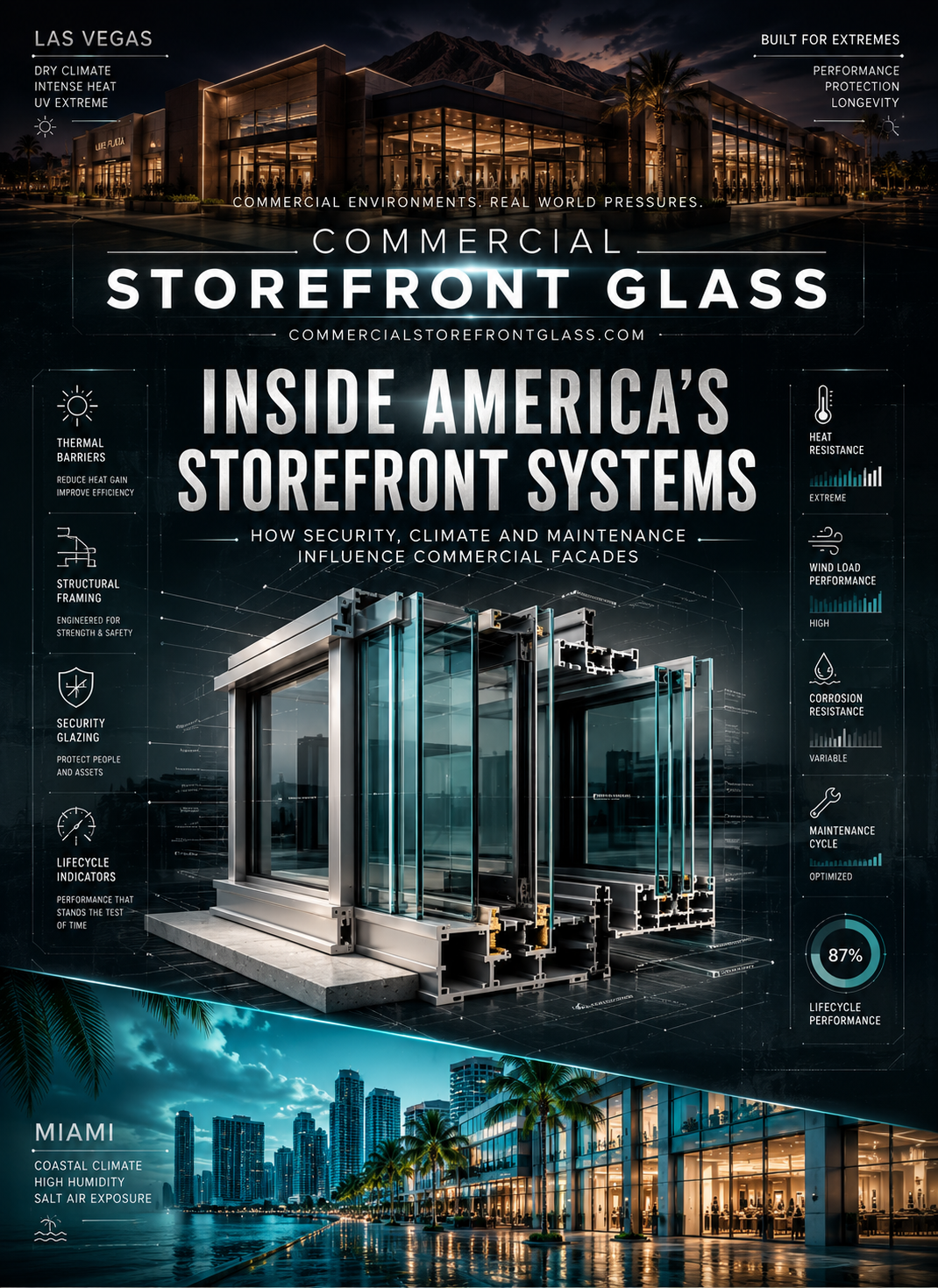
Curtain Wall Systems
Large-scale commercial projects frequently rely on curtain wall construction.
Expansive glazing creates contemporary architecture.
Clean lines contribute to building identity.
Natural light reaches deep into occupied spaces.
Many office towers, healthcare campuses, hospitality properties, and mixed-use developments utilize curtain walls as a primary envelope system.
For those buildings, the glass facade becomes one of the most recognizable features of the property.
Storefront Envelope Systems
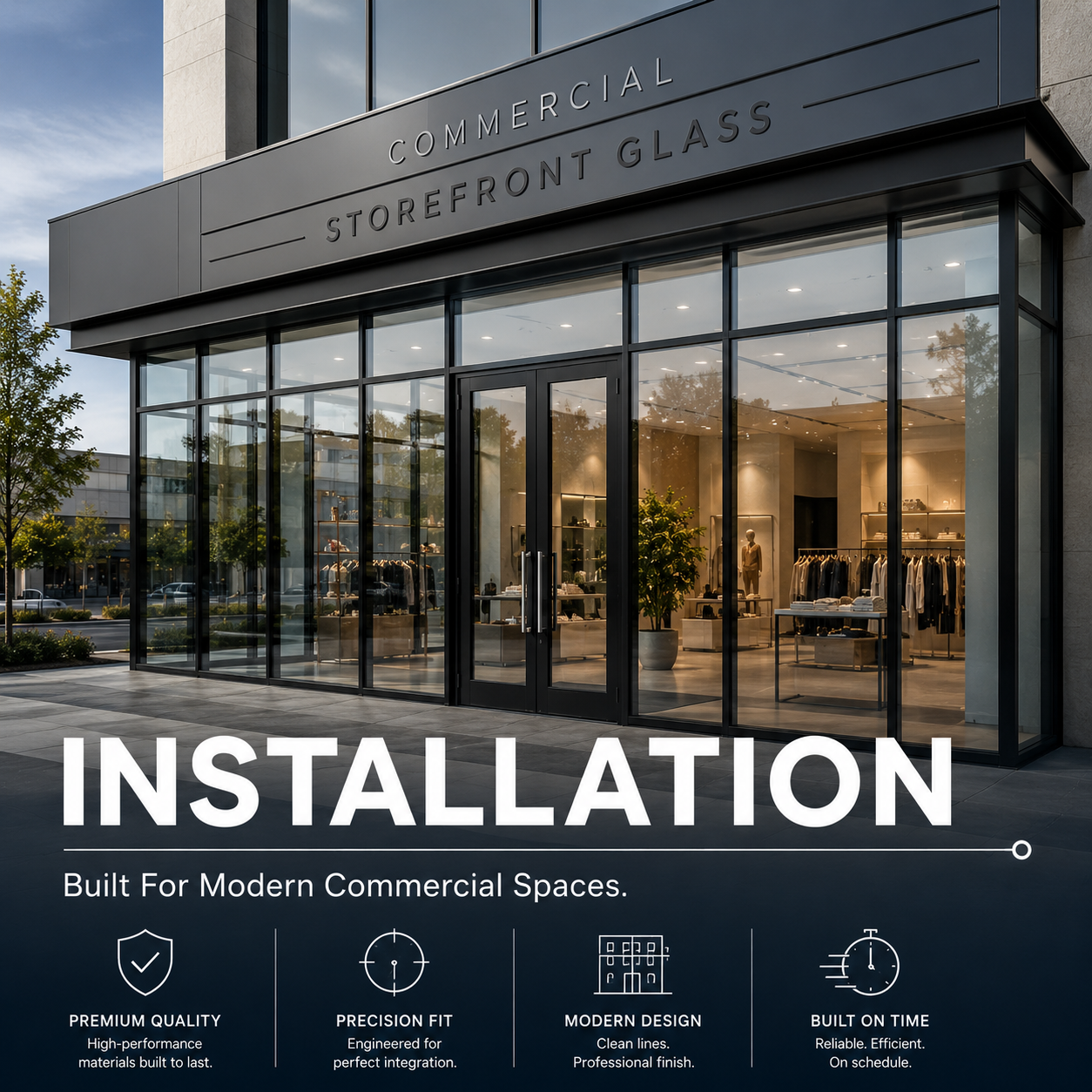
At street level, storefront glazing serves a different purpose.
Customer engagement often begins at the building exterior.
Visibility supports retail performance.
Restaurants benefit from transparency.
Service businesses utilize storefronts to create welcoming environments.
Strong storefront design can significantly influence how people interact with a commercial property.
Architectural Facades
Modern architecture frequently revolves around glass.
Developers often pursue designs that emphasize openness and visibility.
Exterior glazing contributes to visual consistency.
Contemporary facades create stronger market presence.
Many commercial projects utilize architectural glass to establish a distinct identity within competitive markets.
Daylighting And Occupant Experience
Access to natural light continues influencing commercial design strategies.
Brighter environments often improve workplace quality.
Patient comfort may benefit from daylight exposure.
Educational environments frequently prioritize transparency and openness.
Occupant experience remains an increasingly important consideration during both development and renovation projects.
Glazing systems often become central to achieving those objectives.
Modernization And Envelope Improvements
Buildings evolve over time.
Market expectations change.
Ownership strategies adapt.
Exterior upgrades frequently focus on the building envelope because improvements are immediately visible.
Facade modernization can transform property perception.
Updated glazing often helps older buildings remain competitive.
Many redevelopment projects begin with envelope improvements for exactly that reason.
Commercial Property Applications
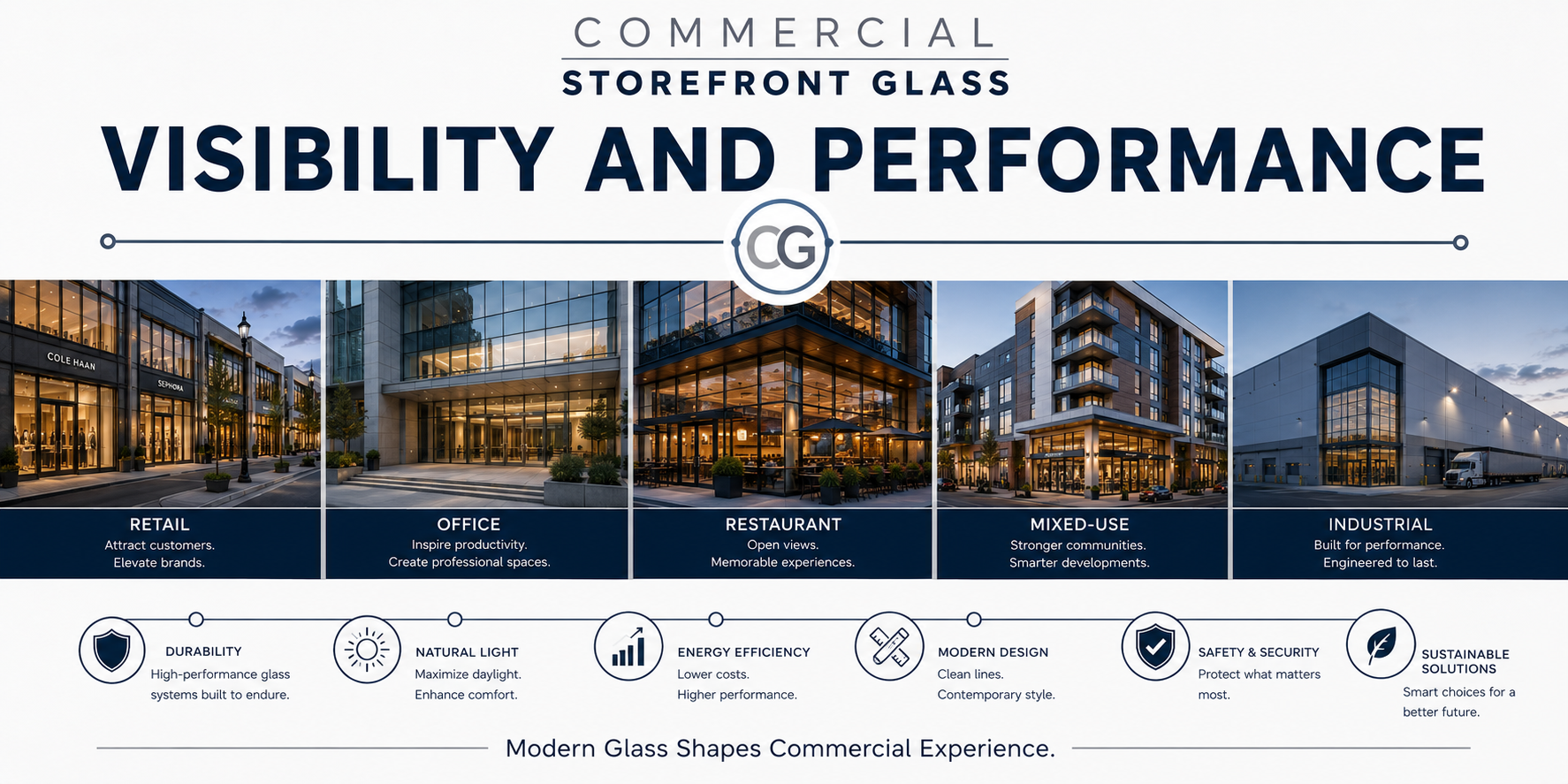
Building envelope glass systems appear across virtually every commercial sector.
Office buildings often prioritize workplace quality and tenant attraction.
Healthcare facilities focus on patient experience and modernization.
Hospitality properties emphasize guest comfort and architectural presentation.
Retail centers depend on visibility and customer engagement.
Universities utilize glazing to create contemporary learning environments.
Industrial developments frequently incorporate glass within office and customer-facing areas.
Although priorities differ, envelope performance remains important across all property categories.
Property Repositioning And Exterior Performance
Competitive markets require continual investment.
Tenants evaluate building quality.
Customers notice appearance.
Investors consider long-term value.
As a result, ownership groups frequently pursue envelope improvements as part of broader repositioning strategies.
Exterior modernization often signals reinvestment and long-term commitment to the property.
Glass systems regularly become one of the most visible aspects of that effort.
Building Envelope Strategy
Successful commercial properties rarely evaluate glazing in isolation.
Roof systems matter.
Facade systems contribute performance.
Entrances influence experience.
Exterior assemblies must work together to support broader building objectives.
A coordinated envelope strategy helps align design, functionality, modernization, and long-term ownership goals.
The Future Of Building Envelope Glass Systems
Commercial construction continues evolving.
Architectural expectations remain high.
Occupant experience influences development decisions.
Modernization drives investment throughout the real estate industry.
Within that environment, building envelope glass systems continue serving as one of the most important components of commercial property design.
Whether supporting architectural identity, daylighting, property repositioning, or long-term asset performance, glazing remains central to how commercial buildings function, compete, and evolve.