


San Francisco vs Oakland — Skyline Core vs Port City
How Commercial Storefront Glass Serves Two Distinct Commercial Markets
Across the San Francisco Bay, two neighboring cities have developed into very different commercial ecosystems. San Francisco is recognized worldwide for its skyline of financial towers, Class A office buildings, luxury retail districts, and dense mixed-use developments. Oakland, meanwhile, has grown around one of America’s busiest seaports, combining logistics, industrial facilities, healthcare campuses, government offices, and a rapidly evolving downtown business district.
From the perspective of commercial storefront glass, these neighboring markets create entirely different opportunities. San Francisco demands architectural elegance, high-rise curtain wall systems, premium entrances, and sophisticated building envelope upgrades. Oakland emphasizes durability, functionality, adaptive reuse, warehouse conversions, healthcare expansion, and commercial redevelopment.
Both cities depend heavily on commercial glazing, but the reasons property owners replace storefront systems often reflect the unique role each city plays within the Bay Area economy.
Skyline Architecture vs Industrial Infrastructure
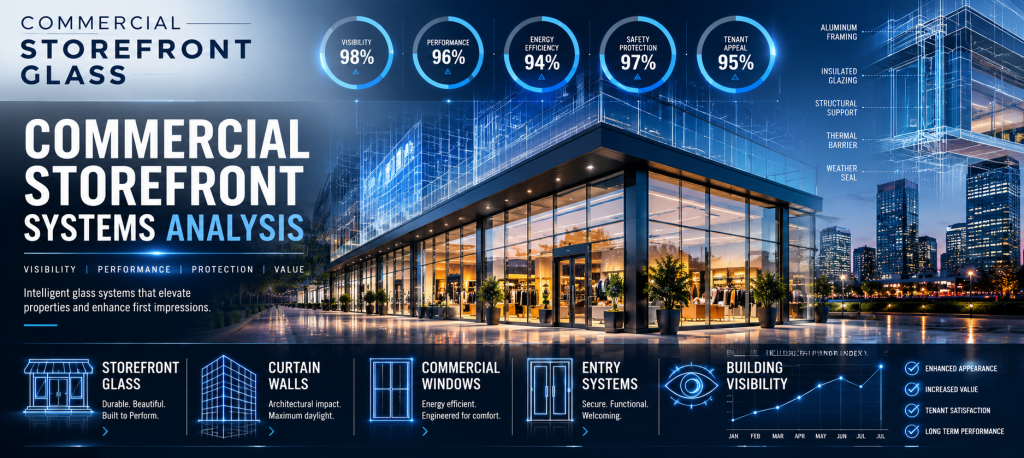
San Francisco’s skyline defines its commercial identity. Office towers, hotels, financial institutions, luxury retailers, and corporate headquarters rely on expansive glass facades that project professionalism while maximizing daylight and energy efficiency.
Many commercial buildings feature custom curtain wall systems, oversized insulated glazing units, architectural entrances, and modern storefront systems that become signature elements of the building itself.
Oakland presents a different commercial landscape. While its downtown continues adding modern office developments, much of the city’s economy centers around the Port of Oakland, manufacturing, transportation, distribution centers, healthcare facilities, educational institutions, and municipal buildings.
Commercial storefront glass in Oakland frequently balances appearance with long-term durability, serving businesses that prioritize operational efficiency alongside professional presentation.
For glazing contractors, these contrasting environments require different installation strategies, engineering considerations, and project management approaches.
Historic Buildings Create Modern Glass Opportunities
Building age remains one of the biggest drivers of commercial glass replacement throughout both cities.
San Francisco contains thousands of historic commercial buildings that continue undergoing modernization. Property owners regularly replace aging storefront systems, insulated glass units, aluminum framing, and commercial entrances to improve energy performance while maintaining architectural character.
Many projects involve occupied buildings where installation schedules, pedestrian safety, and historic preservation require careful coordination.
Oakland also contains an extensive inventory of older commercial structures. Former warehouses, industrial buildings, manufacturing facilities, and historic downtown properties are increasingly converted into offices, restaurants, creative workspaces, healthcare facilities, and mixed-use developments.
Adaptive reuse projects often require entirely new storefront systems that preserve original architecture while meeting modern building codes, accessibility requirements, and energy standards.
Commercial storefront glass becomes one of the most visible improvements during these transformations.
Commercial Districts Reflect Different Business Priorities
The daily activity surrounding commercial buildings differs significantly between the two cities.
San Francisco’s Financial District, Union Square, Mission Bay, and South of Market neighborhoods generate continuous demand for premium commercial entrances, retail storefronts, lobby renovations, and office modernization projects.
Businesses compete through appearance, visibility, and tenant experience.
Oakland’s downtown business district combines government offices, healthcare providers, local retailers, restaurants, educational facilities, and expanding residential development. Beyond downtown, industrial corridors support logistics companies, manufacturers, distribution facilities, and port-related businesses that require durable commercial glazing capable of performing in demanding environments.
Although both cities value attractive storefronts, Oakland often places greater emphasis on longevity, operational reliability, and simplified maintenance.
Tenant Improvements Continue Driving Glass Installation
Commercial tenant improvement projects remain one of the strongest sources of glazing work across both markets.
In San Francisco, companies regularly renovate office suites, financial institutions, legal firms, consulting offices, and technology workspaces. Interior glass partitions, conference rooms, executive entrances, and lobby upgrades create flexible environments that attract modern tenants.
Oakland experiences significant tenant improvement activity as businesses occupy renovated industrial buildings, mixed-use developments, medical offices, educational facilities, and neighborhood retail centers.
Many adaptive reuse projects integrate storefront glass with exposed structural materials to preserve industrial character while creating contemporary commercial environments.
Commercial glazing contractors frequently participate throughout design, engineering, fabrication, and installation phases, making glass a central feature rather than a finishing detail.
Waterfront Conditions Influence Glass Performance
Although neighboring cities share the Bay, environmental conditions influence glazing requirements differently.
San Francisco’s high-rise buildings must address wind exposure, changing temperatures, seismic performance, and constant pedestrian activity. High-performance insulated glazing, thermally broken framing systems, and weather-resistant curtain walls help maintain building efficiency.
Oakland’s proximity to active shipping facilities and industrial waterfront operations creates additional maintenance considerations. Salt air, heavy transportation activity, and industrial environments can accelerate wear on framing, sealants, hardware, and exposed exterior components.
Selecting durable commercial storefront systems helps reduce maintenance costs while extending the useful life of the building envelope.
For facility managers, these environmental factors become important when planning long-term capital improvements.

General Contractors Navigate Two Very Different Project Types
General contractors working in each city often face unique construction challenges.
San Francisco projects frequently involve dense urban logistics, occupied high-rise buildings, restricted street access, crane scheduling, and complex tenant coordination. Commercial storefront glass installations require careful sequencing alongside structural, mechanical, electrical, and interior construction trades.
Oakland projects commonly include industrial redevelopment, warehouse modernization, healthcare expansions, educational facilities, logistics centers, and adaptive reuse developments. Larger staging areas may simplify installation, but extensive coordination remains essential for multi-phase construction projects.
Experienced glazing contractors understand how fabrication schedules, engineering reviews, delivery timing, and installation sequencing directly affect project completion dates.
Building Performance Extends Beyond Appearance
Modern commercial storefront glass improves much more than curb appeal.
High-performance glazing enhances natural daylight, reduces energy consumption, improves occupant comfort, strengthens building security, minimizes air infiltration, and supports sustainability initiatives throughout the building lifecycle.
Owners in both San Francisco and Oakland increasingly invest in storefront modernization because updated glass systems contribute to lower operating costs while improving tenant satisfaction and long-term asset value.
Whether replacing aging insulated glass units, upgrading commercial entrances, or installing complete curtain wall systems, today’s glazing technologies provide measurable operational benefits alongside architectural improvements.
Commercial storefront glass continues serving as one of the highest-return investments available during building modernization.
Skyline Core vs Port City—Two Markets, One Essential Building System
San Francisco and Oakland represent two complementary commercial economies within the Bay Area. One city is defined by financial towers, dense office districts, and iconic skyline architecture. The other thrives through maritime commerce, industrial infrastructure, healthcare expansion, adaptive reuse, and downtown redevelopment.
Despite these differences, both markets rely on commercial storefront glass to improve building performance, modernize aging properties, attract tenants, enhance customer experiences, and support long-term commercial investment.
From landmark skyscrapers overlooking the Bay to renovated warehouses near the waterfront, storefront systems, curtain walls, and architectural glazing remain critical components of every successful commercial property. Understanding the distinct priorities of each city allows property owners, developers, facility managers, architects, and general contractors to choose glazing solutions that meet the demands of their specific commercial environment while strengthening the future of their buildings.