

Commercial Storefront Glass

San Francisco vs San Jose — Financial Capital vs Innovation Capital

Where Commercial Storefront Glass Connects California’s Two Economic Powerhouses

Northern California is home to two cities that shape the global economy in different ways. San Francisco remains the financial capital of the West Coast, housing investment firms, banking institutions, law offices, and corporate headquarters within a dense urban skyline. Just forty-five miles away, San Jose has become the world’s innovation capital, anchored by technology companies, research campuses, semiconductor manufacturers, and advanced engineering firms.

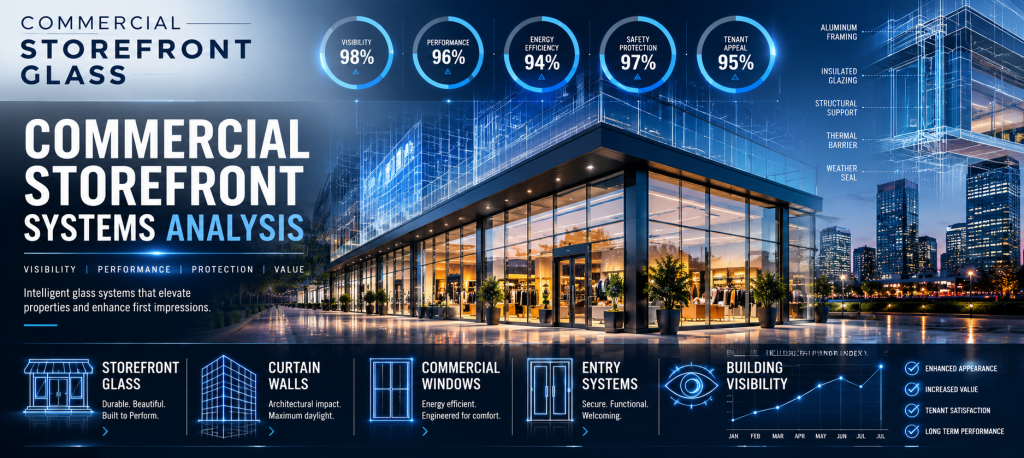
From a commercial storefront glass perspective, both cities demand exceptional glazing systems, but for very different reasons. San Francisco emphasizes architectural prestige, historic modernization, and high-rise performance, while San Jose focuses on corporate campuses, research facilities, flexible office environments, and rapidly expanding technology infrastructure.

Although both markets utilize curtain wall systems, storefront entrances, insulated glazing, and custom architectural glass, the buildings themselves reflect entirely different business priorities. Understanding those priorities helps property owners, developers, facility managers, and general contractors choose glazing solutions that match the long-term needs of each environment.
san jose commercial glass willow glen glazing repair storefront installation bay area (8)

Financial District Towers vs Innovation Campuses

San Francisco’s commercial landscape revolves around dense financial districts filled with office towers, mixed-use developments, luxury retail, hotels, and professional service firms. Glass systems here often become part of a building’s identity. Premium entrances, expansive lobby glazing, oversized curtain walls, and energy-efficient facades create first impressions that reflect stability and professionalism.

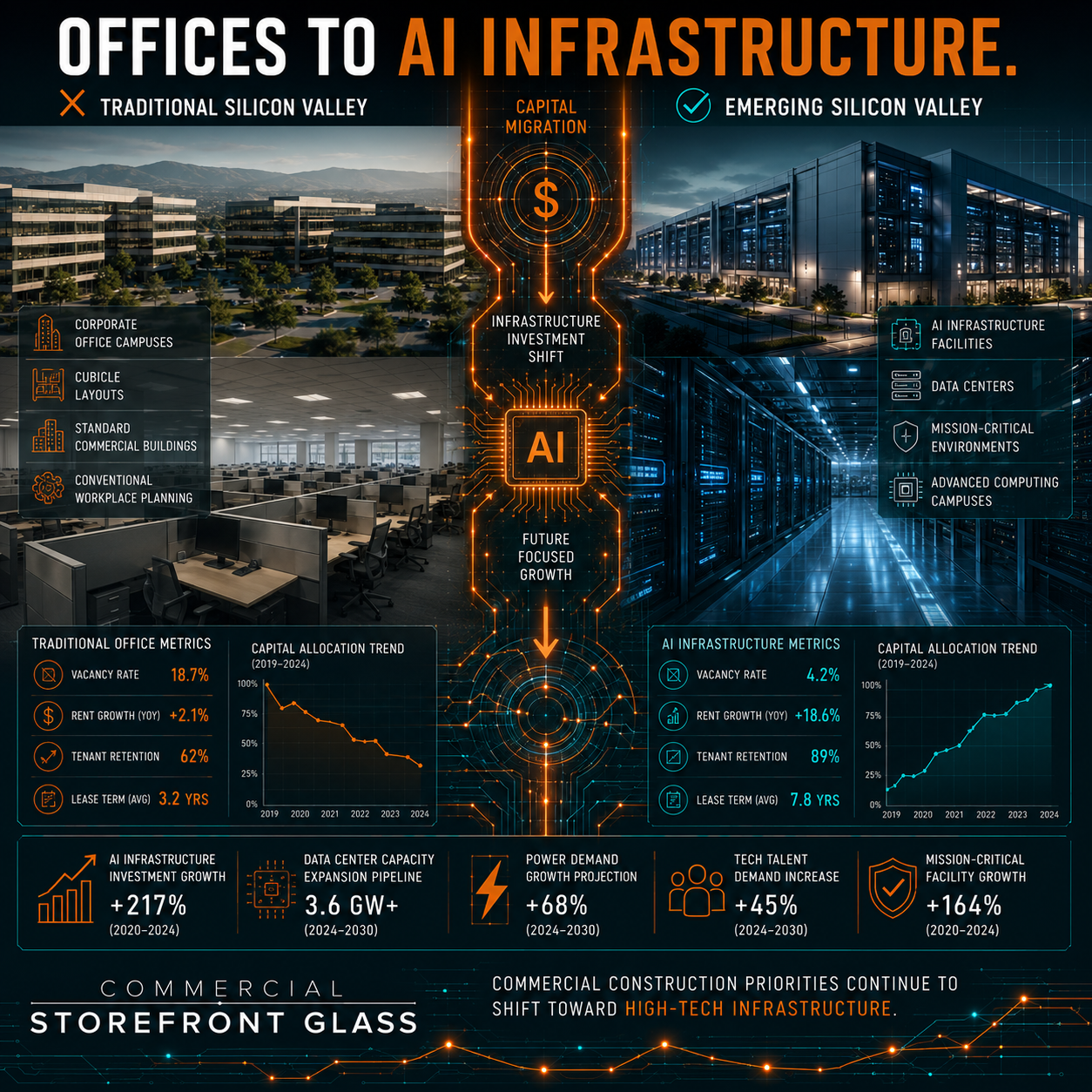
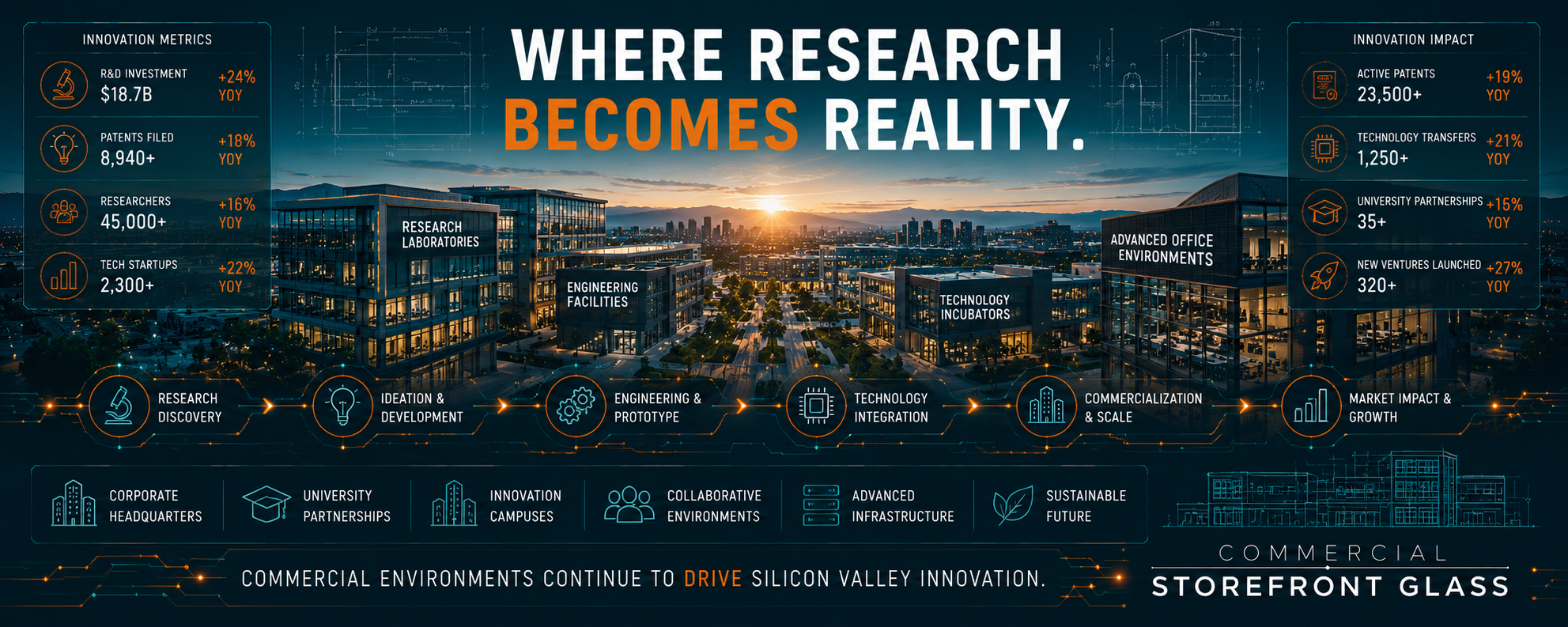
San Jose’s commercial development tells another story. Instead of tightly packed skyscrapers, much of the city’s commercial growth centers around sprawling technology campuses, research facilities, medical buildings, manufacturing headquarters, and innovation districts. These projects frequently require large-scale storefront systems that emphasize daylight, employee collaboration, flexibility, and campus connectivity.

For commercial glazing contractors, each city requires a different project strategy. Downtown San Francisco often presents renovation challenges involving occupied high-rise buildings, aging façades, and strict scheduling requirements. San Jose projects frequently involve new construction, tenant improvements, and campus expansions where glass becomes part of a larger architectural vision.

Building Age Shapes Replacement Opportunities

Building inventory dramatically influences commercial storefront glass demand.

San Francisco contains thousands of older commercial buildings constructed decades before today’s energy efficiency and seismic performance standards. Property owners regularly replace aging storefront systems, insulated glass units, curtain wall components, and commercial entrances to improve building performance while preserving architectural character.

Historic renovations often require custom fabrication, specialized installation methods, and careful coordination with surrounding businesses.

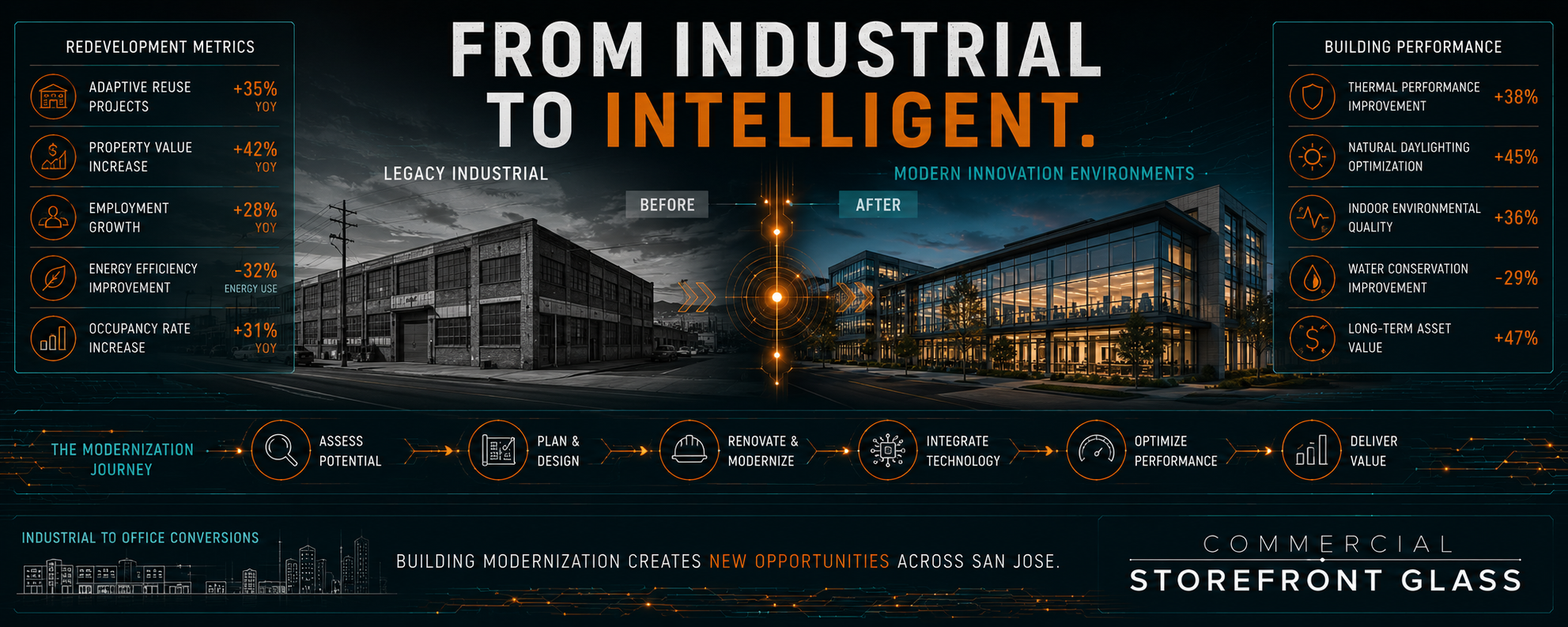
San Jose features a younger commercial inventory. While many technology campuses continue expanding, office buildings constructed during previous growth cycles are now entering modernization phases. As companies renovate headquarters and reposition office space, storefront systems are frequently upgraded to improve natural light, employee experience, energy efficiency, and visual branding.

In both cities, commercial storefront glass serves as one of the most visible investments a property owner can make during a renovation.

Tenant Improvements Drive Continuous Glass Demand

Tenant improvement projects remain one of the strongest sources of commercial glass work across both markets.

In San Francisco, financial firms, legal offices, consulting companies, and corporate tenants regularly remodel office interiors as leases change. Glass conference rooms, frameless office partitions, modern entrances, and upgraded lobby systems help buildings remain competitive in a challenging office market.

San Jose experiences similar activity but with different priorities. Technology companies frequently redesign workspaces to encourage collaboration, hybrid work environments, product development, and flexible team layouts. Interior glazing systems become central features rather than simple partitions.

Commercial storefront contractors often participate early in these projects because glass influences layout, lighting, accessibility, acoustics, and overall workplace appearance.

Whether modernizing an executive suite in San Francisco or renovating a technology campus in San Jose, glass remains one of the highest-impact architectural upgrades available.
 

san jose commercial glass willow glen glazing repair storefront installation bay area (6)


Visibility Matters in Every Commercial District

Commercial storefront glass directly affects how businesses interact with customers, tenants, and visitors.

San Francisco’s retail corridors rely on transparency to attract foot traffic while maintaining security. Restaurants, hotels, luxury retailers, healthcare providers, and financial institutions all depend on storefront systems that balance visibility with durability.

San Jose’s commercial districts emphasize openness across larger developments. Technology campuses, corporate headquarters, educational facilities, and research centers use expansive glazing to create welcoming environments while maximizing daylight throughout buildings.

Modern low-emissivity insulated glass, oversized storefront systems, automatic entrances, and energy-efficient framing help both cities reduce operating costs while improving occupant comfort.

Regardless of industry, attractive storefront glass enhances curb appeal, strengthens branding, and contributes to long-term property value.

Different Markets, Similar Performance Expectations

Although their commercial landscapes differ, San Francisco and San Jose share demanding performance standards.

Both markets require glazing systems capable of handling:

  • High pedestrian traffic
  • Strong seismic requirements
  • Energy efficiency goals
  • Building code compliance
  • ADA accessibility
  • Long-term durability
  • Professional architectural appearance

Facility managers increasingly prioritize products that reduce maintenance, improve thermal performance, and extend building life cycles. General contractors look for glazing systems that integrate smoothly with modern construction schedules while minimizing installation delays.

As sustainability continues influencing commercial development, insulated storefront systems, high-performance coatings, and thermally broken framing have become standard expectations rather than optional upgrades.

General Contractors Depend on Experienced Glass Partners

Large commercial developments rarely treat storefront glass as a standalone trade.

General contractors coordinate glazing with structural steel, waterproofing, mechanical systems, electrical work, roofing, concrete, and interior finishes. Successful storefront installations require careful scheduling because glass frequently represents one of the project’s final architectural components before occupancy.

San Francisco’s dense urban environment often introduces logistical challenges including restricted street access, crane scheduling, occupied buildings, and tight delivery windows.

San Jose projects may offer larger staging areas but frequently involve campus-wide coordination across multiple buildings and construction phases.

Commercial glazing contractors who understand sequencing, engineering coordination, fabrication timelines, and quality control become valuable long-term partners for developers throughout both markets.

Long-Term Building Performance Starts at the Glass Line

Commercial storefront glass influences far more than appearance.

Modern glazing contributes to energy efficiency, occupant comfort, security, acoustics, natural daylight, weather protection, and long-term maintenance costs. High-quality systems reduce air infiltration, improve thermal performance, and support sustainable building operations throughout the property’s lifecycle.

For owners evaluating capital improvements, storefront modernization often produces benefits that extend well beyond aesthetics. Updated entrances improve customer experience, modern facades strengthen tenant attraction, and energy-efficient glazing lowers operational expenses for years after installation.

Whether serving San Francisco’s financial institutions or San Jose’s innovation economy, commercial storefront glass remains one of the most valuable investments available to commercial property owners.
 

san jose commercial glass willow glen glazing repair storefront installation bay area (10)


Financial Capital vs Innovation Capital—Built on Commercial Glass

San Francisco and San Jose represent two distinct visions of commercial development. One city reflects decades of financial leadership through iconic high-rise architecture, while the other continues shaping the future through technology campuses and research-driven growth.

Despite their differences, both depend on commercial storefront glass to modernize aging buildings, support new construction, improve tenant experiences, and strengthen long-term property value. From elegant downtown office towers to expansive innovation campuses, glazing systems influence how businesses operate, how buildings perform, and how commercial districts evolve.

For property owners, developers, facility managers, architects, and general contractors, understanding the unique commercial characteristics of each market leads to smarter storefront decisions. Whether the project involves replacing an aging downtown entrance or installing curtain wall systems on a new corporate campus, high-performance commercial glass continues connecting California’s Financial Capital with its Innovation Capital.

917 383 0795