


San Rafael vs Pleasanton — Storefront Installation Projects vs Office Renovation Demand
Two Established Markets With Different Commercial Priorities
Commercial glass demand does not always originate from new development.
Many projects emerge from renovation activity.
Others result from changing tenant expectations.
Some markets generate work through storefront upgrades.
Others create demand through office modernization.
San Rafael and Pleasanton provide a useful comparison because both remain active commercial centers while serving very different business communities.
One benefits from customer-facing retail districts.
The other continues evolving as a major East Bay office market.
Those differences often shape where commercial glass contractors find opportunity.
Market Snapshot
San Rafael
- Marin County’s primary commercial center
- Established downtown retail corridors
- Strong restaurant and hospitality presence
- Medical and professional office concentration
- Ongoing mixed-use redevelopment
Pleasanton
- Major East Bay business hub
- Large office inventory
- Corporate campus environment
- Regional employment center
- Continued workplace modernization activity
Both markets support commercial glazing projects.
However, the source of demand often differs.
Why San Rafael Generates Storefront Installation Projects
Visibility remains a major priority throughout San Rafael.
Retail businesses compete for attention.
Restaurants benefit from attractive street-facing environments.
Customer experience often begins before someone walks through the door.
As a result, commercial glass projects frequently involve:
- New storefront systems
- Glass entrance upgrades
- Tenant improvement projects
- Retail facade modernization
- Mixed-use redevelopment improvements
Many property owners view storefront glass as part of a larger effort to improve curb appeal and strengthen leasing performance.
Exterior presentation often influences how commercial districts compete.
Why Pleasanton Creates Office Renovation Demand
Pleasanton’s commercial landscape looks different.
Office buildings represent a significant portion of the market.
Corporate tenants continue evaluating workplace quality.
Property owners frequently invest in modernization to remain competitive.
Common renovation priorities include:
Focus Area | Typical Objective |
Daylighting | Improve employee experience |
Energy Efficiency | Reduce operating costs |
Modernization | Maintain market competitiveness |
Building Image | Attract tenants |
Workplace Quality | Support occupancy goals |
Many projects involve updating aging office environments rather than replacing entire building systems.
Glass upgrades often become part of broader renovation initiatives.
Retail Corridors vs Corporate Campuses
One market focuses heavily on customer interaction.
The other prioritizes workplace performance.
San Rafael
Success often depends on:
- Visibility
- Walkability
- Customer engagement
- Storefront presentation
- Street-level experience
Pleasanton
Investment decisions frequently center around:
- Tenant attraction
- Employee experience
- Building efficiency
- Workplace modernization
- Long-term asset performance
Both require commercial glass.
The business objectives simply differ.
Existing Buildings Continue Driving Demand
New construction receives attention.
Nevertheless, much of today’s glazing activity occurs within existing properties.
Older systems eventually show their age.
Seal failures develop.
Energy standards evolve.
Tenant expectations increase.
Those conditions create opportunities throughout both markets.
Commercial property owners regularly evaluate whether replacement, renovation, or modernization offers the best return on investment.
Which Market Creates More Opportunity?
Pleasanton likely generates more overall office renovation demand.
The city’s concentration of corporate office space creates ongoing pressure for workplace modernization.
Property owners frequently upgrade buildings to attract tenants and remain competitive within the East Bay office market.
San Rafael remains highly active as well.
Retail storefronts continue evolving.
Mixed-use projects support additional investment.
Customer-facing businesses regularly pursue exterior improvements that strengthen visibility and property image.
However, when comparing storefront installation projects against office renovation demand, Pleasanton likely produces a larger overall volume of renovation-related commercial glass work.
Office buildings create recurring modernization cycles.
Tenant expectations continue changing.
Workplace environments require regular upgrades to remain competitive.
Meanwhile, San Rafael remains one of Marin County’s strongest markets for storefront installation, facade improvements, and customer-focused commercial modernization.
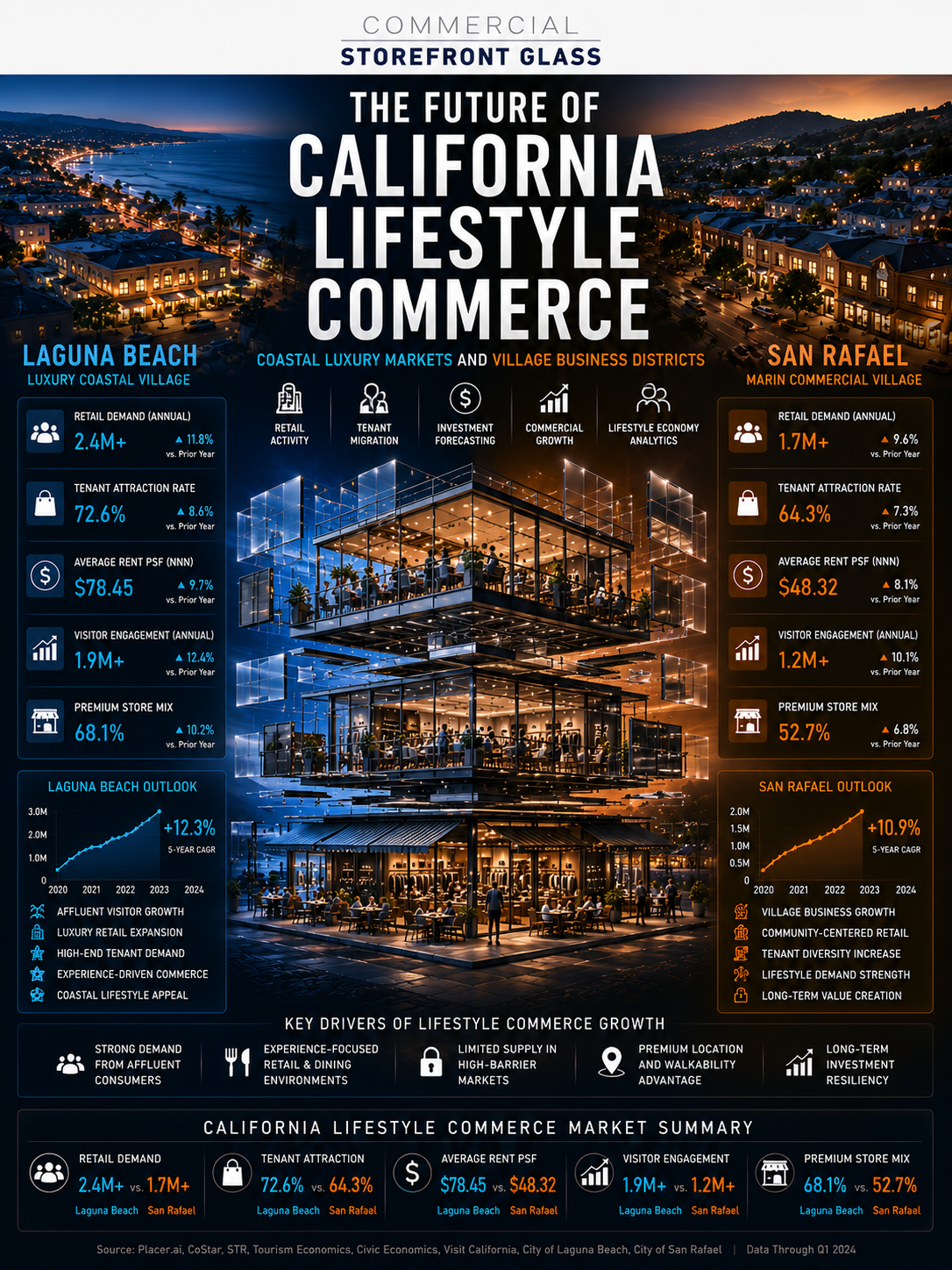
Market Characteristics Comparison
Category | San Rafael | Pleasanton |
Primary Driver | Retail & Mixed-Use Activity | Office & Corporate Environment |
Common Project Type | Storefront Installation | Office Renovation |
Upgrade Focus | Visibility & Customer Experience | Workplace Quality & Performance |
Key Property Types | Retail, Restaurant, Medical | Office, Corporate, Professional |
Demand Source | Tenant Improvements | Building Modernization |
Long-Term Trend | Commercial Revitalization | Office Repositioning |
Commercial glass demand remains strong throughout both communities.
San Rafael often wins when storefront presentation drives investment.
Pleasanton frequently leads when office modernization and workplace improvements become the priority.