


Commercial Security Glass vs Residential Impact Glass — Storefront Protection And Property Risk Management
Similar Materials. Different Risks.
At first glance, commercial security glass and residential impact glass may appear to solve the same problem.
Both are designed to improve protection.
Each helps properties respond to external threats.
Durability remains important in both environments.
However, the risks facing a commercial property are often very different from those facing a home.
A storefront may protect inventory, employees, customers, and business operations.
Residential systems typically focus on homeowners, families, and storm resilience.
Because the objectives differ, the decision-making process frequently differs as well.
Commercial Properties Must Manage Risk
Every commercial building carries responsibility.
Employees work inside.
Customers enter daily.
Inventory may have significant value.
Operations often depend on uninterrupted access.
As a result, storefront protection becomes part of a broader risk management strategy.
Common Commercial Concerns
- Property damage
- Business interruption
- Liability exposure
- Asset protection
- Occupant safety
- Operational continuity
These priorities often shape how commercial security glass is evaluated.
Residential Impact Glass Often Focuses On Weather
Homes face a different set of challenges.
Storm protection is frequently the primary objective.
Wind events can influence design decisions.
Coastal exposure may affect material selection.
Long-term durability remains important.
Unlike commercial properties, however, residential systems are rarely evaluated based on customer access, tenant attraction, or operational performance.
Homeowners simply have different priorities.
Storefront Protection Extends Beyond The Glass
Commercial storefront systems are highly visible.
Customers interact with them daily.
Employees depend on them constantly.
Tenants often view them as part of the overall quality of the property.
Because storefront systems influence so many aspects of commercial operations, security planning often extends beyond physical protection alone.
Appearance matters.
Accessibility matters.
Customer experience matters.
Business continuity matters.
Each objective contributes to the broader performance of the property.
Business Interruption Can Create Significant Costs
A homeowner and a business owner often view downtime differently.
Residential damage can be inconvenient.
Commercial disruption can affect revenue.
Customers may go elsewhere.
Operations may slow.
Tenants may experience interruptions.
Consequently, many commercial security discussions focus on minimizing operational impacts as much as protecting the physical structure itself.
That distinction rarely exists in residential construction.
Property Risk Management Drives Commercial Decisions
Commercial real estate frequently evaluates improvements through a risk management lens.
Revenue matters.
Occupancy matters.
Liability matters.
Asset protection matters.
Because storefront systems sit at the intersection of these concerns, security glass often becomes part of larger ownership and management strategies.
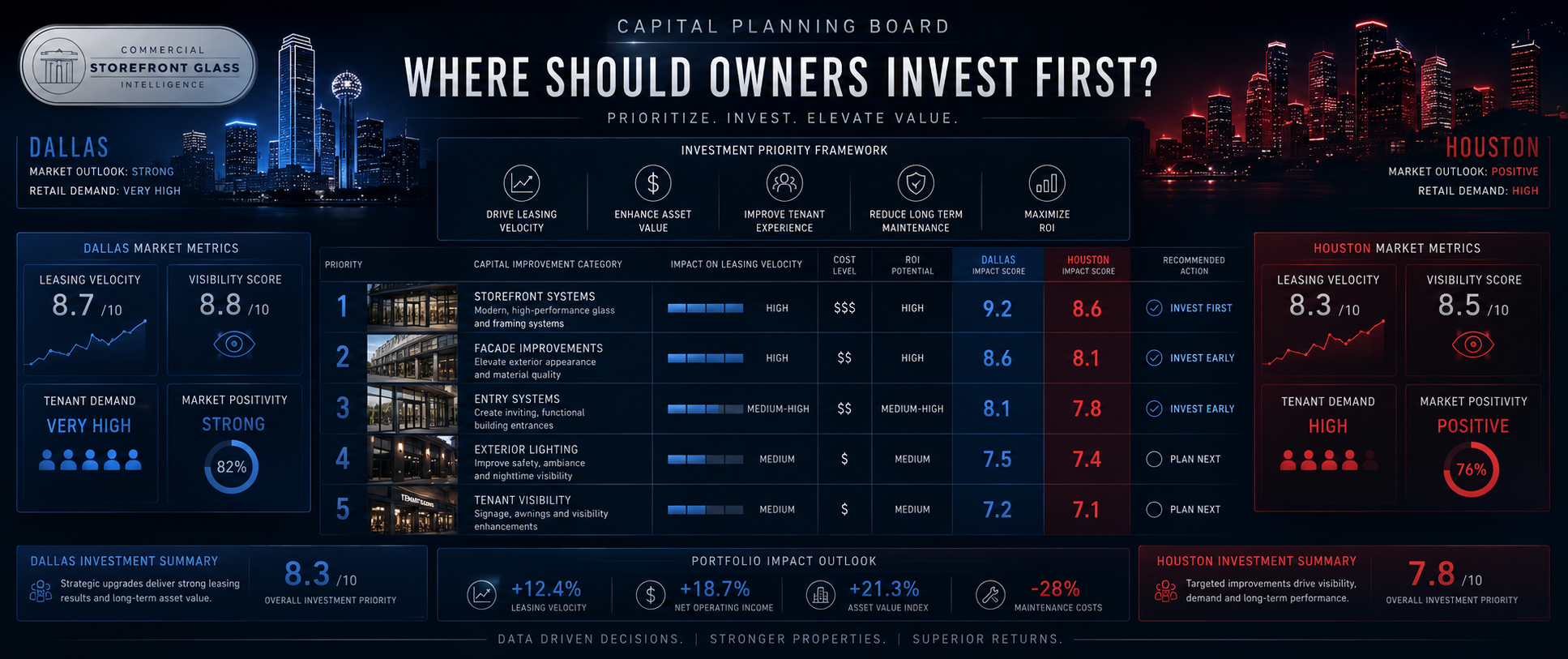
Commercial Ownership Priorities
Objective | Why It Matters |
Asset protection | Preserve property value |
Operational continuity | Support business activity |
Occupant safety | Protect people |
Liability management | Reduce exposure |
Property image | Maintain confidence |
Long-term performance | Protect investments |
These considerations rarely influence residential decisions to the same degree.
Customer Experience Still Matters
Protection is important.
Visibility remains important as well.
Commercial properties must balance multiple objectives simultaneously.
An overly restrictive environment can affect customer perception.
A welcoming storefront often supports engagement.
Natural light contributes to comfort.
Consequently, storefront security strategies frequently seek equilibrium between protection and experience.
Residential properties rarely face that challenge.
Customer interaction is simply not part of the equation.
Building Performance Includes More Than Security
Commercial buildings are evaluated holistically.
Exterior systems contribute to property performance.
Storefront systems influence perception.
Modernization affects competitiveness.
Operational reliability supports long-term value.
Because security glass exists within this broader framework, many ownership groups evaluate protection alongside building performance objectives.
The strongest solution is not always the most fortified.
Often, the best outcome balances resilience, visibility, customer experience, and operational needs.
Scale Creates Different Requirements
A single-family residence may contain a limited number of openings.
A shopping center can contain hundreds.
Office buildings often feature extensive glazing.
Mixed-use developments may incorporate entire streetscapes of storefront systems.
Greater scale creates additional considerations.
Maintenance planning becomes more complex.
Risk exposure may increase.
Operational requirements become more demanding.
Those realities frequently influence commercial security strategies.
Modernization Frequently Includes Security Improvements
Many commercial properties undergo upgrades as markets evolve.
Tenant expectations change.
Security concerns shift.
Ownership objectives expand.
Consequently, modernization efforts often include storefront improvements designed to support both protection and performance.
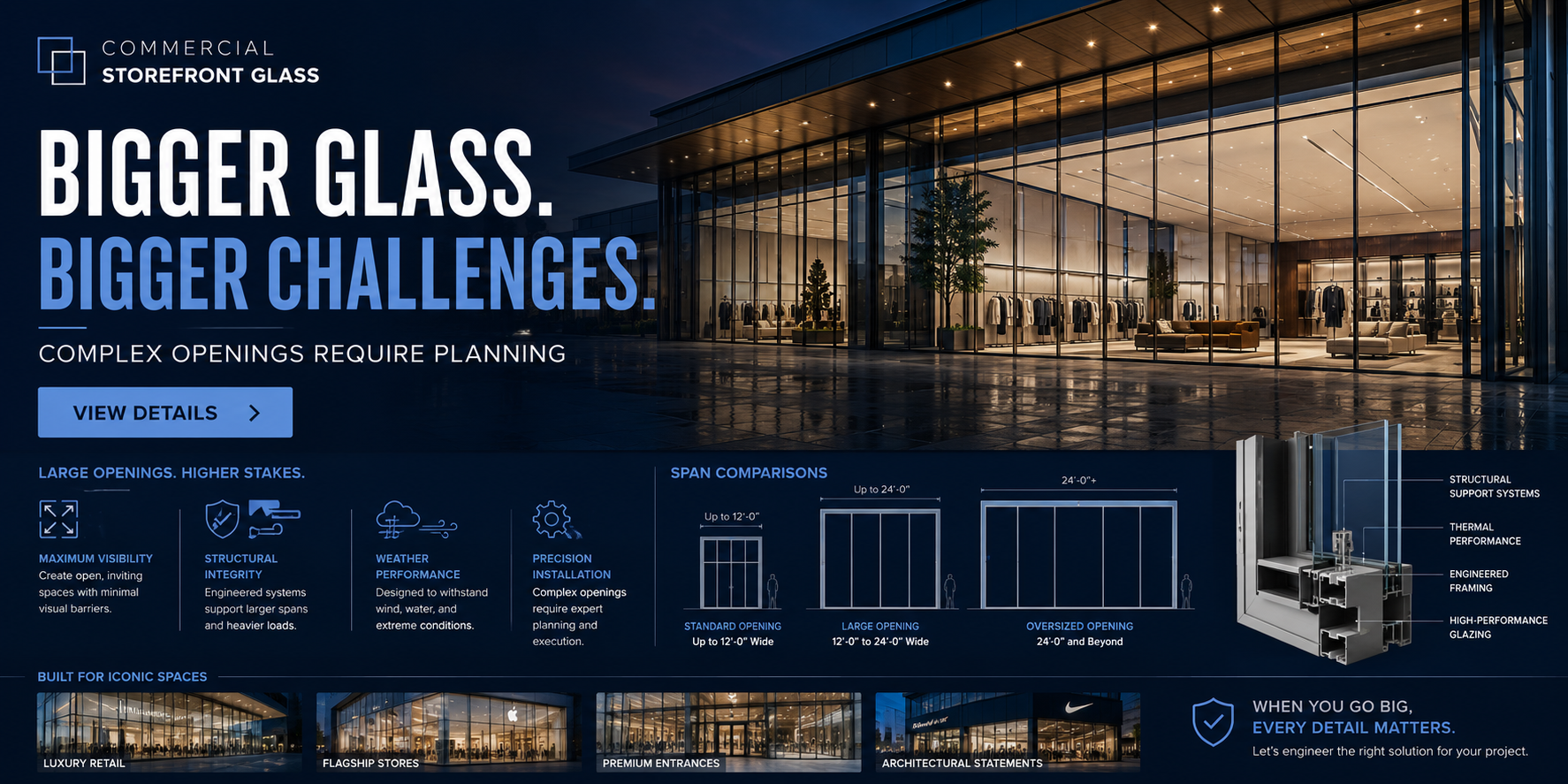
Common Modernization Goals
- Improve storefront security
- Enhance property image
- Support tenant attraction
- Strengthen building performance
- Protect long-term value
- Improve competitiveness
Security upgrades often contribute to several of these objectives simultaneously.
Different Ownership Models Create Different Priorities
Commercial real estate operates as an income-producing asset.
Performance matters.
Occupancy matters.
Business continuity matters.
Meanwhile, residential ownership typically focuses on lifestyle, comfort, and family needs.
That distinction shapes nearly every security-related decision.
One environment protects business activity.
The other protects personal living spaces.
Although the materials may appear similar, the goals behind them are fundamentally different.
Key Differences At A Glance
Commercial Security Glass
- Storefront protection
- Asset preservation
- Occupant safety
- Risk management
- Operational continuity
- Property performance
Residential Impact Glass
- Storm resilience
- Weather protection
- Homeowner safety
- Long-term durability
- Comfort
- Residential security
Both systems provide protection.
The purpose behind that protection changes dramatically depending on the property.
Protection Means Different Things In Different Buildings
Commercial properties must balance security with business performance.
Residential properties focus on protecting homes and families.
One environment prioritizes customers, tenants, employees, and operations.
The other prioritizes personal safety and everyday living.
Understanding that distinction helps explain why commercial security glass and residential impact glass are often evaluated through entirely different frameworks.
While the materials may look similar, the ownership objectives, risk exposure, and performance expectations behind them are not.