


Commercial Storefront Glass: Replace vs Retrofit
When Should You Replace a Commercial Storefront Instead of Retrofitting It?
Every commercial property eventually reaches an important decision. Should the existing storefront system be upgraded and preserved, or is it time for a complete replacement?
From the perspective of commercial storefront glass, both retrofit and replacement can provide significant value when applied to the right building. The best choice depends on the condition of the existing storefront, the performance goals of the property, current building codes, long-term ownership plans, and the overall lifecycle of the building.
Whether managing an office tower, retail center, healthcare campus, hotel, industrial headquarters, restaurant, or mixed-use development, understanding the difference between retrofit and replacement helps property owners make informed long-term investment decisions.
What Is a Storefront Retrofit?
A retrofit improves portions of an existing storefront system while leaving much of the original framework in place.
Common retrofit projects include:
Replacing insulated glass units.
Installing energy-efficient Low-E glass.
Upgrading door hardware.
Replacing weather seals.
Repairing damaged framing components.
Improving accessibility.
Modernizing entrances.
When the structural framing remains in good condition, retrofitting may improve performance while reducing construction time and minimizing disruption to building operations.
For many occupied commercial buildings, retrofits offer an efficient path to modernization.
What Is a Complete Storefront Replacement?
Replacement involves removing the existing storefront system and installing an entirely new one.
A replacement project may include:
New aluminum framing.
New insulated glazing.
Modern entrance systems.
Updated hardware.
Improved thermal performance.
Current accessibility standards.
Revised structural anchoring.
Enhanced weather protection.
Complete replacement allows architects and property owners to redesign the storefront while improving nearly every aspect of building performance.
It also creates opportunities to address aging infrastructure that may no longer meet modern expectations.
Age Often Influences the Decision
Many commercial storefront systems remain in service for decades.
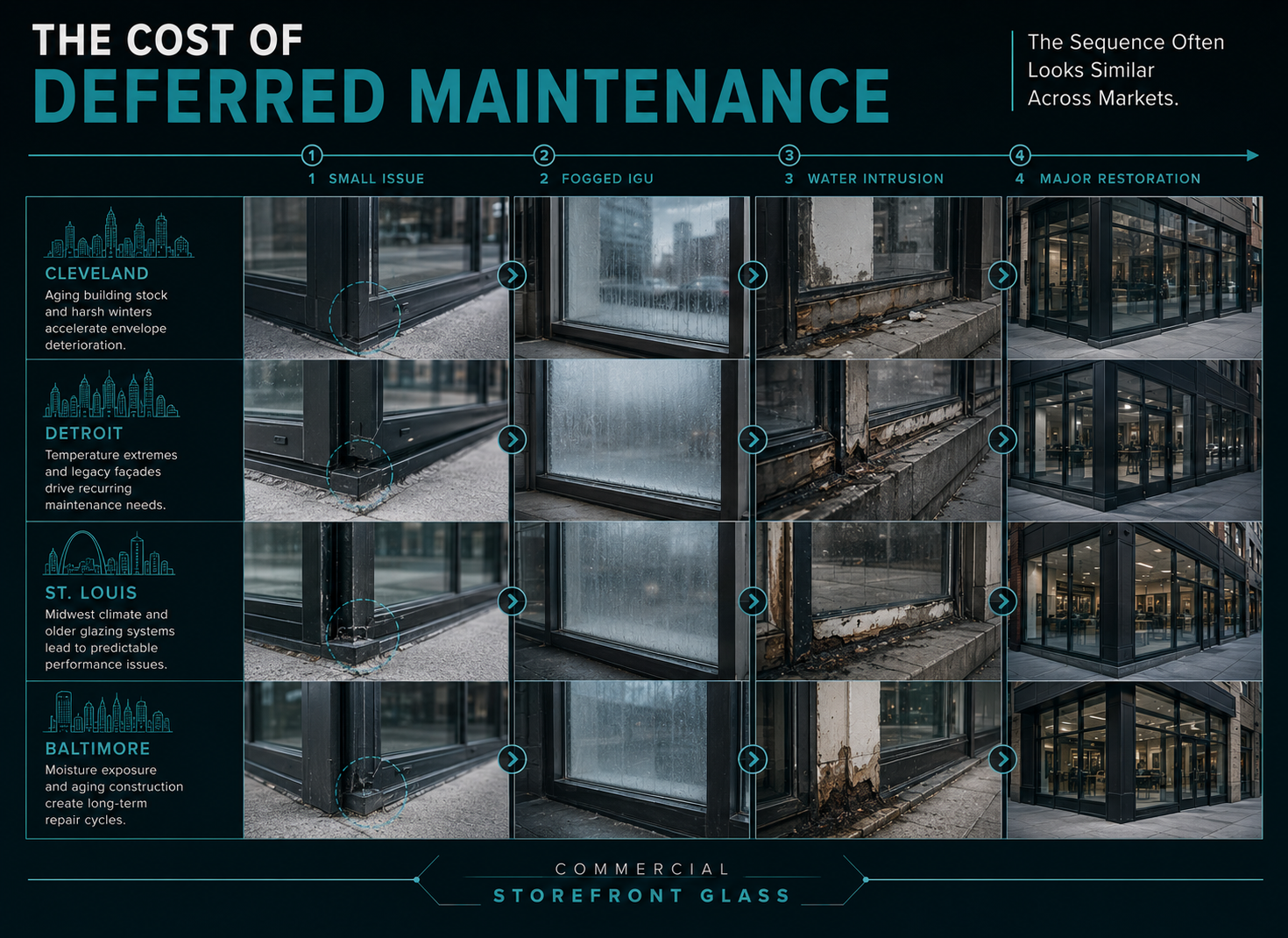
Over time, however, buildings may experience:
Seal failures.
Corroded hardware.
Air infiltration.
Water intrusion.
Outdated glazing.
Thermal inefficiency.
Visible wear.
When isolated issues exist, retrofit may provide an effective solution.
When multiple components have reached the end of their useful life, replacement often becomes the more practical long-term investment.
The condition of the entire system matters more than the age alone.
Energy Performance May Justify Replacement
Energy efficiency standards continue evolving.
Older storefront systems often lack:
Thermally broken framing.
Modern insulated glazing.
Low-emissivity coatings.
Improved weather sealing.
Advanced thermal performance.
Replacing an outdated storefront may significantly improve occupant comfort while reducing heating and cooling demands over the life of the building.
For buildings with high energy consumption, long-term operational savings frequently become an important part of the replacement decision.
Commercial storefront glass contributes directly to building efficiency.
Retrofit Minimizes Operational Disruption
Many occupied commercial properties cannot easily shut down.
Retail centers continue serving customers.
Hospitals operate around the clock.
Office buildings remain occupied.
Hotels welcome guests every day.
Medical clinics maintain patient schedules.
When appropriate, retrofitting portions of an existing storefront can reduce construction impacts while allowing businesses to continue operating.
Careful planning helps minimize disruption while extending the useful life of the storefront.
Replacement Creates New Design Opportunities
Sometimes the objective extends beyond performance.
Property owners may want to:
Modernize building appearance.
Increase glass area.
Improve visibility.
Create larger entrances.
Update branding.
Enhance curb appeal.
Support tenant attraction.
Complete replacement allows architects to redesign the storefront while improving energy efficiency, accessibility, security, and long-term durability.
The storefront becomes an opportunity to reposition the entire property.
General Contractors Evaluate the Entire Building
The decision between retrofit and replacement rarely focuses on glass alone.
General contractors evaluate:
Structural framing.
Waterproofing.
Building envelope performance.
Accessibility requirements.
Mechanical systems.
Future maintenance.
Tenant improvements.
Long-term ownership goals.
Commercial glazing contractors work alongside architects and engineers to determine whether the existing storefront can continue performing reliably or whether replacement offers greater long-term value.
Every project requires a comprehensive evaluation.
Lifecycle Costs Matter More Than Initial Cost
Choosing the lower initial cost does not always produce the lowest lifetime expense.
A well-executed retrofit may extend service life for many years.
A complete replacement may reduce maintenance, improve efficiency, increase tenant satisfaction, and postpone future repairs for decades.
Evaluating lifecycle costs—including maintenance, utility expenses, repair frequency, occupant comfort, and long-term property value—often leads to better investment decisions than focusing solely on construction cost.
Commercial storefront systems should be evaluated over their entire service life.
The Right Solution Depends on the Building
Every commercial property has different priorities.
A historic office building may benefit from carefully planned retrofits.
A retail center undergoing repositioning may require complete replacement.
A healthcare campus may prioritize uninterrupted operations.
A corporate headquarters may seek a dramatic architectural transformation.
Commercial storefront glass provides flexible solutions capable of supporting either approach when properly engineered and professionally installed.
The best decision reflects the building’s condition, performance goals, and future plans.
Replace vs Retrofit—Choosing the Right Commercial Storefront Strategy
Both retrofit and replacement play valuable roles in commercial building modernization. Retrofitting can improve performance while minimizing disruption and preserving existing infrastructure. Complete replacement provides opportunities to redesign the building envelope, improve energy efficiency, enhance architectural appearance, and extend long-term service life.
For developers, architects, property owners, facility managers, and general contractors, understanding the differences between replace and retrofit helps guide smarter investment decisions that balance immediate project goals with decades of future building performance.
Whether renovating a neighborhood retail center, upgrading a healthcare facility, modernizing a downtown office tower, repositioning a mixed-use development, or improving an industrial headquarters, commercial storefront glass offers solutions that strengthen durability, efficiency, occupant comfort, and long-term commercial value.


