

Commercial Facility Manager Guide to Glass Repair, Replacement & Installation
Facility managers are responsible for keeping commercial buildings operating safely, efficiently, and with minimal disruption to occupants. While commercial glass is often viewed as an architectural feature, it is also a critical building system that affects safety, energy performance, accessibility, maintenance costs, tenant satisfaction, security, and long-term asset value. Whether managing a corporate office, healthcare campus, university, retail center, industrial facility, hospitality property, airport, government building, or mixed-use development, facility managers are continually faced with deciding when to repair existing systems, when replacement provides better long-term value, and when a complete installation is appropriate during renovations or capital projects.
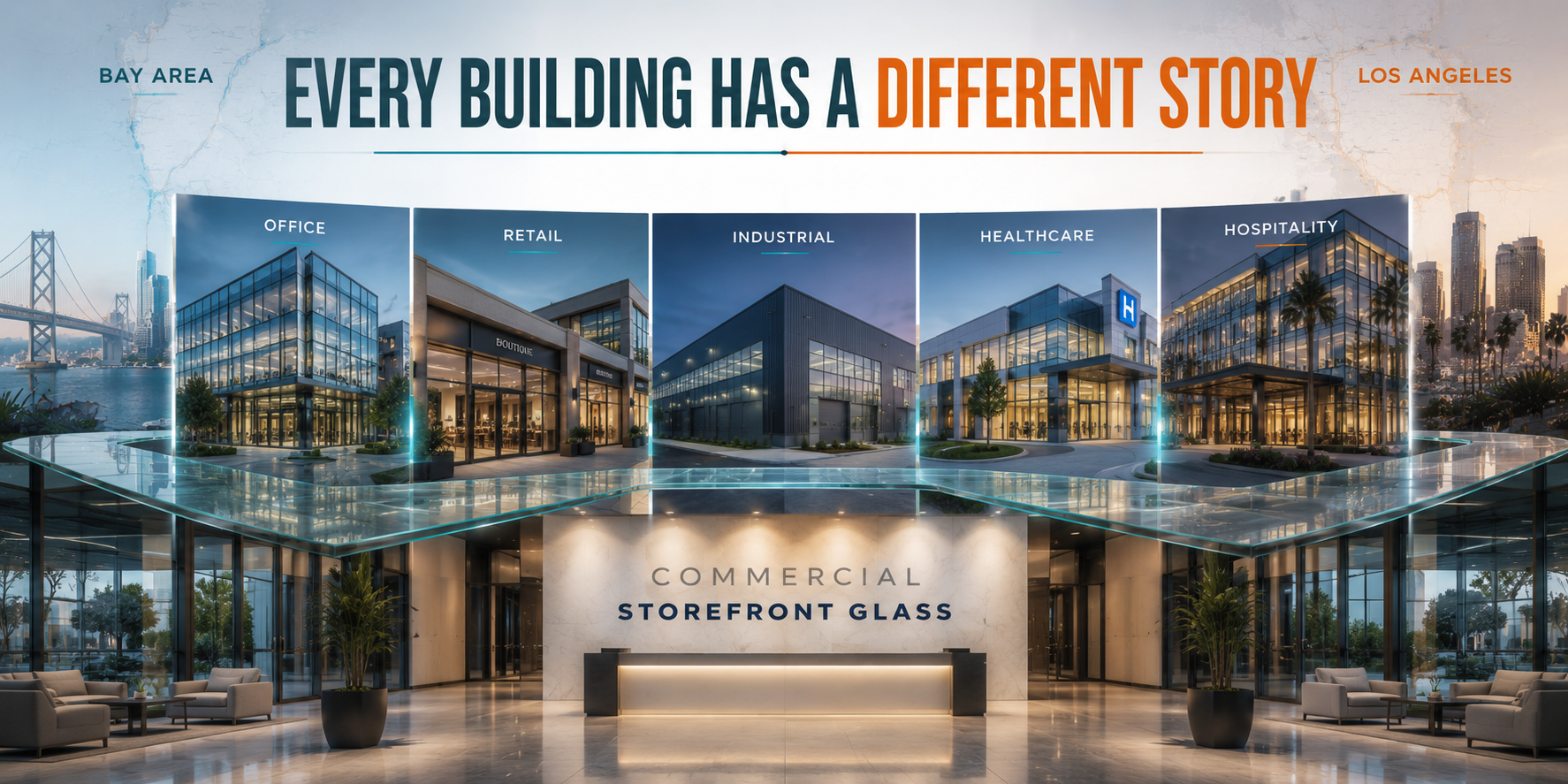
Understanding Commercial Glass as a Building System
Commercial glazing extends far beyond windows.
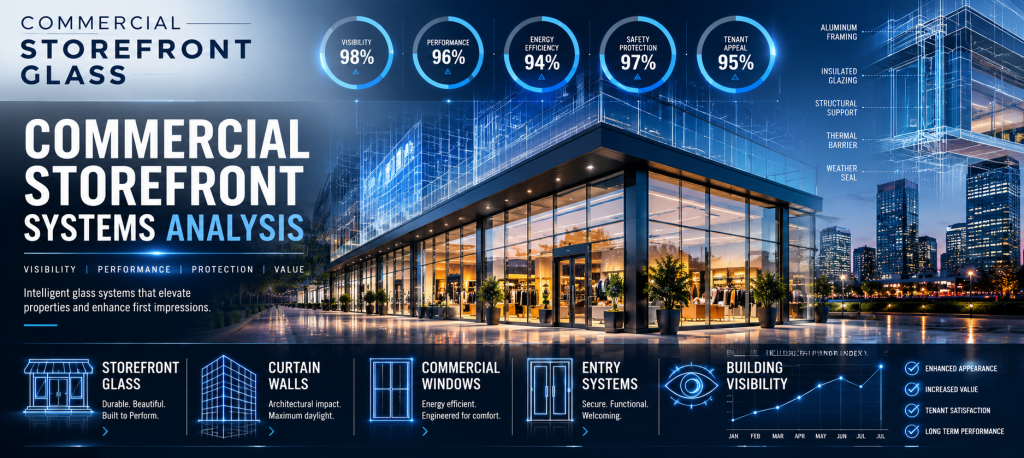
A complete commercial glass system may include:
- Aluminum storefront systems
- Curtain walls
- Commercial windows
- Glass entrances
- Automatic doors
- Fire-rated glazing
- Security glazing
- Interior office glass
- Insulated glass units (IGUs)
- Door hardware
- Building envelope sealants
- Framing systems
Because these systems interact with the building envelope, HVAC performance, accessibility, and security, decisions should consider the building as a whole rather than individual components.
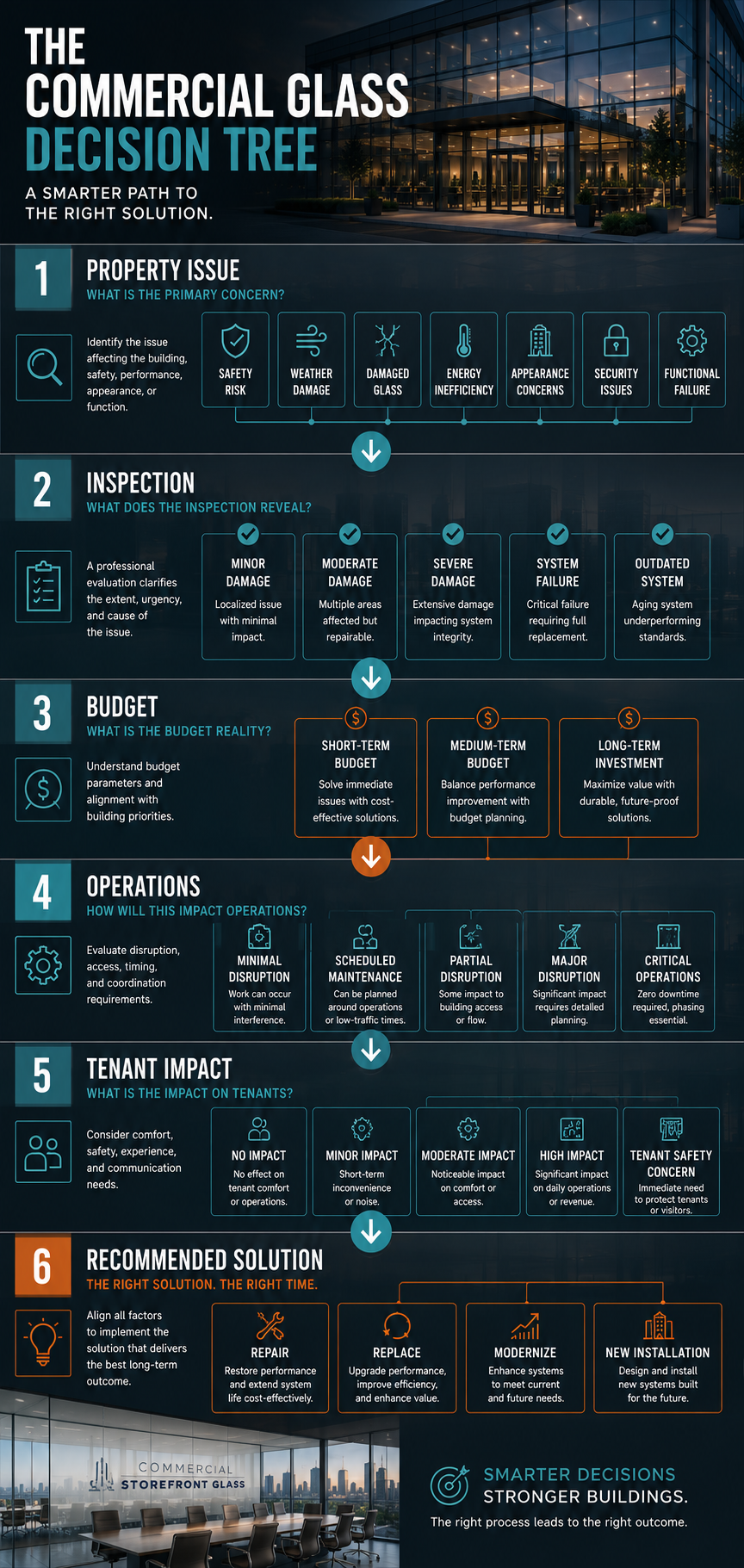
When Repair Makes the Most Sense
Repair is often the most cost-effective solution when the overall system remains structurally sound.
Typical repair situations include:
- Broken glass
- Failed insulated glass units
- Door closer adjustments
- Hardware replacement
- Lock repairs
- Hinge and pivot replacement
- Minor water intrusion
- Sealant replacement
- Automatic door servicing
- Storefront alignment
Timely repairs prevent small issues from becoming larger capital projects while minimizing operational disruptions.
When Replacement Becomes the Better Investment
As glazing systems age, repairs eventually become less economical.
Replacement should be evaluated when:
- Multiple components fail repeatedly
- Water intrusion becomes chronic
- Energy performance declines
- Entrance systems become unreliable
- Building appearance affects leasing
- Maintenance expenses continue rising
- Building modernization is planned
- Tenant expectations evolve
Replacing aging glazing often improves operational reliability while reducing future maintenance costs.
When New Installation Is Appropriate
New installation generally occurs during:
- New construction
- Building expansions
- Major renovations
- Tenant improvements
- Adaptive reuse projects
- Campus redevelopment
- Mixed-use development
- Complete façade modernization
Modern glazing systems frequently improve daylight, energy efficiency, accessibility, security, and long-term building performance.
Preventive Maintenance Priorities
Preventive maintenance is often the highest-return investment for commercial glass.
Facility managers should regularly evaluate:
- Glass condition
- Sealants
- Door alignment
- Automatic operators
- Storefront hardware
- Weatherstripping
- Locking systems
- Water intrusion
- Framing movement
- Accessibility features
Routine inspections help extend service life while reducing emergency repairs.
Managing Risk Before Failures Occur
Commercial glass problems rarely develop overnight.
Common warning signs include:
- Condensation between insulated glass panes
- Water leaks
- Air infiltration
- Difficult door operation
- Loose hardware
- Corrosion
- Damaged framing
- Repeated service calls
- Cracked sealants
- Increasing maintenance costs
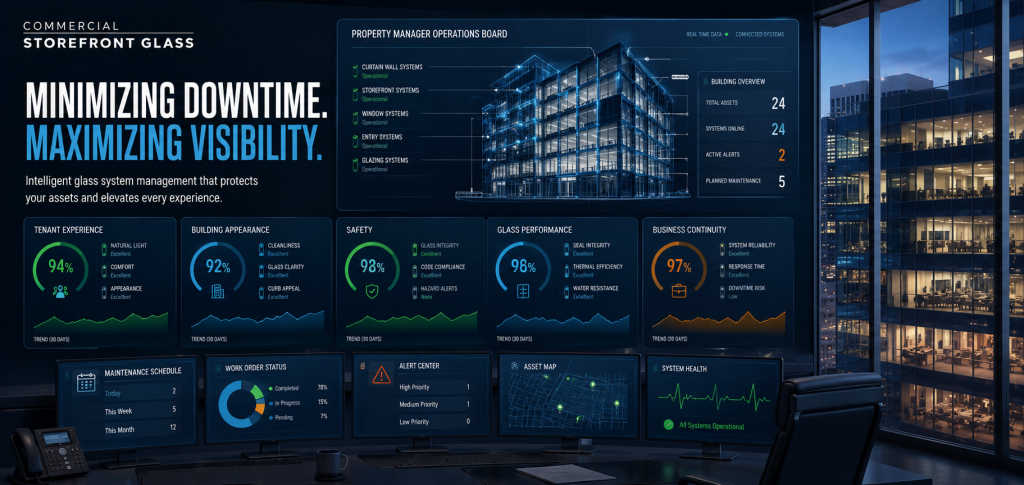
Identifying these issues early helps reduce downtime and protect building operations.
Supporting Building Performance
Commercial glazing influences nearly every aspect of facility performance.
Well-maintained systems help improve:
- Occupant comfort
- Indoor daylight
- Energy efficiency
- Security
- Accessibility
- Weather resistance
- Building appearance
- Operational reliability
- Tenant satisfaction
- Long-term asset value
Because glazing affects multiple building systems simultaneously, it should be evaluated as part of an integrated facility management strategy.
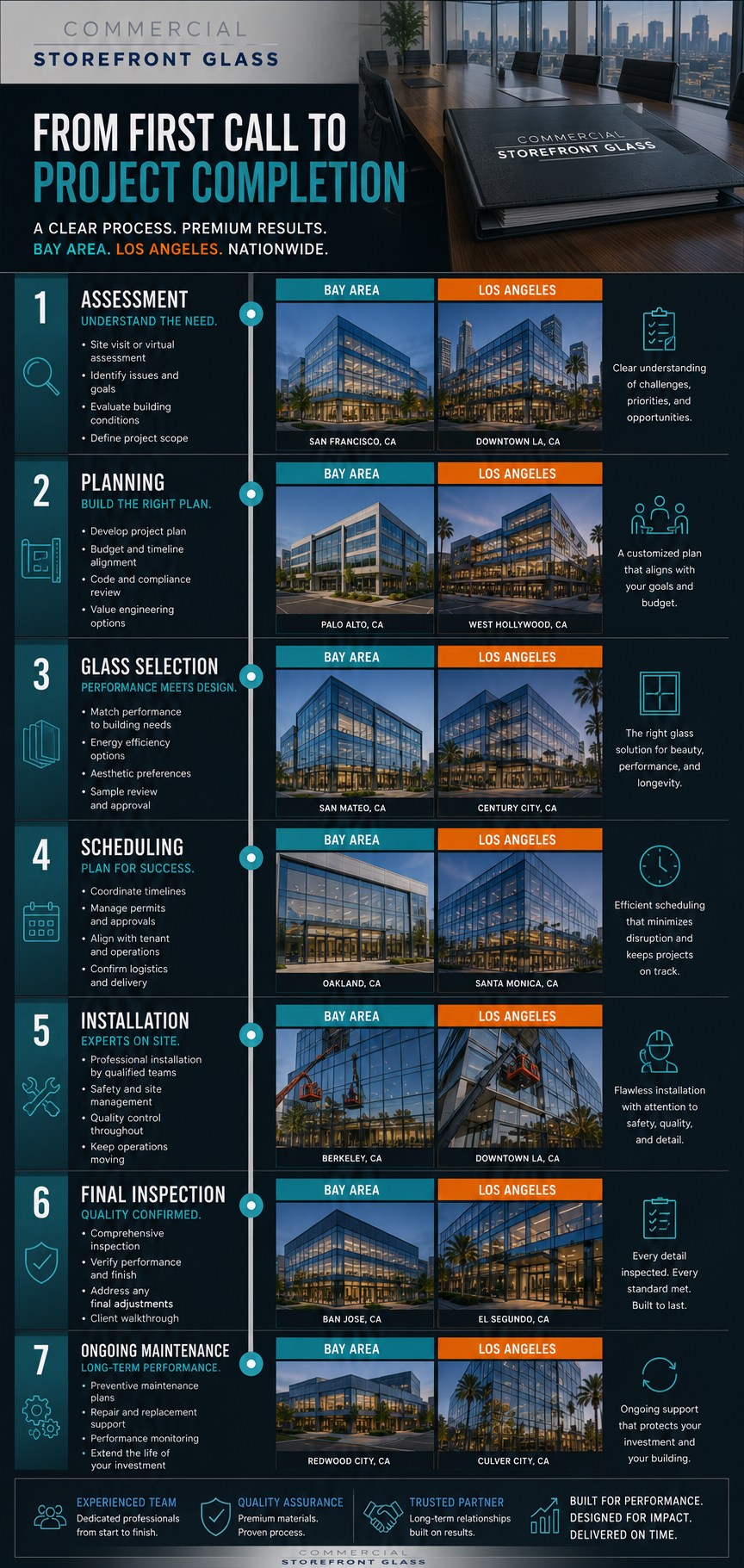
Capital Planning for Commercial Glass
Successful facility managers rarely wait for complete system failure.
Long-term planning often includes:
- Condition assessments
- Remaining service life estimates
- Maintenance forecasting
- Energy evaluations
- Building envelope inspections
- Tenant improvement planning
- Budget forecasting
- Multi-year capital improvement scheduling
Planning ahead allows organizations to coordinate glazing improvements with other building upgrades while minimizing disruption.
Questions Every Facility Manager Should Ask
Before deciding to repair, replace, or install new glazing, consider:
- Is the issue isolated or widespread?
- Is the framing still performing properly?
- Are maintenance costs increasing each year?
- Has energy performance declined?
- Are occupants reporting comfort concerns?
- Is water intrusion becoming more frequent?
- Are future tenant improvements planned?
- Does this project align with the capital improvement schedule?
- Would replacement reduce long-term operating costs?
- How will today’s decision affect the building over the next 10 to 20 years?
These questions help shift decision-making from reactive maintenance toward proactive asset management.
Building Stronger Commercial Facilities
Commercial glass repair, replacement, and installation are all essential tools available to facility managers. Repairs restore performance, replacements modernize aging systems, and new installations prepare buildings for future operational demands. By combining preventive maintenance, lifecycle planning, building envelope awareness, and long-term capital planning, facility managers can reduce operating costs, improve occupant satisfaction, strengthen building performance, and maximize the long-term value of their commercial properties.


