








Commercial Glass Marketing Agency Fails
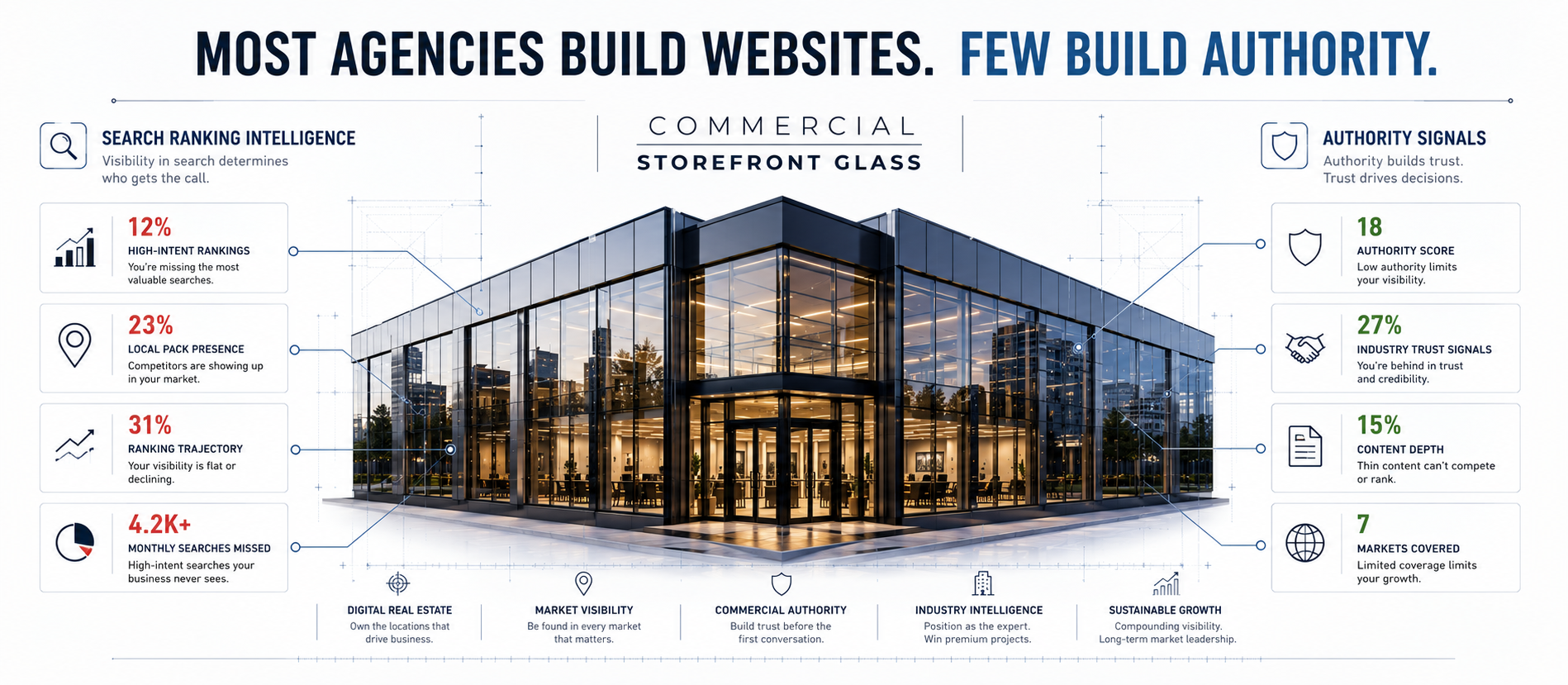
Why Many Marketing Agencies Struggle To Generate Results For Commercial Glass Companies
Commercial storefront glass is not a typical construction niche.
Projects are larger.
Sales cycles are longer.
Decision-makers are more sophisticated.
Buyers often conduct extensive research before contacting a company.
Despite these realities, many commercial glass companies hire marketing agencies that use the same strategies as those for roofers, plumbers, HVAC contractors, and other home service businesses.
The result is predictable.
Money gets spent.
Reports get delivered.
Rankings fluctuate.
Leads remain inconsistent.
Commercial glass marketing requires a different approach because commercial glass buyers behave differently from most consumers.
Understanding where agencies fail helps business owners make better decisions when evaluating marketing partners.
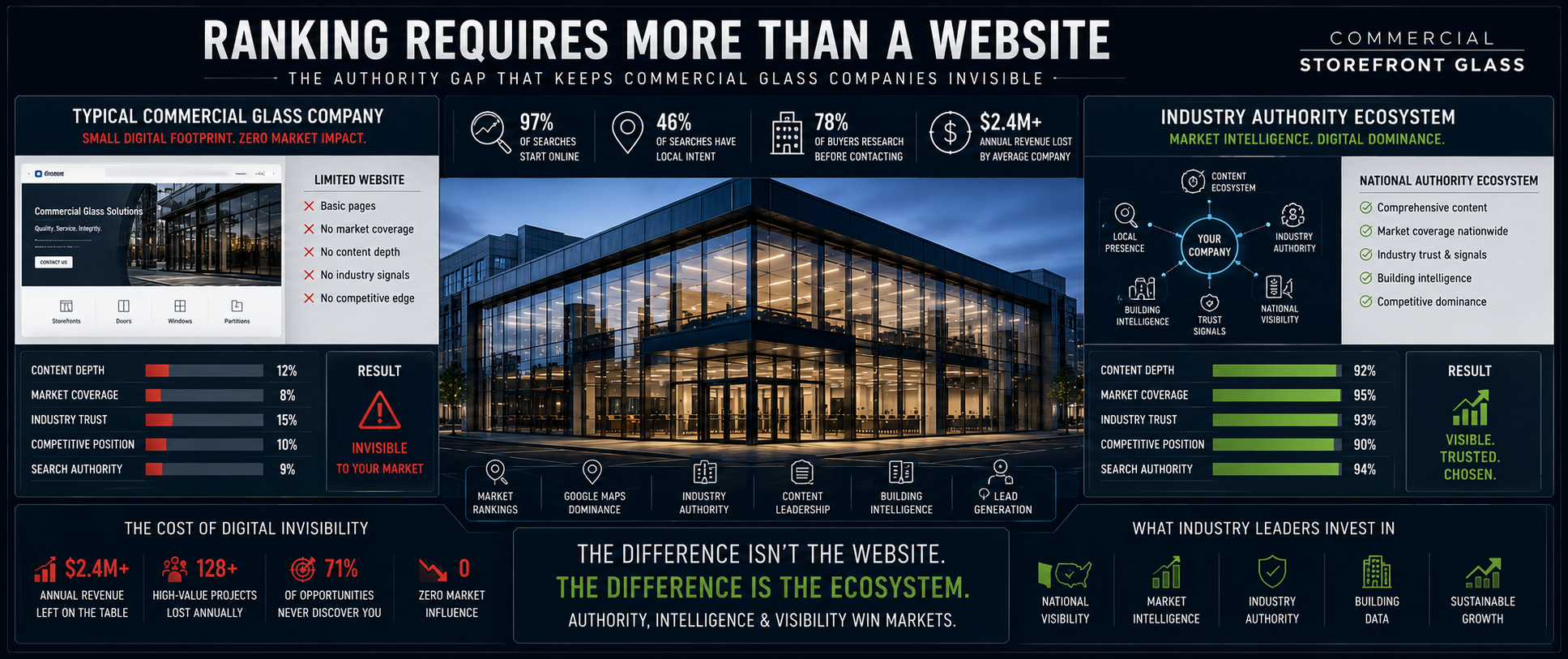
Failure #1: Treating Commercial Glass Like Residential Services
Many agencies approach commercial storefront glass as if it were a residential service.
They build websites focused on:
- Generic service pages
- Basic keyword targeting
- Simple lead forms
- Short-term SEO tactics
Unfortunately, commercial buyers rarely make decisions that way.
A property manager replacing storefront systems for a shopping center does not think like a homeowner replacing a broken window.
A developer evaluating curtain wall contractors follows a different process than a homeowner requesting glass repair.
Commercial projects often involve:
- Multiple stakeholders
- Budget approvals
- Competitive bidding
- Project planning
- Vendor evaluation
- Long-term relationships
Marketing strategies must reflect those realities.
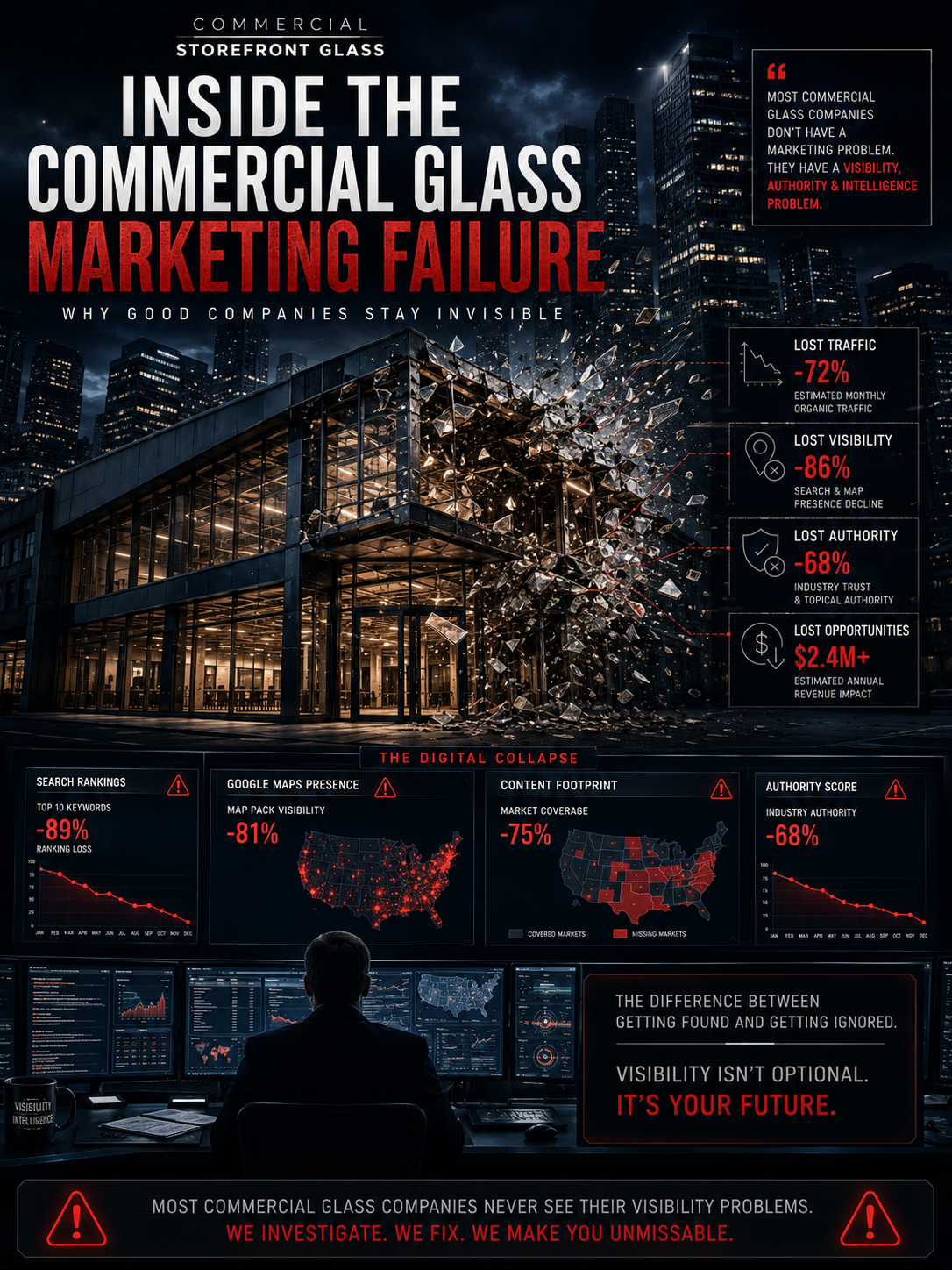
Failure #2: Building Generic Websites
Many commercial glass websites look nearly identical.
Common characteristics include:
- Stock photography
- Generic service descriptions
- Minimal project information
- Weak differentiation
- Little educational content
Visitors frequently leave without learning anything meaningful about the company.
Modern buyers expect more.
Developers want experience.
Property managers want confidence.
Architects want expertise.
General contractors want capabilities.
When every website looks the same, businesses struggle to stand apart from competitors.
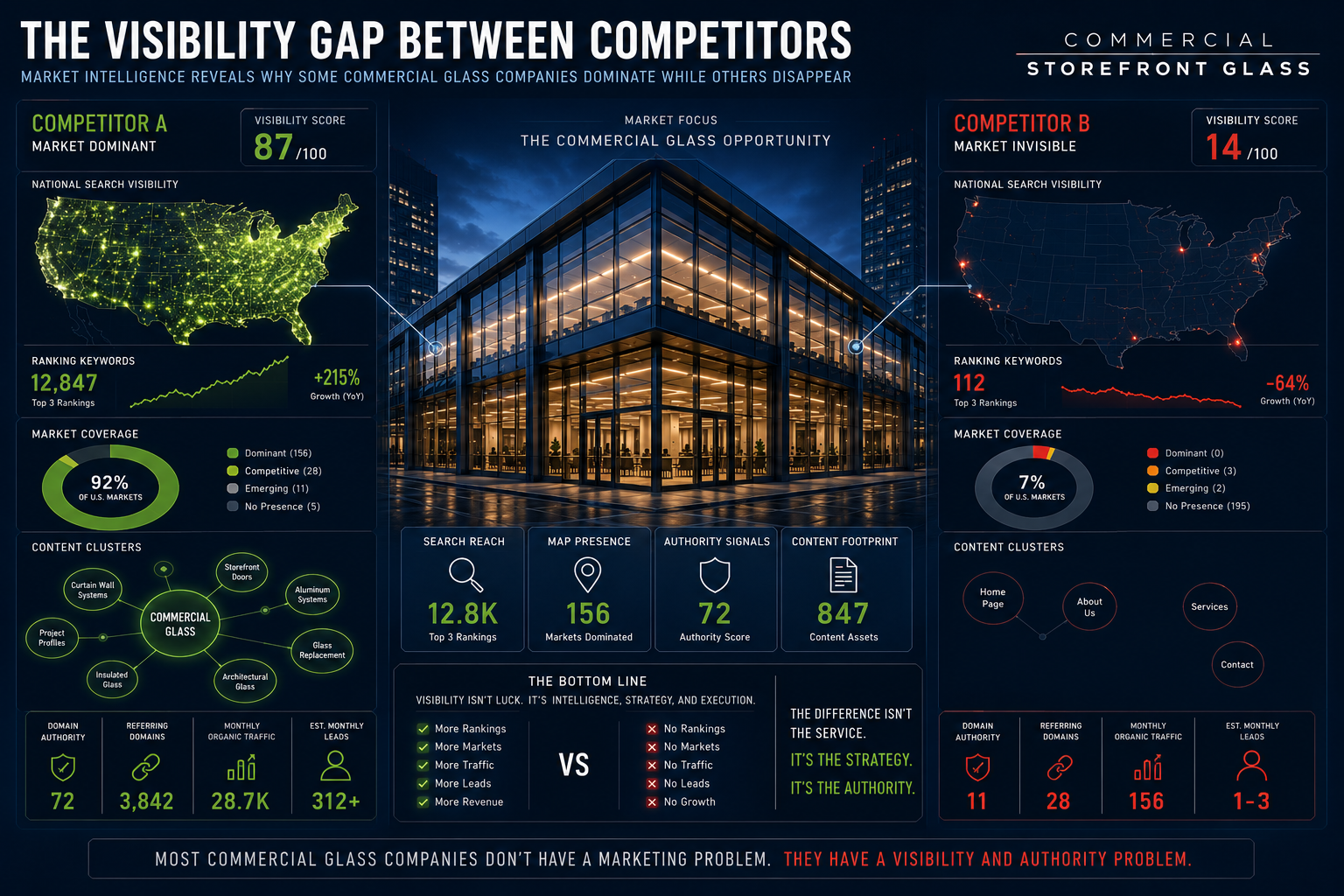
Failure #3: Obsessing Over Keywords Instead Of Authority
Some agencies focus almost entirely on keyword rankings.
Reports often highlight:
- Position changes
- Search volume
- Click-through rates
- Traffic growth
Those metrics matter.
Authority matters more.
Commercial buyers often choose companies they trust.
Trust develops through:
- Experience
- Education
- Visibility
- Reputation
- Demonstrated expertise
A company can rank well while generating very little confidence.
Strong authority helps convert visibility into opportunity.
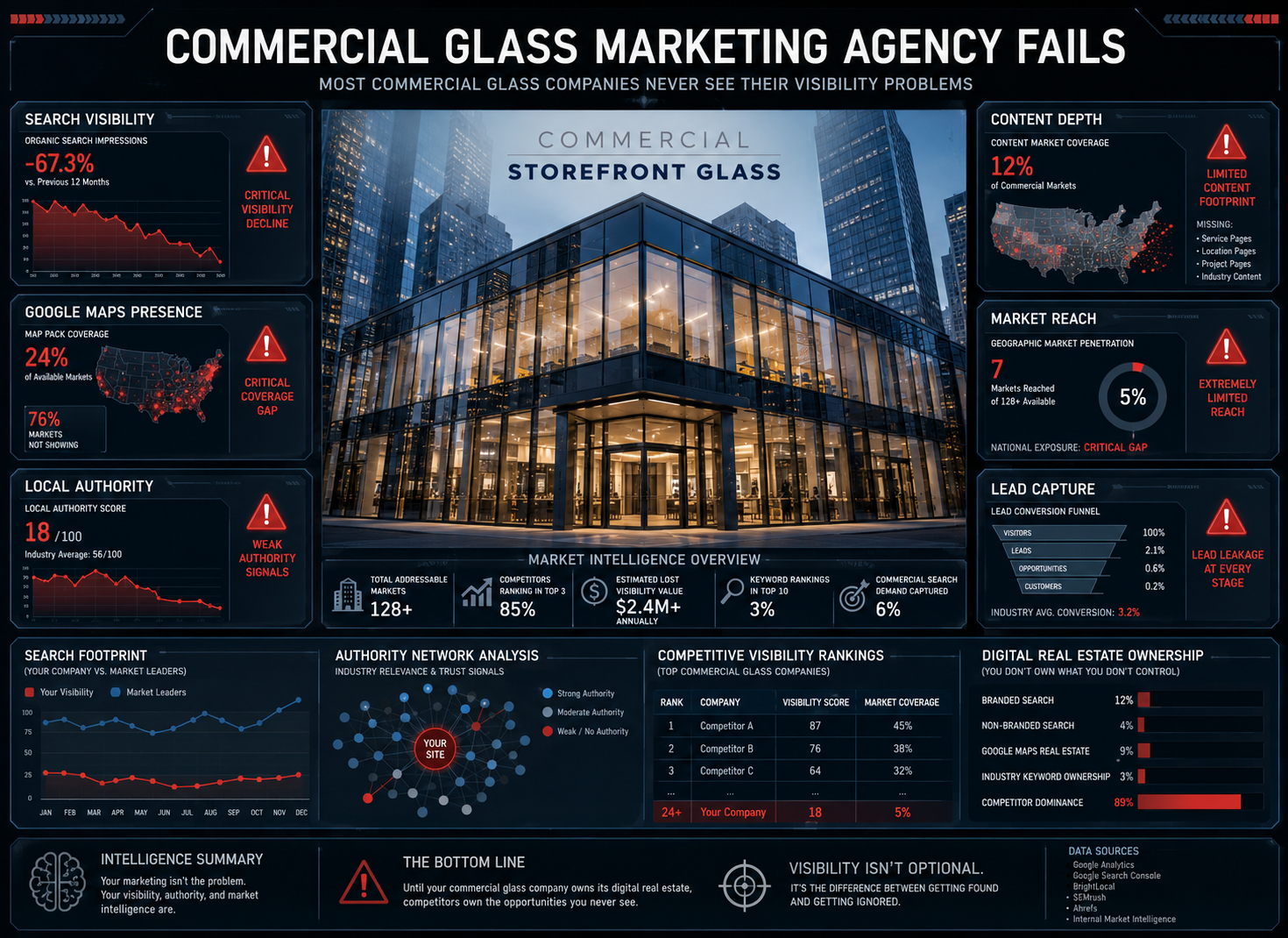
Failure #4: Ignoring Commercial Buyer Psychology
Commercial buyers rarely make emotional decisions.
Research plays a significant role.
Evaluation takes time.
Risk management influences every step of the process.
Potential clients often ask questions such as:
- Can this company handle our project?
- Have they completed similar work?
- Do they understand our industry?
- Are they financially stable?
- Will they perform as promised?
Many marketing campaigns fail because they never address those concerns.
Instead, they focus exclusively on attracting clicks.
Commercial decision-makers require much more information before taking action.
Failure #5: Producing Thin Content
Content remains one of the most misunderstood aspects of commercial marketing.
Many agencies publish short articles that offer little value.
Topics are often shallow.
Information lacks depth.
Readers leave without learning anything useful.
Commercial buyers frequently research:
- Storefront systems
- Curtain walls
- Impact glass
- Building modernization
- Energy efficiency
- Commercial development trends
- Environmental challenges
Companies that consistently provide useful information often build stronger authority over time.
Educational content becomes an asset that continues working long after publication.
Failure #6: Ignoring Market Differences
Commercial glass markets vary dramatically across the country.
New York City presents different opportunities than Phoenix.
Chicago faces different environmental pressures than Miami.
Denver operates differently from Houston.
Many agencies create identical campaigns regardless of location.
That approach overlooks critical market factors such as:
- Climate
- Development activity
- Building types
- Local competition
- Economic conditions
- Commercial growth patterns
Successful strategies often reflect the unique characteristics of individual markets.
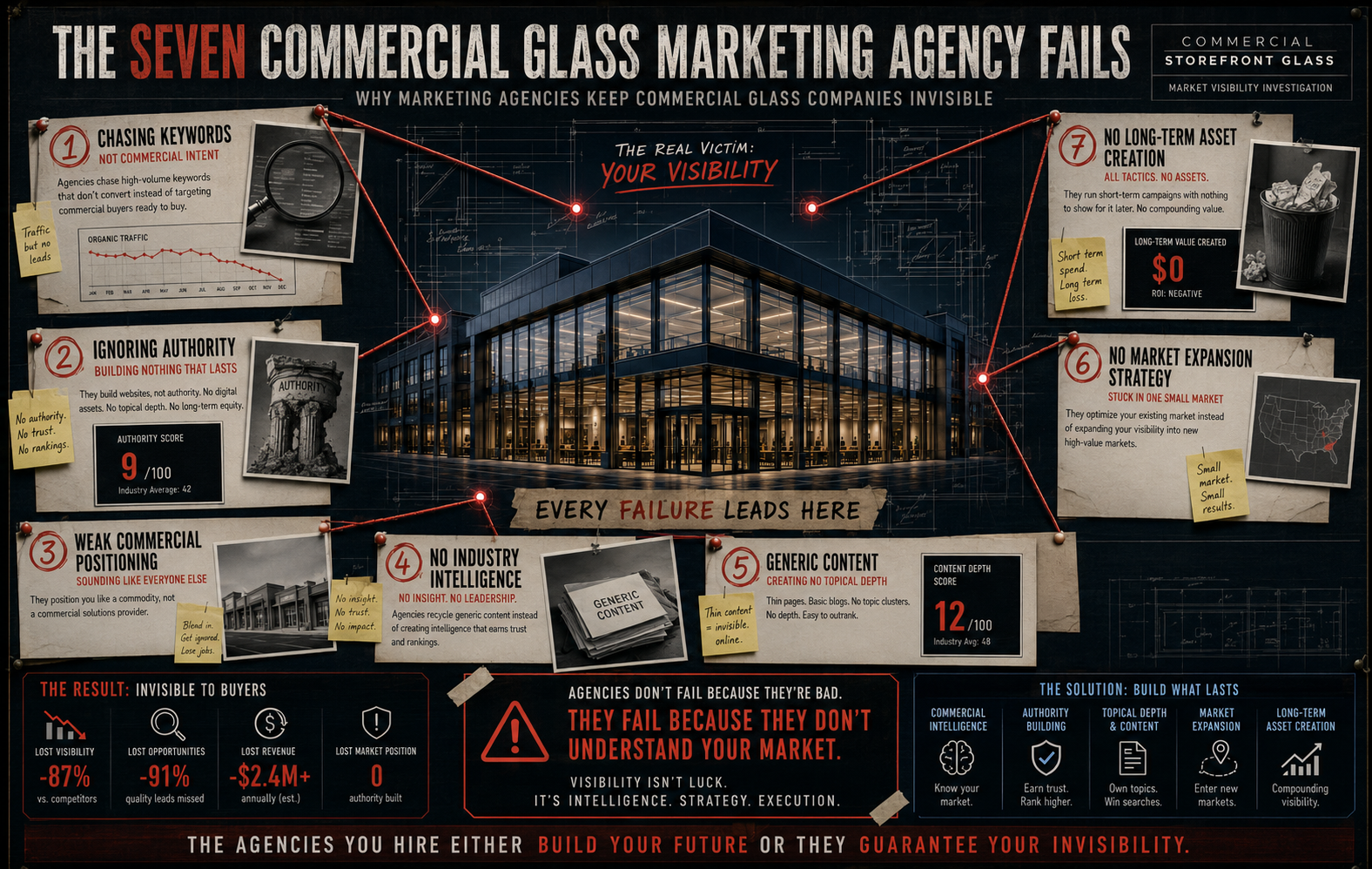
Failure #7: Focusing Only On Leads
Lead generation receives enormous attention.
Visibility often receives far less.
Many agencies promise immediate leads while ignoring the foundation required to generate them consistently.
Commercial growth is typically driven by several factors working together.
These include:
- Authority
- Visibility
- Reputation
- Relationships
- Referrals
- Content
- Search presence
Leads are frequently the result of those efforts rather than the starting point.
Companies that focus exclusively on lead generation may overlook opportunities to strengthen their long-term market position.
Failure #8: Forgetting About Industry Education
Most commercial glass websites discuss services.
Few discuss the industry itself.
Buyers often research topics beyond installation.
Common interests include:
- Commercial construction trends
- Glass technologies
- Building modernization
- Environmental exposure
- Material comparisons
- Market analysis
Educational resources help companies demonstrate expertise while creating opportunities to reach potential clients earlier in the research process.
Knowledge becomes a competitive advantage.
Failure #9: Measuring The Wrong Metrics
Many agencies highlight numbers that sound impressive but contribute little to actual business growth.
Examples include:
- Page views
- Impressions
- Social engagement
- Keyword counts
Those metrics can be useful.
However, commercial glass companies should also evaluate:
- Authority growth
- Market visibility
- Branded searches
- Project inquiries
- Industry recognition
- Referral opportunities
- Content reach
Meaningful growth often comes from strengthening overall market presence rather than chasing isolated statistics.
Failure #10: Thinking Short-Term
Commercial storefront glass operates within a relationship-driven industry.
Reputation compounds.
Authority compounds.
Content compounds.
Visibility compounds.
Unfortunately, many marketing campaigns are designed around short-term expectations.
Companies frequently abandon strategies before meaningful momentum develops.
Sustainable growth usually requires consistency, patience, and ongoing investment in visibility and expertise.
Organizations willing to think long-term often create significant advantages over competitors focused solely on immediate results.
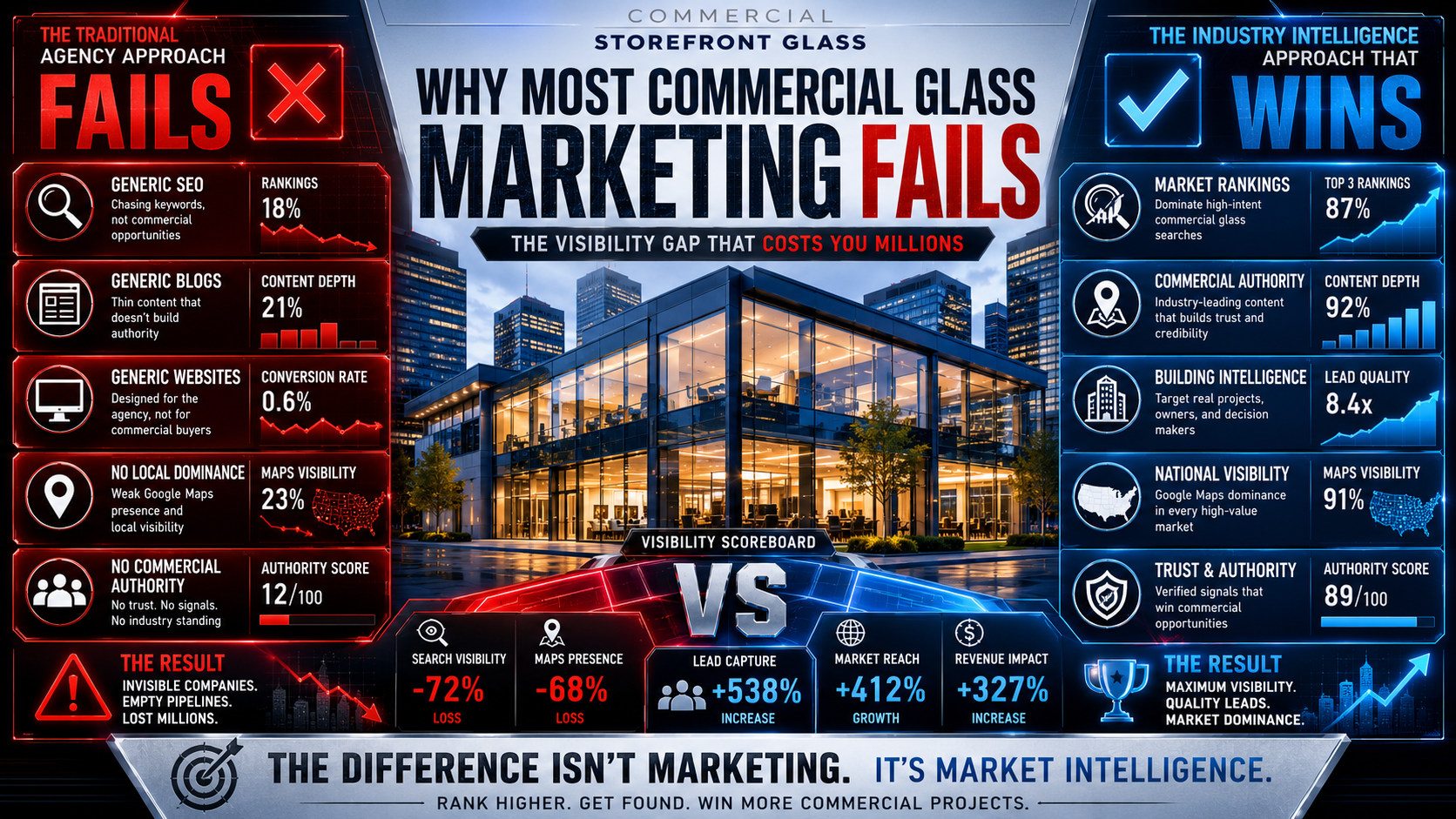
The Best Commercial Glass Marketing Agencies Think Differently
Successful agencies understand that commercial storefront glass is not simply another category for contractors.
Commercial buyers behave differently.
Projects follow different timelines.
Research patterns are more extensive.
Decision-making processes are more complex.
The strongest marketing strategies reflect those realities.
Rather than focusing exclusively on rankings or leads, effective campaigns help companies build authority, increase visibility, educate buyers, strengthen trust, and establish long-term market presence.
Businesses that achieve those goals often discover that leads become a natural byproduct of becoming easier to find, easier to trust, and easier to remember.
In the commercial glass industry, visibility creates opportunity. Authority creates confidence. Consistency creates momentum.