




What Is a Tenant Improvement Contractor? A Complete Guide for Commercial Property Owners
A tenant improvement contractor is a licensed commercial builder who converts leased space into a finished, occupancy-ready environment. Owners, tenants, and property managers hire this contractor to run demolition, framing, tenant improvement glass, mechanical trades, finishes, and inspections under one contract.
Because the work happens inside an occupied building and against a lease deadline, the role is different from ground-up construction. This guide explains what the contractor does, how the leasehold improvements process works, and what property owners should expect at each stage.
What a Tenant Improvement Contractor Actually Does
A tenant improvement contractor coordinates every trade required to build out a commercial suite. That scope usually includes selective demolition, metal-stud framing, drywall and ceilings, storefront and interior glass, doors and hardware, electrical and lighting, HVAC distribution, plumbing, flooring, paint, millwork, and signage.
The contractor also manages the paperwork that keeps a project legal and on schedule: permit applications, plan-check responses, inspection scheduling, certificate of occupancy, and the closeout package of warranties and as-built drawings.
- One contract and one point of accountability for the whole build-out
- A dedicated superintendent on site to direct subcontractors daily
- Weekly reporting on schedule, budget, and open decisions
- Coordination with the landlord, architect, and building department
Tenant Improvement vs. New Construction
New construction starts with an empty site. Tenant improvement work starts with an existing shell, often surrounded by occupied tenants, active utilities, and a landlord who controls building access. The tenant improvement contractor plans around those constraints with after-hours work, dust and noise control, and tight staging.
Lease economics also shape the job. Most build-outs are funded partly by a landlord allowance and partly by the tenant, so the contractor prices scope precisely and flags anything that falls outside the allowance before work begins.
How the Build-Out Process Works
A typical engagement moves through five phases: walkthrough and estimate, design and permitting, buyout and scheduling, construction, then punch list and handover. The contractor should give you a line-item budget and a realistic schedule at the estimate stage, not a vague per-square-foot number.
During construction, the superintendent sequences trades so that framing, rough-ins, inspections, and finishes happen in the right order. Good sequencing is what keeps a build-out on time.
Where Glass and Glazing Fit In
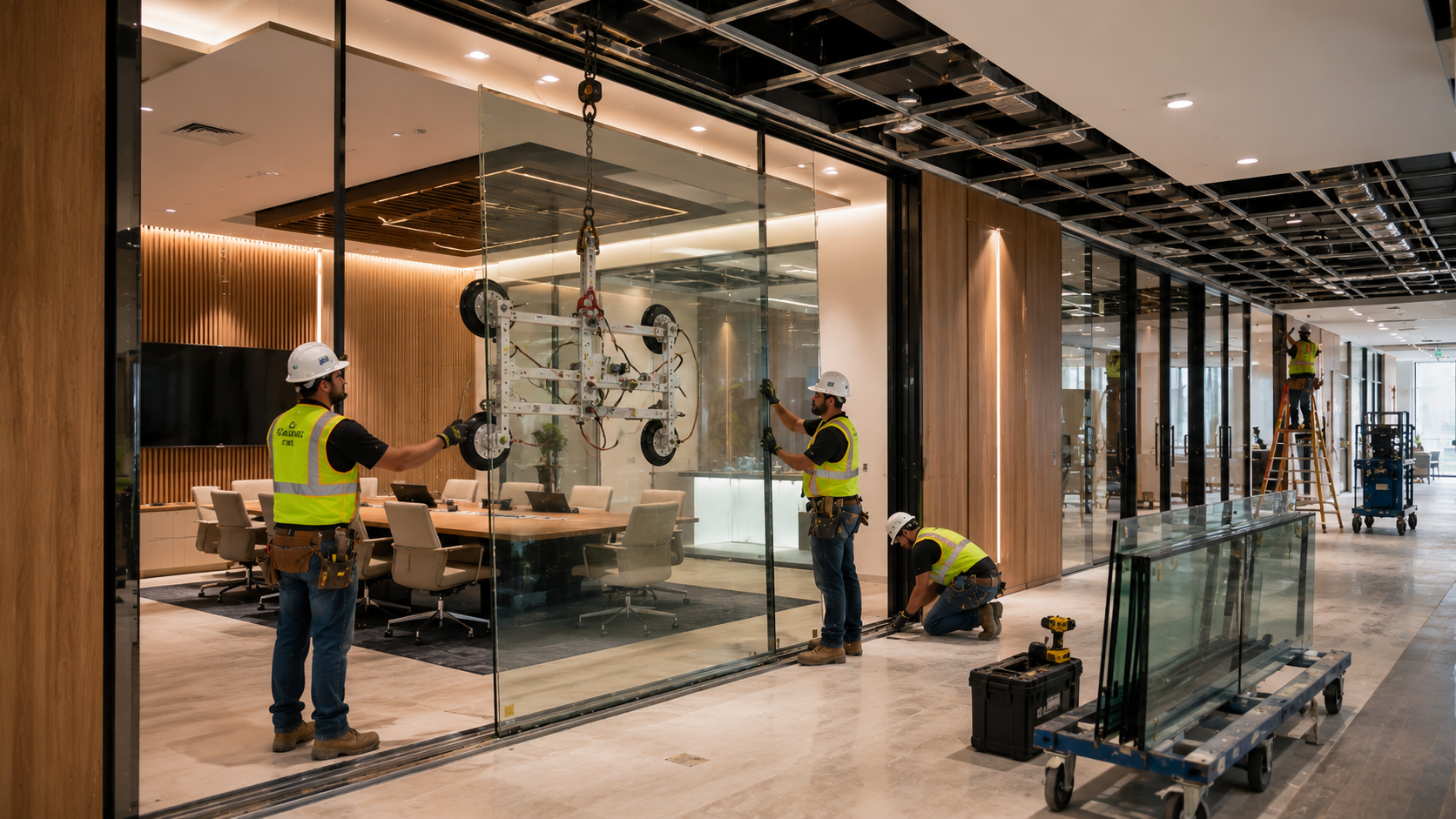
Glazing is one of the most visible parts of a build-out and one of the easiest to under-scope. Storefronts, entrance systems, interior office fronts, and demountable partitions all have long lead times and their own inspections. A tenant improvement contractor with in-house commercial glass services keeps that scope on the same schedule as the rest of the work.
For a deeper look at the glazing side, see our guide to tenant improvement glass and our overview of tenant improvement projects.
What a Tenant Improvement Contractor Needs From You
A tenant improvement contractor works fastest when the tenant provides a clear program, a firm budget range, and a target move-in date at the first meeting. With those three inputs, the contractor can test the space against the plan and tell you early whether the schedule and the landlord allowance are realistic.
The contractor also needs the lease exhibits: the work letter, the allowance terms, and the building rules and regulations. These documents define what the landlord delivers, what the landlord funds, and how the building must be treated during construction.
Common Mistakes Owners Make Without a Tenant Improvement Contractor
Tenants who skip a contractor during planning tend to sign leases with unrealistic build-out timelines, underestimate the cost of glass and mechanical work, and discover permit requirements after the move-in date is already promised to staff or customers.
Bringing a tenant improvement contractor in during lease review turns those unknowns into line items. The cost is small, and it routinely changes which space a tenant chooses.
Bottom Line for Commercial Property Owners
A well-managed tenant improvement contractor decision protects three things at once: your construction schedule, your build-out budget, and the long-term performance of the space. Getting it right early, with a contractor who has done it many times, is far cheaper than correcting it later.
Every commercial building reaches these decision points. The owners and tenants who plan for them, document the scope, and work with an experienced team consistently open on time, stay on budget, and end up with space that leases and performs better for years.
Key Takeaways
- A tenant improvement contractor delivers a complete commercial build-out under one contract
- The role centers on trade coordination, permitting, and lease-deadline scheduling
- Work happens inside an occupied building, so planning and phasing matter
- Glass and glazing scope should be managed on the same schedule as every other trade
- Ask for a line-item budget and a real schedule before signing
Frequently Asked Questions
Is a tenant improvement contractor the same as a general contractor?
Every tenant improvement contractor is a licensed general contractor, but not every general contractor specializes in commercial interiors. See our comparison of a tenant improvement contractor and a general contractor.
Who pays the tenant improvement contractor?
Payment usually comes from a combination of the landlord’s tenant improvement allowance and tenant funds, disbursed against completed work and lien releases.
How long does a commercial build-out take?
A light refresh runs three to five weeks; a full build-out of a warm shell is typically eight to fourteen weeks of construction, plus four to eight weeks of design and permitting beforehand.
Talk to a Commercial Glazing and Tenant Improvement Team
If you are planning a commercial build-out, our team handles the full scope with in-house glazing crews. contact our team for a walkthrough and a line-item estimate, or review our commercial glass services first.