




Stockton commercial glass replacement starts with a good estimate. Too often, owners compare two quotes that look alike but cover very different work. One includes new frames, the other does not. One includes permits, the other leaves them out. By the time the gaps show up, the job is underway and the budget is blown. A clear, complete estimate prevents that. This guide explains what to include in your project estimate, item by item, so you can compare bids with confidence.
Building owners, property managers, and business owners in Stockton, Lodi, Manteca, and Tracy can use it as a checklist.
Why the Estimate Matters
An estimate is more than a price. It is a plan. It shows what the glazier will do, what materials they will use, and what you will get at the end. When every bidder prices the same scope, you can compare fairly. In contrast, vague estimates lead to change orders, delays, and disputes. So a strong estimate is the foundation of any Stockton commercial glass replacement.
Item 1: Glass Specs for Stockton Commercial Glass Replacement
First, the estimate should name the glass. Look for:
- Glass type, such as tempered, laminated, or insulated
- Thickness and size of each panel
- Coatings, such as Low-E
- Tint or color
- Safety glazing labels where required
Stockton summers are hot. So Low-E insulated glass often makes sense for comfort and energy savings.
Item 2: Frames and Hardware
Next, the estimate should say whether frames stay or go. If frames stay, it should cover new gaskets and sealant. If frames are replaced, it should list the frame system, finish, and thermal performance. Doors need their own line items, including closers, pivots, locks, and panic hardware.
Item 3: Removal and Disposal
Removing old glass and frames takes time. So the estimate should include removal, protection of the area, and disposal of debris. Ask whether glass recycling is included. Also check who handles any hazardous materials, such as old sealants in older buildings.

Item 4: Labor
Crew time often makes up a big share of the price. The estimate should state the crew size, expected time on site, and working hours. After-hours or weekend work usually costs more. However, it may be worth it if your business cannot close during the day.
Item 5: Access and Equipment
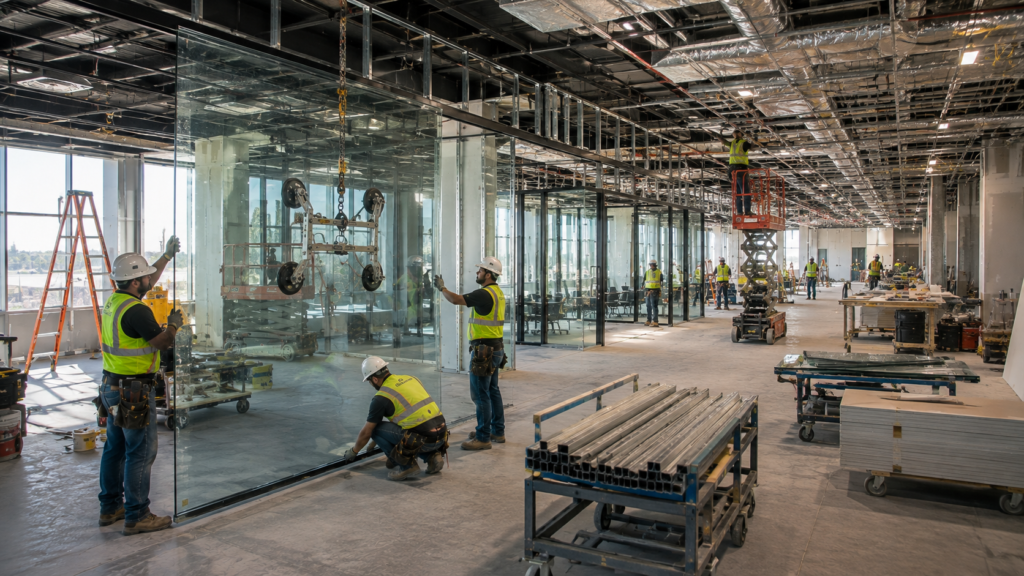
Large panels may need lifts, cranes, or glazing robots. Second-floor or high windows may need scaffolding. So the estimate should list any special equipment. It should also note if street or parking lot space is needed.
Stockton Commercial Glass Replacement and Title 24
California’s energy code, known as Title 24, sets performance rules for glass and frames. When you replace a significant amount of glass, the new products may need to meet these rules. So the estimate should note whether the glass and frames comply. The California Energy Commission explains the standards.
Item 6: Permits for Stockton Commercial Glass Replacement
Simple glass swaps may not need a permit. However, new storefronts, new doors, or structural changes usually do. The estimate should say who pulls permits, who pays fees, and who schedules inspections. Clear roles avoid delays.
Item 7: Temporary Protection
If glass is out for a while, the opening needs cover. So the estimate should include board-up or temporary panels if needed. It should also cover security for the store during the work.
Item 8: Schedule
The estimate should list lead times for glass and frames, plus the expected install dates. Custom or insulated glass can take several weeks. A clear schedule helps you plan around business needs.
Item 9: Stockton Commercial Glass Replacement Warranty
Finally, the estimate should describe warranties. Glass seals, frames, hardware, and labor may each have different terms. Ask how long each lasts and what voids it. Get warranty details in writing.
Checking the Contractor
In California, glazing contractors generally need a license from the Contractors State License Board. You can look up any license online. The CSLB website shows license status, bonds, and complaints. Also ask for proof of insurance and local references.
Comparing Stockton Commercial Glass Replacement Bids
Once you have estimates, line them up side by side. Check that each one covers every item above. Then look for exclusions and allowances. Ask questions about anything unclear. The lowest bid is not always the best value if it leaves out key work.
Stockton Commercial Glass Replacement Estimate Checklist
- Glass type, size, and coatings
- Frames, doors, and hardware
- Removal and disposal
- Labor, crew size, and hours
- Equipment and access
- Title 24 compliance
- Permits and inspections
- Temporary protection
- Schedule and lead times
- Warranties
Our replacement services page explains how we build estimates.
Stockton Commercial Glass Replacement in Central Valley Heat
Stockton summers often climb past 100 degrees. As a result, west- and south-facing storefronts soak up a lot of heat. So your estimate should spell out the glass performance, not just the size. For example, ask for the solar heat gain and U-factor of each unit. In addition, ask whether the frames are thermally broken. These numbers decide how cool the store stays and how much you spend on air conditioning.
Red Flags in an Estimate
- One lump-sum price with no line items
- No mention of glass type or thickness
- No removal or disposal costs
- No license number
- No warranty terms
- A large deposit before any work starts
If you see these signs, ask questions before you sign. A good glazier will gladly explain every line.
Planning Around Your Business
Most businesses cannot close for long. So ask how the crew will keep you open. For example, they may replace one panel at a time. Likewise, they may work early in the morning or after hours. In addition, temporary panels can secure any open sections overnight. Put these plans in the estimate, so everyone agrees before work begins.
Keeping Records After the Job
Once the work is done, keep the estimate, invoice, glass labels, and warranty papers together. These records help with insurance, future repairs, and resale. They also show inspectors that the work met code. A simple folder or digital file is all you need.
Ask for a Site Visit
Accurate estimates start on site. So ask each glazier to visit before they price the job. During the visit, they measure openings, check frames, and look at access. They also spot problems a photo might miss. As a result, their price is more accurate and fewer surprises appear later. It also gives you a chance to meet the team and judge how they communicate.
FAQ on Stockton Commercial Glass Replacement
Why do glass estimates vary so much?
Usually because each one covers a different scope or different materials. Some bids also leave out permits, disposal, or after-hours labor, which makes them look cheaper at first.
Does Title 24 apply to my project?
It may, especially if you replace a large amount of glass. Ask your glazier.
How do I check a California glazing contractor?
Look up their license on the CSLB website. The search shows license class, status, bond details, and any public complaints. For glass work, look for the glazing classification on the license.
Get a Clear Estimate
A complete estimate protects your budget and your building. Visit our storefront glass page, or ask for a detailed quote.