


Few parts of a tenant build-out get noticed as quickly as the glass, which makes Los Angeles glass installation worth planning carefully. Storefronts, entry doors, glass conference rooms, office fronts, and display cases all shape how a space looks and works. Yet glass often arrives late in the schedule, after framing, electrical, HVAC, and ceilings. If it is not planned early, it can delay the move-in date. In Los Angeles, seismic rules, California energy standards, and busy building logistics add more layers. This guide explains how to coordinate glass with your tenant build-out from start to finish.
Tenants, general contractors, designers, and property managers across Los Angeles can use it to protect their move-in date.
Why Glass Needs Early Planning
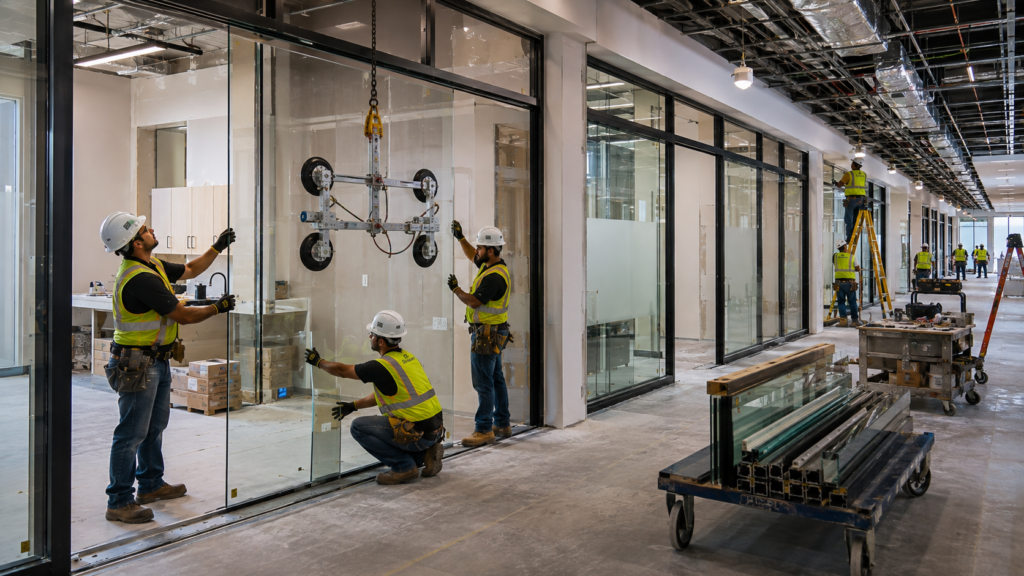
To begin, glass is custom-made. Each panel is cut, tempered, and sometimes laminated or coated to order. As a result, lead times can run several weeks. If the glass order waits until late in construction, the whole project may wait too. So bring your glazier in during design, not after drywall.
Types of Glass in a Build-Out
A typical Los Angeles tenant build-out may include:
- Exterior storefronts and entry doors
- Interior glass office fronts and partitions
- Glass conference rooms
- Glass railings at stairs or mezzanines
- Display cases and mirrors
- Back-painted glass for walls and whiteboards
Each item has its own lead time, hardware, and installation steps.
Step 1: Involve the Glazier in Design
First, share early drawings with your glazier as soon as they exist. They can suggest panel sizes, frame systems, and door types that fit the budget and schedule. They can also flag items with long lead times. Early input often saves money and prevents redesigns.
Los Angeles Glass Installation and Seismic Rules
Of course, Los Angeles sits in earthquake country. So glass systems must handle building movement. Storefront frames need proper anchors. Interior glass walls need head tracks that allow some movement. In addition, glass railings must meet strict load and safety rules. Your designer and glazier will make sure details meet current code.

Title 24 Energy Standards
In addition, California’s energy code sets rules for exterior glass and frames. New storefronts and some replacements must meet these standards. So exterior glass often needs Low-E coatings and good frames. The California Energy Commission explains the standards. Plan compliance early to avoid permit delays.
Step 2: Coordinate Los Angeles Glass Installation With Other Trades
In practice, glass touches many trades. For example:
- Framers build openings and blocking for glass walls.
- Electricians keep switches and outlets off glass lines.
- HVAC crews place diffusers so glass rooms stay comfortable.
- Ceiling crews leave level surfaces for head tracks.
- Flooring crews finish floors before glass sits on them.
Weekly coordination meetings help everyone stay aligned.
Step 3: Approve Shop Drawings Quickly
After design, the glazier then prepares shop drawings. These show exact sizes, hardware, and details. The general contractor, architect, and tenant review them. Fabrication only starts after approval. So review drawings quickly to protect the schedule.
Step 4: Field Measure
Drawings show intended sizes. However, real openings can differ. So the glazier should field measure once framing and drywall are in place. Ordering from field measurements prevents costly re-orders.
Los Angeles Glass Installation Sequencing
Typically, interior glass goes in near the end, after paint and ceilings. Storefronts may go in earlier, especially if the space must stay secure. Doors and hardware come last, along with any film or graphics. A clear sequence keeps trades from damaging finished glass.
Permits and Licensing
Naturally, most build-outs need a building permit. Glass details are usually part of the permit set. Glass contractors working in California must hold a state license. The Contractors State License Board lets you check any license.
Building Logistics for Los Angeles Glass Installation
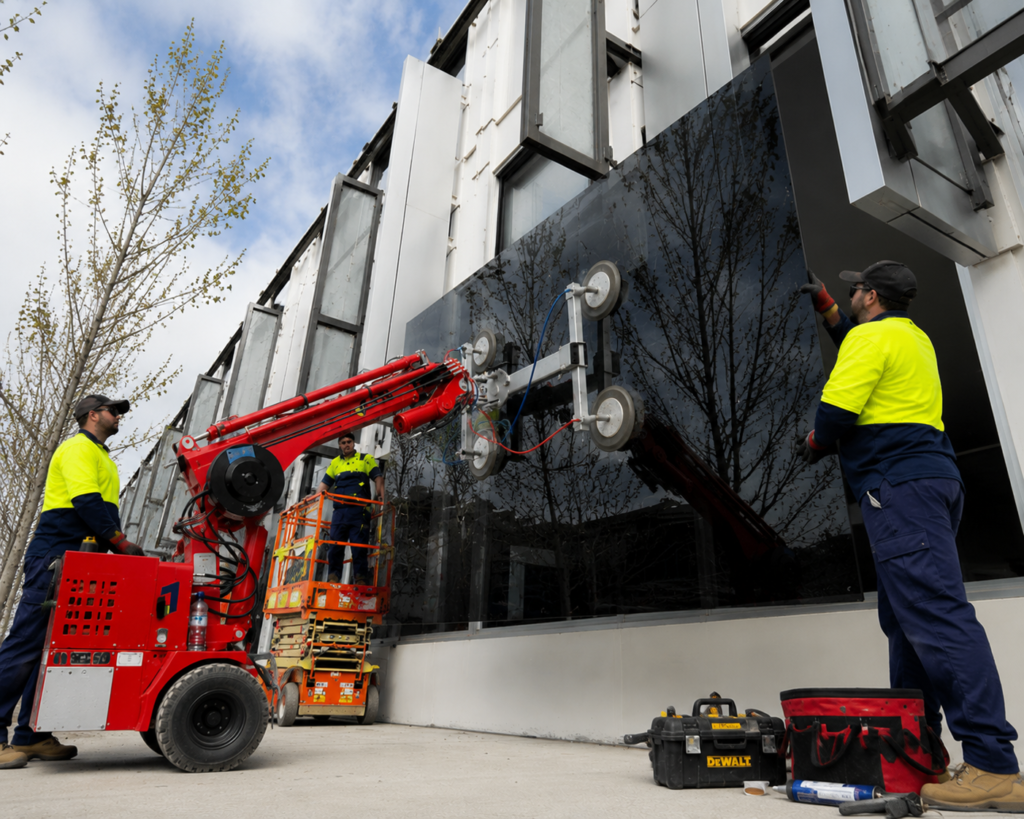
Meanwhile, many LA buildings have strict rules for deliveries, freight elevators, and work hours. In addition, parking and street access can be tight. So plan glass deliveries with the building manager. Large panels may need after-hours delivery or special equipment.
Budgeting for Los Angeles Glass Installation
Overall, costs depend on design, size, and hardware. Key factors include:
- Framed vs frameless systems
- Laminated, Low-E, or specialty glass
- Doors and hardware
- Seismic details
- After-hours delivery and labor
Our tenant improvement glass page shares typical project steps.
Los Angeles Glass Installation for Retail and Restaurants
Retail and restaurant build-outs lean heavily on glass. For example, shops want big storefronts that show off products. Restaurants may want folding glass walls that open to a patio. Meanwhile, both need sturdy entry doors that handle steady traffic. So plan these features early. In addition, check landlord rules for storefront design and signage. As a result, your Los Angeles glass installation fits the brand and the building.
Los Angeles Glass Installation for Offices
Offices often use glass to bring light deep into the floor. Many teams now want meeting rooms and private offices wrapped in glass. However, they raise questions about privacy and sound. So consider frosted bands, laminated glass, and good door seals. Also plan where whiteboards, screens, and power will go. That way, glass walls look great and work well every day.
Protecting Glass After Installation
Once glass is in, other trades still work nearby. So protect it. Crews often add film or cardboard to guard against scratches and paint. They also post signs so workers notice large panels. Finally, the glazier removes the protection and cleans the glass before move-in.
Simple Steps to Stay on Schedule
Bring the glazier in early. Approve drawings fast. Measure on site. Order right away. Protect the glass. Then clean and inspect before move-in. Follow these steps, and glass will not hold up your opening.
Working With Your Landlord
Many LA leases include a work letter. It may say what the landlord pays for and what the tenant covers. For example, the landlord may supply a standard storefront, while the tenant pays for upgrades. In addition, landlords often approve glass drawings before fabrication. So share your plans early. Quick approvals keep the glass order on time.
Choosing a Glazier for Your Build-Out
Pick a glazier with tenant improvement experience in Los Angeles. Ask how they handle seismic details and Title 24. Also ask about lead times and crew size. Then check their license and insurance. A team that knows local buildings and inspectors will help you open on time.
Common Mistakes to Avoid
- Bringing the glazier in too late
- Ordering from drawings without field measurements
- Placing outlets where glass walls will go
- Forgetting Title 24 compliance
- Skipping seismic details
FAQ on Los Angeles Glass Installation
How long does Los Angeles glass installation take?
Fabrication often takes several weeks. Crews then need anywhere from a few days to about two weeks on site.
Do interior glass walls need seismic details?
Yes. Head tracks and anchors must allow for building movement. Your designer will show these details on the drawings, and the inspector will check them on site.
Does Title 24 apply to interior glass?
Mainly to exterior glass. Interior glass follows safety rules instead, such as tempered or laminated glass in doors and large panels. Your glazier will label each panel so the inspector can confirm it.
Keep Your Build-Out on Track
Early planning keeps glass from delaying your move-in. Visit our installation services page, or talk to a glass planner today.