


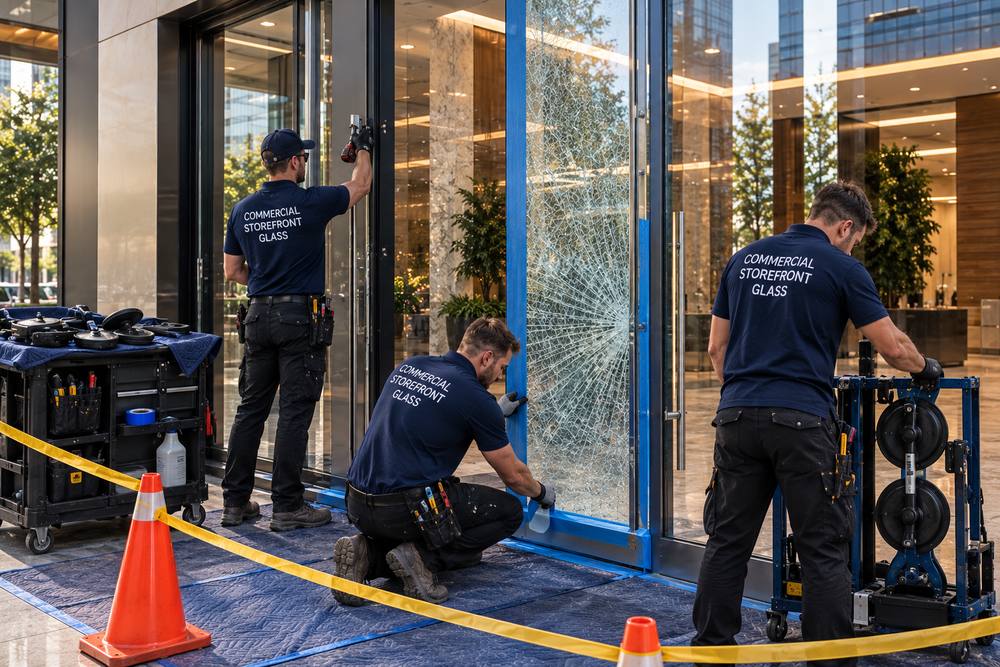
It is two in the morning and the alarm company says the front glass is broken. Emergency storefront glass repair in Las Vegas is often a two-trip job: the first trip to make the opening safe, the second to install permanent glass. How well the first trip goes depends on what you can tell the dispatcher in the first two minutes.
The goal of this guide is simple: help you describe the opening so the crew arrives with the right board, the right fasteners and, where possible, the right glass measurements.
When you call, you are choosing what the crew should do tonight.
- Board up only and come back to measure in daylight
- Board up and measure tonight so glass can be ordered at once
- Install stock glass tonight if the lite is small and a common size
- Secure the door first if the business must stay open overnight
The Phone Photo That Saves a Trip
Stretch a tape measure across the visible glass, side to side and top to bottom, and take a photo of each. Then photograph the corner of an intact neighboring lite: tempered glass usually carries a small permanent stamp in one corner, and that stamp tells the glazier what the glass is. A broken lite that crumbled into small cubes was likely tempered; one with long shards was likely annealed or laminated.
What it cannot tell you yet: The exact glass size (the visible opening is smaller than the glass, which sits inside the frame) and whether the frame or door was damaged when the glass broke.
What to Tell the Dispatcher
Address, unit and cross street: and where the crew should park
Which lite: door, fixed lite beside the door, or a lite away from the door
Approximate size: visible glass width x height from your tape
Glass that is still in the frame: hanging, cracked across, or cleared
Door status: opens, closes, locks?
Access: who will meet the crew, alarm code holder, gate codes
Business hours: when the space must be open again
Photos: text them to the number the dispatcher gives you
Why the Location of the Lite Matters
Glass in and next to doors is a hazardous location under the building code, which generally means safety glazing such as tempered or laminated glass is required there. A crew can sometimes cut and install a small annealed lite on the spot, but a tempered lite has to be made to size before it is tempered, so it cannot be cut on site. If the broken lite is in or beside the door, expect a board-up or temporary infill first and permanent glass after fabrication.
- The door rails, pivots or closer were damaged when the glass broke
- The frame is bent where someone pried or struck it
- Glazing stops are missing or broken and cannot be reused
- The lock or strike was forced, so the door no longer secures
The Las Vegas factor: open all night, and the weather
Many Las Vegas businesses never close, which changes what “secure” means. A 24-hour store may need the door working by morning even if a fixed lite stays boarded. Summer monsoon storms can also bring sudden strong winds, which the National Weather Service in Las Vegas warns about each season. Board-up on a wind-exposed front should be fastened for that, not just leaned in place.
A convenience store on a busy arterial calls at night after a rock goes through the lite beside the door. The clerk sends a tape photo and a picture of the stamp in the next lite, which reads as tempered. The dispatcher sends a crew with board and fasteners, the crew measures the frame opening while there, and the tempered replacement is ordered the next morning.
Can you measure the glass size tonight while you are boarding, so the order goes in first thing?
If the crew measures during the first visit, the permanent glass is ordered a day earlier. If the frame is damaged, the answer may be that it has to be repaired before a reliable measurement is possible, which is important to know now.
| What you can document | What the glazier verifies on site |
|---|---|
| The tape-measure photos | Actual glass size inside the frame |
| The corner stamp on a neighboring lite | Required glass type for that location |
| Door function: open, close, lock | Frame, stops and hardware condition |
| Police report number if it was a break-in | Whether stock glass is safe to use or custom is required |
After the First Visit
- ☐ Board-up fastened to the frame, not just wedged
- ☐ Door secured or working
- ☐ Glass size and type recorded by the crew
- ☐ Order date and expected install date confirmed
- ☐ Photos saved for the insurance claim
- That replacement glass in or next to a door meets the safety glazing rules in the code your city or the county has adopted
- That the replacement matches the existing glass type and thickness, or that a change is approved
- Your policy’s requirements for emergency work before permanent repairs
- That whoever installs the permanent glass holds an active Nevada contractor license (searchable on the NSCB site)
The Next Decision
The next decision, usually the morning after, is whether to approve the permanent replacement as measured or to add frame or door repairs found during the board-up.
Have this ready:
- The crew’s measurements and photos
- Glass type confirmed by the glazier
- Your claim number
- The hours the opening must be usable
Talk It Through
If you need a storefront secured tonight, call and have the photos ready. See our pages on commercial storefront glass in Las Vegas and commercial glass repair, or call 866-665-3975 to schedule a site visit.
Sources and Further Reading
- International Code Council (IBC, including Chapter 24 safety glazing)
- 16 CFR Part 1201: Safety Standard for Architectural Glazing Materials
- ASTM C1048: Heat-Strengthened and Fully Tempered Flat Glass
- National Weather Service, Las Vegas office
- Nevada State Contractors Board
- Insurance Information Institute: commercial property claims