



The glass is ready, the opening is measured and the crew is booked for Monday. Then someone checks the convention calendar and finds a show moving into the halls down the street the same week. In this city, a storefront installation schedule is not only about lead times. It also has to fit around the traffic, freight and hotel demand that big events bring.
This guide shows how to read the calendar against your install dates and what to ask the glazier before you lock them in.
The owner or general contractor has to set the install window.
- Keep the planned dates and accept slower deliveries
- Move the install a week earlier or later to avoid move-in
- Split it: set frames before the event, glass after
- Shift work to early mornings and keep the dates
The Calendar Is the Evidence
The Las Vegas Convention and Visitors Authority publishes upcoming shows. Print the weeks around your install and mark three things: move-in days, show days and move-out days. Move-in and move-out bring heavy freight to the roads around the convention areas, and big shows fill hotel rooms and parking. If your site is near a resort corridor, those days are when deliveries slow and crews lose time getting to the job.
What it cannot tell you yet: How a specific show affects your street. A small show may not matter; a citywide one can. The glazier and the supplier usually know which ones hurt.
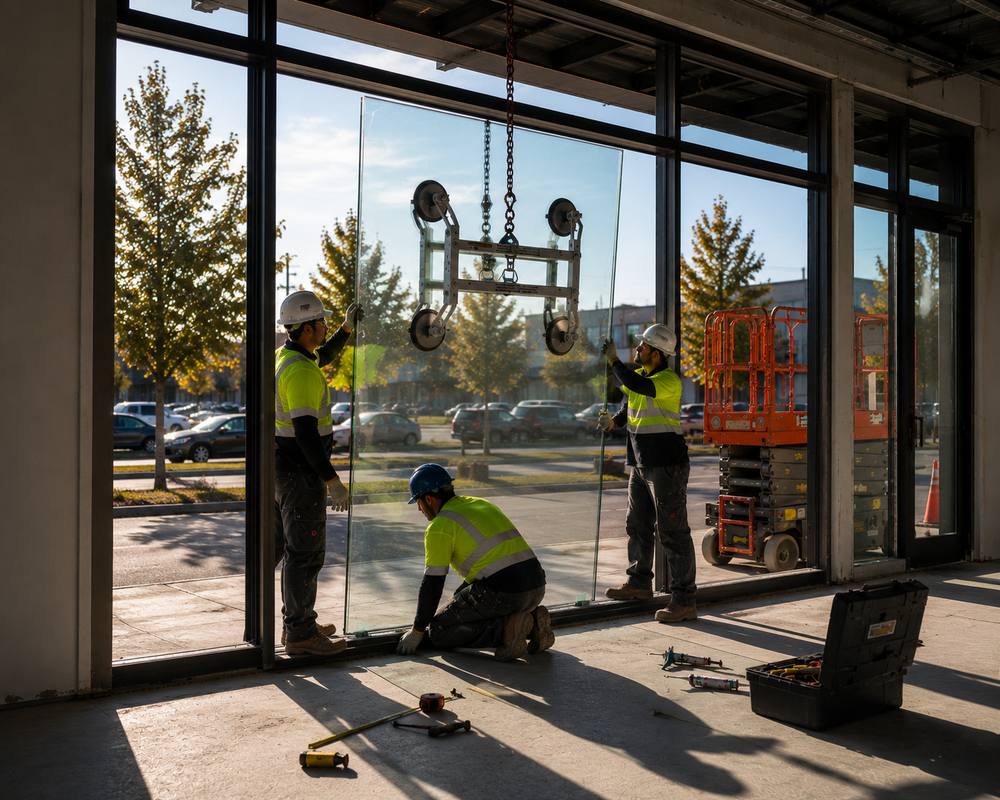
What Actually Gets Delayed
- Glass deliveries. Insulated units arrive on racks and need a truck that can reach the curb or dock. Congested days push delivery windows.
- Lift rentals. Scissor lifts and glass-handling machines can be booked up by event work.
- Crew travel. A crew that loses an hour in traffic loses the coolest working hours of a summer day.
- Inspections. Inspectors may not be slower, but a missed slot is harder to rebook in a busy week.
The Assembly Sets the Order of Work
A storefront goes in as a sequence: frame set and anchored, sill sealed, glass set and glazed, doors hung and adjusted, perimeter sealant applied. Some steps can be split across weeks without harm. Frames can be set and the opening closed with temporary panels, then glass installed after the event. Doors are often the last item and depend on the hardware arriving complete.
- The frames are not on site, so splitting the work is not possible
- The door hardware or power operator is late and the opening cannot be secured
- The opening was not ready when measured, and glass sizes need to be checked again
- The tenant wants to reuse an existing entrance that turns out to be damaged
The Las Vegas factor: heat, hours and permits
Summer adds a second calendar. Crews generally prefer early starts in hot months, and the sealant manufacturer lists the temperatures its product can be applied in. Ask whether the schedule assumes morning-only work in July and August. Also confirm whether the project is in the City of Las Vegas or unincorporated Clark County, since inspections are booked through different offices.
A restaurant fit-out near the convention center plans a Tuesday glass install. The calendar shows a large show moving in that weekend. The glazier suggests setting the frames and temporary panels the Thursday before, then installing glass the Tuesday after move-out. The restaurant keeps its opening date, and the crew avoids two days of slow deliveries.
If we set frames first and glass later, how will you close the opening in between?
The answer tells you whether splitting the work is safe. A secured temporary panel keeps the space usable by other trades. A loose sheet of plywood may not satisfy the landlord or the insurer.
| What you can document | What the glazier verifies on site |
|---|---|
| Your install dates beside the event calendar | Lead time for glass, frames and hardware |
| Delivery access: curb, alley or dock, and any time limits | Whether the work can be split |
| Hours other trades need the opening | Lift and handling equipment needed |
| The opening date and any soft-opening events | Temporary closure method |
A Two-Week Install Planner
| Day | Event status | Glazing work | Other trades |
|---|---|---|---|
| Mon-Wed | Normal traffic | Frames set and anchored, sill sealed | Electrical rough-in at sign band |
| Thu | Normal | Temporary panels in openings | Interior finishes continue |
| Fri-Sun | Show move-in | No deliveries | Inside work only |
| Mon-Wed | Show days | Glass set and glazed (early starts) | Ceiling work clear of storefront |
| Thu | Move-out | Doors hung, hardware adjusted | Flooring at threshold |
| Fri | Normal | Perimeter sealant, cleaning, walkthrough | Signage install |
Replace the rows with your real dates. The pattern to copy is: frames before the busy days, deliveries after.
- Sealant application temperatures from the sealant data sheet
- Permit and inspection scheduling with the City of Las Vegas or Clark County
- Lift operation and site safety rules (OSHA applies to the crew)
- That temporary closures meet the landlord’s and insurer’s requirements
The Next Decision
The next decision is the install window. Lock the dates once the glazier has confirmed lead times and the calendar check is done.
Have this ready:
- The event calendar for your weeks
- Supplier lead times in writing
- Your opening date
- Delivery access details for the site
Talk It Through
If you are scheduling a storefront install, we can build the plan around the city’s event calendar. See our pages on commercial storefront glass in Las Vegas and storefront glass installation, or call 866-665-3975 to schedule a site visit.