



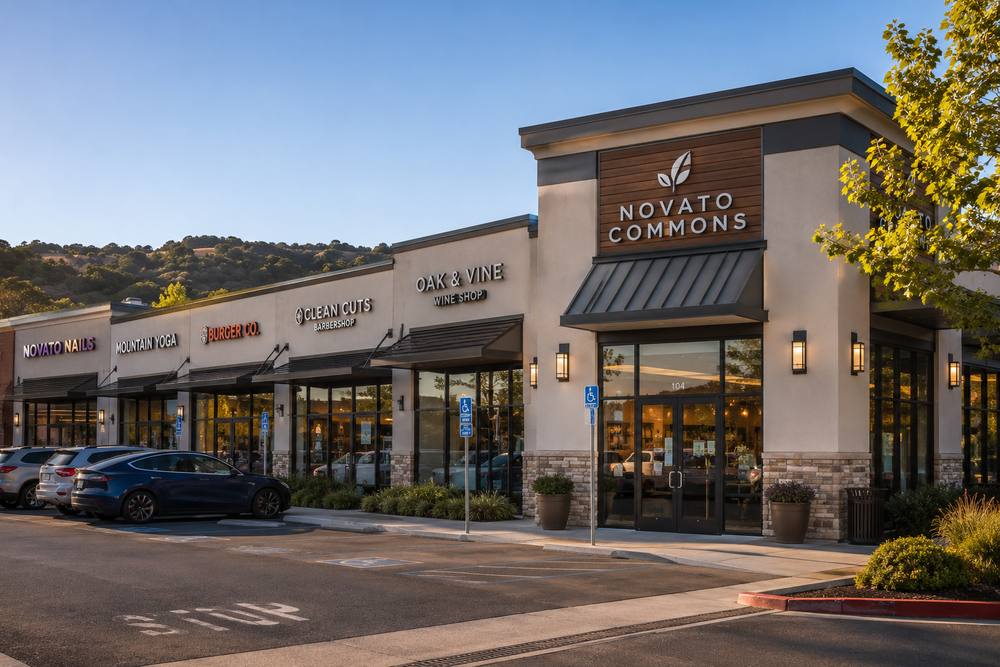
A property manager has a budget line for storefront glass and a center with twenty bays of aging fronts. The first quote comes back, and it is hard to tell whether it is fair. Storefront glass replacement cost in a Las Vegas shopping center depends on a handful of factors, and nearly all of them can be seen on site before anyone prices the job.
This article explains those factors so you can read a bid and compare two of them with confidence.
The manager has to decide what to fund this year.
- Replace the worst bays now and the rest over two or three years
- Replace all fronts at once for a consistent look
- Reglaze only, keeping existing frames
- Fund an inventory and condition survey first
Start With the Glass Schedule
List every lite by bay: width, height, single or insulated, tinted or clear, and whether it is in or beside a door. Even rough sizes help. The schedule shows how many lites are large (which need more labor and equipment), how many need safety glazing, and how many different glass types the center has. A center where every bay has the same glass costs less to manage than one where each tenant changed theirs.
What it cannot tell you yet: Frame condition, anchor condition and whether the tint and coating on existing glass are still made.
The Cost Drivers, in Order of Impact
- Scope: glass only or frames too. New framing usually costs more than glass alone, and it brings demolition, disposal and finish repairs.
- Glass makeup. Insulated units cost more than single lites. Laminated and coated glass add more. Low-E or solar control coatings may also be required by the energy code for new work.
- Lite size. Very large lites need more people, lifting equipment and careful handling.
- Access. Covered walkways, landscaping and parked cars change how a crew stages. Work that must happen before stores open costs more per hour.
- Matching. Matching an existing tint across neighboring bays can mean sourcing a specific product or replacing more lites than planned.
- Doors and hardware. An entrance with a new closer, pivots and lock adds more than a fixed lite.
- Frames are bent, corroded at the sill or anchored poorly
- The existing tint is discontinued, so adjacent lites must change to match
- The energy code requires better glass than the frame can hold
- Doors or thresholds need to change to meet accessibility requirements during the work
The Las Vegas factor: sun, dust and tenant hours
Many valley centers have long south- or west-facing runs, so solar control glass is a common upgrade request. Dust and wind also wear gaskets and sealant faster on exposed elevations. Tenant hours matter too: restaurants and 24-hour stores limit when a bay can be opened up, and night work generally costs more.
A manager of a 1990s neighborhood center in northwest Las Vegas gets two quotes for replacing six bays. One is much lower. Line by line, the lower quote reglazes in existing frames and excludes sealant and door work, while the higher one includes new sill flashing, perimeter sealant and two door closers. Once the scopes match, the prices are close.
Which bays would you reglaze, and which would you reframe, and why?
A good answer names specific bays and gives reasons you can check: a bent mullion, a rusted anchor, a gap at the sill. A vague answer suggests the bid was priced from a drive-by.
| What you can document | What the glazier verifies on site |
|---|---|
| A glass schedule by bay | Frame and anchor condition by bay |
| Tenant hours and any restrictions | Glass type and coating identification |
| Photos of every bay, inside and out | Energy and safety glazing requirements |
| Leak history and complaints | Staging and access plan |
A Short Bid Comparison
| Line | Bidder A | Bidder B | Notes |
|---|---|---|---|
| Glass makeup per lite | Same thickness, tint and coating? | ||
| Frames: reuse or replace | Which bays? | ||
| Sill flashing and perimeter sealant | Included in both? | ||
| Doors and hardware | Which items? | ||
| Work hours assumed | Day, early morning, night | ||
| Demolition, disposal, protection | Included? | ||
| Permits | Who pulls them? | ||
| Warranty on labor and glass | Length and terms |
Fill the blanks from each bid. Empty boxes are questions to send back before you compare totals.
- Energy code glazing requirements for replacement glass in conditioned spaces (City of Las Vegas or Clark County, depending on location)
- Safety glazing locations under the adopted building code
- Glass coating and tint product data from the glass manufacturer
- Whether a permit is needed for frame replacement
The Next Decision
The next decision is the funding plan: phase the work or do it all at once. Use the glass schedule and the bid comparison to decide.
Have this ready:
- The completed glass schedule
- Two bids on the same scope
- Tenant hours
- The budget window for this year and next
Talk It Through
If you manage a center and want a bay-by-bay plan, we can survey the storefronts and price phases. See our pages on commercial storefront glass in Las Vegas and storefront glass replacement, or call 866-665-3975 to schedule a site visit.
Sources and Further Reading
- National Fenestration Rating Council (NFRC): U-factor, SHGC and visible transmittance ratings
- Vitro Architectural Glass: glass product data and coatings
- Guardian Glass: architectural glass performance data
- International Code Council (IBC, including Chapter 24 safety glazing)
- Clark County Building & Fire Prevention
- City of Las Vegas: Building Permits