


Aluminum Framing Systems
The Frame Supports Everything Around It
Glass often receives most of the attention.
The framing system makes the entire assembly possible.
Storefronts depend on it.
Curtain walls rely on it.
Entrances require it.
Without a properly designed framing system, commercial glazing cannot perform as intended.
Because of this, aluminum framing systems remain one of the most widely used components in modern commercial construction.
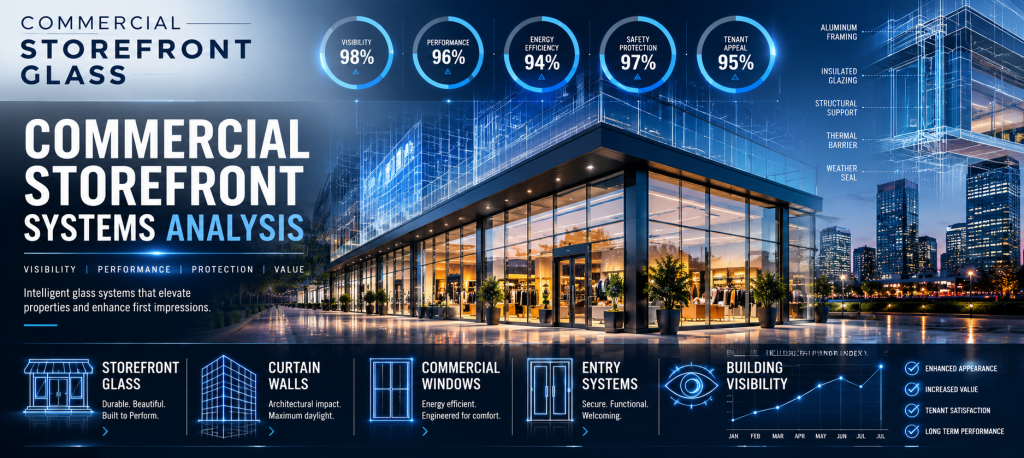
From retail storefronts and office buildings to hospitality properties and mixed-use developments, aluminum framing supports both architectural design and long-term building performance.
Why Aluminum Is Used In Commercial Construction
Commercial properties require materials that balance strength, durability, and flexibility.
Aluminum performs well across all three.
The material supports large glazing systems.
Architects gain greater design flexibility.
Property owners benefit from long-term reliability.
These advantages help explain why aluminum framing has become the industry standard for many commercial applications.
Common Benefits
- Durability
- Architectural flexibility
- Long-term performance
- Modern appearance
- Low maintenance requirements
- Compatibility with commercial glazing systems
These characteristics make aluminum suitable for a wide range of property types.
Storefront Systems Depend On Strong Framing
A storefront system functions as a complete assembly.
Glass provides visibility.
The frame provides structure.
Entrances integrate within the system.
Together, these components create the customer-facing side of the property.
Because storefronts experience daily use and constant exposure, framing systems play an important role in maintaining long-term performance.
Many storefront modernization projects include both glazing and framing improvements.
Glass Entry Systems Require Reliable Support
Commercial entrances operate continuously.
Customers use them throughout the day.
Employees rely on them for access.
Visitors interact with them immediately upon arrival.
Properly designed framing systems help support smooth operation while contributing to overall building appearance.
For many commercial properties, the entrance becomes one of the most heavily used portions of the building.
Retail Properties Benefit From Modern Framing Systems
Retail environments depend on visibility.
Customer engagement begins at the storefront.
Exterior presentation influences perception.
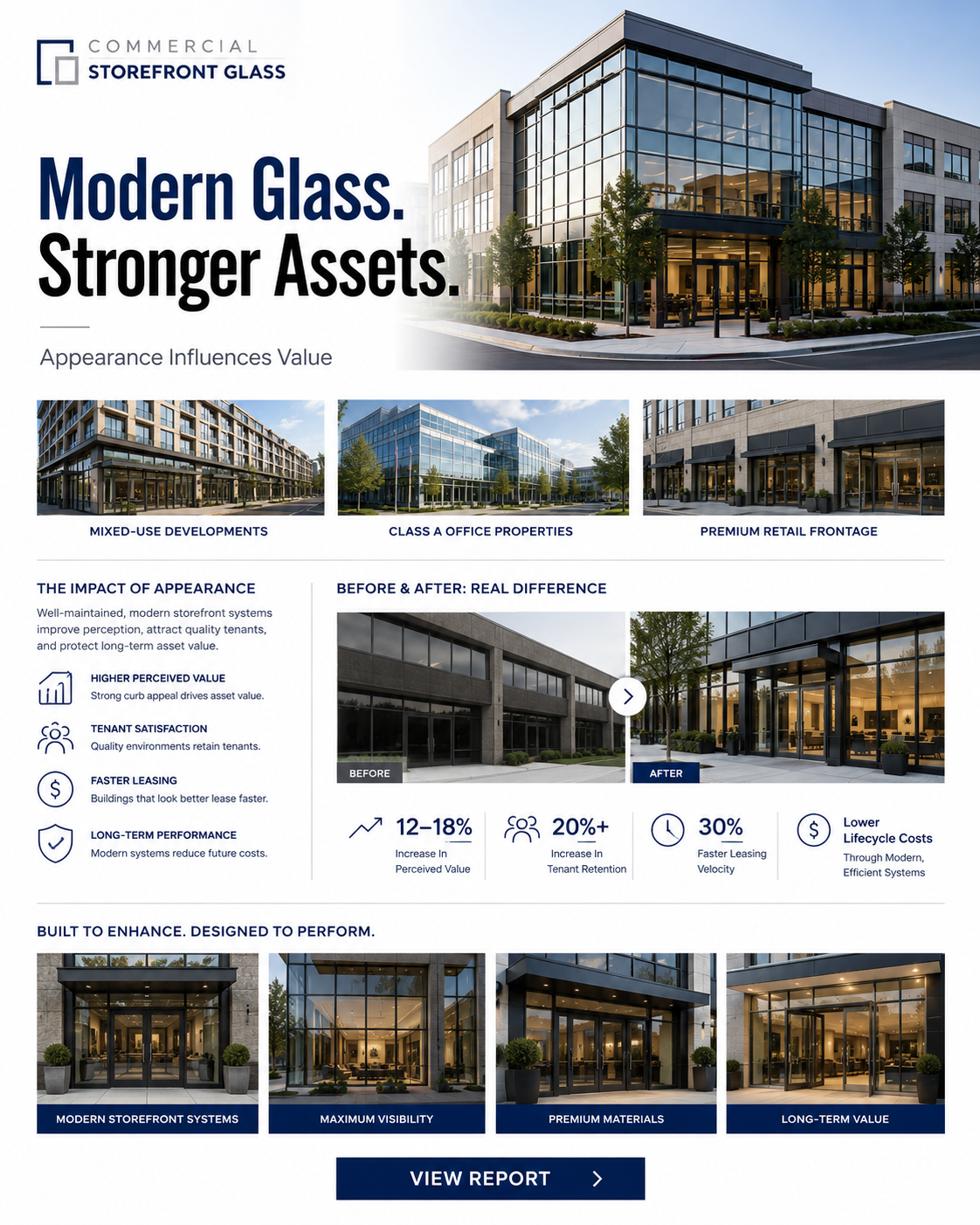
Modern aluminum framing systems help create clean sightlines while supporting contemporary storefront designs.
Many retailers incorporate updated framing systems as part of broader property modernization efforts designed to improve customer experience and strengthen curb appeal.
Office Buildings Prioritize Performance And Appearance
Professional office environments often rely on aluminum framing throughout the building envelope.
Storefront systems support lobby entrances.
Curtain walls shape exterior architecture.
Interior glazing frequently incorporates similar framing components.
Because office properties compete for tenants, both performance and appearance become important considerations.
Modern framing systems help support those objectives.
Hospitality Properties Focus On Guest Experience
Hotels and resorts depend heavily on first impressions.
Guests notice exterior presentation immediately.
Natural light contributes to interior comfort.
Architectural glass helps create welcoming environments.
Aluminum framing systems support these design goals while providing the durability required in high-traffic commercial settings.
Corporate Campuses And Institutional Buildings
Large commercial developments frequently utilize extensive glazing systems.
Corporate campuses often prioritize modern architecture.
Universities continue investing in building modernization.
Healthcare facilities rely on durable and reliable exterior systems.
Aluminum framing supports these environments by combining architectural flexibility with long-term performance.
Property Modernization Frequently Includes Framing Upgrades
Commercial properties evolve over time.
Tenant expectations change.
Building appearance affects competitiveness.
Exterior systems eventually age.
As a result, modernization projects often include framing improvements alongside glazing upgrades.
New framing systems can help refresh the appearance of the property while supporting broader renovation objectives.
Common Modernization Goals
- Improve building appearance
- Support storefront upgrades
- Enhance architectural design
- Strengthen long-term durability
- Increase tenant appeal
- Support property repositioning
These initiatives frequently contribute to broader commercial improvement strategies.
Durability Supports Long-Term Value
Commercial buildings operate for decades.
Exterior systems face constant environmental exposure.
Daily use creates wear.
Maintenance requirements influence ownership costs.
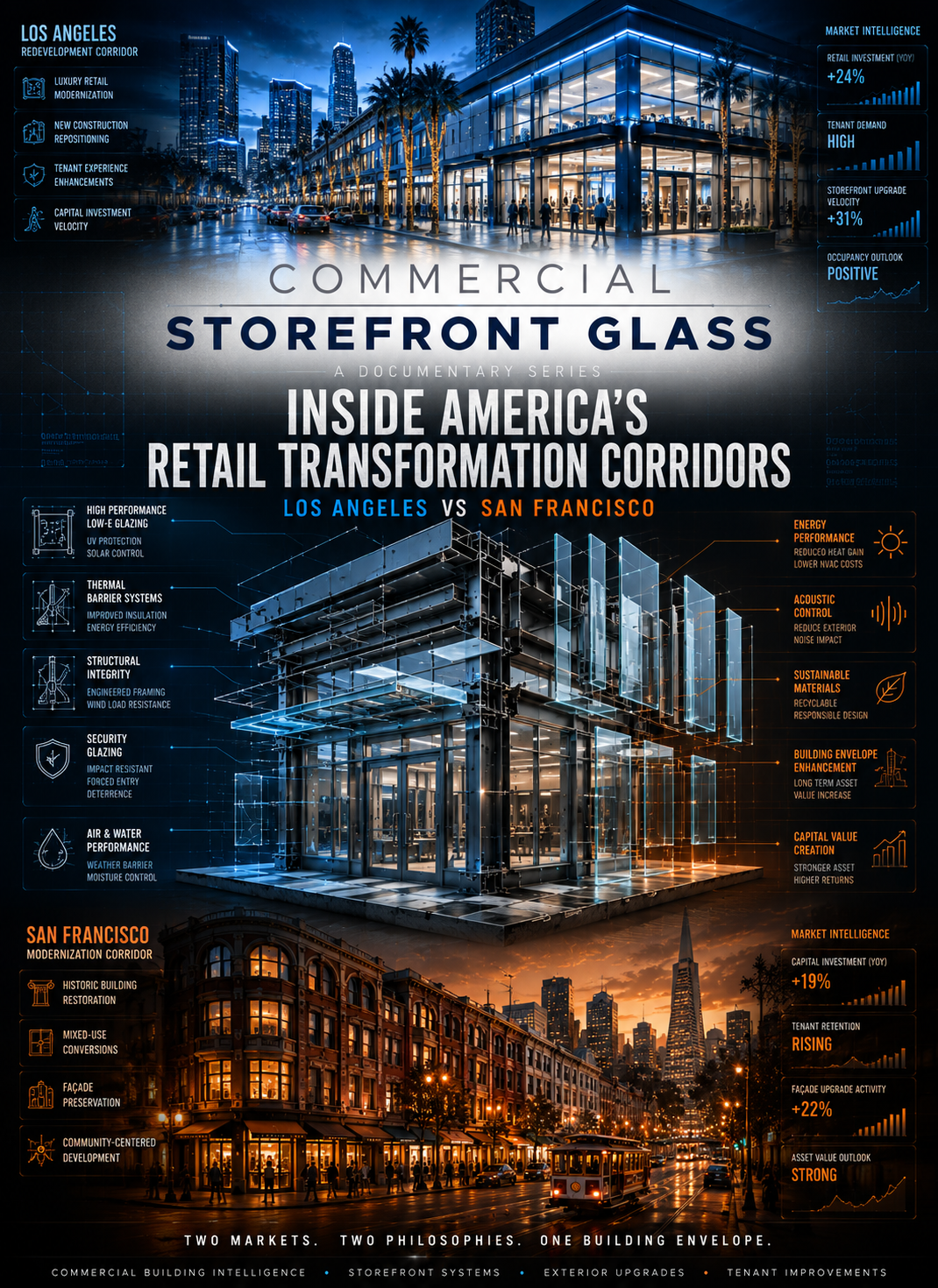
Because aluminum resists many of the challenges that affect other materials, it remains a popular choice across commercial real estate.
Property owners often evaluate framing systems through a long-term performance lens rather than focusing solely on initial installation.
Supporting Commercial Building Performance
Aluminum framing systems influence far more than appearance.
Storefronts rely on them.
Entrances depend on them.
Curtain walls incorporate them extensively.
Modern commercial properties use aluminum framing to support visibility, functionality, durability, and architectural design.
Whether installed within retail centers, office buildings, hospitality properties, healthcare facilities, universities, mixed-use developments, or corporate campuses, aluminum framing systems remain one of the foundational components of modern commercial construction.