


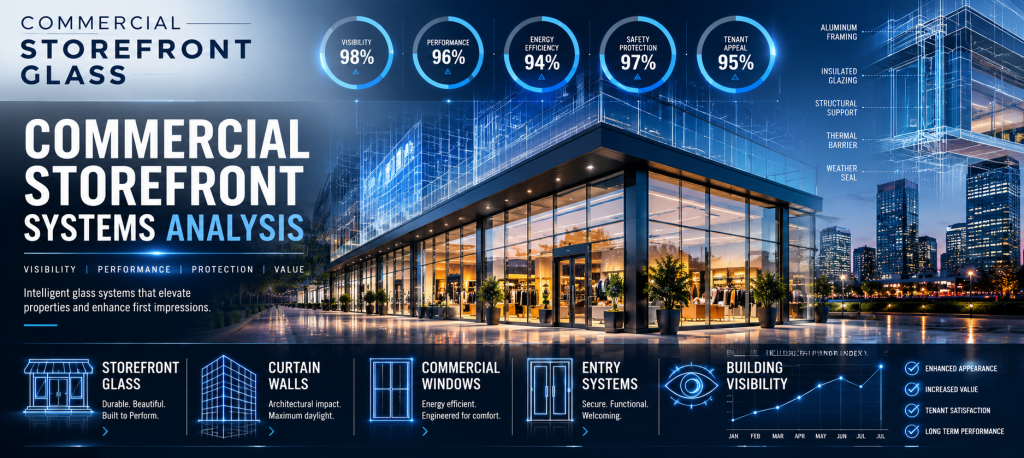
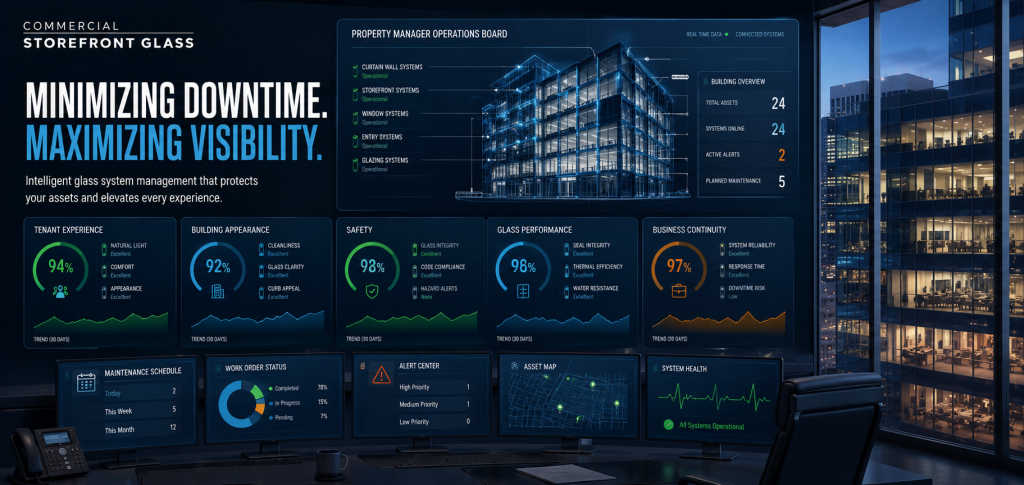

Oakland vs Bay Area — Urban Gateway vs Regional Commercial Network
How Commercial Storefront Glass Connects Oakland to the Bay Area’s Diverse Business Landscape
The Bay Area is one of the largest and most economically diverse commercial regions in the United States. It stretches from dense financial districts and technology campuses to industrial ports, healthcare centers, research facilities, hospitality destinations, and suburban business corridors. At the center of this network sits Oakland, a city whose commercial identity is built around maritime commerce, logistics, government, healthcare, education, and a steadily growing downtown.
From the perspective of commercial storefront glass, comparing Oakland to the Bay Area is not simply comparing one city to many others. It is the comparison of a major commercial hub against an entire regional ecosystem. Oakland generates consistent demand through port activity, adaptive reuse, and urban redevelopment, while the broader Bay Area creates opportunities across finance, biotechnology, manufacturing, technology, retail, hospitality, healthcare, and corporate headquarters.
Although every commercial market has unique priorities, storefront glass remains one of the few building systems that serves every sector across the region.

Oakland’s Urban Core vs the Bay Area’s Regional Diversity
Oakland serves as one of Northern California’s primary commercial gateways. Downtown office buildings, government facilities, hospitals, educational campuses, neighborhood retail districts, and the Port of Oakland create an unusually broad mix of commercial property types.
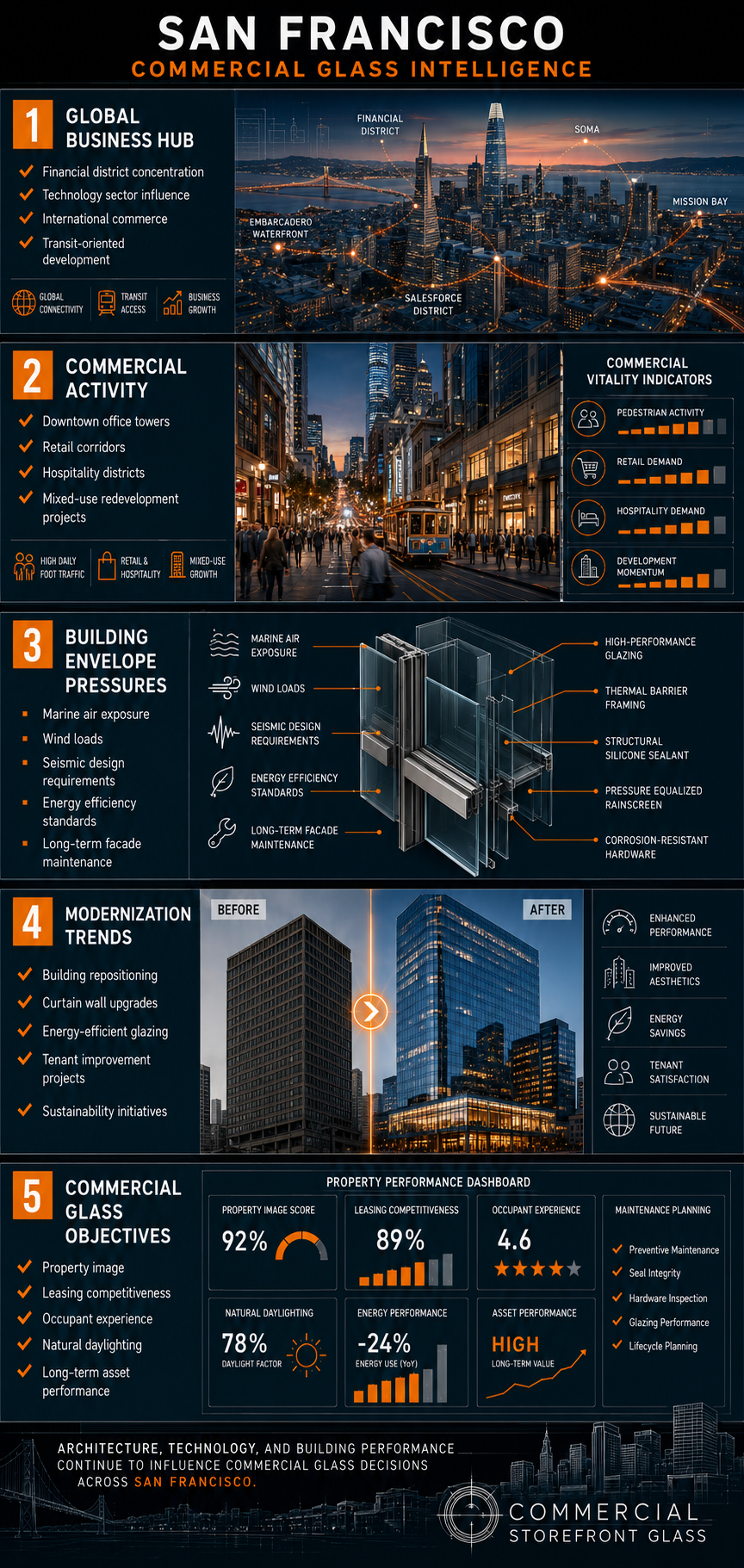
Throughout the larger Bay Area, commercial development becomes even more diverse. San Francisco contributes financial towers and hospitality projects. San Jose drives technology campuses and corporate headquarters. Palo Alto supports venture capital and innovation. South San Francisco anchors life science research. Walnut Creek, Pleasanton, Redwood City, San Mateo, Fremont, and Santa Clara each contribute their own commercial specialties.
For commercial storefront glass contractors, Oakland represents one major market within a regional network where nearly every city creates unique glazing opportunities.
Commercial Building Inventories Create Constant Demand
Building age directly influences storefront replacement throughout Oakland and across the Bay Area.
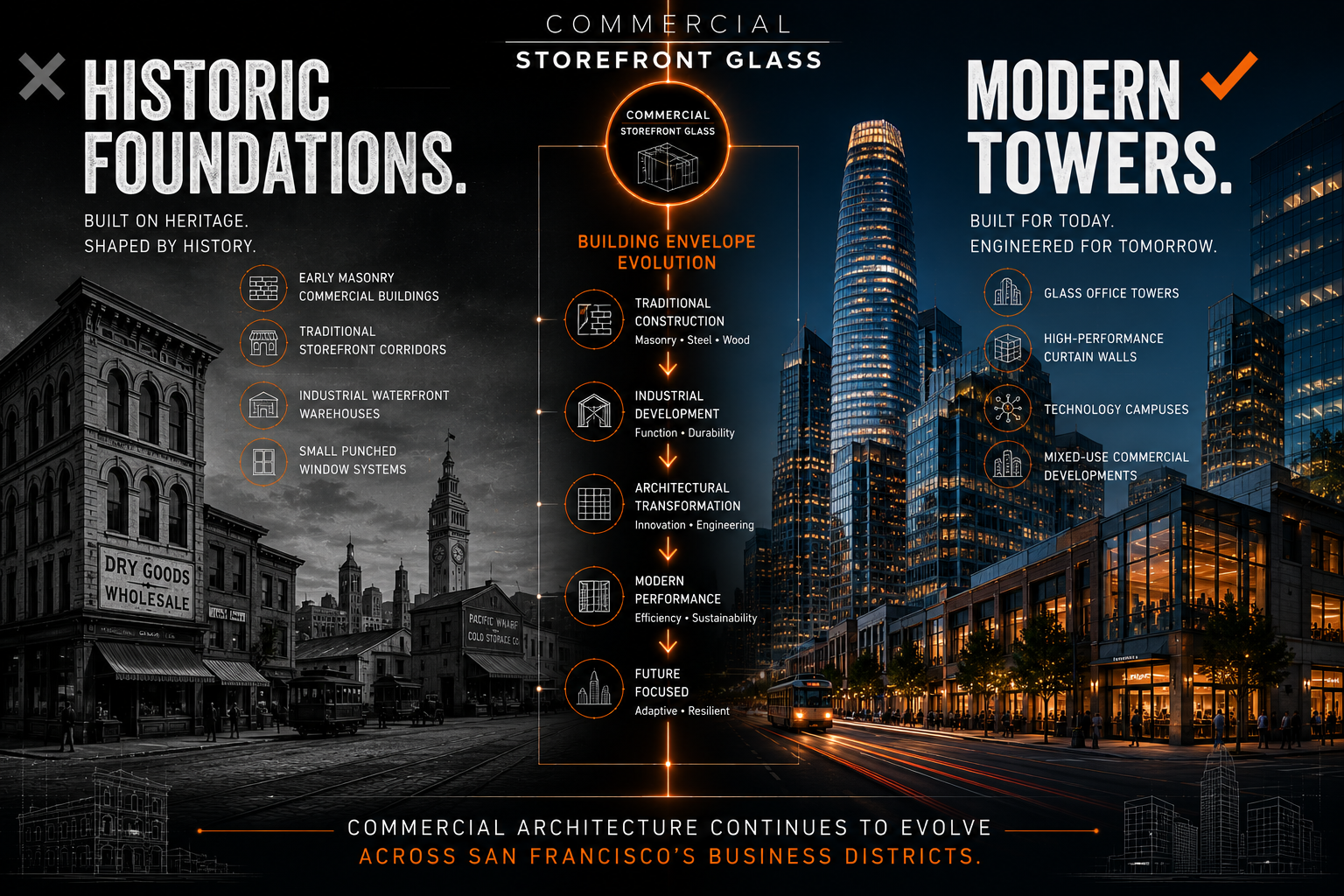
Oakland contains thousands of older commercial buildings requiring facade restoration, insulated glass replacement, entrance modernization, and storefront renovation. Historic downtown properties, industrial buildings, medical offices, schools, and neighborhood retail centers continue receiving significant upgrades as owners invest in long-term property performance.
The broader Bay Area contains an even wider variety of commercial inventories. Historic financial towers, suburban office campuses, mixed-use developments, shopping centers, hotels, healthcare facilities, and manufacturing buildings all generate continuous demand for glazing improvements.
Regardless of location, aging storefront systems eventually require replacement to improve energy efficiency, appearance, safety, and code compliance.
Port Infrastructure vs Regional Economic Engines
Oakland’s economy has long been tied to transportation, logistics, shipping, manufacturing, healthcare, and government services. Commercial buildings often prioritize durability, operational efficiency, and long-term performance.
The Bay Area expands well beyond those industries.
Financial services dominate San Francisco.
Technology companies define Silicon Valley.
Biotechnology drives South San Francisco.
Healthcare systems continue expanding throughout multiple counties.
Hospitality thrives in tourism centers.
Retail, education, advanced manufacturing, and professional services contribute additional commercial activity across the region.
Although these industries operate differently, they all depend on high-quality storefront systems that improve visibility, efficiency, and occupant comfort.
Commercial storefront glass becomes a shared investment regardless of business sector.
Tenant Improvements Keep Commercial Buildings Competitive
Tenant improvement projects remain one of the strongest drivers of commercial glazing work.
Oakland continues modernizing office buildings, healthcare facilities, restaurants, retail centers, educational properties, and adaptive reuse developments. Interior glass partitions, upgraded entrances, conference rooms, and storefront replacements help aging buildings compete for new tenants.
Across the Bay Area, tenant improvements occur continuously within technology campuses, financial offices, hospitality properties, healthcare facilities, biotechnology laboratories, and mixed-use developments.
Businesses increasingly expect bright workspaces, flexible layouts, collaborative environments, and attractive entrances that support employee satisfaction and customer experience.
Commercial storefront glass frequently becomes one of the most visible components of these renovations.
Adaptive Reuse Meets New Commercial Development
Oakland has become a leader in adaptive reuse.
Former warehouses, industrial buildings, manufacturing facilities, and historic commercial properties continue transforming into creative offices, restaurants, residential developments, and mixed-use commercial spaces.
These projects often require completely new storefront systems while preserving historic architectural character.
Elsewhere in the Bay Area, new commercial development remains equally active. Technology campuses expand throughout Santa Clara County. Life science laboratories continue growing along the Peninsula. Office developments, hotels, medical centers, and retail districts continue reshaping communities across multiple counties.
Whether modernizing an existing structure or constructing an entirely new building, storefront glass plays a central role in defining both appearance and performance.
Building Performance Drives Long-Term Investment
Commercial storefront systems now influence nearly every aspect of building performance.
Modern insulated glazing reduces energy consumption, improves occupant comfort, strengthens security, minimizes air infiltration, and supports sustainability goals.
Oakland properties benefit from storefront upgrades that improve operational efficiency while reducing maintenance requirements.
Across the Bay Area, developers and property owners increasingly prioritize thermally broken framing, high-performance coatings, laminated safety glass, oversized storefront systems, and advanced curtain wall technology.
These investments help buildings remain competitive while lowering operating costs throughout the building lifecycle.
Commercial storefront glass has evolved from an architectural feature into a critical component of long-term asset management.
General Contractors Build Across Multiple Commercial Markets
General contractors serving Oakland often work throughout the entire Bay Area.
A single contractor may complete healthcare renovations in Oakland, office improvements in San Francisco, technology campuses in Santa Clara County, laboratory facilities in South San Francisco, hospitality projects in San Mateo County, and retail developments throughout the East Bay.
Commercial glazing contractors who understand regional building codes, project sequencing, fabrication timelines, and installation logistics become valuable partners across multiple jurisdictions.
Successful storefront installations require close coordination with architects, engineers, structural trades, mechanical contractors, and facility managers regardless of project location.
Regional experience allows contractors to navigate the Bay Area’s diverse commercial environments more efficiently.
Urban Gateway vs Regional Commercial Network—Connected by Commercial Glass
Oakland represents one of the Bay Area’s most important commercial gateways, combining maritime commerce, downtown redevelopment, healthcare expansion, government facilities, education, and industrial infrastructure within a single city.
The Bay Area extends that commercial activity across one of the world’s most dynamic regional economies, where finance, technology, biotechnology, manufacturing, hospitality, healthcare, and retail continuously reshape the built environment.
Despite their different scales, both Oakland and the greater Bay Area rely on commercial storefront glass to modernize buildings, improve energy performance, attract tenants, strengthen business visibility, and increase long-term property value.
From renovated warehouses near the Port of Oakland to landmark office towers, biotechnology campuses, suburban corporate headquarters, and mixed-use developments across the region, commercial storefront glass remains one of the most important investments in every successful commercial property. For developers, architects, facility managers, property owners, and general contractors, understanding both Oakland’s role and the broader Bay Area market creates smarter glazing strategies that support long-term commercial success.