

Commercial Storefront Glass

Repair

Fast, reliable repairs for all types of commercial glass and storefronts.

Replacement

High-quality glass replacement for safety, security, and efficiency.

Installation

Professional installation for new construction and renovation projects.

Commercial Storefront Glass: Heat Exposure

How High Temperatures Influence Commercial Storefront Glass Performance

Heat is one of the most significant environmental forces affecting commercial buildings. Whether a property is located in the deserts of the Southwest, the humid Southeast, the California coast, or an urban downtown where surrounding buildings amplify temperatures, commercial storefront glass is exposed to daily thermal stress that can influence energy efficiency, occupant comfort, and long-term building performance.

From the perspective of commercial storefront glass, heat exposure is far more than an issue of indoor comfort. It affects HVAC performance, glazing selection, aluminum framing, seal longevity, thermal movement, and overall operating costs. Modern storefront systems are engineered to manage these conditions while preserving architectural beauty and protecting the building envelope.

The right commercial storefront system helps buildings remain comfortable, efficient, and durable—even during years of extreme heat.
 

repair vs replacement vs installation bay area sf oakland san jose ca (10)


Heat Affects Every Commercial Property

Every commercial building experiences heat differently.

Downtown office towers absorb reflected solar energy.

Retail storefronts receive direct afternoon sunlight.

Healthcare facilities operate around the clock regardless of outside temperatures.

Hotels balance guest comfort with rising energy costs.

Industrial buildings generate additional interior heat from equipment and operations.

Mixed-use developments experience different heating conditions across offices, restaurants, retail spaces, and residential areas.

Commercial storefront systems must perform reliably regardless of how heat affects the building.

Understanding Thermal Stress

As temperatures rise, building materials expand.

As temperatures fall, they contract.

Glass.

Aluminum framing.

Sealants.

Anchors.

Hardware.

Every storefront component responds to changing temperatures.

Proper engineering allows these materials to move safely while maintaining structural integrity, weather resistance, and energy performance.

Ignoring thermal movement can shorten the lifespan of a storefront system and increase maintenance requirements.

Solar Heat and Air Temperature Are Different

Not all heat comes from outdoor air.

Direct sunlight often creates more significant thermal challenges than air temperature alone.

South-facing storefronts may receive intense solar exposure throughout the day.

West-facing glass experiences concentrated afternoon heat.

Large expanses of glazing can transfer unwanted heat into occupied spaces if not properly specified.

Modern commercial storefront systems use advanced glazing technologies to help manage both solar radiation and outdoor temperatures.

This distinction is critical when designing energy-efficient buildings.
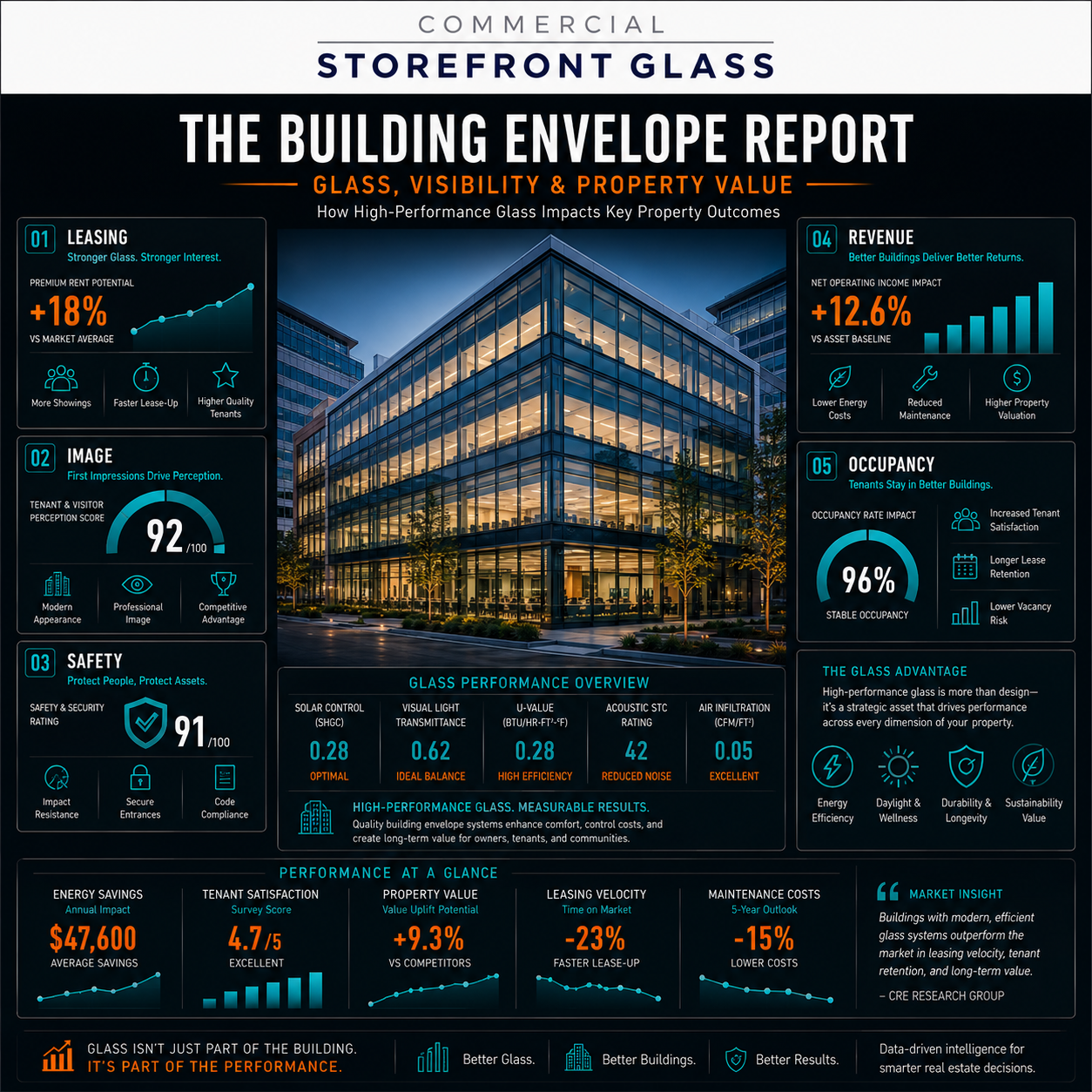
 

commercial glass in the bay area storefront glazing company repair and install services (7)


Modern Glass Controls Heat Without Blocking Daylight

Today’s storefront systems provide remarkable thermal performance.

Insulated glazing reduces heat transfer.

Low-emissivity (Low-E) coatings reflect infrared heat while allowing visible daylight to enter.

Thermally broken aluminum framing minimizes conductive heat transfer.

Specialized glazing options help balance daylight, visibility, and thermal efficiency.

These technologies allow commercial buildings to remain bright and welcoming without dramatically increasing cooling demands.

Modern storefront glass delivers comfort alongside architectural transparency.

Energy Efficiency Lowers Operating Costs

Cooling commercial buildings represents one of the largest ongoing operating expenses in warm climates.

High-performance storefront systems help reduce HVAC demand by limiting unwanted heat transfer.

The benefits include:

Lower utility bills.

More consistent indoor temperatures.

Reduced strain on mechanical systems.

Improved occupant comfort.

Greater sustainability.

Over the life of a building, improved thermal performance can produce meaningful operational savings while extending equipment life.

Commercial storefront glass contributes directly to long-term building efficiency.

Durability Under Extreme Conditions

Heat exposure affects more than energy consumption.

Daily temperature cycles place continual stress on building materials.

Premium aluminum framing resists long-term distortion.

Quality sealants remain flexible under changing temperatures.

Commercial-grade hardware maintains reliable performance.

Professionally engineered glazing systems accommodate thermal movement while preserving structural integrity.

Durable storefront systems reduce maintenance while protecting commercial investments over decades of service.

General Contractors Coordinate High-Performance Building Envelopes

Managing heat exposure requires collaboration.

General contractors coordinate storefront systems with roofing, insulation, HVAC design, waterproofing, structural framing, and architectural specifications.

Commercial glazing contractors work alongside architects and engineers to ensure storefront systems satisfy energy codes, climate conditions, and long-term performance expectations.

Proper installation is essential.

Even high-performance materials depend on accurate fabrication and installation to achieve their intended results.

Different Buildings Have Different Thermal Priorities

Every commercial property uses glass differently.

Office buildings seek employee comfort and energy efficiency.

Retail storefronts balance customer visibility with cooling costs.

Healthcare facilities require stable indoor environments.

Hotels prioritize guest comfort throughout the year.

Industrial headquarters require durable systems capable of handling demanding operating conditions.

Educational campuses maximize daylight while controlling thermal performance.

Commercial storefront systems can be customized to meet each building’s unique thermal requirements.
 

san francisco bay area commercial glass storefront glazing systems installation and repair san jose (2)


Investing in Heat-Resistant Storefront Systems

Choosing storefront glass based solely on initial cost may overlook decades of operating expenses.

High-performance systems help reduce maintenance.

Improve occupant comfort.

Protect interior finishes.

Increase energy efficiency.

Support sustainability goals.

Enhance long-term property value.

Commercial storefront glass becomes one of the building’s most important energy management tools rather than simply its exterior appearance.

Heat Exposure—Building Smarter with Commercial Storefront Glass

Heat exposure is an unavoidable part of commercial building performance, but modern storefront systems are designed to manage it effectively. Through advanced glazing technologies, insulated glass, thermally broken framing, and professional engineering, today’s commercial storefronts help control heat while maximizing natural daylight and long-term durability.

For developers, architects, property owners, facility managers, and general contractors, understanding heat exposure is essential when selecting commercial storefront glass. The right system reduces operating costs, improves occupant comfort, protects the building envelope, and extends the life of the investment.

Whether serving an office tower, retail center, healthcare campus, hotel, industrial headquarters, or mixed-use development, commercial storefront glass transforms heat from a building challenge into an opportunity for better performance, greater efficiency, and lasting commercial value.