


Commercial Storefront Glass: Retail vs Office
How Storefront Glass Requirements Change Between Customer-Facing Retail and Professional Office Buildings
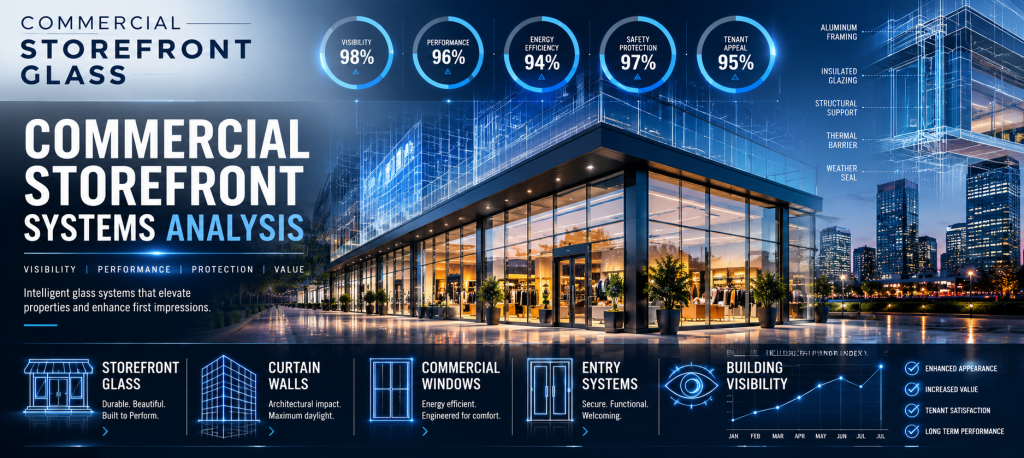
Retail centers and office buildings may both use commercial storefront glass, but they are designed to achieve very different goals. A retail storefront is built to attract attention, showcase products, and invite customers inside. An office building emphasizes professionalism, employee comfort, energy efficiency, security, and long-term operational performance.
From the perspective of commercial storefront glass, understanding the differences between retail and office environments helps property owners, architects, developers, facility managers, and general contractors choose storefront systems that support the unique purpose of each building.
Although both property types rely on aluminum storefront framing, insulated glazing, architectural entrances, and high-performance glass, the priorities behind each installation are often very different.
Retail Prioritizes Visibility
Retail buildings compete for attention every day.
Customers make decisions within seconds.
A storefront often determines whether someone walks inside.
Large display windows maximize product visibility.
Clear sightlines strengthen merchandising.
Modern entrances create welcoming first impressions.
Natural daylight makes interior spaces feel larger and more inviting.
Commercial storefront glass becomes part of the customer experience, helping businesses establish trust before a purchase ever occurs.
For retailers, visibility often translates directly into opportunity.
Office Buildings Prioritize Performance
Office buildings have different objectives.
Employee comfort.
Professional image.
Tenant satisfaction.
Energy efficiency.
Long-term operating costs.
Natural daylight remains important, but excessive glare, heat gain, and thermal performance become larger considerations than retail display visibility.
Office storefront systems frequently incorporate insulated glazing, Low-E coatings, thermally broken framing, and larger curtain wall assemblies that improve building performance while creating productive work environments.
The goal is supporting the people working inside the building every day.
Building Traffic Changes Storefront Design
Retail storefronts experience constant customer traffic.
Automatic doors.
Frequent daily entry.
Shopping carts.
Product deliveries.
Changing seasonal displays.
Office buildings generally experience more predictable occupancy.
Employees.
Visitors.
Business meetings.
Controlled building access.
Security systems.
Reception areas.
Because building traffic differs, hardware selection, entrance systems, glazing specifications, and maintenance requirements also change.
Commercial storefront systems are designed around how the building will actually be used.
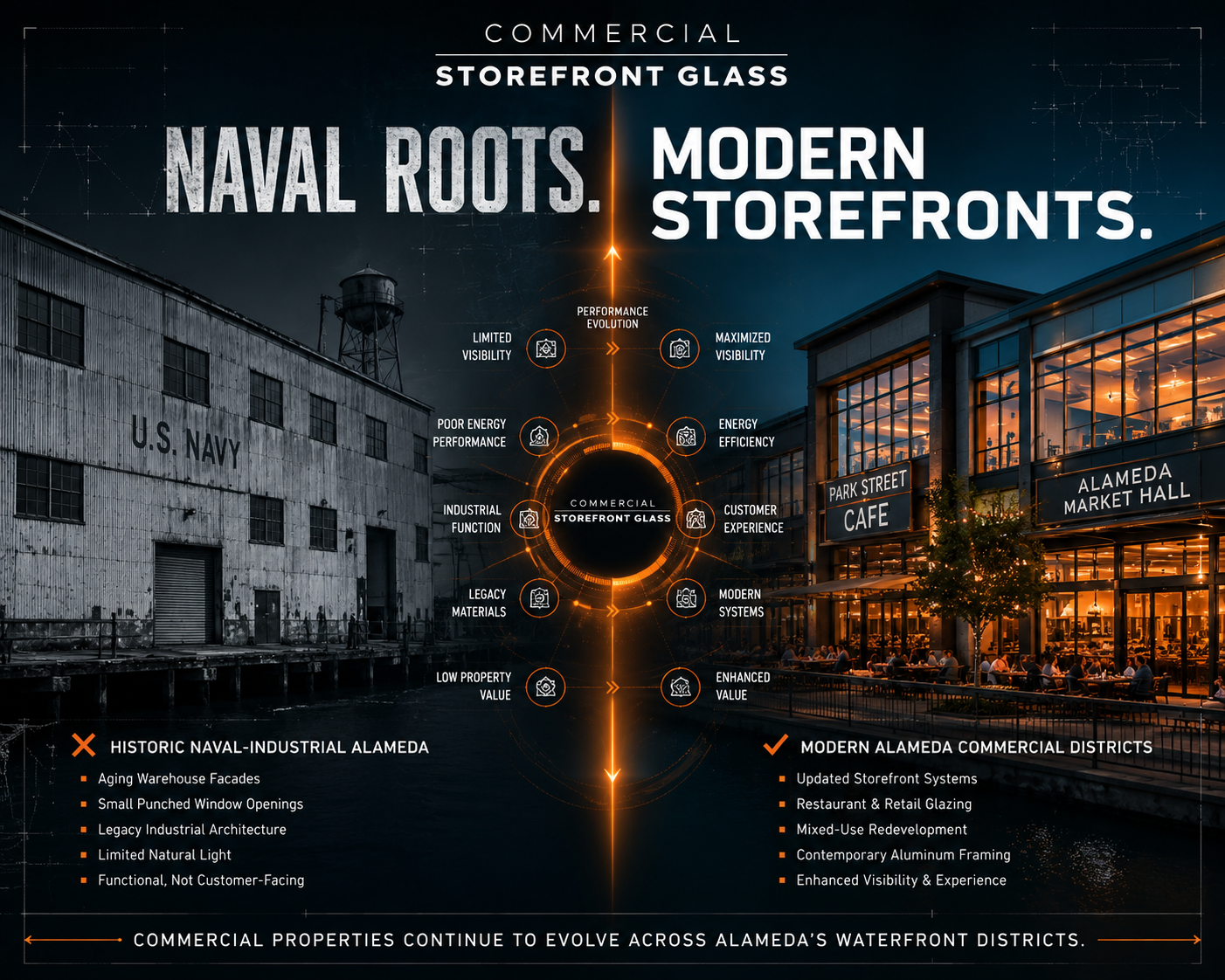
Retail Focuses on Customer Experience
Successful retail storefronts encourage people to stop.
Transparent glass creates visual connection.
Bright interiors improve product presentation.
Corner entrances increase accessibility.
Architectural glass reinforces branding.
Well-designed storefronts become marketing tools as much as building components.
Restaurants, boutiques, shopping centers, automotive showrooms, grocery stores, and neighborhood retailers all rely on storefront glass to strengthen customer engagement.
Appearance directly supports business performance.
Office Buildings Focus on Workplace Quality
Office buildings emphasize long-term functionality.
Natural daylight improves employee wellness.
Glass conference rooms encourage collaboration.
Professional entrances strengthen corporate identity.
Energy-efficient glazing lowers operating expenses.
Comfortable work environments improve tenant retention.
Commercial storefront systems contribute to workplace productivity while supporting sustainability goals and long-term asset value.
The building becomes an investment in both employees and tenants.
Security and Durability Matter in Both
Although priorities differ, both building types require durable storefront systems.
Laminated safety glass improves security.
Heavy-duty aluminum framing withstands years of operation.
Commercial-grade hardware supports high-traffic entrances.
Insulated glazing improves thermal performance.
Professional installation helps maintain structural integrity and weather resistance.
Whether serving a retail center or an office tower, storefront systems must perform reliably through years of daily use.
Durability protects every commercial investment.
General Contractors Build for Different Occupancies
Retail and office construction require different planning strategies.
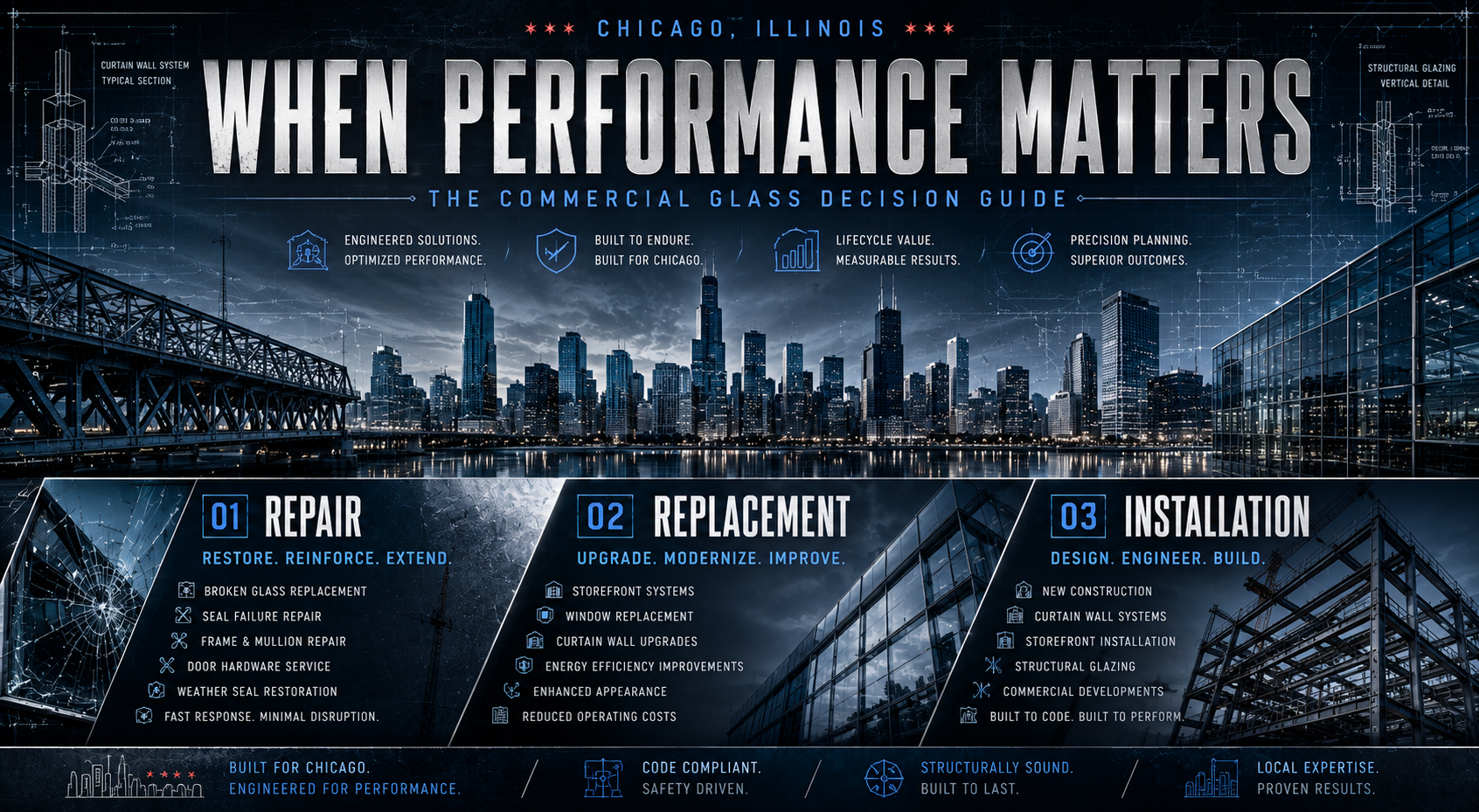
Retail projects often coordinate tenant improvements, storefront branding, display windows, restaurants, and public-facing entrances.
Office construction frequently emphasizes curtain wall systems, lobby architecture, controlled access, conference facilities, executive offices, and energy-efficient building envelopes.
Commercial glazing contractors coordinate with architects, structural engineers, electrical trades, HVAC contractors, and project managers to ensure storefront systems integrate seamlessly with each occupancy type.
Every building has its own operational priorities.
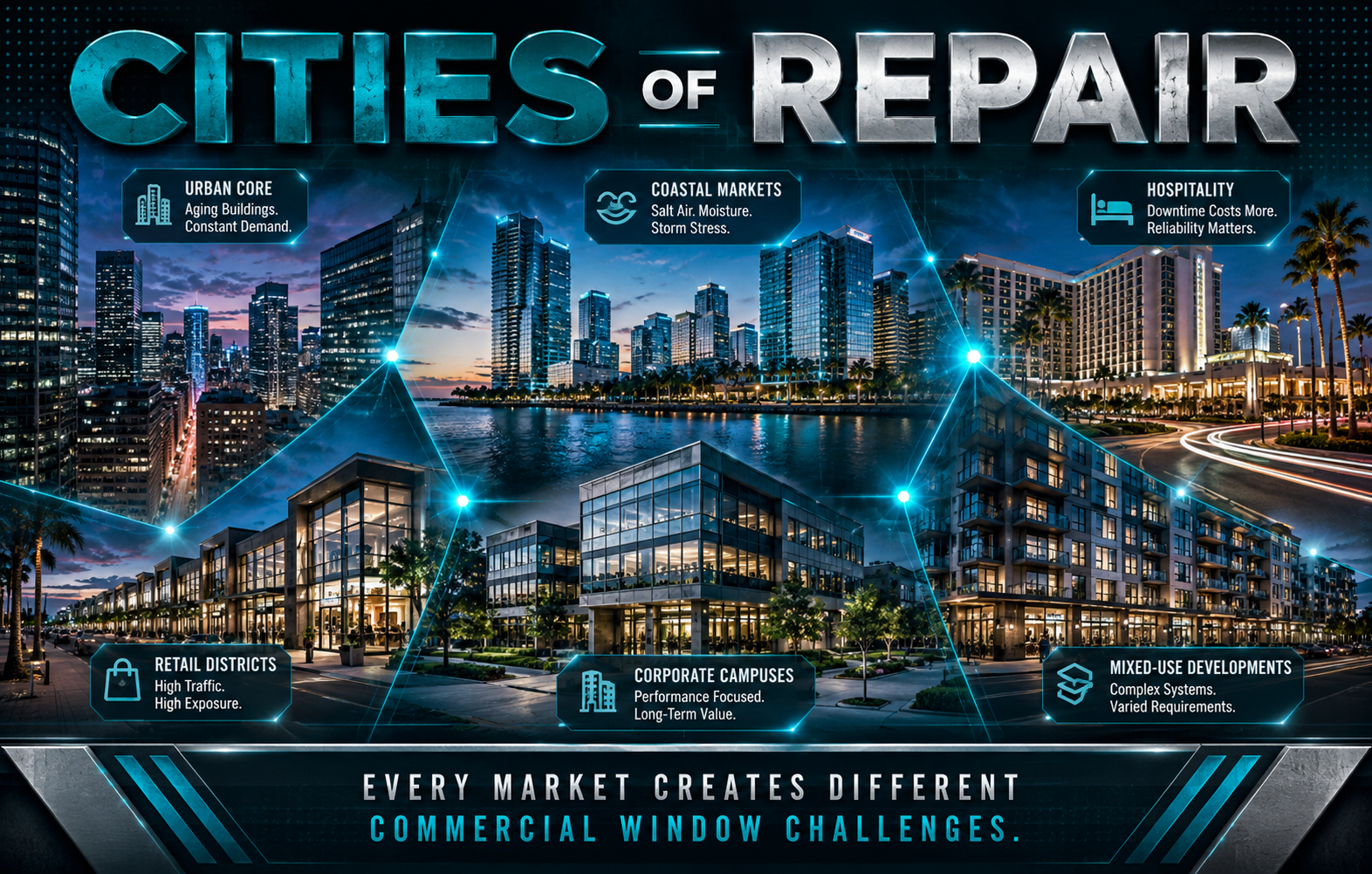
Long-Term Value Depends on Proper Glass Selection
The right storefront system supports the long-term goals of the property.
Retail owners seek customer visibility and flexible merchandising opportunities.
Office owners prioritize tenant attraction, operational efficiency, and lower lifecycle costs.
Selecting appropriate glass, framing, coatings, hardware, and entrance systems helps maximize performance throughout the life of the building.
Commercial storefront glass contributes directly to property value regardless of occupancy.
The specification should reflect how the building will serve its users.
One Material, Two Different Missions
Retail and office buildings often begin with the same core storefront technologies.
Aluminum framing.
Architectural entrances.
Insulated glazing.
Safety glass.
Energy-efficient coatings.
Yet each system is engineered differently based on occupancy, customer interaction, energy goals, maintenance expectations, and long-term operational performance.
Commercial storefront glass provides the flexibility to support both highly visible retail environments and sophisticated professional workplaces.
Retail vs Office—Choosing the Right Commercial Storefront Glass
Retail storefronts and office buildings may share similar materials, but their goals are fundamentally different. Retail spaces focus on visibility, customer engagement, and first impressions. Office buildings prioritize workplace quality, energy efficiency, tenant satisfaction, and long-term operating performance.
Modern commercial storefront glass allows both property types to achieve their objectives through carefully engineered glazing systems tailored to each environment.
For developers, architects, property owners, facility managers, and general contractors, understanding the differences between retail and office storefront systems leads to better building performance, lower operating costs, stronger tenant retention, improved customer experiences, and greater long-term commercial value.
Whether serving a neighborhood retail center, a downtown office tower, a mixed-use development, or a corporate headquarters, the right commercial storefront glass system transforms the building into a stronger, more efficient, and more successful commercial asset.


