

Commercial Storefront Glass

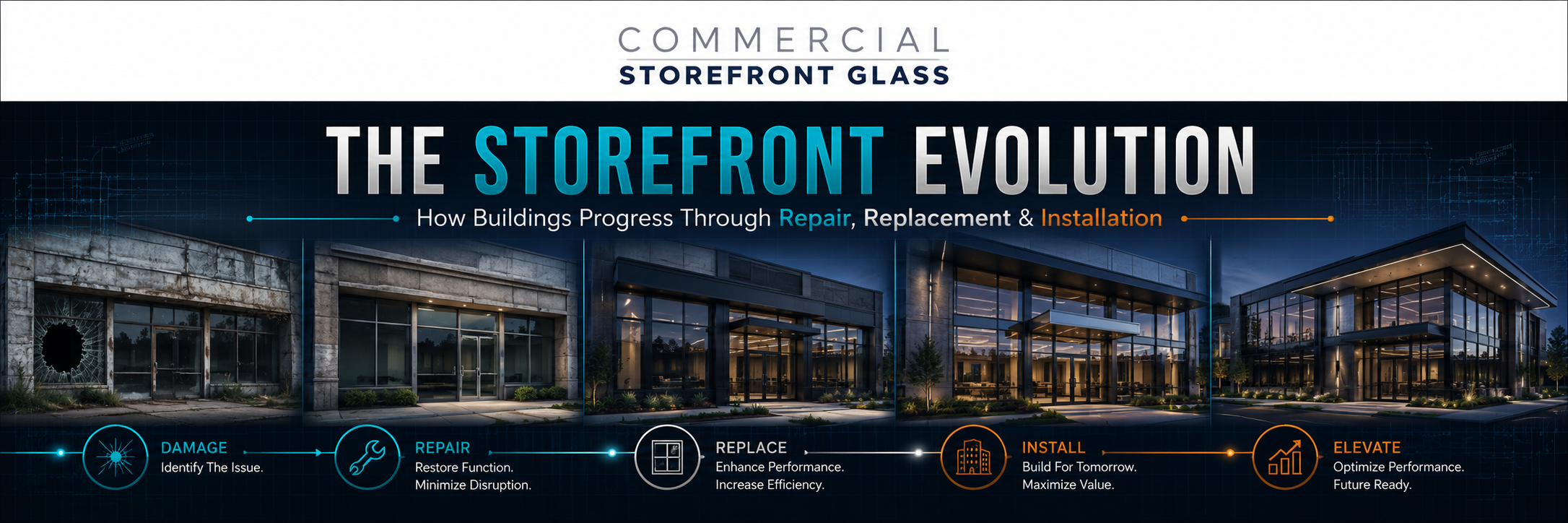
Repair

Fast, reliable repairs for all types of commercial glass and storefronts.

Replacement

High-quality glass replacement for safety, security, and efficiency.

Installation

Professional installation for new construction and renovation projects.

Commercial Storefront Glass: Mixed-Use vs Standalone Buildings

How Commercial Storefront Glass Adapts to Two Distinct Development Strategies

Commercial real estate continues to evolve as cities and suburbs respond to changing business needs. Some developments combine retail, offices, restaurants, residential space, hospitality, and entertainment into one integrated destination. Others focus on a single building designed for one tenant, one business, or one primary purpose. These two approaches—mixed-use and standalone development—create very different design priorities for commercial storefront glass.

From the perspective of commercial storefront glass, both property types rely on high-performance glazing systems, but each requires a unique balance of visibility, durability, accessibility, energy efficiency, and architectural identity. Whether developing a downtown mixed-use district or constructing a standalone corporate headquarters, the storefront system plays a central role in building performance and long-term value.

Understanding these differences helps developers, architects, property owners, facility managers, and general contractors select the right storefront solution for each project.
 

san rafael vs palo alto commercial glass storefront glazing repair vs replacement vs installation bay area ca (1)


Mixed-Use Developments Create Connected Communities

Mixed-use developments bring multiple property types together within one project.

Ground-floor retail.

Professional offices.

Restaurants.

Healthcare clinics.

Apartments.

Hotels.

Entertainment venues.

Public gathering spaces.

Because these buildings serve different occupants throughout the day, commercial storefront glass must support multiple functions simultaneously.

Retail spaces require visibility.

Office tenants prioritize comfort.

Restaurants seek inviting street presence.

Residential amenities value privacy and daylight.

Commercial storefront systems help connect these different environments into one cohesive architectural design.

Standalone Buildings Focus on One Primary Mission

Standalone commercial buildings generally serve a single purpose.

Corporate headquarters.

Medical offices.

Banks.

Automotive dealerships.

Industrial headquarters.

Large retail stores.

Government buildings.

Educational facilities.

Without multiple occupancy types to accommodate, storefront systems can be optimized specifically for the building’s operational needs.

The result is a more focused design strategy tailored to one business model.

Storefront Design Reflects Building Function

Mixed-use developments often require different storefront systems within the same structure.

Retail tenants may feature large display windows.

Restaurants emphasize transparent entrances.

Office spaces prioritize insulated glazing.

Shared lobbies create architectural continuity.

Standalone buildings usually maintain one consistent storefront design throughout the property.

Commercial storefront glass provides the flexibility to support both approaches while maintaining visual consistency and long-term durability.

Every building tells a different architectural story.
 

oakland bay area commercial glass storefront glazing company (2)


Foot Traffic Shapes Storefront Performance

Mixed-use developments experience activity throughout the day.

Morning commuters.

Lunch crowds.

Afternoon shoppers.

Evening diners.

Weekend visitors.

Residents.

Office workers.

Guests.

Standalone buildings typically experience more predictable occupancy patterns based on the specific business operating inside.

Because traffic differs, entrance systems, door hardware, glazing specifications, and maintenance strategies also differ.

Commercial storefront systems are designed around how people actually use the building.

Energy Efficiency Benefits Every Property Type

Regardless of occupancy, energy performance remains essential.

High-performance insulated glazing reduces heating and cooling demands.

Low-emissivity coatings improve indoor comfort.

Thermally broken framing minimizes heat transfer.

Modern curtain wall systems strengthen overall building performance.

Mixed-use developments often benefit from efficient storefront systems across multiple tenant spaces.

Standalone buildings improve operational efficiency by optimizing performance for one primary use.

Commercial storefront glass contributes directly to lower operating costs in both environments.

Durability Supports Long-Term Investment

Commercial properties are long-term investments.

Mixed-use developments require storefront systems capable of supporting multiple tenants over decades.

Standalone buildings rely on durable materials that reduce maintenance while preserving appearance.

Premium aluminum framing.

Commercial-grade hardware.

Laminated safety glass.

Weather-resistant sealants.

Professional installation.

These components help storefront systems remain reliable regardless of occupancy type.

Durability protects both property value and business continuity.

General Contractors Coordinate Different Construction Strategies

Construction planning varies significantly between these project types.

Mixed-use developments require coordination across retail, office, hospitality, residential, parking, and public spaces.

Standalone buildings often focus on one occupancy with specialized operational requirements.

Commercial glazing contractors coordinate with architects, structural engineers, mechanical contractors, electrical trades, waterproofing specialists, and project managers to ensure storefront systems integrate successfully throughout construction.

Every project demands a tailored approach.
 

commercial glass in the bay area storefront glazing company repair and install services (9)


Commercial Glass Creates Stronger Buildings

Commercial storefront systems influence every aspect of building performance.

Professional appearance.

Natural daylight.

Energy efficiency.

Occupant comfort.

Business visibility.

Security.

Long-term maintenance.

Whether serving a mixed-use district or a standalone commercial property, storefront systems strengthen the relationship between architecture and functionality.

Modern commercial glass supports both operational performance and long-term investment.

Choosing the Right Storefront System

No two commercial developments are identical.

A downtown mixed-use project may require multiple storefront designs serving different businesses within one building.

A standalone headquarters may prioritize corporate branding, workplace comfort, and operational efficiency.

A healthcare building may emphasize accessibility.

A retail center may focus on customer visibility.

Commercial storefront glass can be customized to support each of these objectives through carefully engineered framing, glazing, hardware, and entrance systems.

The right solution reflects how the building will function for decades to come.

Mixed-Use vs Standalone—Commercial Storefront Glass for Every Development

Mixed-use developments and standalone commercial buildings represent two different approaches to commercial real estate, yet both depend on high-performance storefront systems to support long-term success.

Mixed-use projects prioritize flexibility, connectivity, and multiple occupancies within one architectural environment. Standalone buildings focus on optimizing performance for one organization, one tenant, or one primary business function.

For developers, architects, property owners, facility managers, and general contractors, understanding the differences between mixed-use and standalone commercial storefront systems leads to better design decisions, improved energy efficiency, stronger tenant satisfaction, reduced maintenance, and greater long-term property value.

Whether constructing a vibrant mixed-use district, a corporate headquarters, a medical office building, a retail center, or an industrial campus, commercial storefront glass provides the performance, durability, and architectural quality needed to build successful commercial environments for generations.