

Bay Area vs Los Angeles: Storefront Hardware Repair vs Replacement vs Installation
Commercial storefront hardware is one of the most frequently used building systems in any business. Every day, door closers, panic devices, pivots, hinges, locks, handles, thresholds, weatherstripping, access control hardware, and aluminum storefront components support thousands of building occupants across office buildings, retail centers, hospitals, hotels, schools, airports, industrial facilities, and mixed-use developments. Throughout the Bay Area and Los Angeles, property owners, facility managers, property managers, and commercial contractors continually evaluate whether storefront hardware should be repaired, replaced, or upgraded to improve safety, accessibility, reliability, and long-term building performance.
The Bay Area includes major commercial markets throughout San Francisco, Oakland, San Jose, Palo Alto, Mountain View, Sunnyvale, Santa Clara, Berkeley, Fremont, Redwood City, South San Francisco, Walnut Creek, San Mateo, San Rafael, Emeryville, and neighboring business districts. Technology campuses, healthcare facilities, universities, biotechnology laboratories, office towers, shopping centers, and mixed-use developments all depend on high-performance storefront hardware capable of withstanding heavy daily use.
The Los Angeles region includes Los Angeles, Long Beach, Santa Monica, Century City, Beverly Hills, Pasadena, Glendale, Burbank, Culver City, El Segundo, Anaheim, Irvine, Costa Mesa, Orange, Torrance, and surrounding commercial markets. Entertainment venues, hospitality properties, airports, shopping centers, healthcare campuses, logistics facilities, and corporate headquarters all require dependable entrance hardware that supports continuous operations.
Although storefront glass receives much of the attention, hardware often determines how well an entrance performs throughout its service life.
Storefront Hardware Keeps Commercial Entrances Operating
Commercial entrance systems rely on numerous mechanical components working together.
Common storefront hardware includes:
- Door closers
- Continuous hinges
- Offset pivots
- Panic hardware
- Exit devices
- Pull handles
- Locking systems
- Thresholds and weather seals
Routine inspection and maintenance help extend the life of both the hardware and the surrounding storefront system.
When Storefront Hardware Repair Is Appropriate
Many entrance problems originate with hardware rather than the storefront itself.
Repair is often appropriate when:
- Door closers require adjustment
- Hinges or pivots show wear
- Locks need servicing
- Exit devices require maintenance
- Weatherstripping deteriorates
- Alignment adjustments restore smooth operation
- Aluminum framing remains structurally sound
Timely repairs often improve reliability while reducing the likelihood of emergency service calls.
Replacement Improves Long-Term Reliability
High-use entrances eventually require more than routine maintenance.
Replacement is commonly recommended when:
- Hardware reaches the end of its service life
- Parts become obsolete
- Frequent repairs increase maintenance costs
- Accessibility upgrades are planned
- Tenant improvements include new entrances
- Building modernization begins
- Security systems are upgraded
Replacing worn hardware can restore smooth operation while improving safety, accessibility, and occupant experience.
New Installation Supports Modern Commercial Buildings
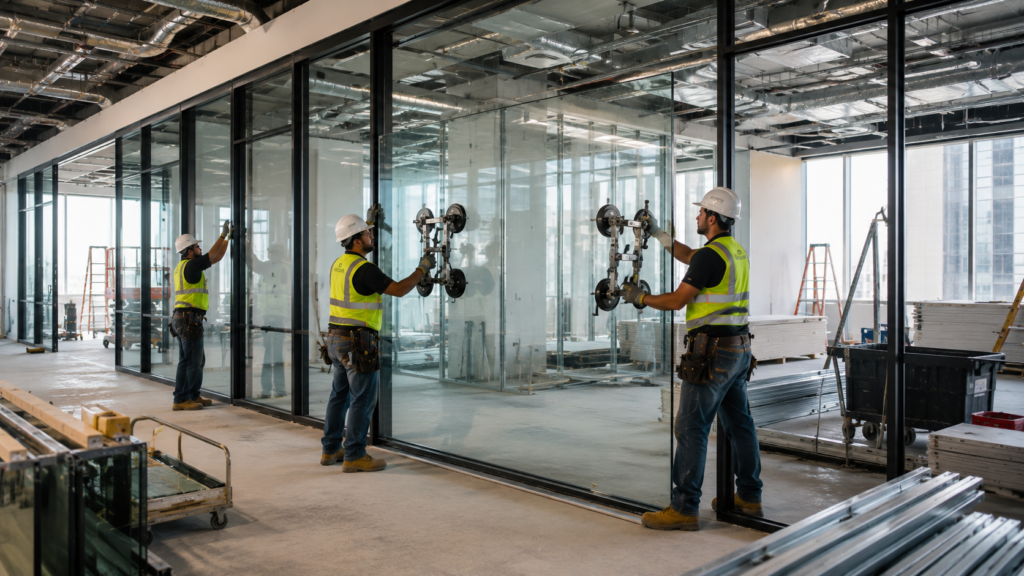
New construction provides opportunities to integrate high-performance storefront hardware from the beginning.
Modern installations frequently include:
- Heavy-duty commercial door closers
- Modern panic hardware
- ADA-compliant entrance hardware
- Access control integration
- High-cycle pivot systems
- Durable locking mechanisms
- Weather-resistant storefront components
Selecting compatible hardware during installation helps maximize long-term performance while simplifying future maintenance.
Preventive Maintenance Reduces Operational Interruptions
Storefront hardware benefits from routine inspections.
Facility teams commonly evaluate:
- Door alignment
- Closing speed
- Lock operation
- Pivot wear
- Weather seals
- Security hardware
- Accessibility performance
Preventive maintenance extends equipment life while helping entrances remain safe and dependable for occupants.
Regional Building Types Shape Hardware Requirements
Commercial entrances experience different operating demands across California.
Throughout the Bay Area, storefront hardware commonly serves:
- Technology campuses
- Biotechnology facilities
- Universities
- Healthcare systems
- Office towers
- Mixed-use developments
Throughout Los Angeles and Southern California, entrance hardware frequently supports:
- Hotels
- Entertainment venues
- Airports
- Retail centers
- Healthcare campuses
- Corporate headquarters
These building types influence hardware selection, maintenance frequency, replacement schedules, and long-term lifecycle planning.
Bay Area vs Los Angeles: Where Storefront Hardware Strategies Apply
Bay Area storefront hardware markets include:
San Francisco
Oakland
San Jose
Palo Alto
Mountain View
Sunnyvale
Santa Clara
Berkeley
Fremont
Redwood City
South San Francisco
Walnut Creek
San Mateo
San Rafael
Emeryville
Los Angeles regional storefront hardware markets include:
- Los Angeles
- Long Beach
- Santa Monica
- Century City
- Beverly Hills
- Pasadena
- Glendale
- Burbank
- Culver City
- El Segundo
- Anaheim
- Irvine
- Costa Mesa
- Orange
- Torrance
Across both regions, successful storefront hardware programs prioritize operational reliability, accessibility, security, durability, weather protection, preventive maintenance, and long-term building performance.
Keeping California’s Commercial Entrances Operating Smoothly
Storefront hardware repair, replacement, and new installation each contribute to dependable commercial entrances. Repairs restore smooth daily operation, replacements modernize worn mechanical components, and new installations provide durable hardware systems designed for decades of reliable service.
Whether upgrading a technology campus in Mountain View, modernizing a healthcare facility in Oakland, improving a financial office building in San Francisco, renovating a hotel in Santa Monica, expanding a shopping center in Long Beach, or constructing a new corporate headquarters in Irvine, thoughtfully selected storefront hardware improves accessibility, strengthens security, protects the building envelope, enhances the user experience, and increases the long-term value of commercial properties throughout California’s two largest metropolitan regions.