

Glass Doors vs Automatic Entrances
Commercial entrances do far more than provide access to a building.
They influence customer experience.
They affect accessibility.
They contribute to security, energy efficiency, and the overall appearance of a commercial property.
Should a project install traditional commercial glass doors?
Or is an automatic entrance system the better long-term investment?
Whether managing office towers in San Francisco, technology campuses in San Jose, healthcare facilities in Redwood City, shopping centers in Walnut Creek, or advanced manufacturing headquarters in Fremont, selecting the right entrance system plays an important role in long-term building performance.
Commercial glass doors provide simplicity and flexibility.
Automatic entrances improve accessibility and traffic flow.
Both remain essential throughout the Bay Area’s commercial real estate market.
✓ Glass doors create durable commercial entrances
✓ Automatic entrances improve accessibility and convenience
✓ Both strengthen long-term property performance
✓ Building use ultimately determines the best solution
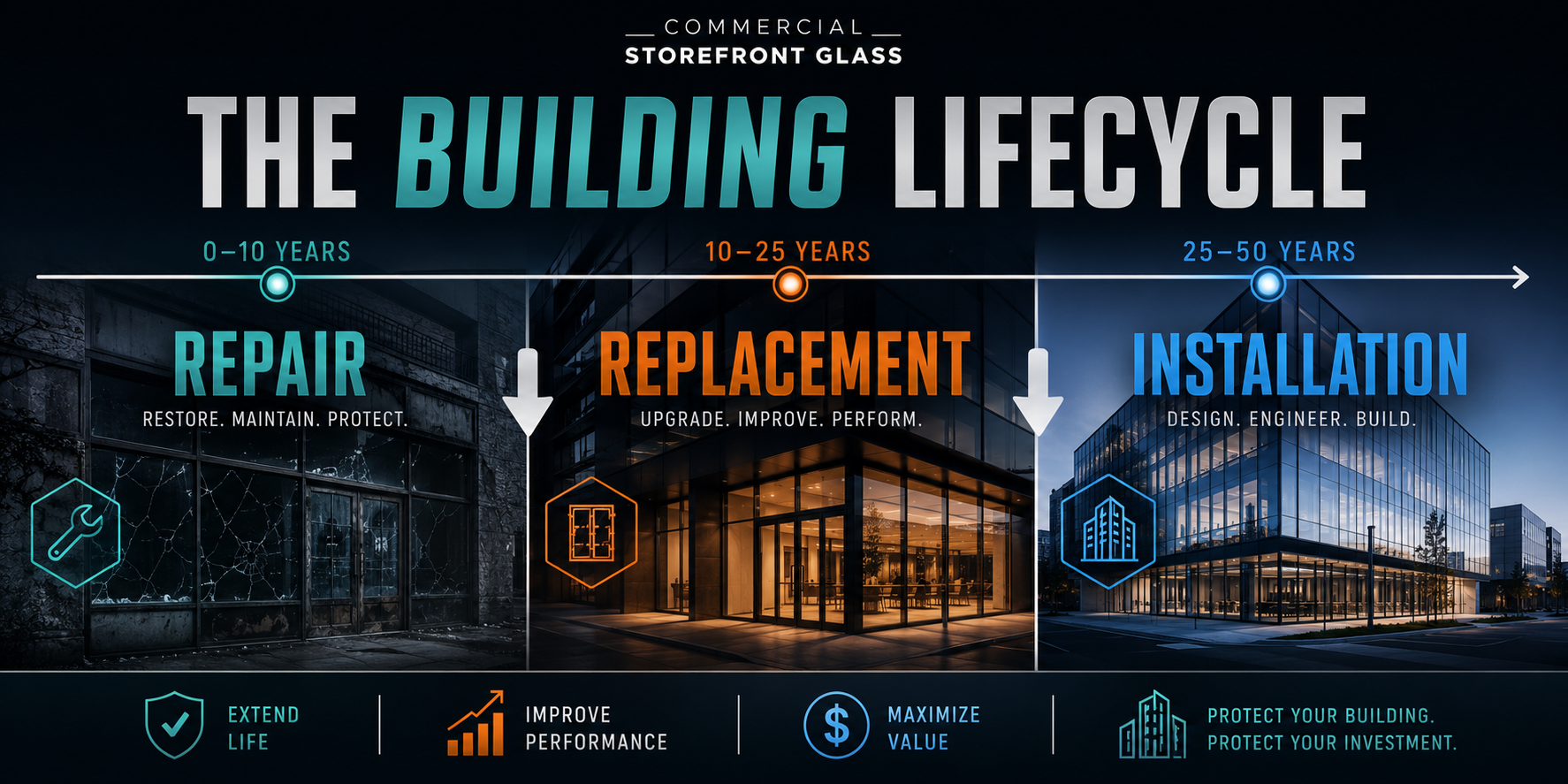
How Commercial Entrance Systems Have Evolved
Commercial entrances have changed considerably over the past several decades.
50 Years Ago
Most commercial buildings relied on traditional manual entrance systems.
Many properties throughout San Francisco, Oakland, Berkeley, San Jose, and older downtown business districts utilized:
- Aluminum glass doors
- Manual swing entrances
- Basic storefront framing
- Conventional door hardware
Accessibility standards and traffic flow received relatively little attention.
25 Years Ago
Commercial redevelopment accelerated throughout the Bay Area.
Retail centers expanded.
Healthcare campuses modernized.
Building owners increasingly focused on:
✓ Better customer experience
✓ ADA accessibility
✓ Improved building appearance
✓ Reduced maintenance costs
Automatic entrances became increasingly common in high-traffic commercial environments.
10 Years Ago
Commercial real estate became increasingly experience driven.
Ownership groups prioritized:
✓ Accessibility
✓ Operational efficiency
✓ Customer convenience
✓ Building performance
Today, commercial glass doors and automatic entrances frequently work together within the same commercial development.
Commercial Properties Utilizing Modern Entrance Systems
Nearly every commercial property depends on well-designed entrance systems.
Project activity remains common across:
- Downtown San Francisco office towers
- San Jose corporate campuses
- Fremont advanced manufacturing facilities
- Santa Clara technology parks
- Mountain View and Sunnyvale research campuses
- Palo Alto life science properties
- Redwood City and South San Francisco biotechnology facilities
- Walnut Creek shopping centers
- Pleasanton office developments
- Oakland mixed-use redevelopment
- Santa Rosa healthcare campuses
- Napa hospitality properties
Different commercial environments create different priorities.
Retail centers emphasize customer traffic.
Healthcare facilities prioritize accessibility.
Corporate offices value appearance and security.
Industrial facilities focus on durability.
Commercial Glass Doors
Commercial glass doors remain one of the most widely used entrance systems throughout the Bay Area.
Typical applications include:
- Office buildings
- Retail storefronts
- Restaurants
- Professional offices
- Mixed-use developments
- Hospitality properties
Common advantages include:
✓ Clean architectural appearance
✓ Flexible design options
✓ Lower installation costs
✓ Easy maintenance
Throughout established commercial districts like Berkeley, Burlingame, San Mateo, Concord, Petaluma, and Oakland, commercial glass doors continue supporting both renovation projects and new commercial construction.
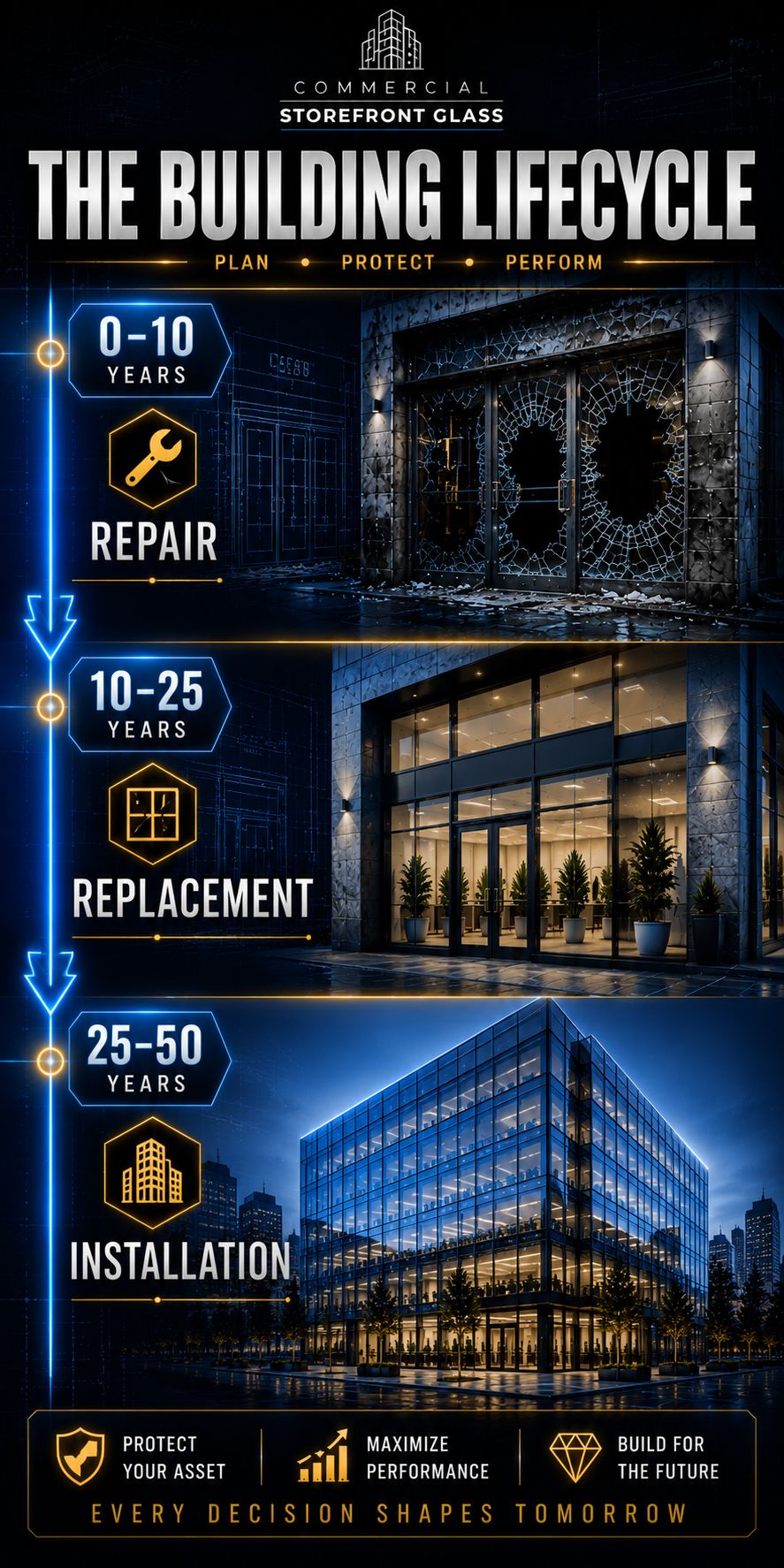
Automatic Entrance Systems
Automatic entrances are designed for commercial properties with higher pedestrian traffic, accessibility requirements, and operational demands.
Typical applications include:
- Hospitals
- Medical offices
- Hotels
- Airports
- Shopping centers
- Corporate headquarters
Common advantages include:
✓ Improved accessibility
✓ Better traffic flow
✓ Hands-free operation
✓ Enhanced customer experience
Automatic entrance installation remains especially active throughout expanding commercial markets such as Fremont, Dublin, Livermore, San Jose, Redwood City, Walnut Creek, and South San Francisco, where healthcare expansion, mixed-use development, and corporate growth continue driving commercial investment.
Building Performance And Accessibility
Commercial entrances contribute to far more than security.
They influence how occupants experience the building every day.
Modern ownership groups frequently evaluate:
✓ Accessibility compliance
✓ Energy efficiency
✓ Air infiltration
✓ Traffic flow
✓ Long-term durability
Across technology campuses in Santa Clara County, office developments in San Mateo County, and mixed-use projects throughout Alameda County, entrance systems increasingly support broader building modernization strategies.
Commercial Markets Driving Entrance Modernization
Commercial entrance upgrades continue throughout nearly every major Bay Area market.
Ongoing investment remains common across:
- San Francisco
- San Jose
- Oakland
- Fremont
- Santa Clara
- Sunnyvale
- Mountain View
- Palo Alto
- Redwood City
- South San Francisco
- San Mateo
- Burlingame
- Foster City
- Menlo Park
- Walnut Creek
- Pleasanton
- Dublin
- Livermore
- Concord
- Berkeley
Many commercial projects combine traditional glass entrance systems with automatic operators, creating solutions that balance appearance, accessibility, and long-term performance.
Regional Commercial Drivers
Three Bay Area counties consistently generate the highest concentration of commercial entrance modernization projects.
Santa Clara County
As the economic center of Silicon Valley, Santa Clara County contains one of the nation’s largest concentrations of corporate headquarters, semiconductor manufacturing, research laboratories, and technology campuses.
Commercial investment remains especially active throughout San Jose, Santa Clara, Sunnyvale, Mountain View, Cupertino, Milpitas, Campbell, Los Gatos, Morgan Hill, and Palo Alto.
Common priorities include:
✓ Corporate campus modernization
✓ Workplace accessibility
✓ Employee experience
✓ Building performance
Alameda County
Alameda County combines technology, logistics, manufacturing, healthcare, higher education, and retail into one of California’s most diverse commercial markets.
Major commercial activity extends across Oakland, Fremont, Berkeley, Pleasanton, Livermore, Dublin, San Leandro, Newark, Alameda, and Hayward.
Common priorities include:
✓ Retail improvements
✓ Office modernization
✓ Mixed-use redevelopment
✓ Customer accessibility

San Mateo County
San Mateo County connects San Francisco with Silicon Valley while supporting one of the nation’s highest concentrations of biotechnology, healthcare, hospitality, and corporate headquarters.
Commercial investment remains active throughout Redwood City, San Mateo, South San Francisco, Burlingame, Foster City, Menlo Park, San Carlos, Belmont, and Millbrae.
Common priorities include:
✓ Corporate headquarters
✓ Healthcare expansion
✓ Hospitality improvements
✓ Building accessibility
Traditional Entrance Or Automated Access?
Every commercial property presents different operational requirements.
Traditional glass doors provide a clean, durable, and cost-effective entrance solution.
Automatic entrances improve accessibility, convenience, and pedestrian flow for higher-traffic environments.
Many of today’s commercial buildings successfully combine both systems.
Across San Francisco, San Jose, Fremont, Walnut Creek, Redwood City, Oakland, Pleasanton, Santa Rosa, Napa, and commercial markets throughout the Bay Area, commercial glass doors and automatic entrances continue shaping how people experience commercial properties.
That evolution makes glass doors versus automatic entrances one of the most valuable discussions in commercial glazing, connecting directly to accessibility, customer experience, storefront design, building performance, tenant improvements, and long-term commercial property value.