



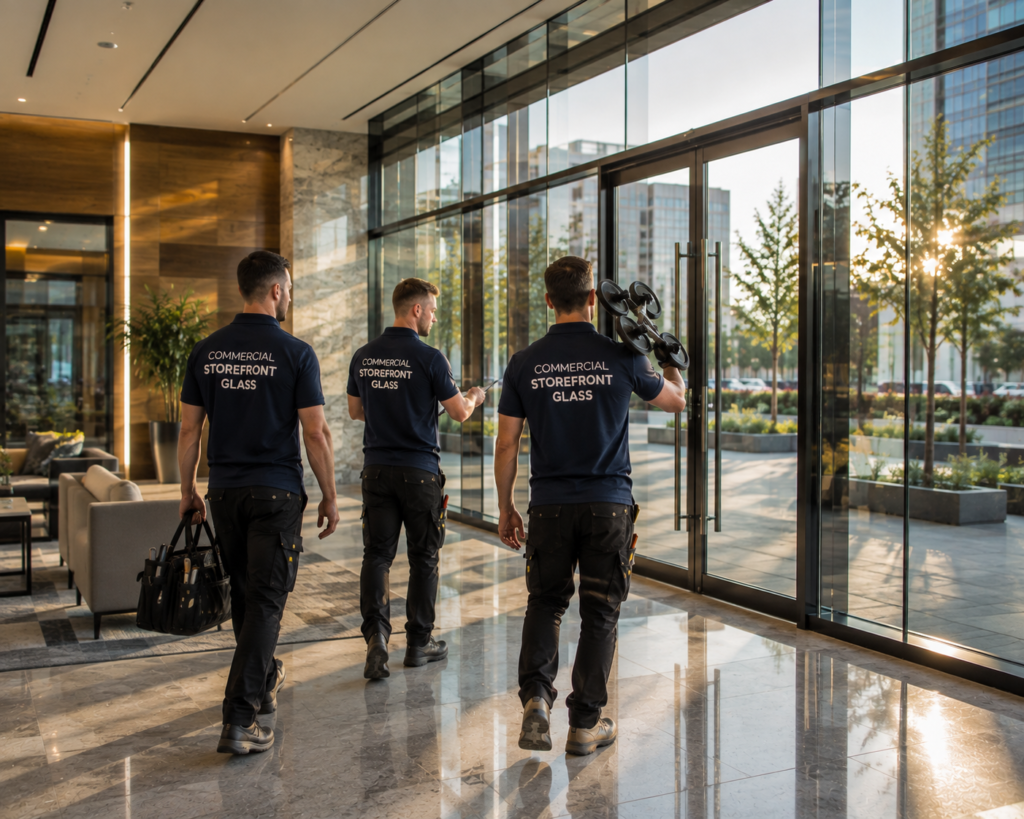
Commercial glass installation rarely happens in an empty building. Customers still need to come and go, employees still need to work, and deliveries still need to arrive. Meanwhile, the crew needs room to remove old glass, stage new panels, and work safely. Balancing both sides takes a clear plan. This guide explains how to schedule, stage, and communicate so your business keeps running while the new glass goes in.
Store owners, restaurant managers, office managers, and property teams can use it to plan a smooth project.

Why Planning Around Operations Matters
Every hour a door is blocked or a section is closed can cost sales. Noise and dust can bother customers and staff. On top of that, broken glass and heavy panels pose real safety risks. So the goal is simple: keep the business open and keep everyone safe.
Good planning makes that possible. In fact, most commercial glass installation projects can run with little or no full closure when the team plans ahead.
Step 1: Understand How Your Business Runs
Start by mapping your normal day. When are your busiest hours? Which doors do customers use most? When do deliveries arrive? Also note any special events, sales, or seasonal rushes.
Share this information with your glazing contractor early. With it, they can suggest the best times to work and the best order for each section.
Step 2: Pick the Right Schedule
There are several ways to schedule the work:
- Normal hours: Lowest labor cost, but more impact on customers.
- Early mornings: Good for stores that open late.
- Nights: Ideal for busy retail and restaurants, though labor costs more.
- Weekends: Useful for offices that close on Saturday and Sunday.
- Phased work: Small sections over several days to keep most of the front open.
Often, the best plan mixes these options. For example, the crew may remove old glass at night and finish sealing during quiet daytime hours.
Step 3: Keep an Entrance Open
Customers need a clear way in. If the main door is part of the project, plan a temporary entrance. That might be a side door, a second storefront door, or a temporary door in a plywood wall. In addition, post clear signs that point people to the open entrance.
Accessibility matters too. The open entrance must still work for people using wheelchairs, strollers, and walkers. The ADA guidance on entrances explains what to keep in mind.

Commercial Glass Installation Safety Zones
Safety zones protect both the public and the crew. Typically, crews set up barriers, cones, and caution tape around the work area. On busy sidewalks, they may add covered walkways or traffic control. Inside the building, they may close off a small area near the work.
Keep these zones clear at all times. Staff should guide customers around them. Also keep children and pets away from the area, since glass can break without warning.
Temporary Protection While Glass Is Out
Sometimes old glass comes out before the new glass arrives. In that case, the crew installs temporary protection. Plywood panels are common, though some crews use clear polycarbonate panels so stores can still show products. These panels keep out weather and intruders. Our board-up services can secure openings quickly.
Managing Noise, Dust, and Debris
Glass work can be noisy, especially during removal. To reduce the impact, schedule loud tasks for off-peak hours. Also ask the crew to use drop cloths and to clean up at the end of each shift. Broken glass should go straight into covered bins, never left on the floor.
Inside restaurants and stores, protect products, tables, and floors near the work. A few plastic covers can prevent a lot of cleanup later.
Commercial Glass Installation in Restaurants and Stores
Restaurants and retail stores face special challenges. For restaurants, food safety comes first. So keep glass dust and debris far from kitchens, food prep areas, and dining tables. Many restaurants schedule work after closing or before breakfast.
Retail stores, by contrast, often worry about window displays and security. Plan to move displays before work starts. If the store must stay secure overnight, make sure every opening closes up before the crew leaves.
Commercial Glass Installation in Offices
Offices usually have more flexibility. Many work happens after hours or on weekends. However, offices still need to protect computers, files, and meeting rooms. Also tell employees which entrances are closed and how long the work will last. Our glass entrance services page covers common office entry upgrades.

Communicating During Commercial Glass Installation
Clear updates prevent confusion. Before work starts, tell staff the schedule, the safety rules, and who to contact with questions. For customers, post signs at the entrance and update your website and social media. If you share a building, notify neighbors and the property manager.
During the project, ask the crew lead for a quick daily update. That way, you can plan around any changes.
Commercial Glass Installation Costs for After-Hours Work
Night and weekend work keeps customers happy, but it does cost more. Crews earn higher pay for off-hours shifts, and lighting or security may add to the bill. So weigh that extra labor against the sales you would lose during a daytime closure.
For many busy stores and restaurants, the math favors night work. For example, a single lost Saturday can cost more than the premium for an overnight crew. On the other hand, a quiet office may save money by allowing daytime work in a closed-off area. Ask your contractor to price both options, so your commercial glass installation plan fits both your schedule and your budget.
Finally, remember that a well-planned commercial glass installation often pays for itself. Fewer complaints, safer customers, and steady sales all add value that does not show up on the invoice.
Step 5: Plan for Weather and Delays
Weather can affect sealing and lifting work. Rain, wind, and cold can all cause delays. So build a little extra time into your schedule. In addition, confirm that glass deliveries arrive on time, since a late panel can push back the whole job.
Step 6: Final Walkthrough
When the work is done, walk the area with the crew lead. Check that doors open, close, and lock correctly. Look for scratches, gaps in sealant, or missing labels. Then confirm that all debris is gone and the area is clean before customers return.
Choosing the Right Contractor
A good contractor plans around your business, not the other way around. Ask how they handle after-hours work, temporary entrances, and cleanup. Also ask for references from businesses like yours. Groups such as the National Glass Association can help you find experienced firms.
FAQ on Commercial Glass Installation
Can I stay open during commercial glass installation?
In most cases, yes. Phased work, night shifts, and temporary entrances keep the doors open.
How long does the work take?
Small jobs may take a day. Larger storefronts may take several days spread over a week or two.
Will the work be noisy?
Removal can be loud, so crews often schedule it during off-peak hours.
Keep Your Business Running
With the right plan, new glass does not have to disrupt your day. Visit our glass installation services page, or reach our team to plan your project.