


Commercial Glass Replacement
Understanding Commercial Glass Replacement
Commercial properties evolve over time.
Tenant expectations change.
Building systems age.
Market competition continues increasing.
As a result, glass replacement often becomes part of a broader strategy focused on modernization, property performance, and long-term asset value.
Across retail centers, office buildings, healthcare facilities, hospitality properties, universities, industrial developments, and mixed-use projects, updated glazing systems help properties remain competitive within changing markets.
For many ownership groups, replacement represents an opportunity to improve both appearance and functionality.

What Is Commercial Glass Replacement?
Commercial glass replacement involves removing and replacing existing glazing systems within a building.
Some projects address damaged components.
Others focus on modernization.
Many owners pursue replacement as part of larger renovation efforts.
Applications can range from storefront systems and glass entrances to curtain walls, architectural facades, and interior glazing.
The scope varies, but the objective remains consistent: improving the performance and presentation of the property.
Storefront Glass Replacement
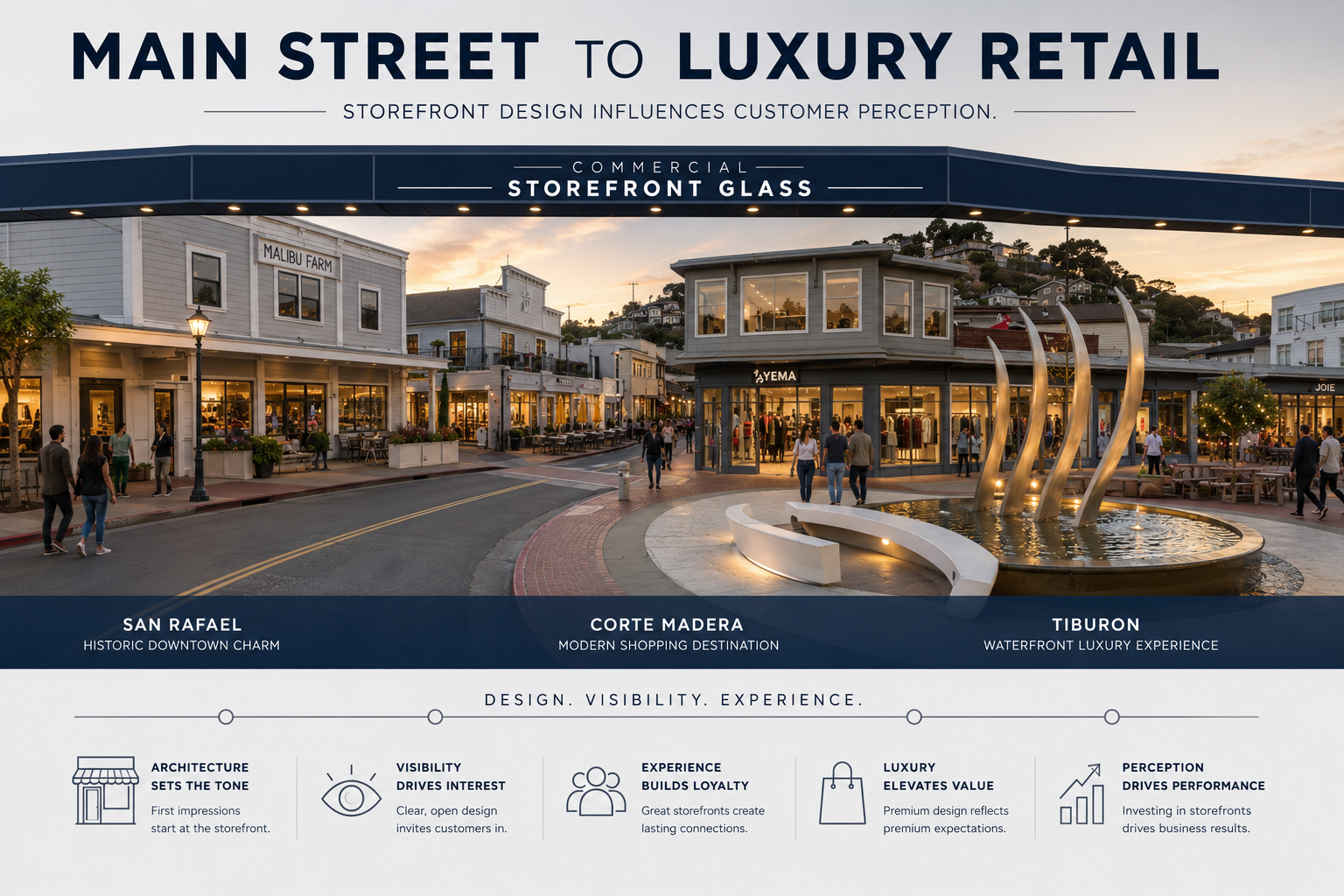
Few building elements influence customer perception more than the storefront.
Visibility affects engagement.
Exterior presentation shapes first impressions.
Street-facing glazing often becomes one of the most noticeable features of a commercial property.
Many businesses replace aging storefront systems to improve appearance, support modernization efforts, and strengthen their position within competitive markets.
Replacing Aging Building Facades
Exterior systems experience years of exposure and daily use.
Design standards evolve.
Architectural expectations change.
Ownership groups frequently modernize facades to improve overall property appeal.
Updated glazing can dramatically transform the appearance of an older building while helping align the property with current market expectations.
For many redevelopment projects, facade improvements become a highly visible sign of reinvestment.
Curtain Wall Replacement
Large commercial buildings often depend on extensive glazing systems.
Office towers frequently incorporate curtain walls.
Healthcare facilities utilize architectural glass.
Hospitality developments rely on modern facades.
Over time, ownership groups may choose to replace sections of these systems as part of broader renovation strategies designed to enhance building appearance and long-term performance.
Glass Entrance Replacement
Entrances experience constant interaction.
Employees use them daily.
Visitors encounter them immediately.
Customers notice them before entering the property.
Replacing outdated entry systems can improve appearance while supporting accessibility, functionality, and overall user experience.
Many modernization projects include entrance upgrades as part of a comprehensive exterior improvement plan.
Commercial Renovation Projects
Property improvement initiatives frequently involve glazing replacement.
Retail centers pursue modernization.
Office buildings adapt to changing workplace expectations.
Healthcare campuses continue evolving.
Hospitality properties refresh guest-facing environments.
Because glass influences both perception and functionality, replacement often becomes a key component of commercial renovation projects.
Tenant Improvement Applications
New tenants rarely have identical requirements.
Operational needs change.
Space planning evolves.
Branding expectations differ.
Commercial glass replacement frequently supports tenant improvement efforts by helping ownership groups adapt spaces to meet new business objectives.
Updated glazing often contributes to a more contemporary and attractive environment.
Property Repositioning Strategies
Competitive markets require continual investment.
Owners pursue upgrades to maintain relevance.
Exterior appearance influences perception.
Leasing activity often benefits from modernization.
As a result, glazing replacement frequently becomes part of broader property repositioning initiatives designed to strengthen marketability and support long-term value.
Visible improvements help demonstrate commitment to the asset.
Commercial Properties And Customer Experience
Customer impressions form quickly.
Exterior presentation matters.
Visibility influences engagement.
Building appearance can affect how a business is perceived.
Replacing aging glazing systems often helps create a cleaner, more modern environment that better reflects current customer expectations.
Many organizations view these improvements as part of a larger customer experience strategy.
Industry Applications
Commercial glass replacement supports a wide variety of property types.
Retail centers frequently modernize storefronts.
Office buildings pursue workplace improvements.
Healthcare facilities renovate patient-facing environments.
Hotels refresh guest experiences.
Universities upgrade academic buildings.
Industrial properties improve administrative and customer-facing areas.
Regardless of industry, replacement projects help properties adapt to evolving requirements.
Long-Term Asset Improvement
Building ownership involves ongoing investment.
Markets change.
Competition increases.
Occupant expectations continue evolving.
Commercial glass replacement allows properties to remain aligned with those changes while supporting broader modernization efforts.
Many owners view glazing improvements as a practical way to enhance both appearance and long-term competitiveness.
The Value Of Commercial Glass Replacement
Commercial properties must continually adapt to remain relevant.
Architectural standards evolve.
Tenant expectations shift.
Modernization drives investment throughout the real estate industry.
Within that environment, commercial glass replacement remains an important tool for maintaining property performance, improving exterior presentation, and supporting long-term asset value.
Whether part of a storefront upgrade, facade renovation, tenant improvement project, or large-scale redevelopment effort, replacement projects continue helping commercial properties compete in an increasingly demanding marketplace.