

Hurricane-Rated Curtain Wall Systems
How Hurricane-Rated Curtain Walls Protect Commercial Buildings in High-Wind Coastal Environments
Commercial buildings along the Atlantic Coast, Gulf Coast, Caribbean, Hawaii, and other storm-prone regions face environmental conditions far more demanding than everyday wind and rain. Hurricanes combine extreme wind speeds, wind-driven rain, rapid pressure changes, and airborne debris into one of the most challenging environments a building envelope can encounter.
From the perspective of commercial storefront glass, hurricane-rated curtain wall systems are engineered to help commercial buildings withstand these severe conditions while maintaining structural integrity, occupant safety, and long-term building performance. Office towers, hospitals, hotels, airports, schools, government facilities, mixed-use developments, and coastal corporate campuses often rely on these specialized glazing systems to meet stringent building code requirements and improve resilience.
A properly engineered hurricane-rated curtain wall is designed not only to protect the building during a storm but also to provide dependable performance every day throughout its service life.

What Is a Hurricane-Rated Curtain Wall System?
A hurricane-rated curtain wall is a commercial facade system engineered to resist extreme weather conditions associated with tropical storms and hurricanes.
A typical system may include:
Reinforced aluminum framing.
Impact-resistant laminated glass.
Heavy-duty anchors.
Engineered mullions.
Advanced weather seals.
Pressure-equalized drainage systems.
Structural attachment systems.
Every component is designed to work together as an integrated building envelope capable of resisting severe environmental loading.
Performance depends on the complete system rather than any single material.
Designed for Extreme Wind Loads
Hurricanes generate powerful wind forces that place tremendous stress on commercial buildings.
Curtain wall systems must resist:
High wind pressures.
Rapid pressure fluctuations.
Structural movement.
Glass deflection.
Repeated loading.
Connection stresses.
Engineers analyze local wind design requirements, building height, exposure conditions, and structural characteristics before specifying the appropriate curtain wall system.
Proper engineering helps ensure long-term structural performance.
Impact Resistance Is a Critical Component
One of the defining characteristics of hurricane-rated systems is impact resistance.
During major storms, airborne debris may strike the building envelope at high speed.
To improve resilience, many hurricane-rated curtain walls incorporate laminated impact-resistant glazing designed to remain in place even if the outer glass layers crack.
Combined with reinforced framing and engineered attachment systems, impact-resistant glazing helps maintain the integrity of the building envelope during severe weather events.
The objective is reducing the risk of catastrophic facade failure.
Managing Wind-Driven Rain
Heavy rain often accompanies hurricane-force winds.
Modern hurricane-rated curtain wall systems incorporate multiple strategies to manage water intrusion.
Pressure-equalized framing.
Engineered drainage paths.
Continuous weather seals.
High-performance gaskets.
Precision sealant systems.
These components work together to direct water away from the building envelope while maintaining interior protection during demanding weather conditions.
Effective water management is just as important as structural strength.

Energy Efficiency Beyond Storm Protection
Although designed for severe weather, hurricane-rated curtain walls also improve everyday building performance.
Modern systems commonly include:
Insulated glazing.
Low-emissivity (Low-E) coatings.
Thermally broken aluminum framing.
Advanced weather barriers.
Reduced air infiltration.
These technologies improve occupant comfort, lower heating and cooling costs, and contribute to long-term sustainability.
Storm protection and energy efficiency work together within one integrated facade system.
Ideal Applications for Coastal Commercial Buildings
Hurricane-rated curtain walls are frequently specified for:
Office buildings.
Hotels and resorts.
Hospitals.
Airport terminals.
Educational campuses.
Government facilities.
Financial institutions.
Mixed-use developments.
Corporate headquarters.
Healthcare campuses.
Any commercial property located in regions subject to hurricane design requirements may benefit from enhanced facade performance.
Building resilience protects both occupants and long-term investments.
General Contractors Coordinate Specialized Construction
Installing hurricane-rated curtain wall systems requires careful coordination among multiple disciplines.
Commercial glazing contractors work closely with:
Architects.
Structural engineers.
General contractors.
Steel fabricators.
Building envelope consultants.
Waterproofing specialists.
Every anchor, glazing unit, connection, and framing component must be installed according to engineered specifications to achieve the intended level of performance.
Attention to detail is essential throughout construction.
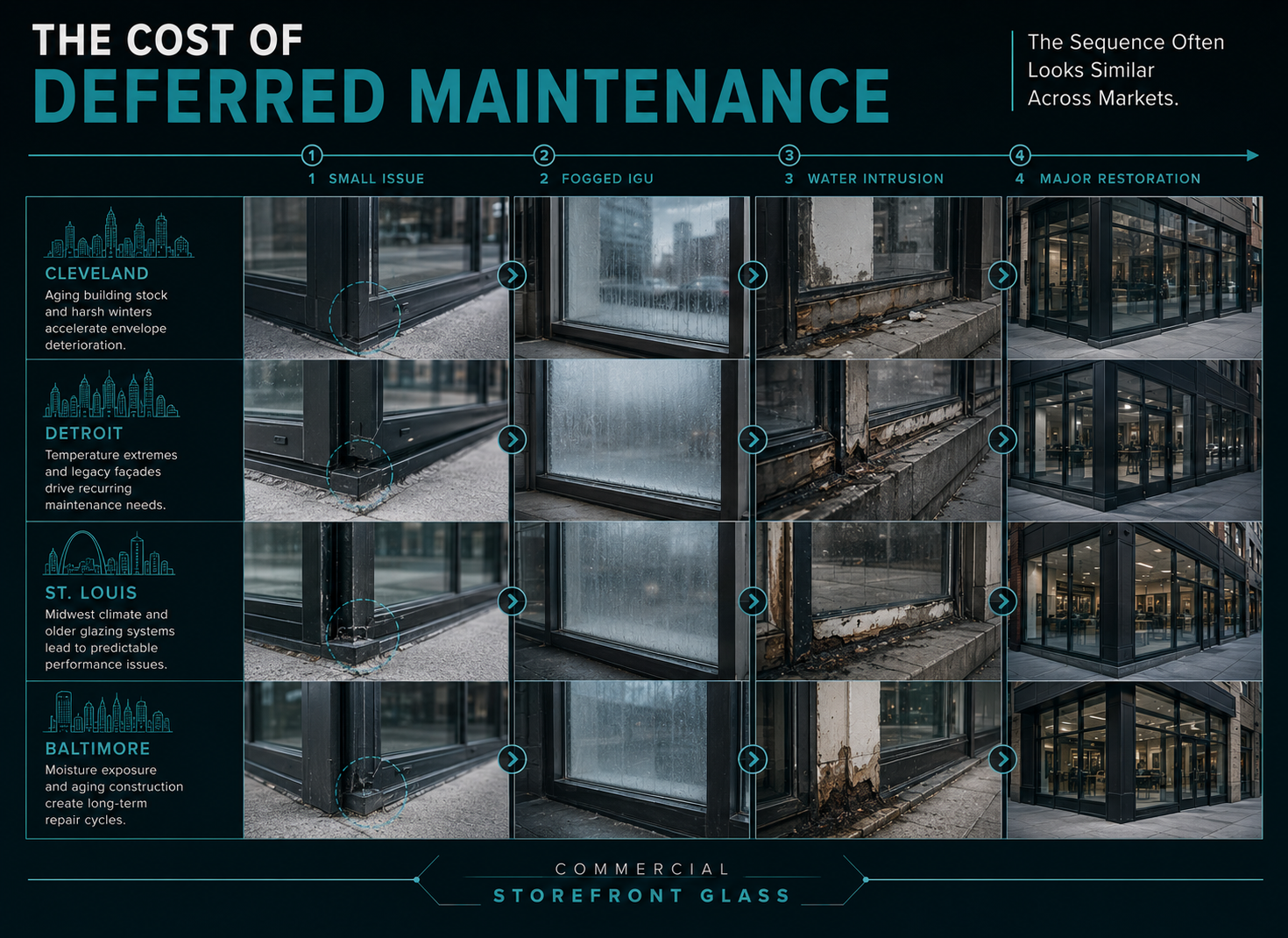
Long-Term Maintenance Preserves Performance
Even the highest-performing curtain wall systems require routine maintenance.
Regular inspections may include:
Sealant condition.
Glazing evaluation.
Hardware inspections.
Drainage system cleaning.
Weather seal assessment.
Structural attachment reviews.
Preventive maintenance helps preserve weather resistance, energy efficiency, and long-term facade performance throughout the life of the building.
Reliable performance begins with ongoing care.
Built for Everyday Performance and Extreme Weather
Hurricane-rated curtain wall systems are designed to perform every day—not only during severe storms.
They provide:
Professional architectural appearance.
Natural daylight.
Energy efficiency.
Weather resistance.
Occupant comfort.
Long-term durability.
When extreme weather arrives, the same engineered systems help protect the building from some of nature’s most demanding conditions.
That combination of everyday functionality and storm resilience makes hurricane-rated curtain walls an essential solution for many coastal commercial properties.
Hurricane-Rated Curtain Wall Systems—Engineered for Coastal Commercial Resilience
Hurricane-rated curtain wall systems combine advanced engineering, reinforced framing, impact-resistant glazing, weather management, and energy-efficient design into one high-performance commercial facade. These systems help commercial buildings withstand severe coastal weather while delivering the durability, comfort, and architectural quality expected from modern construction.
For developers, architects, property owners, facility managers, and general contractors working in hurricane-prone regions, hurricane-rated curtain walls provide a dependable solution for office buildings, hotels, hospitals, airports, educational campuses, government facilities, and mixed-use developments.
When professionally engineered, manufactured, installed, and maintained, hurricane-rated curtain wall systems create resilient building envelopes that protect occupants, reduce long-term operating costs, preserve property value, and support reliable commercial performance through both everyday conditions and the most demanding storms.


