

Commercial Property Manager Guide to Glass Repair, Replacement & Installation
Commercial property managers balance one responsibility above all others: protecting the value of an income-producing asset while keeping tenants satisfied and buildings operating efficiently. Commercial glass plays a much larger role in that responsibility than many people realize. Storefront systems, curtain walls, entrances, windows, automatic doors, and the overall building envelope directly affect leasing, curb appeal, tenant retention, operating expenses, maintenance budgets, security, and long-term property value. Whether managing a neighborhood retail center, downtown office tower, medical office building, industrial park, mixed-use development, hospitality property, or corporate campus, property managers routinely evaluate whether commercial glass should be repaired, replaced, or upgraded as part of an effective asset management strategy.
Unlike facility managers, whose primary responsibility is day-to-day building operations, property managers often balance tenant expectations, ownership objectives, lease obligations, maintenance coordination, budgeting, contractor management, and long-term capital planning simultaneously. Commercial glazing decisions frequently sit at the intersection of all of these responsibilities.
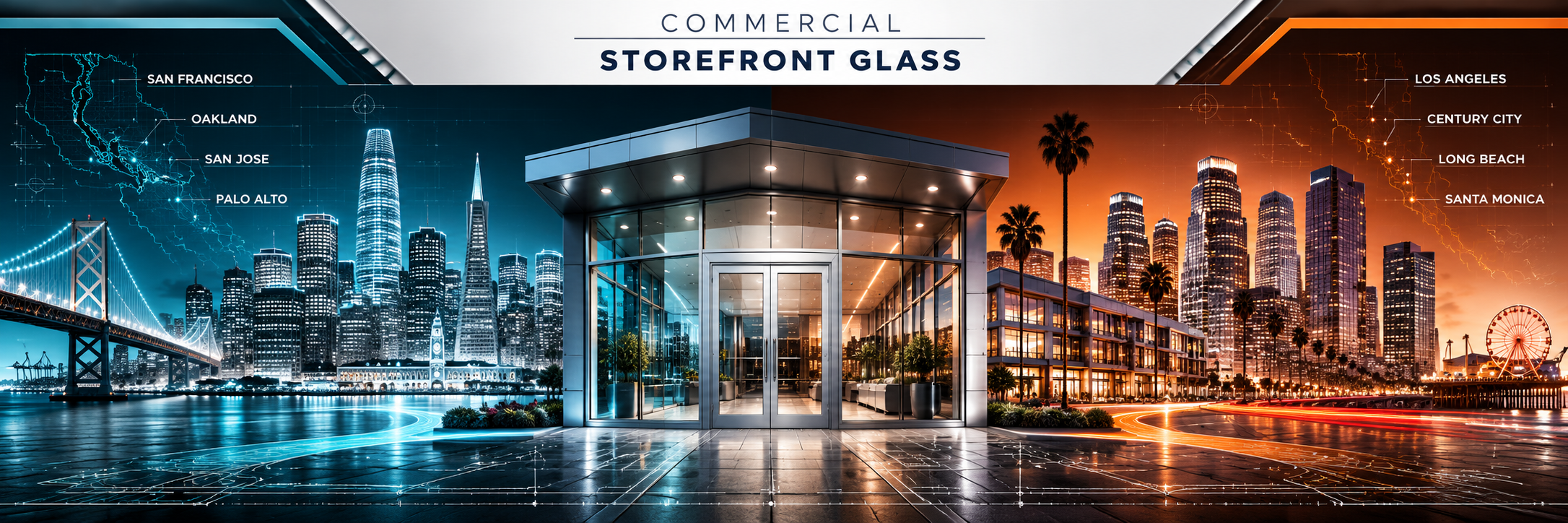
Commercial Glass Protects More Than the Building
Commercial glazing directly influences property performance.
Well-maintained systems improve:
- First impressions
- Tenant satisfaction
- Leasing potential
- Building appearance
- Energy efficiency
- Security
- Accessibility
- Long-term property value
- Operating efficiency
- Maintenance predictability
For many commercial properties, the storefront and entrance create the first experience every tenant, customer, and prospective occupant has with the building.
When Repair Is the Right Decision
Repairs are often the most practical solution when the overall glazing system remains in good condition.
Repair is commonly appropriate when:
- Individual glass panels break
- Storefront hardware wears
- Door closers require servicing
- Automatic doors need adjustment
- Sealants deteriorate
- Locks require maintenance
- Insulated glass units fail
- Water intrusion remains localized
Prompt repairs help preserve tenant satisfaction while avoiding more expensive problems later.
When Replacement Creates Greater Value
Replacement becomes increasingly attractive as buildings age.
Replacement is often recommended when:
- Multiple glazing systems begin failing
- Storefront appearance affects leasing
- Energy performance declines
- Water intrusion becomes recurring
- Maintenance costs continue increasing
- Building repositioning begins
- Tenant improvements require modernization
- Capital improvement projects are underway
Modern commercial glazing frequently improves both operating performance and marketability.
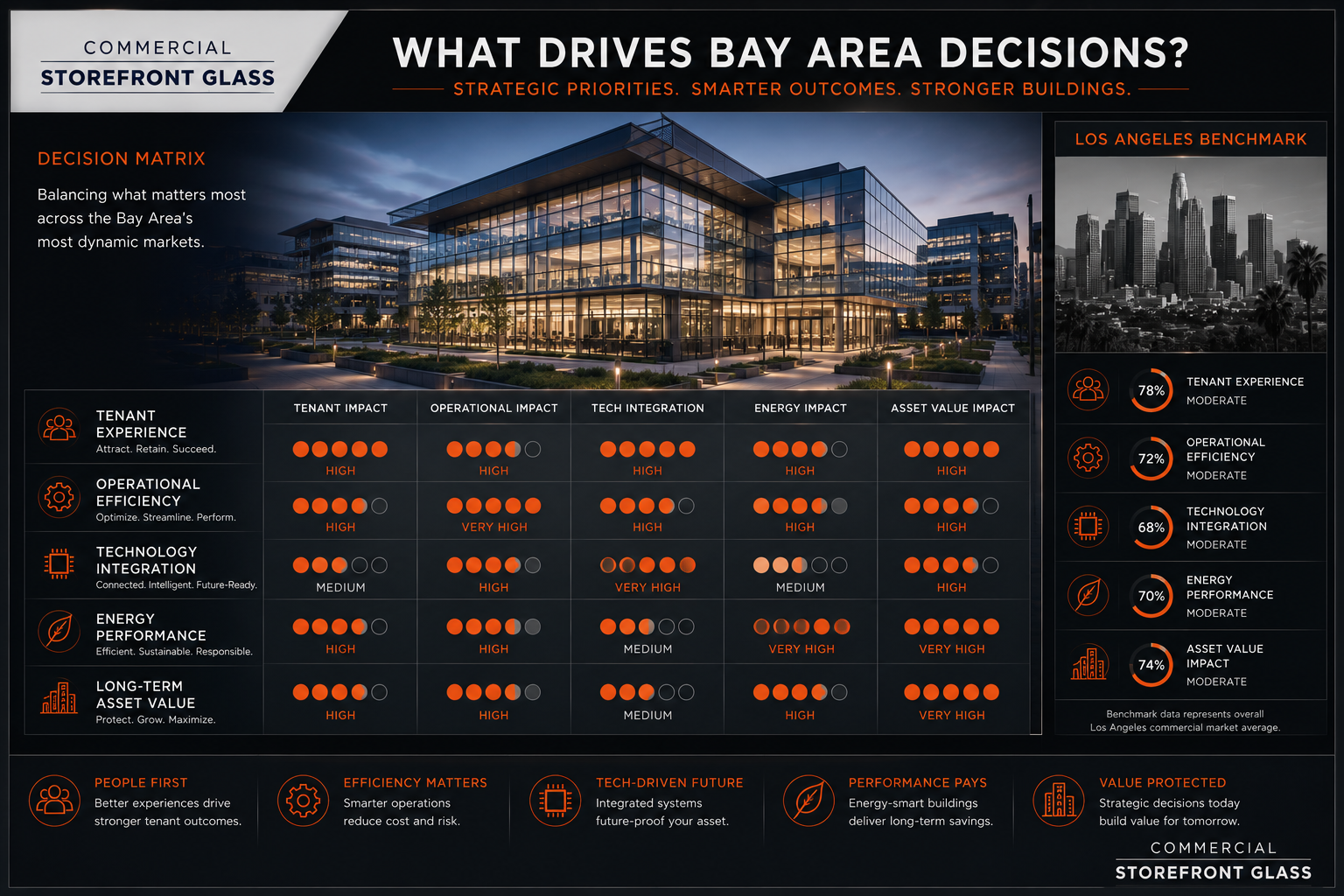
When New Installation Supports Property Growth
New installations are commonly part of larger investment strategies.
Typical projects include:
- New commercial construction
- Mixed-use developments
- Retail redevelopment
- Office repositioning
- Hospitality expansion
- Medical office construction
- Industrial development
- Campus expansion
Modern glazing systems help properties remain competitive while supporting long-term ownership objectives.
Managing Tenant Expectations
Commercial entrances and storefronts are highly visible to tenants and visitors.
Property managers frequently coordinate:
- Emergency glass replacement
- Storefront repairs
- Door operation
- Accessibility concerns
- Building appearance
- Security improvements
- Weather-related issues
- Contractor scheduling
Fast communication and proactive maintenance often improve tenant relationships while reducing operational disruptions.
Budgeting Beyond Emergency Repairs
Reactive maintenance typically costs more over the life of the property.
Successful budgeting often includes:
- Annual building inspections
- Preventive maintenance
- Hardware replacement schedules
- Sealant evaluations
- Entrance servicing
- Building envelope assessments
- Multi-year capital planning
- Lifecycle forecasting
Planning ahead helps owners avoid unexpected expenses while coordinating projects with leasing activity and tenant improvements.
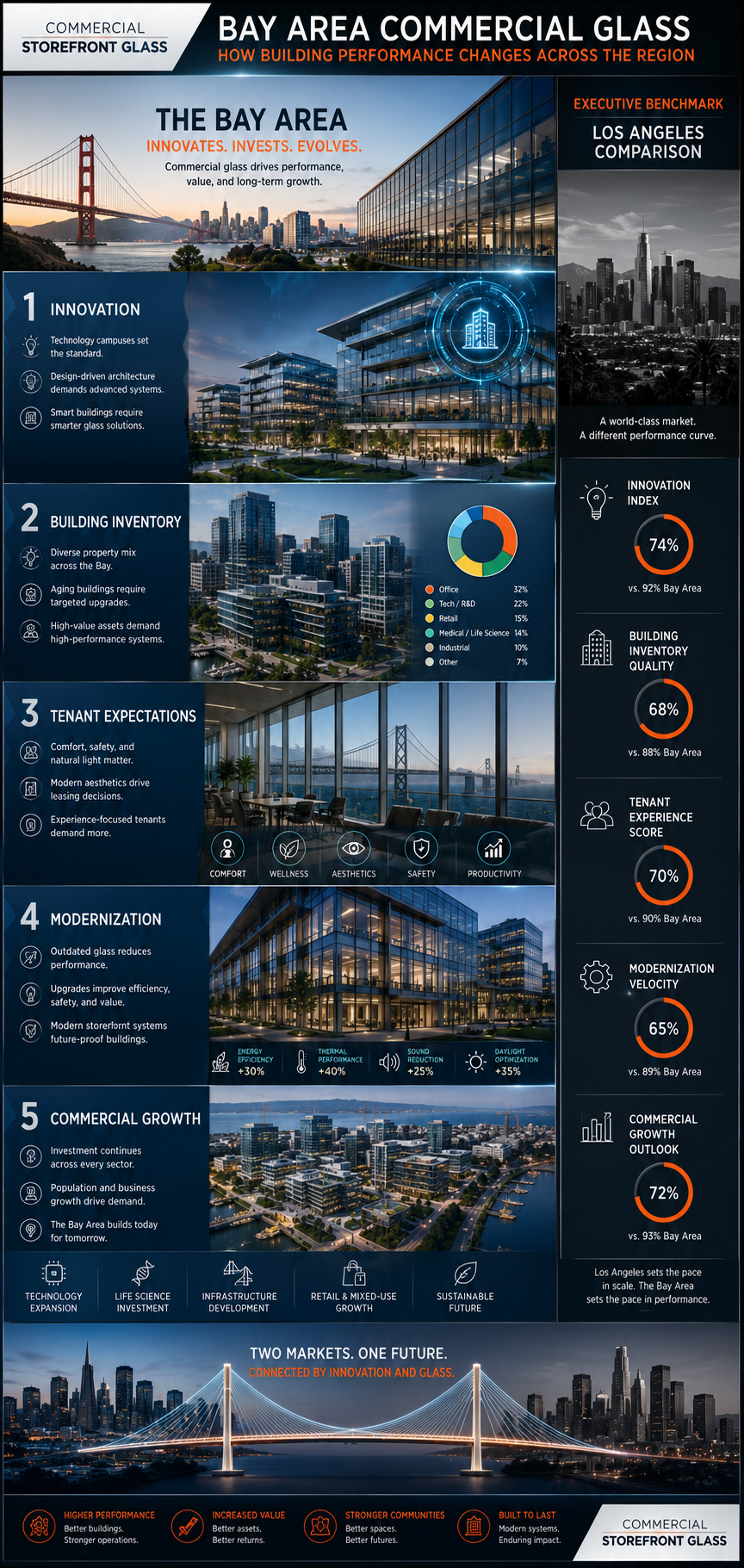
Protecting Long-Term Asset Value
Commercial glass contributes directly to investment performance.
Property owners often evaluate:
- Occupancy rates
- Tenant retention
- Lease renewals
- Property appearance
- Operating costs
- Deferred maintenance
- Building competitiveness
- Capital appreciation
Well-maintained glazing helps commercial properties remain attractive in competitive leasing markets while supporting long-term investment goals.
Questions Every Property Manager Should Ask
Before approving a repair, replacement, or installation, consider:
- Will repair solve the underlying issue?
- How much useful life remains in the existing system?
- Is maintenance becoming more frequent?
- Will modernization improve leasing opportunities?
- Are future tenant improvements planned?
- Does this align with the owner’s capital improvement strategy?
- Will replacement reduce operating expenses?
- How will the project affect current tenants?
- Can work be phased to minimize disruption?
- What option creates the greatest long-term value?
These questions encourage decisions that balance today’s operational needs with tomorrow’s investment performance.
Building Stronger Commercial Properties
Commercial glass repair, replacement, and installation each support successful property management in different ways. Repairs preserve day-to-day operations, replacements improve aging building systems, and new installations position commercial assets for future growth and tenant demand.
By combining preventive maintenance, proactive budgeting, thoughtful contractor coordination, lifecycle planning, and strategic capital improvements, property managers can reduce operating costs, improve tenant satisfaction, strengthen building performance, protect ownership investments, and maximize the long-term value of commercial real estate.


