


Commercial Storefront Glass: Cosmetic Improvements vs Performance Upgrades
When Should a Commercial Storefront Focus on Appearance, and When Should It Focus on Building Performance?
Commercial buildings age in different ways. Sometimes the storefront still performs well but looks outdated. In other cases, the glass appears acceptable while hidden issues such as poor energy efficiency, air infiltration, failing seals, or aging hardware reduce the building’s overall performance.
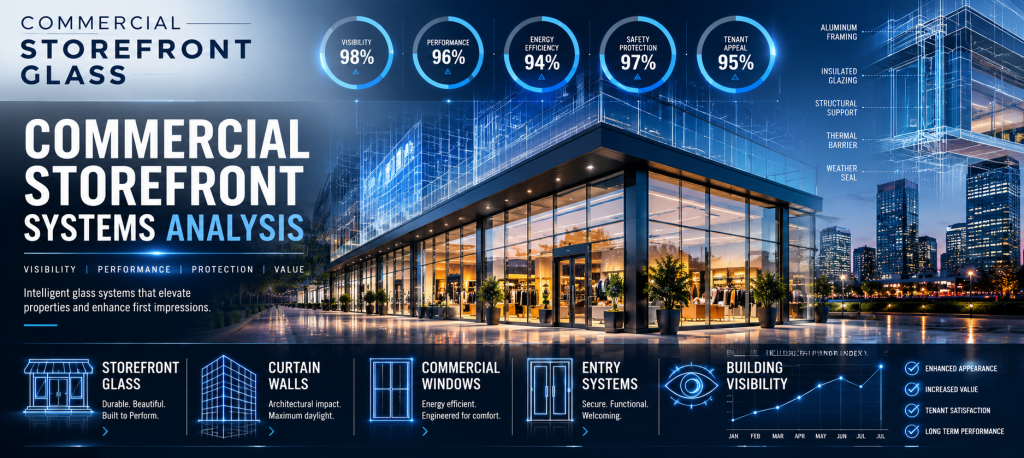
From the perspective of commercial storefront glass, the most successful renovation projects balance aesthetics with functionality. Improving appearance can strengthen first impressions and tenant appeal, while performance upgrades reduce operating costs, improve occupant comfort, and extend the life of the building envelope.
Whether renovating an office tower, retail center, healthcare facility, hotel, industrial headquarters, or mixed-use development, understanding the difference between cosmetic improvements and performance upgrades helps property owners invest where it creates the greatest long-term value.
What Are Cosmetic Storefront Improvements?
Cosmetic improvements primarily enhance the visual appearance of a commercial building.
Common upgrades include:
New entrance doors.
Updated aluminum finishes.
Modern framing colors.
Larger glass panels.
Improved architectural detailing.
Contemporary hardware.
Refinished storefront systems.
Enhanced exterior lighting.
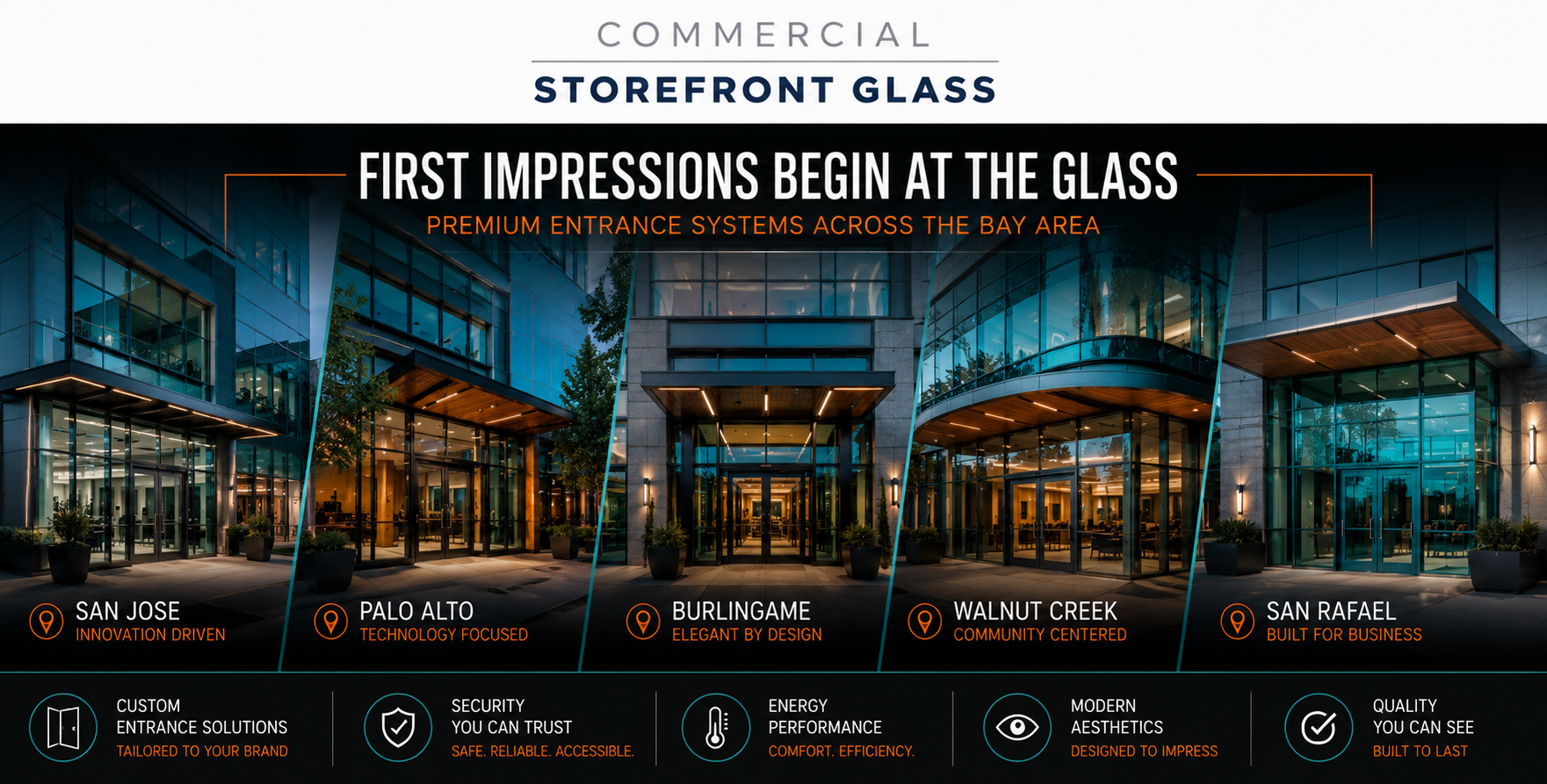
These improvements help modernize older buildings, strengthen curb appeal, improve customer confidence, and attract prospective tenants.
For many commercial properties, appearance directly influences how the business is perceived before anyone enters the building.
What Are Performance Upgrades?
Performance improvements focus on how the storefront functions every day.
Typical upgrades include:
High-performance insulated glazing.
Low-emissivity (Low-E) glass.
Thermally broken aluminum framing.
Improved weather seals.
Modern door hardware.
Enhanced accessibility.
Better water management.
Reduced air infiltration.
These improvements increase energy efficiency, improve occupant comfort, strengthen weather resistance, and lower long-term operating expenses.
Unlike cosmetic renovations, many performance upgrades continue delivering value throughout the life of the building.
First Impressions Matter
Commercial storefronts influence business success long before a transaction occurs.
Professional entrances create confidence.
Modern glass improves visibility.
Clean architectural lines strengthen brand image.
Updated storefront systems make buildings feel current and well maintained.
Retail centers attract customers.
Office buildings appeal to prospective tenants.
Hotels welcome guests.
Healthcare facilities create reassuring first impressions.
Cosmetic improvements often become valuable marketing investments.
Performance Affects the Building Every Day
Building performance continues long after appearance has made its first impression.
Efficient storefront systems reduce heating and cooling demands.
Natural daylight improves workplace quality.
Modern glazing minimizes glare.
Durable framing resists long-term wear.
Reliable weather seals reduce maintenance.
Commercial storefront glass contributes to the building every hour of every day.
Performance improvements often generate value through lower operating costs and greater occupant satisfaction.
The Best Projects Combine Both
Modern commercial renovations rarely focus on only one objective.
A new storefront can improve architectural appearance while increasing thermal efficiency.
Larger glazing systems may strengthen curb appeal while introducing more natural daylight.
Updated entrances can improve accessibility while reinforcing the building’s professional image.
Today’s storefront technology allows aesthetics and performance to work together instead of competing.
Commercial storefront glass provides opportunities to improve both simultaneously.
Different Property Types Have Different Priorities
Every commercial building approaches renovations differently.
Retail centers often prioritize customer visibility and storefront presentation.
Office buildings emphasize tenant comfort and operational efficiency.
Hotels balance guest experience with long-term maintenance.
Healthcare facilities focus on reliability, accessibility, and energy performance.
Industrial headquarters seek durability alongside professional appearance.
Mixed-use developments combine multiple priorities within one building envelope.
Commercial storefront systems can be tailored to support every occupancy type.
General Contractors Evaluate the Entire Building
General contractors rarely separate appearance from performance.
They evaluate:
Building envelope condition.
Structural framing.
Weather resistance.
Accessibility.
Tenant improvements.
Future maintenance.
Architectural goals.
Commercial glazing contractors coordinate with architects and engineers to recommend storefront systems that improve both visual appeal and operational performance whenever possible.
Successful renovations consider the entire lifecycle of the building.
Long-Term Value Comes from Balanced Investment
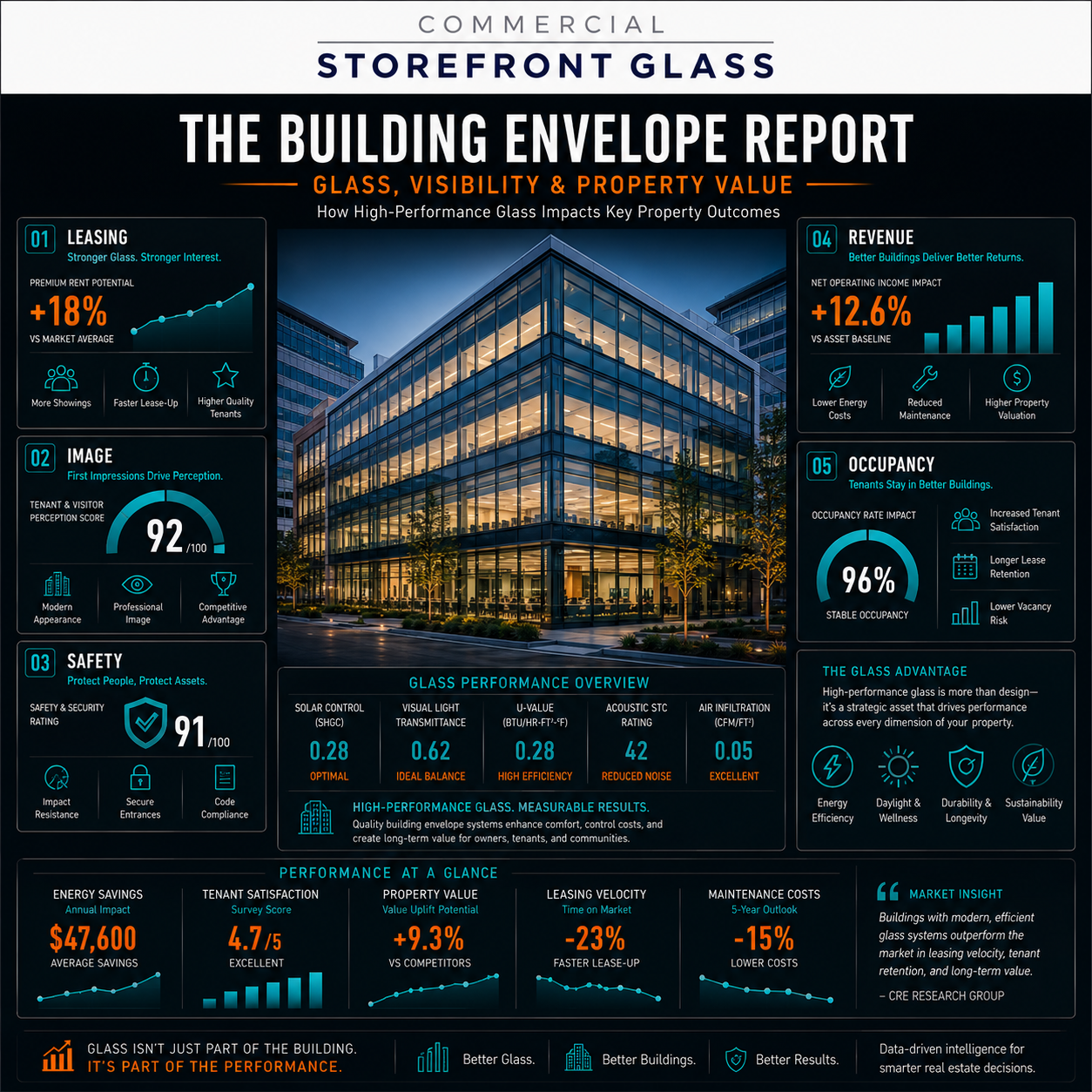
Focusing only on appearance may overlook hidden performance issues.
Focusing only on performance may miss opportunities to strengthen marketability and tenant attraction.
The highest-performing commercial buildings often combine:
Modern architectural design.
Energy-efficient glazing.
Durable aluminum framing.
Professional entrances.
Reliable weather protection.
Lower maintenance requirements.
Improved occupant comfort.
Balanced investments create buildings that look better, perform better, and remain competitive longer.
Choosing the Right Improvement Strategy
Every commercial project begins with different priorities.
An aging retail center may require cosmetic repositioning.
A corporate headquarters may seek higher energy efficiency.
A hotel may renovate public spaces while improving building performance.
A healthcare campus may modernize entrances while upgrading accessibility.
Commercial storefront glass provides flexible solutions capable of supporting both appearance and performance objectives.
The best strategy aligns with the property’s long-term business goals.
Cosmetic Improvements vs Performance Upgrades—Building Better Commercial Storefronts
Commercial storefront renovations should never be viewed as simply aesthetic or purely technical. Attractive buildings help attract customers, tenants, and investors, while high-performance storefront systems improve efficiency, comfort, durability, and operational value.
For developers, architects, property owners, facility managers, and general contractors, understanding the relationship between cosmetic improvements and performance upgrades leads to smarter investment decisions that benefit both the appearance and function of commercial properties.
Whether upgrading a retail center, office building, healthcare campus, hotel, industrial facility, or mixed-use development, modern commercial storefront glass allows owners to improve architectural presentation while strengthening long-term building performance—creating commercial environments that are both visually impressive and built to perform for decades.


