

Commercial Storefront Glass

Repair

Fast, reliable repairs for all types of commercial glass and storefronts.

Replacement

High-quality glass replacement for safety, security, and efficiency.

Installation

Professional installation for new construction and renovation projects.

Commercial Storefront Glass: Full Renovation vs Phased Renovation

Choosing the Right Commercial Storefront Strategy for Budget, Operations, and Long-Term Performance

When a commercial building needs a storefront upgrade, one of the first decisions is whether to complete the entire project at once or divide the work into multiple phases. Both strategies can produce excellent results, but the right approach depends on building occupancy, available capital, operational priorities, construction logistics, and long-term ownership goals.

From the perspective of commercial storefront glass, a full renovation provides immediate modernization across the entire property, while a phased renovation allows improvements to occur over time with less disruption to daily operations. Office buildings, shopping centers, healthcare campuses, hotels, industrial facilities, and mixed-use developments all use both approaches depending on their unique circumstances.

Understanding the advantages of each strategy helps developers, architects, property owners, facility managers, and general contractors make informed decisions that support long-term building performance.
 

commercial window repair glass storefront replacement glazing company (12)


What Is a Full Storefront Renovation?

A full renovation upgrades the entire storefront system during one coordinated construction project.

This may include:

New aluminum storefront framing.

Energy-efficient insulated glass.

Modern entrance systems.

Updated hardware.

Improved accessibility.

Weather-resistant sealing systems.

Architectural facade improvements.

Because all work is completed during one construction schedule, the building benefits from immediate improvements in appearance, performance, and operational efficiency.

Many owners choose this approach when undertaking major building repositioning or comprehensive renovations.

What Is a Phased Renovation?

A phased renovation divides the project into manageable sections.

Work may be completed:

One tenant at a time.

One building at a time.

One elevation at a time.

One floor at a time.

Or over multiple budget cycles.

This approach allows occupied buildings to continue operating while improvements are gradually completed.

Retail centers, hospitals, hotels, office campuses, universities, and large mixed-use developments frequently use phased renovation strategies to minimize disruption.

Construction progresses while the business continues serving customers, tenants, or patients.

Budget Often Influences the Decision

Capital planning plays a major role.

A full renovation typically requires a larger upfront investment but completes modernization in one project.

A phased renovation spreads costs over several months or years, allowing improvements to align with operating budgets, lease renewals, or capital improvement schedules.

Both approaches can create long-term value when properly planned.

The best strategy depends on financial objectives as much as construction considerations.

Operational Disruption Must Be Managed

Commercial buildings rarely stop operating.

Office tenants continue working.

Retail stores remain open.

Healthcare facilities provide patient care.

Hotels welcome guests every day.

Industrial facilities maintain production schedules.

A full renovation may require temporary closures or carefully coordinated work schedules.

Phased renovations often reduce operational disruption by limiting construction to specific portions of the property at one time.

Business continuity frequently becomes one of the deciding factors.
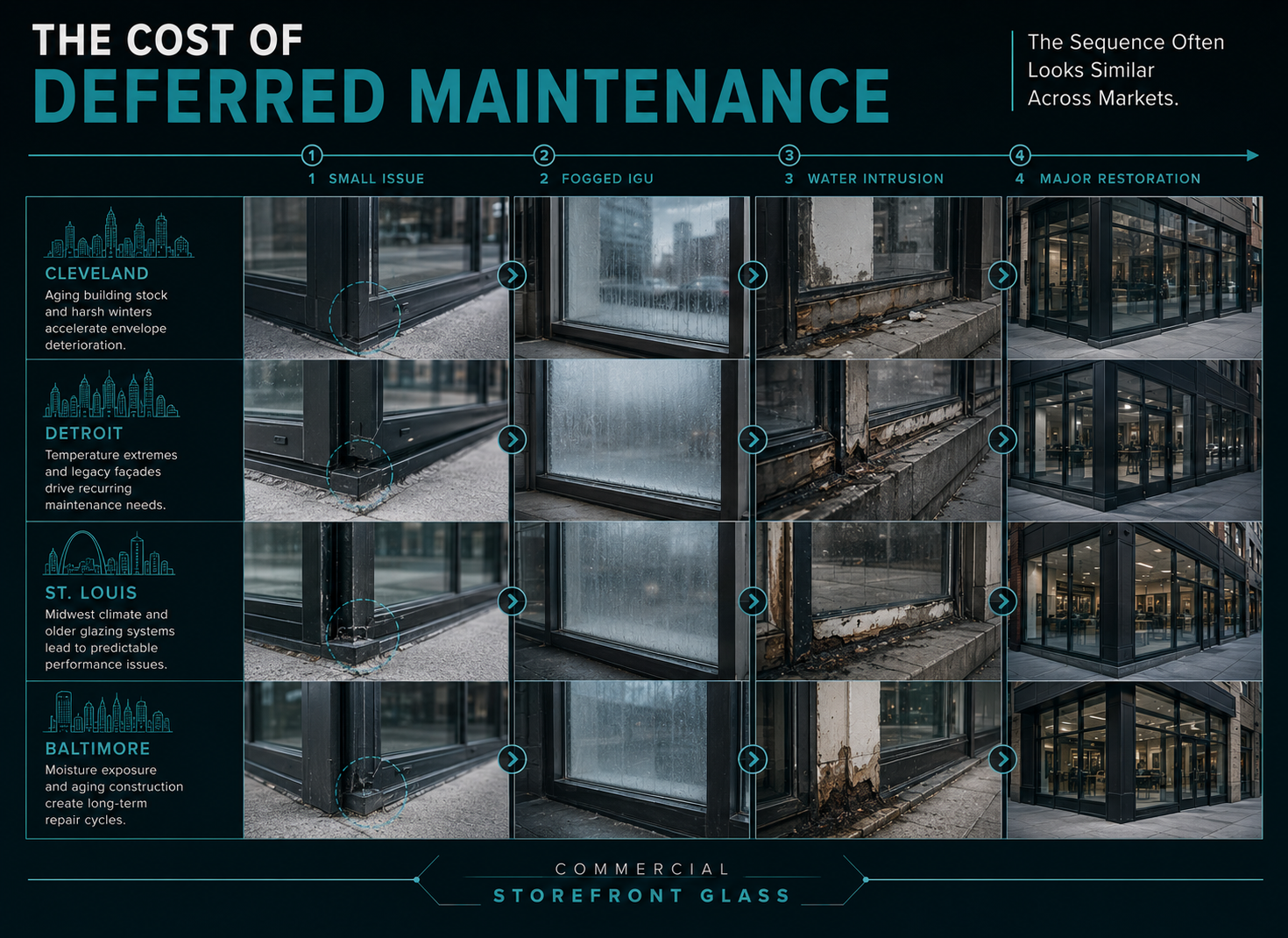
 

commercial window repair glass storefront replacement glazing company (13)


Consistency vs Incremental Improvement

A full renovation provides immediate visual consistency.

Every entrance.

Every storefront.

Every glazing system.

Every facade.

Every tenant space.

The property presents one unified architectural image from the moment construction is complete.

Phased renovations improve the property gradually.

Older storefront systems may temporarily exist alongside newly renovated areas until the project reaches completion.

Both strategies can succeed when guided by a comprehensive long-term design plan.

Energy Performance Improves with Every Upgrade

Whether completed all at once or in phases, modern storefront systems deliver measurable operational benefits.

High-performance insulated glazing reduces heat transfer.

Low-emissivity coatings improve occupant comfort.

Thermally broken framing increases energy efficiency.

Modern weather seals reduce air infiltration.

Commercial storefront glass improves building performance regardless of renovation strategy.

The difference lies primarily in how quickly those benefits are realized across the property.

General Contractors Coordinate Construction Around Occupancy

Successful renovations require careful planning.

General contractors coordinate storefront work alongside roofing, waterproofing, structural improvements, HVAC upgrades, electrical work, accessibility improvements, and tenant improvements.

Commercial glazing contractors work closely with architects and engineers to sequence construction while protecting occupants and maintaining building operations.

Whether completing one comprehensive renovation or multiple construction phases, coordination remains essential to project success.

Planning often determines the overall efficiency of the renovation.
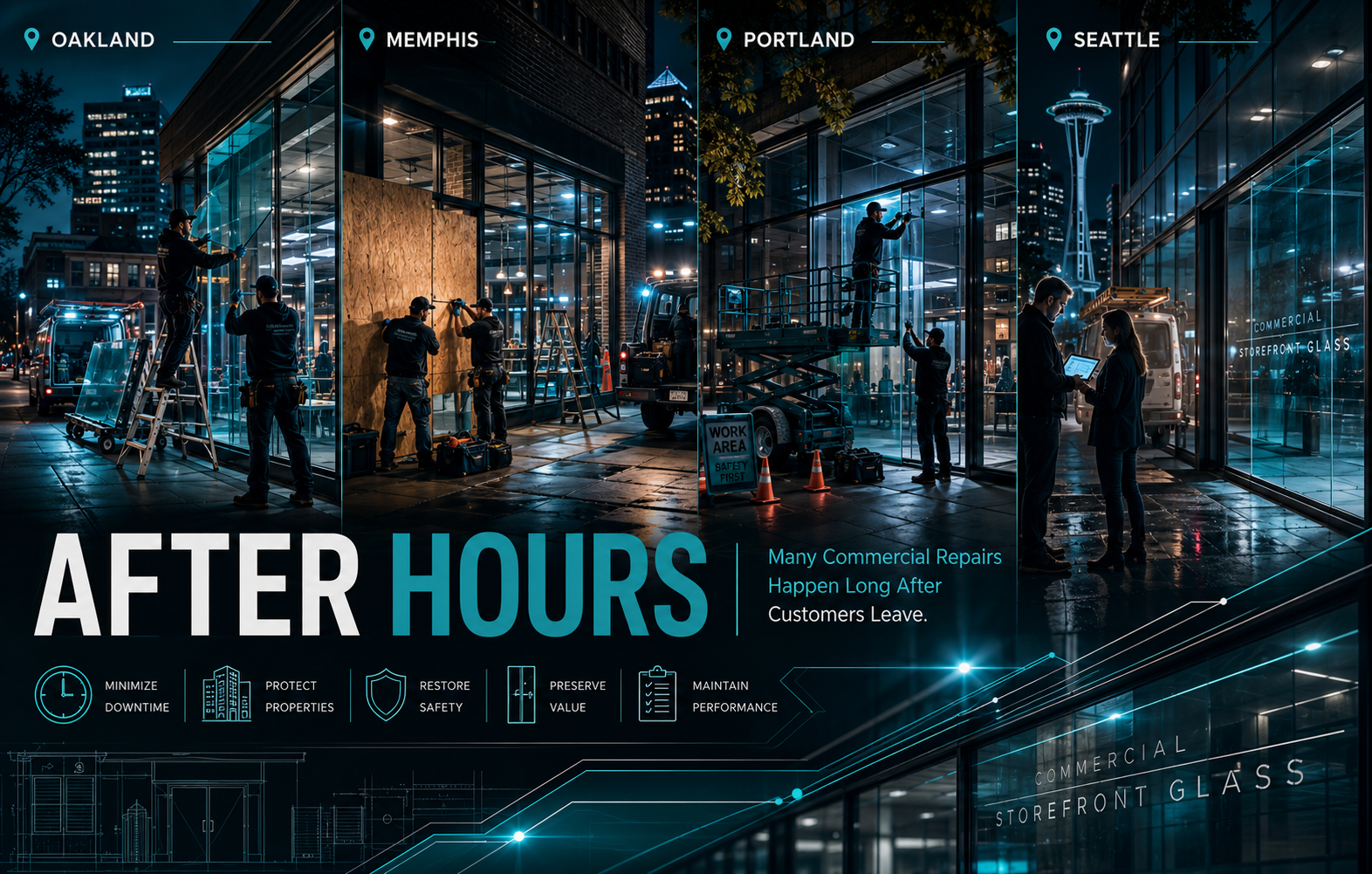
 

commercial window repair glass storefront replacement glazing company (15)


Long-Term Value Matters More Than Construction Timing

The objective extends beyond finishing construction.

Commercial property owners seek:

Lower maintenance costs.

Improved tenant attraction.

Greater energy efficiency.

Modern architectural appearance.

Longer storefront lifespan.

Higher property value.

Both renovation strategies can achieve these objectives when quality materials, professional installation, and thoughtful planning guide the project.

The focus should remain on lifecycle performance rather than construction speed alone.

Choosing the Right Renovation Strategy

Every commercial property has different needs.

A corporate headquarters preparing for a major rebrand may benefit from a complete renovation.

A shopping center with long-term tenants may prefer phased improvements.

A healthcare campus may renovate one building at a time to maintain uninterrupted patient care.

A hotel may schedule work floor by floor during slower seasons.

Commercial storefront glass systems can be successfully implemented using either strategy when aligned with operational goals and long-term planning.

The right approach depends on how the building functions today—and how it is expected to perform tomorrow.

Full Renovation vs Phased Renovation—Building Better Commercial Properties

Both full renovations and phased renovations provide effective paths toward modernizing commercial storefront systems. A complete renovation delivers immediate transformation and unified building performance, while a phased approach allows improvements to occur with greater operational flexibility and budget control.

For developers, architects, property owners, facility managers, and general contractors, understanding the differences between full renovation and phased renovation helps create construction strategies that balance business continuity with long-term building performance.

Whether upgrading an office tower, retail center, healthcare campus, hotel, industrial headquarters, educational facility, or mixed-use development, high-performance commercial storefront glass provides lasting improvements in energy efficiency, durability, architectural appeal, occupant comfort, and property value—regardless of how the renovation is phased.