


Commercial Storefront Glass: Natural Light vs Solar Heat Gain
Maximizing Daylight While Controlling Building Performance
Natural light has become one of the most desirable features in modern commercial buildings. Office employees are more productive in bright workplaces, retail stores feel more inviting, hotels create stronger first impressions, and healthcare facilities benefit from daylight-filled environments that improve occupant comfort. At the same time, large expanses of glass can introduce unwanted solar heat, increasing cooling costs and placing additional demand on HVAC systems.
From the perspective of commercial storefront glass, the goal is not to choose between natural light and solar heat gain—it is to maximize one while minimizing the other. Advances in insulated glazing, Low-E coatings, thermally broken framing, and high-performance glass technology allow commercial buildings to enjoy expansive daylight without sacrificing energy efficiency.
Today’s storefront systems are engineered to balance occupant comfort, architectural beauty, and long-term building performance.
Natural Light Improves Commercial Buildings
Daylight offers measurable benefits across nearly every commercial property type.
Office buildings become brighter and more productive.
Retail stores create more inviting shopping environments.
Hotels deliver welcoming lobbies and gathering spaces.
Healthcare facilities improve patient and staff comfort.
Educational buildings support learning environments.
Restaurants benefit from open, visually connected interiors.
Commercial storefront glass allows natural daylight to penetrate deep into buildings while creating stronger connections between interior spaces and the surrounding community.
Modern architecture increasingly depends on glass to create these experiences.
Understanding Solar Heat Gain
While sunlight provides valuable daylight, it also carries heat.
As solar radiation enters a building through glass, indoor temperatures can rise, increasing cooling requirements during warmer months.
Without proper glazing, excessive solar heat gain may contribute to:
Higher energy bills.
Uneven indoor temperatures.
Occupant discomfort.
Greater HVAC demand.
Increased operating costs.
For commercial buildings with large storefronts or curtain wall systems, controlling solar heat gain becomes an important part of long-term building performance.
Modern Glass Balances Daylight and Efficiency
Commercial storefront technology has transformed the relationship between daylight and energy efficiency.
High-performance insulated glazing allows visible light to enter while reducing unwanted heat transfer.
Low-emissivity (Low-E) coatings reflect portions of solar energy without significantly reducing daylight.
Multiple glazing layers improve thermal performance.
Specialized glass selections allow designers to tailor performance to climate, building orientation, and occupancy.
The result is brighter interiors with lower cooling demands.
Commercial storefront glass no longer requires sacrificing comfort to achieve transparency.
Building Orientation Influences Glass Performance
Every commercial building interacts differently with the sun.
South-facing storefronts often experience greater solar exposure.
West-facing entrances receive intense afternoon sunlight.
East-facing facades capture morning daylight.
North-facing elevations typically receive more consistent indirect light.
Architects and glazing professionals evaluate building orientation when selecting storefront systems.
Proper glass specification helps maximize daylight while reducing excessive heat gain throughout the year.
The best storefront solution depends on how the building interacts with its environment.

Energy Efficiency Supports Long-Term Savings
Reducing solar heat gain directly affects building operating costs.
Efficient storefront systems help lower HVAC demand.
Mechanical equipment operates more efficiently.
Occupants experience improved comfort.
Utility expenses decrease over time.
Commercial property owners increasingly view storefront glazing as an energy management system rather than simply an architectural feature.
High-performance commercial glass contributes to sustainability goals while supporting lower lifetime operating expenses.
Long-term efficiency often produces measurable returns on investment.
Different Commercial Properties Have Different Priorities
Every commercial property uses daylight differently.
Corporate headquarters often emphasize employee wellness and collaborative workspaces.
Retail storefronts maximize product visibility and customer engagement.
Hotels create welcoming public areas filled with natural light.
Healthcare facilities prioritize patient comfort and healing environments.
Educational buildings benefit from bright classrooms and common areas.
Industrial offices seek energy-efficient work environments that reduce long-term operating costs.
Commercial storefront systems can be customized to support each building’s specific performance goals.
General Contractors Coordinate High-Performance Building Envelopes
Modern storefront systems must integrate with the entire building envelope.
General contractors coordinate glazing alongside roofing, insulation, waterproofing, mechanical systems, structural framing, and architectural design.
Commercial glazing contractors work closely with architects and engineers to select glass systems that satisfy energy codes, performance requirements, occupant comfort goals, and long-term durability.
Proper installation is just as important as selecting the right glass.
Well-designed storefront systems perform as an integrated part of the building.
Commercial Glass Creates Better Buildings
High-performance storefront systems contribute to every stage of building operation.
Natural daylight improves workplace quality.
Solar control lowers cooling expenses.
Modern glazing enhances architectural appearance.
Energy-efficient envelopes increase sustainability.
Comfortable interiors improve tenant satisfaction.
Professional storefronts strengthen business image.
Commercial storefront glass delivers both visual and operational advantages throughout the life of the property.
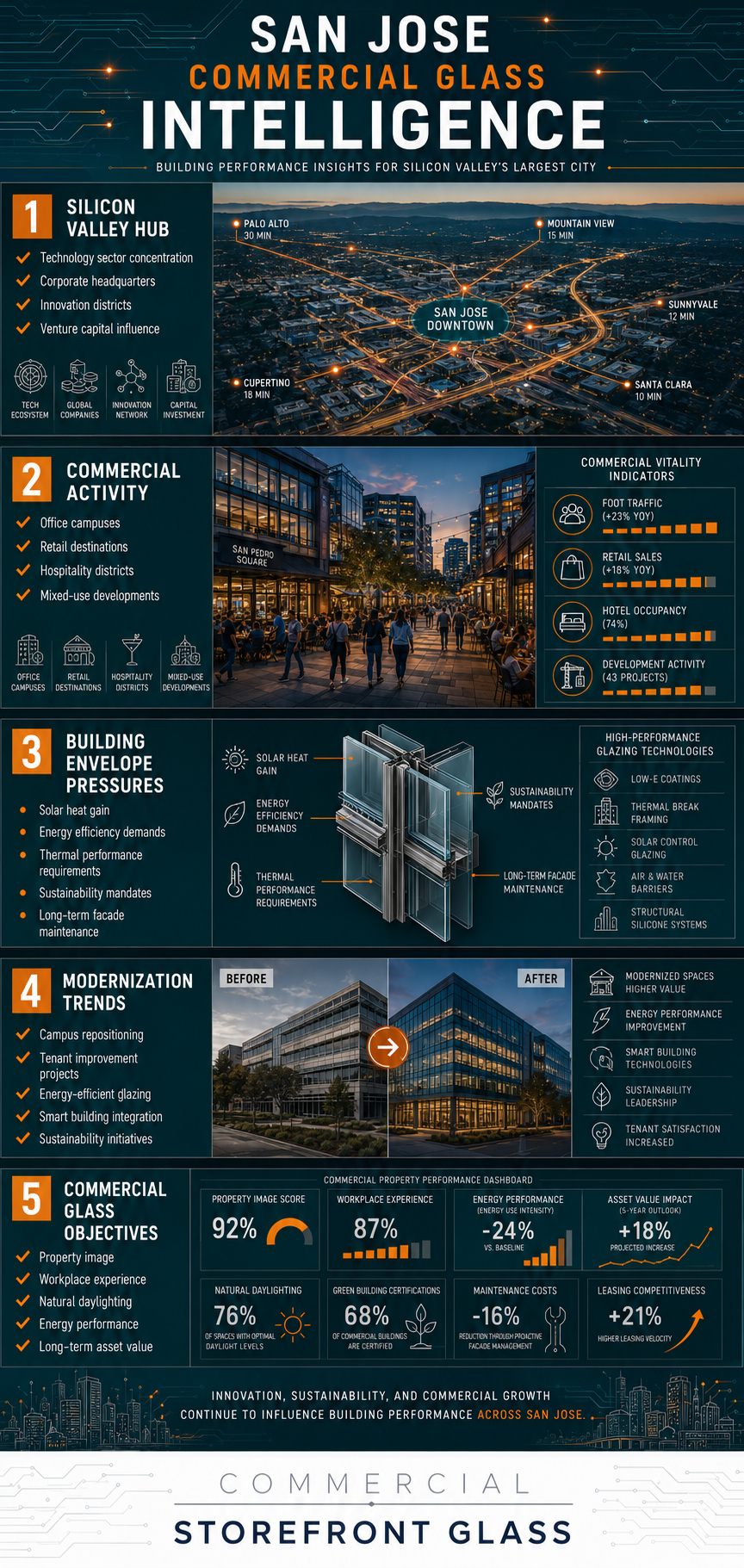
Finding the Right Balance
The objective is not maximizing glass at any cost, nor minimizing sunlight.
The objective is balance.
The right storefront system allows abundant natural daylight while limiting unwanted solar heat gain through advanced glazing technology, thoughtful design, and proper engineering.
By considering climate, orientation, occupancy, and building performance goals, commercial property owners can create spaces that remain bright, comfortable, and energy efficient for decades.
Natural Light vs Solar Heat Gain—Modern Storefront Glass Delivers Both
Modern commercial buildings no longer need to choose between daylight and energy performance. Advances in commercial storefront glass make it possible to create bright, inviting interiors while reducing cooling loads, improving occupant comfort, and lowering operating costs.
For developers, architects, property owners, facility managers, and general contractors, the question is not whether to prioritize natural light or solar heat gain. The answer is selecting a high-performance storefront system that intelligently manages both.
Whether designing an office tower, retail center, healthcare facility, hotel, educational campus, or mixed-use development, commercial storefront glass helps transform sunlight into a long-term asset—improving building performance, strengthening sustainability, and increasing lasting commercial value.


