


San Francisco vs Dallas: Commercial Glass Repair, Replacement & Installation
San Francisco and Dallas represent two of America’s most influential commercial real estate markets. Both cities are recognized as national business centers, attracting global investment, corporate headquarters, technology companies, financial institutions, healthcare organizations, and major commercial development. While each market continues to grow, they have evolved in very different ways. San Francisco emphasizes dense urban redevelopment, technology, life sciences, and high-rise construction, while Dallas continues expanding through corporate relocations, large office campuses, logistics, industrial development, and mixed-use communities. Throughout both regions, commercial property owners, developers, facility managers, architects, and general contractors regularly evaluate whether commercial glass systems should be repaired, replaced, or upgraded to improve building performance, operational efficiency, and long-term property value.
The San Francisco Bay Area includes San Francisco, Oakland, South San Francisco, San Mateo, Redwood City, Palo Alto, Mountain View, Sunnyvale, Santa Clara, San Jose, Berkeley, Emeryville, Walnut Creek, Fremont, and neighboring commercial markets. Technology headquarters, biotechnology campuses, financial institutions, healthcare systems, universities, and mixed-use developments continue driving demand for high-performance commercial glazing.
The Dallas metropolitan area includes Dallas, Plano, Frisco, Irving, Richardson, Addison, Las Colinas, Garland, Carrollton, Mesquite, Grand Prairie, Arlington, McKinney, Allen, and surrounding business centers. Corporate headquarters, industrial parks, distribution facilities, healthcare campuses, office towers, retail developments, and mixed-use projects continue fueling one of the fastest-growing commercial markets in the country.
Although both metropolitan areas support world-class commercial construction, their climates, industries, building styles, and long-term development priorities create different demands for commercial glass systems.
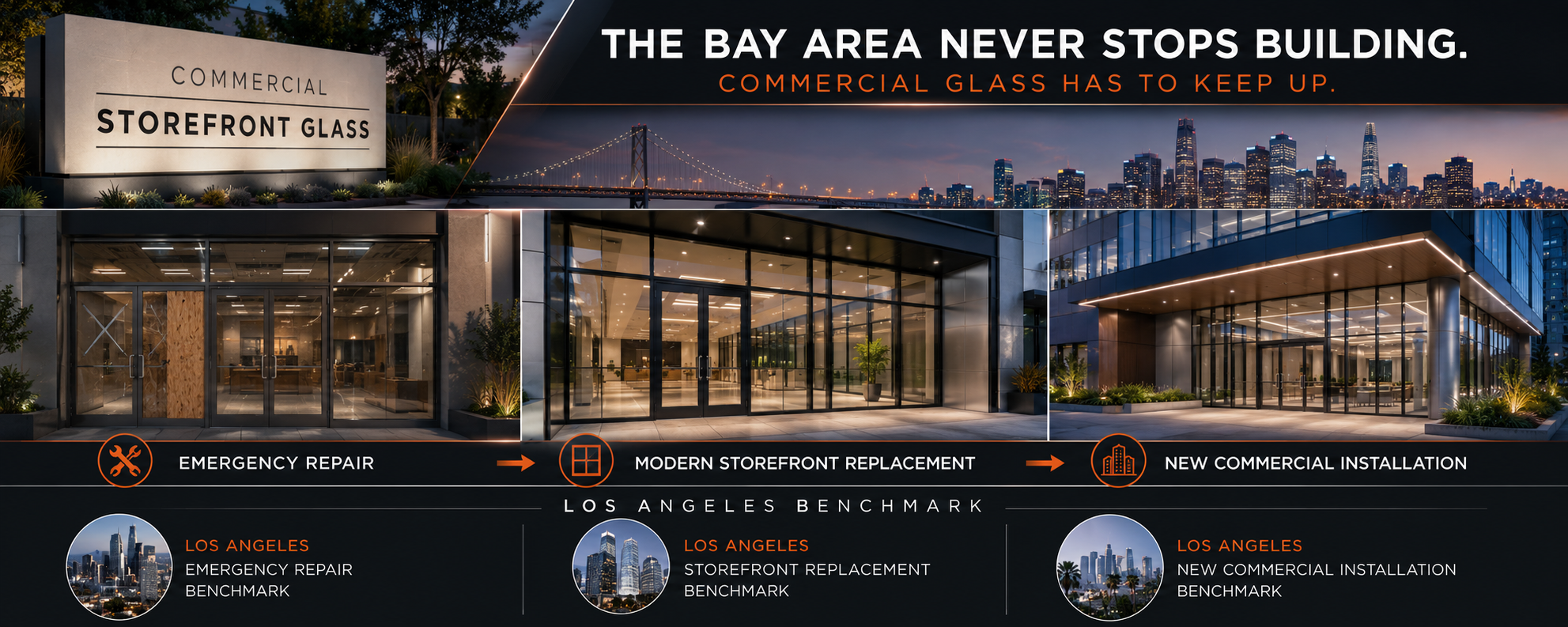
Two National Business Centers with Different Growth Models
Each region supports a broad range of commercial investment.
San Francisco commercial growth includes:
- Technology campuses
- Biotechnology laboratories
- Financial institutions
- Healthcare expansion
- Office modernization
- Mixed-use redevelopment
- Universities
- High-rise construction
Dallas commercial growth includes:
- Corporate headquarters
- Industrial expansion
- Distribution centers
- Healthcare systems
- Office campuses
- Retail development
- Mixed-use communities
- Manufacturing facilities
Commercial glazing supports every stage of these investments.
When Commercial Glass Repair Is the Best Solution
Many glazing issues can be resolved without replacing complete systems.
Repair is often appropriate when:
- Individual glass panels break
- Insulated glass units fail
- Door hardware requires servicing
- Automatic entrances need adjustment
- Sealants deteriorate
- Water intrusion remains localized
- Aluminum framing remains structurally sound
Prompt repairs restore building performance while minimizing operational disruptions.
When Replacement Creates Greater Long-Term Value
As commercial properties mature, replacement often becomes the most effective long-term investment.
Replacement is commonly recommended when:
- Multiple glazing systems begin failing
- Energy efficiency declines
- Building appearance becomes outdated
- Water intrusion becomes recurring
- Maintenance costs continue increasing
- Tenant improvements are planned
- Capital modernization projects begin
Modern glazing systems improve operational efficiency while extending building life.
New Installation Supports Future Commercial Growth
Both metropolitan areas continue investing in large-scale commercial development.
Modern installations commonly include:
- Curtain wall systems
- Aluminum storefront systems
- Commercial windows
- Glass entrances
- Automatic doors
- Security glazing
- Fire-rated glazing
- High-performance insulated glass
These systems strengthen the building envelope while improving energy efficiency, occupant comfort, and long-term durability.
Regional Conditions Shape Building Design
The environmental conditions affecting commercial buildings differ significantly.
San Francisco properties commonly address:
- Coastal moisture
- Marine air
- Seasonal rainfall
- Seismic design
- Wind exposure
- Dense urban construction
- Historic building modernization
Dallas buildings commonly address:
- Intense summer heat
- Strong solar exposure
- Severe thunderstorms
- Hail events
- High winds
- Rapid suburban expansion
- Large commercial campuses
These conditions influence glazing specifications, maintenance planning, energy performance, and lifecycle strategies.
Commercial Property Types Continue Expanding
Commercial glass supports nearly every major property sector.
Common projects include:
- Office towers
- Corporate headquarters
- Healthcare facilities
- Research laboratories
- Retail centers
- Hotels
- Industrial buildings
- Warehouses
- Universities
- Government facilities
- Mixed-use developments
- Distribution centers
Each property type places unique demands on commercial glazing throughout the building lifecycle.
Long-Term Building Performance Drives Investment
Commercial glass contributes to much more than building appearance.
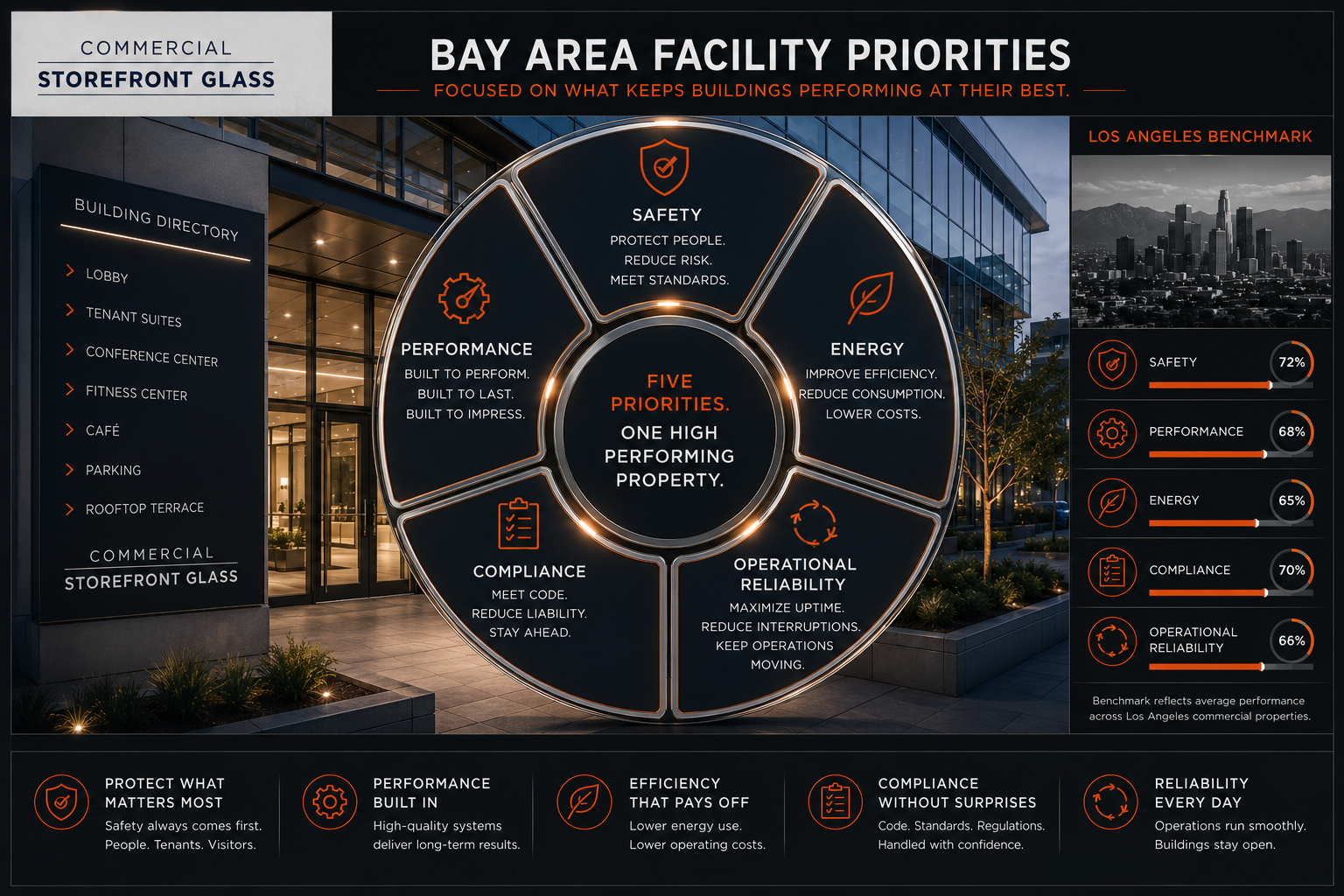
Owners commonly prioritize:
- Energy efficiency
- Occupant comfort
- Weather protection
- Security
- Preventive maintenance
- Building envelope performance
- Lifecycle planning
- Long-term property value
Evaluating glazing as part of the complete building system helps maximize operational efficiency while reducing long-term ownership costs.
San Francisco vs Dallas: Where These Strategies Apply
San Francisco regional markets include:
- San Francisco
- Oakland
- South San Francisco
- San Mateo
- Redwood City
- Palo Alto
- Mountain View
- Sunnyvale
- Santa Clara
- San Jose
- Berkeley
- Emeryville
- Walnut Creek
- Fremont
Dallas regional markets include:
- Dallas
- Plano
- Frisco
- Irving
- Richardson
- Addison
- Las Colinas
- Garland
- Carrollton
- Mesquite
- Grand Prairie
- Arlington
- McKinney
- Allen
Across both metropolitan regions, commercial property owners benefit from proactive maintenance, strategic modernization, capital planning, and high-performance glazing systems designed for long-term building performance.
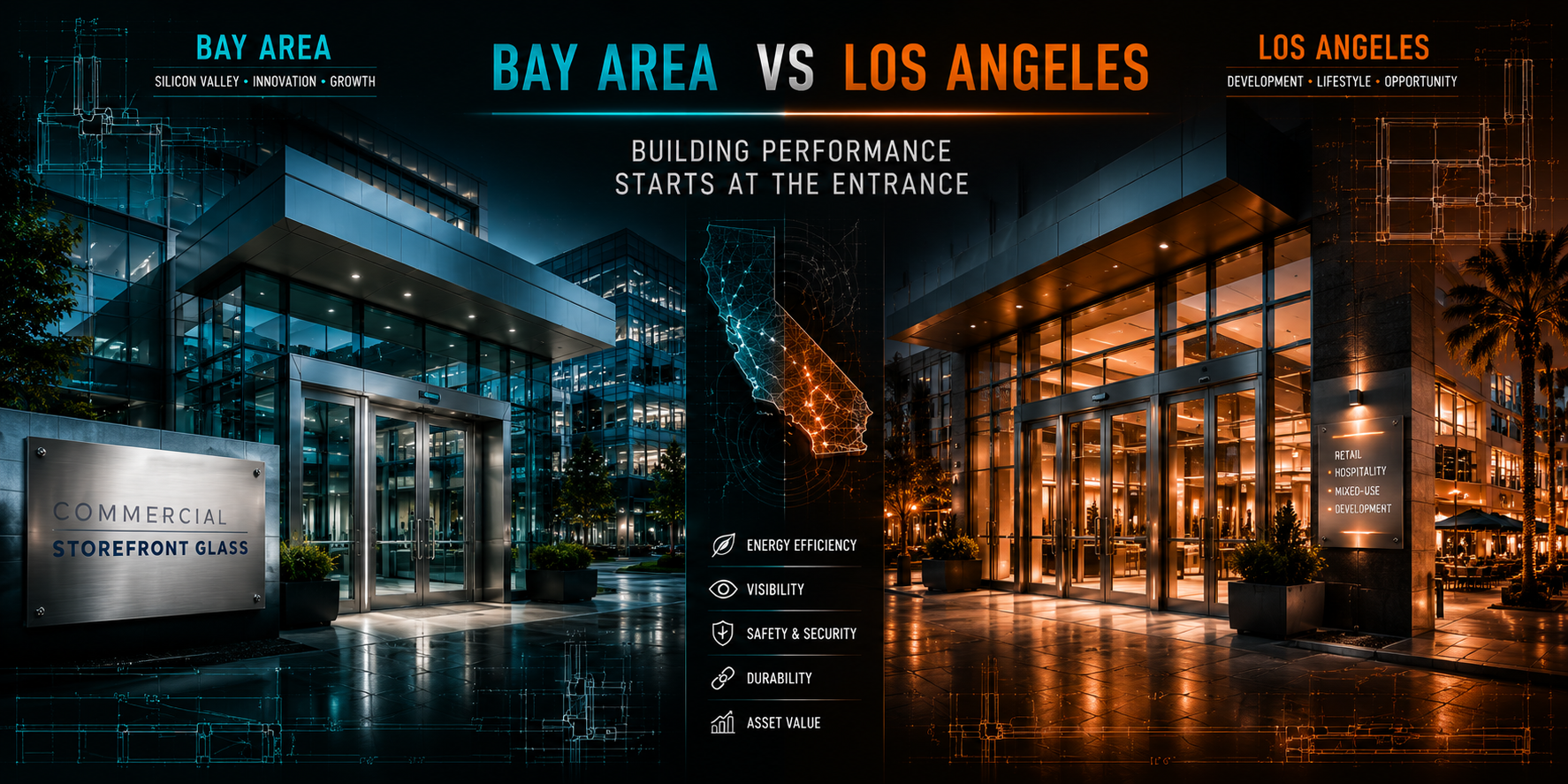
Building Stronger Commercial Properties in Two Leading Markets
Commercial glass repair, replacement, and new installation each contribute to stronger commercial buildings. Repairs preserve valuable assets, replacements modernize aging systems, and new installations create efficient, durable properties prepared for future growth.
Whether upgrading a technology headquarters in Palo Alto, modernizing a financial office tower in San Francisco, improving a healthcare campus in Oakland, renovating a corporate headquarters in Plano, expanding a distribution facility in Irving, or constructing a new mixed-use development in Frisco, thoughtfully engineered commercial glazing strengthens the building envelope, improves energy efficiency, enhances occupant comfort, supports operational reliability, and increases the long-term value of commercial properties in two of America’s premier business regions.


