


Missouri Commercial Glass Repair, Replacement & Installation
Missouri sits at the crossroads of the American Midwest, making it one of the nation’s most important commercial, manufacturing, logistics, and healthcare markets. The state’s economy is supported by major metropolitan areas, interstate transportation corridors, advanced manufacturing, financial services, healthcare systems, higher education, distribution centers, government facilities, and growing mixed-use developments. Throughout Missouri, office buildings, hospitals, industrial facilities, warehouses, retail centers, hotels, universities, and corporate campuses rely on high-performance commercial glass systems that improve energy efficiency, occupant comfort, security, and long-term building performance. Property owners, developers, facility managers, property managers, architects, and general contractors regularly evaluate whether commercial glass should be repaired, replaced, or upgraded to maximize building performance and protect long-term property value.
Commercial activity extends throughout Kansas City, St. Louis, Springfield, Columbia, Independence, Lee’s Summit, St. Charles, Chesterfield, Jefferson City, Blue Springs, O’Fallon, Joplin, St. Joseph, Cape Girardeau, and neighboring communities. Each region supports different industries while sharing a common need for durable storefront systems, curtain walls, commercial windows, automatic entrances, and complete building envelope solutions.
Whether serving a corporate headquarters in Kansas City, a healthcare campus in St. Louis, a university building in Columbia, or a manufacturing facility in Springfield, commercial glazing plays an essential role in creating safe, efficient, and modern commercial buildings.
Missouri’s Commercial Economy Continues to Expand
Commercial construction supports a broad range of industries across the state.
Major sectors include:
- Corporate headquarters
- Healthcare systems
- Financial services
- Advanced manufacturing
- Logistics and distribution
- Aerospace and defense
- Higher education
- Government facilities
- Hospitality
- Retail centers
- Professional office buildings
- Mixed-use developments
Commercial glazing supports each of these industries throughout every stage of the building lifecycle.
When Commercial Glass Repair Is the Right Choice
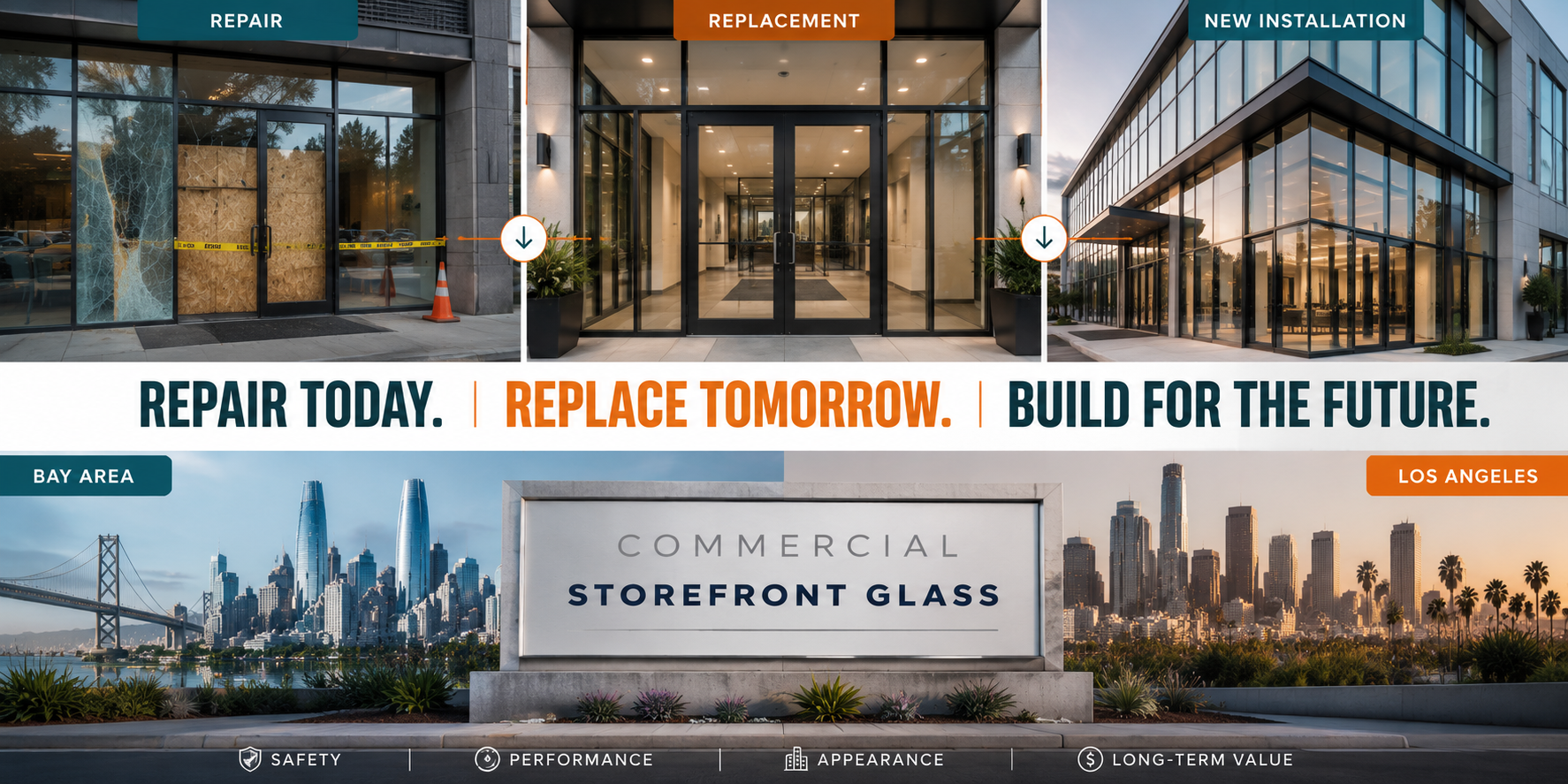
Many glazing issues can be resolved without replacing the complete system.
Repair is often appropriate when:
- Individual glass panels are damaged
- Insulated glass units fail
- Door hardware requires servicing
- Automatic entrances require adjustment
- Sealants deteriorate
- Water intrusion remains localized
- Aluminum framing remains structurally sound
Prompt repairs restore building performance while minimizing disruptions to business operations.
When Replacement Creates Better Long-Term Value
As commercial buildings mature, replacement often becomes the better long-term investment.
Replacement is commonly recommended when:
- Multiple glazing systems begin failing
- Energy performance declines
- Building appearance becomes outdated
- Maintenance costs continue increasing
- Water intrusion becomes recurring
- Tenant improvements are planned
- Capital modernization projects begin
Modern glazing systems improve efficiency while extending the useful life of commercial buildings.
New Installation Supports Missouri’s Continued Growth
Commercial construction remains active throughout the state.
Modern installations commonly include:
- Curtain wall systems
- Aluminum storefront systems
- Commercial windows
- Glass entrances
- Automatic doors
- Security glazing
- Fire-rated glazing
- High-performance insulated glass
These systems strengthen the building envelope while improving occupant comfort, durability, and long-term operational performance.
Missouri’s Climate Shapes Commercial Glass Performance
Commercial buildings throughout Missouri experience a wide range of weather conditions.
Property owners commonly plan for:
- Hot, humid summers
- Cold winters
- Freeze-thaw cycles
- Severe thunderstorms
- High winds
- Heavy rainfall
- Occasional snow and ice
- Long-term energy efficiency
These conditions influence glazing specifications, maintenance schedules, sealant performance, and lifecycle planning.
Commercial Glass Supports Every Property Type
Commercial glazing serves nearly every major commercial sector.
Common projects include:
- Office buildings
- Corporate campuses
- Healthcare facilities
- Manufacturing plants
- Warehouses
- Distribution centers
- Retail centers
- Hotels
- Universities
- Government buildings
- Mixed-use developments
- Professional office parks
Each property type requires glazing systems designed to support operational performance and long-term building value.
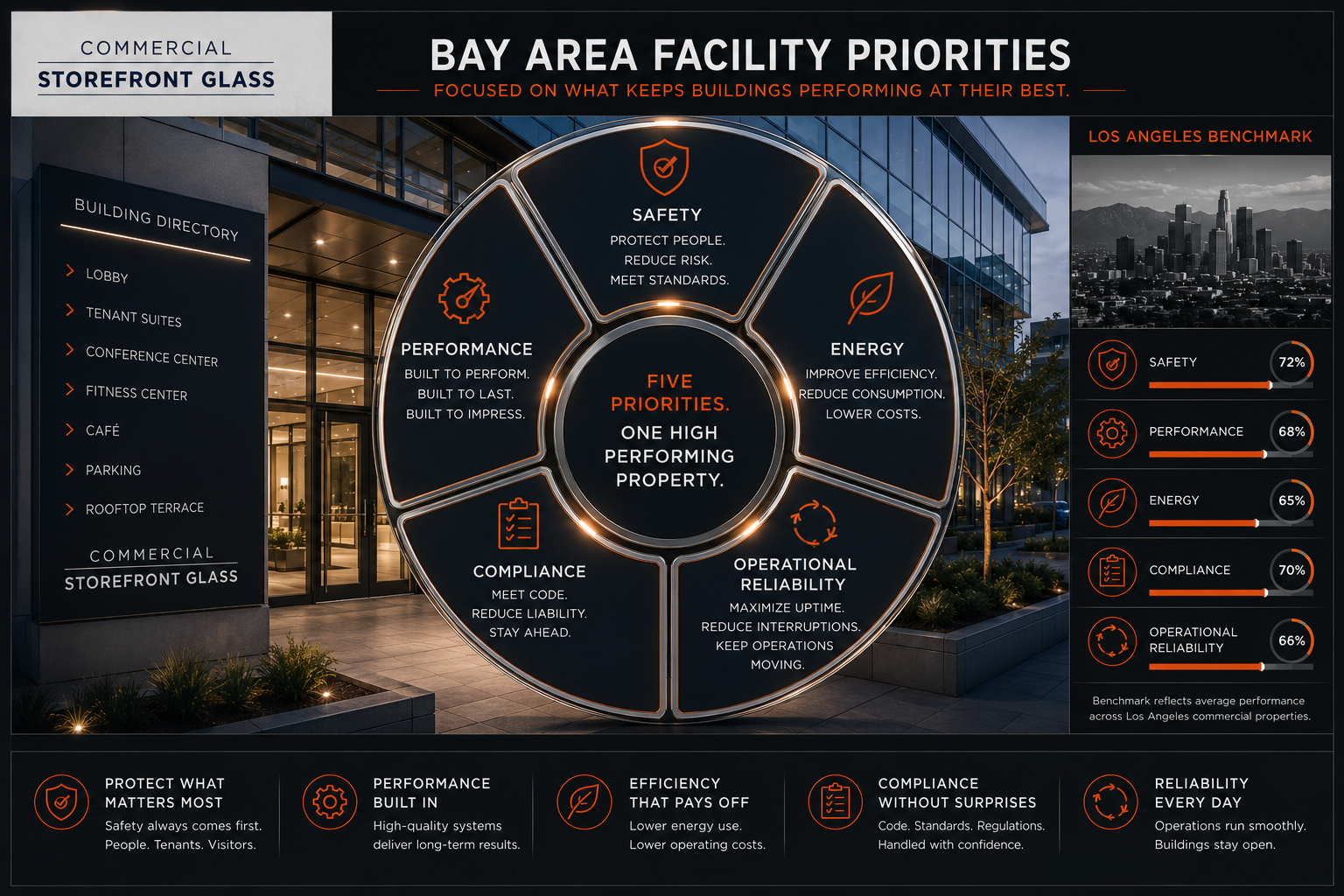
Building Performance Protects Long-Term Investment
Commercial glass contributes to much more than architectural appearance.
Owners commonly prioritize:
- Energy efficiency
- Occupant comfort
- Weather resistance
- Natural daylight
- Security
- Preventive maintenance
- Building envelope performance
- Long-term property value
Managing glazing proactively helps reduce operating costs while improving building performance throughout the property’s lifecycle.
Commercial Glass Throughout Missouri
Major commercial markets include:
- Kansas City
- St. Louis
- Springfield
- Columbia
- Independence
- Lee’s Summit
- St. Charles
- Chesterfield
- Jefferson City
- Blue Springs
- O’Fallon
- Joplin
- St. Joseph
- Cape Girardeau
Across Missouri, commercial property owners benefit from preventive maintenance, strategic modernization, lifecycle planning, and high-performance glazing systems designed for the state’s diverse economy and four-season climate.
Supporting Missouri’s Commercial Future
Commercial glass repair, replacement, and new installation each play an important role in supporting Missouri’s continued commercial growth. Repairs preserve valuable building assets, replacements modernize aging systems, and new installations create durable, energy-efficient buildings prepared for decades of service.
Whether upgrading a corporate headquarters in Kansas City, modernizing a healthcare campus in St. Louis, improving a manufacturing facility in Springfield, expanding a university building in Columbia, renovating a mixed-use development in Chesterfield, or constructing a new distribution center in O’Fallon, thoughtfully engineered commercial glazing strengthens the building envelope, improves energy efficiency, enhances occupant comfort, supports operational reliability, and increases the long-term value of commercial real estate throughout Missouri.


