


Commercial Storefront Glass

Oakland vs Detroit — Port City vs Motor City

How Commercial Storefront Glass Supports Two Industrial Cities Reinventing Their Commercial Future

Few American cities have contributed more to the nation’s industrial economy than Oakland and Detroit. Oakland grew into one of the West Coast’s most important international shipping gateways, while Detroit became the global center of automobile manufacturing. Although their industries developed differently, both cities share a common history of manufacturing, logistics, transportation, skilled labor, and large-scale commercial infrastructure.

Today, each city is experiencing a new era of investment. Oakland continues expanding through downtown redevelopment, healthcare, education, logistics, and mixed-use construction. Detroit has transformed through adaptive reuse, corporate reinvestment, advanced manufacturing, technology, healthcare, and downtown revitalization.

From the perspective of commercial storefront glass, both cities demonstrate how modernization of aging commercial buildings creates long-term opportunities for developers, property owners, facility managers, and general contractors.
 

san francisco bay area commercial glass storefront glazing systems installation and repair san jose (1)


International Port vs Automotive Capital

Oakland’s economy is anchored by one of North America’s busiest container ports. Shipping, warehousing, logistics, healthcare, higher education, government offices, entertainment, and professional services create a remarkably diverse commercial market.

Commercial storefront systems serve office towers, hospitals, industrial headquarters, neighborhood retail centers, mixed-use developments, and adaptive reuse projects throughout the city.

Detroit’s economy has historically revolved around automotive manufacturing, engineering, industrial production, and corporate headquarters. While manufacturing remains central, healthcare, finance, education, technology, and entrepreneurship have become increasingly important drivers of commercial construction.

Both cities rely on modern commercial buildings to support evolving industries.

Historic Buildings Fuel Commercial Modernization

Older commercial inventories continue generating storefront replacement projects throughout both markets.

Oakland contains thousands of historic office buildings, industrial facilities, retail districts, healthcare campuses, schools, and municipal buildings that regularly receive facade restoration, storefront modernization, insulated glass replacement, and upgraded entrances.

Detroit features an equally impressive collection of historic commercial buildings. Downtown office towers, former manufacturing facilities, warehouses, hotels, retail buildings, and neighborhood business districts continue undergoing adaptive reuse and redevelopment.

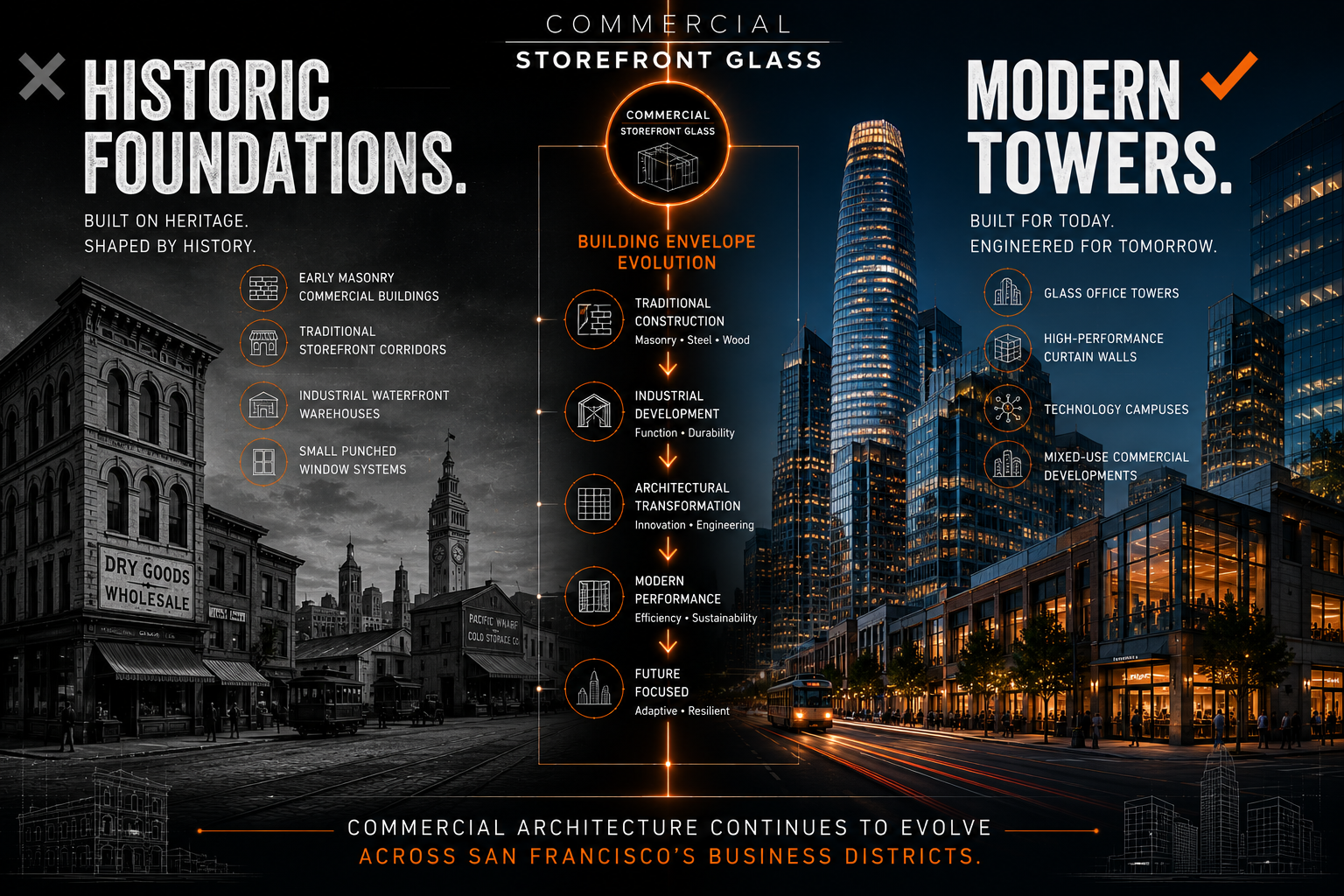
Commercial storefront glass allows these properties to maintain their architectural identity while improving energy performance, accessibility, security, and long-term operational efficiency.

Industrial Legacy Creates Diverse Construction Opportunities

Although both cities grew through industry, today’s commercial activity extends well beyond their original economic foundations.

Oakland supports healthcare providers, logistics companies, educational institutions, restaurants, financial services, government agencies, entertainment venues, and mixed-use developments.

Detroit combines automotive engineering, healthcare systems, advanced manufacturing, technology companies, universities, sports venues, financial institutions, and hospitality.

Commercial storefront systems serve every one of these industries by improving building performance while creating professional, welcoming environments for employees, tenants, and visitors.

Regardless of industry, successful commercial buildings require durable, efficient building envelopes.
 

commercial glass in the bay area storefront glazing company repair and install services (2)


Adaptive Reuse Drives Urban Revitalization

One of the strongest similarities between Oakland and Detroit is the continued redevelopment of existing commercial properties.

Oakland regularly transforms former warehouses, industrial buildings, waterfront facilities, and historic office structures into restaurants, office space, creative work environments, residential developments, and mixed-use neighborhoods.

Detroit has experienced similar success through redevelopment of former factories, automotive facilities, warehouses, office buildings, hotels, and commercial corridors.

These projects frequently require custom storefront systems capable of preserving historic architecture while meeting modern energy codes and accessibility standards.

Commercial glazing plays a central role in connecting historic buildings with contemporary commercial performance.

Tenant Improvements Keep Commercial Properties Competitive

Commercial tenant improvements remain one of the largest sources of storefront glass demand.

Oakland businesses continually renovate healthcare facilities, office buildings, retail storefronts, educational campuses, restaurants, and government offices. Interior glass systems, conference rooms, lobby renovations, storefront replacements, and executive entrances help older buildings compete in today’s leasing environment.

Detroit experiences similar renovation activity as manufacturers modernize headquarters, healthcare providers expand facilities, office tenants redesign workspaces, and mixed-use developments attract new businesses.

Modern commercial glass improves flexibility while enhancing natural daylight, employee comfort, and professional presentation.

Building Performance Extends Beyond Appearance

Today’s commercial storefront systems contribute directly to operational performance.

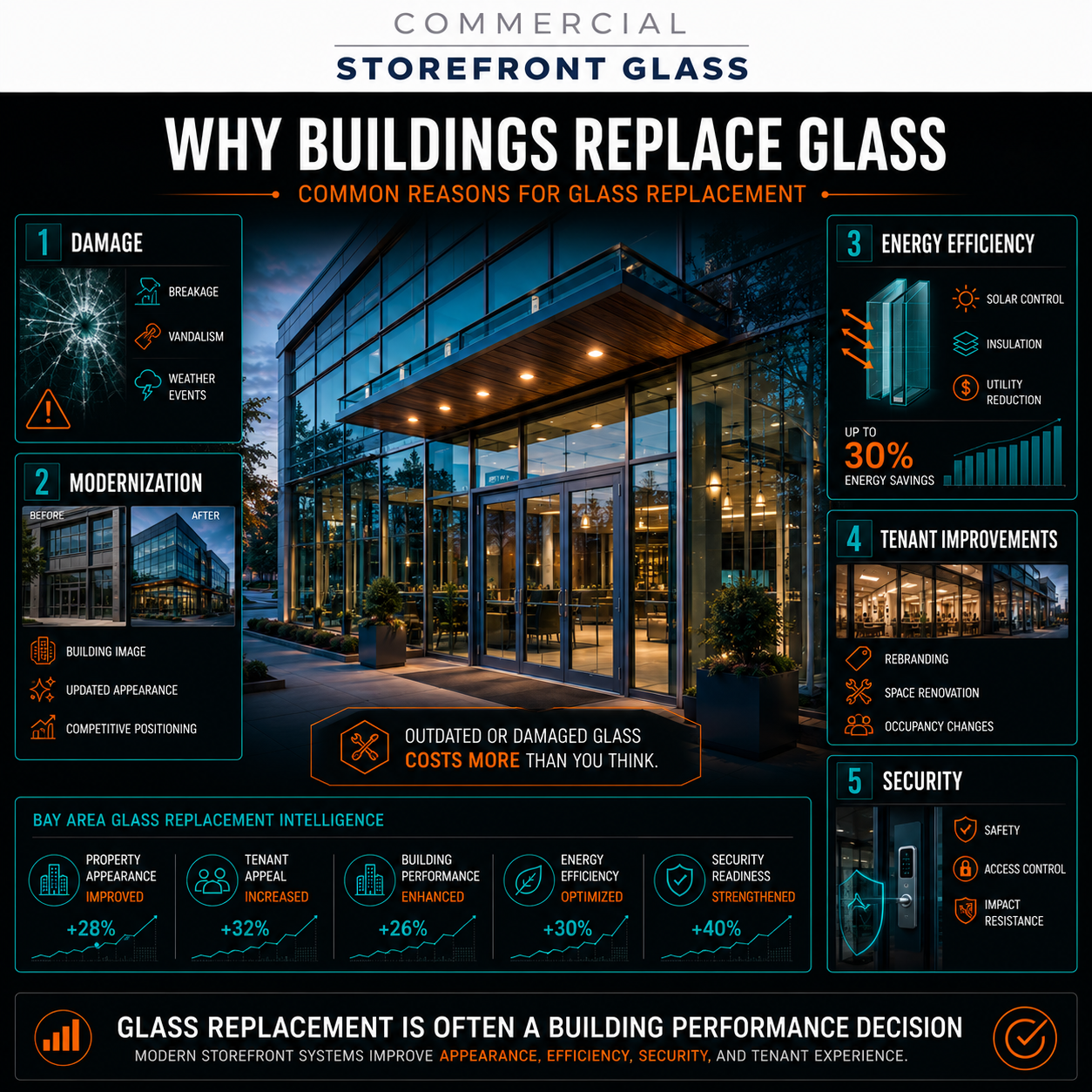
Insulated glazing reduces utility expenses.

Thermally broken framing improves thermal efficiency.

Laminated safety glass strengthens security.

Advanced coatings improve occupant comfort while reducing solar heat gain.

Both Oakland and Detroit contain aging commercial inventories where improving building performance has become a top priority for owners and facility managers.

Replacing outdated storefront systems often produces measurable long-term savings while increasing overall property value.

Commercial storefront glass has become a critical component of sustainable commercial building management.
 

san francisco bay area commercial glass storefront glazing systems installation and repair san jose (2)


General Contractors Coordinate Complex Commercial Projects

Commercial construction in Oakland and Detroit requires careful coordination between multiple specialty trades.

Oakland general contractors oversee hospitals, universities, adaptive reuse developments, government facilities, office towers, industrial modernization, mixed-use construction, and retail renovations.

Detroit contractors frequently manage manufacturing facilities, healthcare campuses, corporate headquarters, educational buildings, sports venues, hotels, office renovations, and large redevelopment projects.

Commercial glazing contractors coordinate closely with architects, engineers, structural contractors, electricians, mechanical trades, and project managers to ensure storefront systems integrate efficiently throughout construction.

Engineering precision and installation quality remain essential to project success.

Commercial Storefront Glass Supports Economic Transformation

As both cities continue evolving, storefront systems play a larger role than ever before.

Modern entrances improve first impressions.

Energy-efficient glazing lowers operating costs.

Curtain wall systems strengthen building envelopes.

Architectural glass increases tenant appeal.

Storefront modernization supports leasing activity and long-term property value.

Whether renovating a historic downtown office tower or constructing a new commercial headquarters, glazing systems directly influence how buildings perform for decades after completion.

Oakland and Detroit continue proving that commercial reinvestment begins with high-performing buildings.

Port City vs Motor City—Connected Through Commercial Glass

Oakland and Detroit represent two of America’s most influential industrial cities. One became the West Coast’s international shipping gateway, while the other earned worldwide recognition as the Motor City. Today, both are experiencing commercial renewal through redevelopment, healthcare expansion, adaptive reuse, technology investment, and mixed-use construction.

Despite their different economic histories, both cities rely on commercial storefront glass to modernize aging buildings, improve operational efficiency, strengthen business visibility, attract tenants, and increase long-term property value.

From waterfront office buildings and logistics centers to corporate headquarters, healthcare campuses, retail districts, and restored historic structures, commercial storefront systems remain one of the most valuable investments available to developers, architects, facility managers, property owners, and general contractors.

Whether serving a Pacific port or an automotive capital, high-performance commercial glass continues shaping the future of America’s commercial buildings.

917 383 0795