


San Francisco vs Bay Area
Commercial Storefront Glass in the Region’s Premier Market
San Francisco Sets the Commercial Storefront Glass Standard
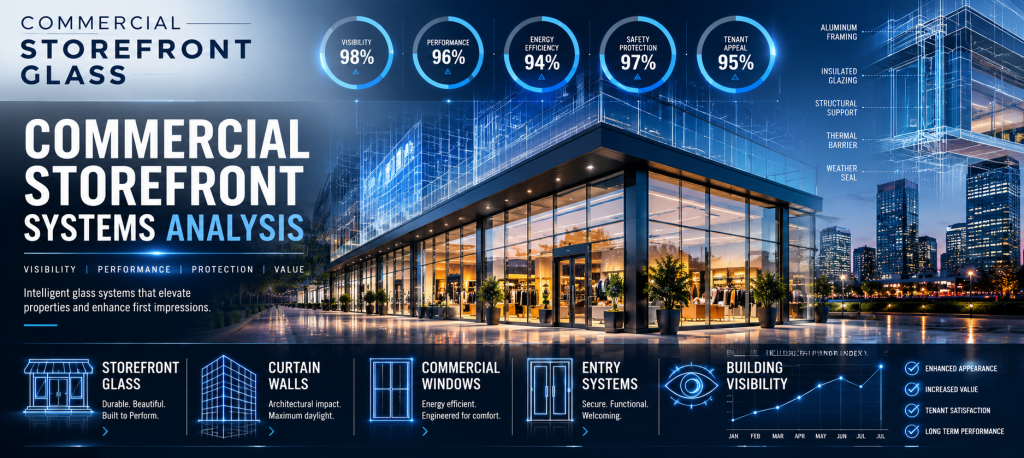
San Francisco contains one of the largest concentrations of commercial storefront glass in Northern California. Financial towers, hotels, restaurants, retail corridors, healthcare facilities, and mixed-use developments all depend on durable glazing systems that perform under constant public use. Unlike many surrounding communities, projects inside the city frequently involve older buildings that require careful modernization instead of complete replacement.
Historic storefronts often need upgraded insulated glass, new aluminum framing, ADA-compliant entrances, and energy-efficient glazing that preserves architectural character. Property owners also face strict planning requirements, making experienced commercial glazing contractors especially valuable. As buildings evolve, modern storefront systems improve tenant appeal while supporting long-term building performance.
The Bay Area Offers a Broader Commercial Glass Network
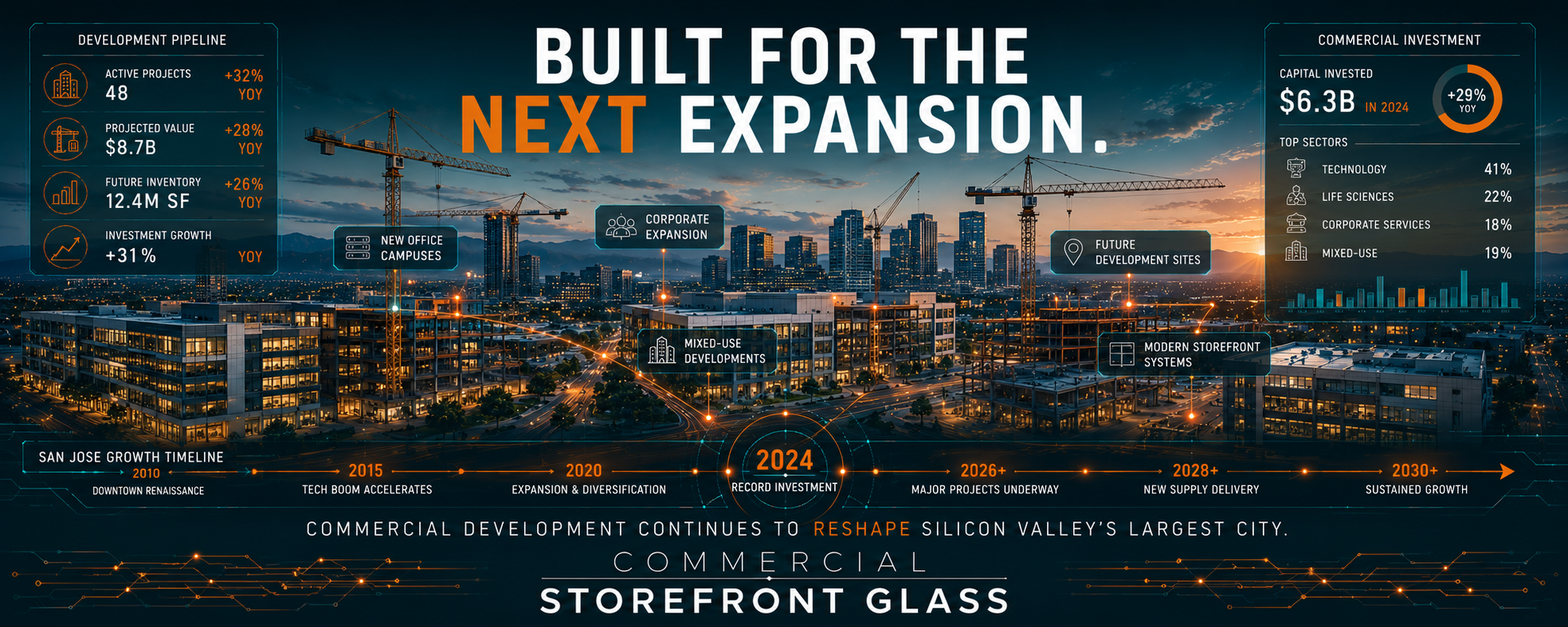
Although San Francisco is the region’s best-known market, the Bay Area contains a much larger inventory of commercial buildings. San Jose contributes technology campuses, Oakland supports logistics and healthcare, South San Francisco leads biotechnology construction, while Redwood City, San Mateo, Walnut Creek, Pleasanton, Fremont, Santa Clara, and Sunnyvale continue expanding office, retail, and industrial space.
Every submarket creates different commercial storefront glass opportunities. Corporate campuses emphasize curtain walls and entrance systems, neighborhood shopping centers require storefront replacements, and industrial facilities focus on durable glazing, warehouse offices, and security improvements. Together these cities generate year-round demand for commercial glass services.
Building Types Shape Different Glazing Priorities
A downtown high-rise rarely requires the same glazing solution as a suburban medical office or neighborhood retail center. San Francisco projects frequently involve historic renovations, premium office interiors, hospitality upgrades, and mixed-use redevelopment. Across the Bay Area, contractors also install storefront systems for technology campuses, distribution facilities, schools, healthcare buildings, restaurants, and business parks.
Because every property serves different occupants, commercial storefront glass specifications vary from insulated units and laminated safety glass to automatic entrances, fire-rated glazing, and energy-efficient curtain wall systems. Matching the right product to the building remains one of the most important decisions during renovation.
Tenant Improvements Continue Driving Commercial Demand
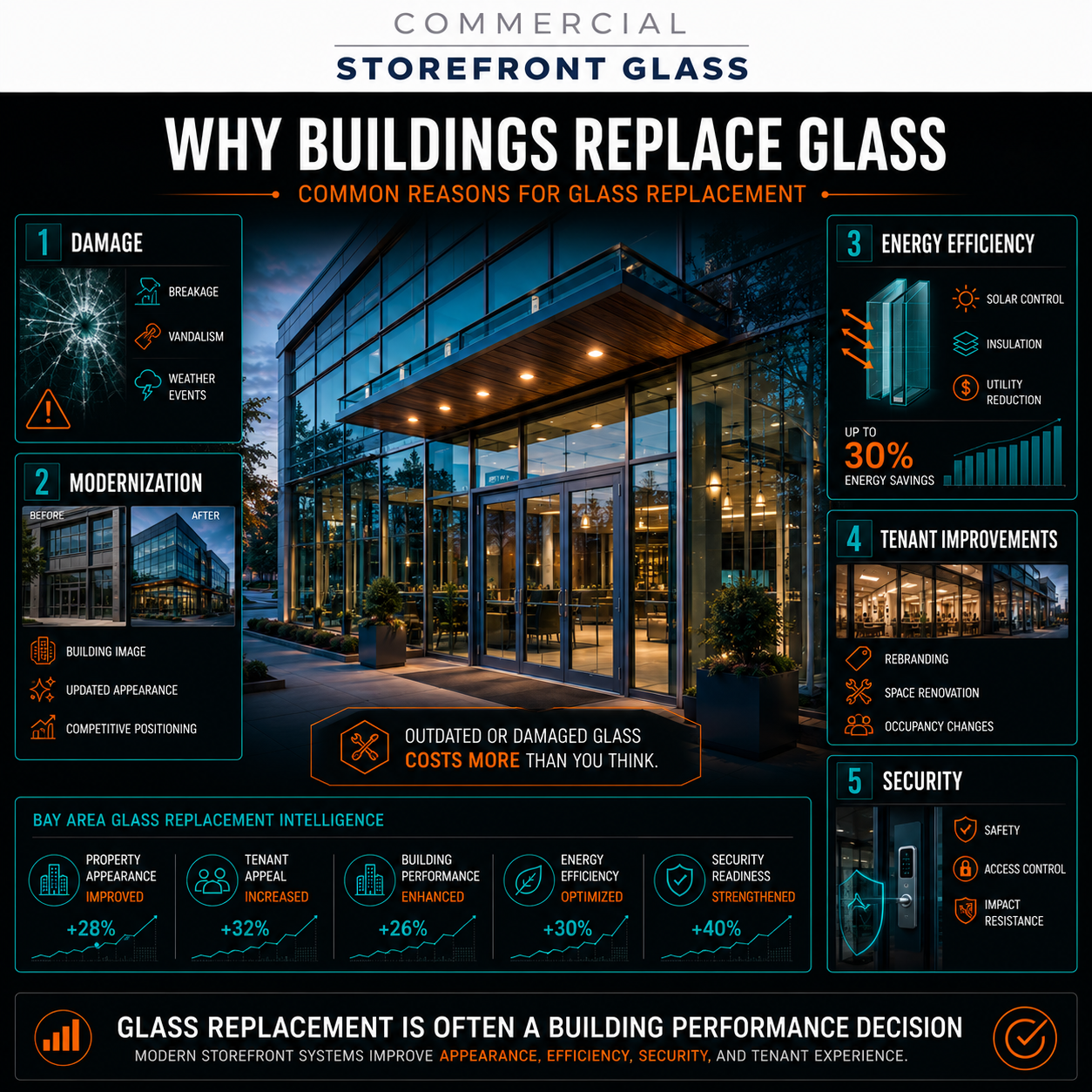
Tenant improvement projects represent one of the strongest sources of commercial storefront glass work throughout the region. Businesses relocating into existing spaces frequently replace aging entrances, create new glass office fronts, install conference room glazing, modernize reception areas, and improve visibility from the street.
Meanwhile, retail centers update storefronts to attract customers, office buildings renovate common areas to compete for tenants, and hospitality properties refresh public entrances. Rather than constructing entirely new buildings, many owners achieve measurable value through targeted commercial glass improvements that increase appearance, efficiency, and functionality.
Why Property Owners Compare San Francisco with the Bay Area
Comparing San Francisco with the broader Bay Area helps owners understand how project requirements change across markets. Downtown construction often involves tighter sites, higher pedestrian traffic, and more complex permitting. Peninsula and East Bay projects may offer larger campuses, easier logistics, and different building types while maintaining equally demanding quality expectations.
Successful commercial storefront glass contractors understand both environments. They recognize the differences between urban tower renovations and suburban business park improvements while delivering consistent workmanship, code compliance, and long-term performance. Whether a project is located in downtown San Francisco or elsewhere across the Bay Area, modern storefront systems continue improving commercial properties through stronger security, better energy performance, enhanced visibility, and a more professional appearance.