



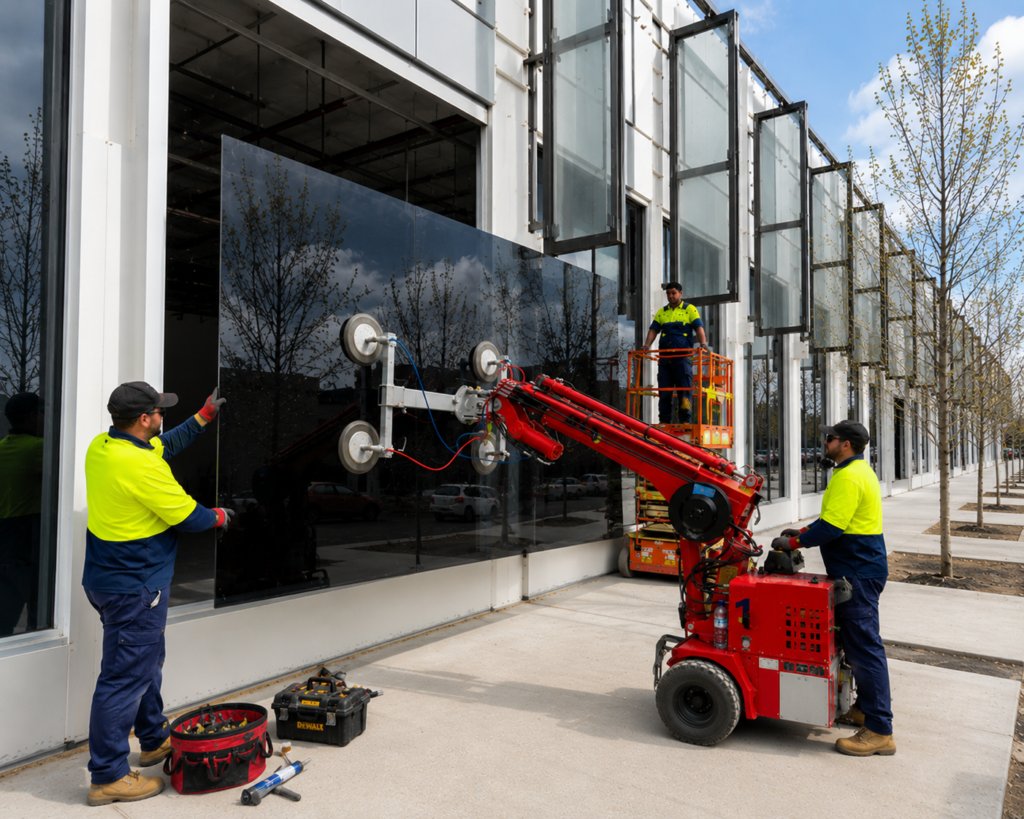
Storefront Glass for Tenant Improvements: Repair, Replace, or Reconfigure?
Storefront glass tenant improvement work starts with a choice: repair the existing system, replace it, or reconfigure the whole entrance. The right answer depends on the framing condition, the energy performance, and how well the current storefront serves the brand.
This article walks through each option and how it fits into a tenant improvement projects schedule and budget.
When Storefront Glass Tenant Improvement Means Repair
Repair is the right call when the aluminum framing is sound and only the glass, gaskets, or hardware have failed. Cracked lites, failed insulated units with fogging, worn door closers, and leaking gaskets are all repairable without replacing the system.
- Single cracked or fogged glass units
- Worn weatherstripping and gaskets
- Door closers, pivots, locks, and handles
- Minor water intrusion at a specific joint

When to Replace the System
Replace when the framing is corroded or racked, when the thermal performance is poor enough to drive energy and comfort complaints, or when multiple components are failing at once. A new thermally broken storefront with insulated low-e glass usually pays back through energy and maintenance savings.
When to Reconfigure the Entrance
Reconfiguring makes sense when the tenant’s use changes: a retailer widening the entry, a restaurant adding an operable glass wall, or an office converting to an all-glass entrance with glass entry systems. Reconfiguration usually needs landlord approval and a permit, and it is best scoped during design.
Fitting It Into the Build-Out
Whichever path you choose, the storefront scope is ordered at buyout and installed after interior drywall. Emergency board-up and temporary security are available if a failure cannot wait, through our commercial glass repair service.
Energy and Code Upgrades to Consider
A storefront glass tenant improvement is a natural moment to upgrade thermal performance. Moving from single glazing to an insulated low-emissivity unit in a thermally broken frame improves comfort near the glass line and can reduce heating and cooling load.
Depending on the jurisdiction and the scope, an energy-code upgrade may be required when the storefront is replaced. The contractor checks this early.
Security and Impact Options
For street-level retail, a storefront glass tenant improvement can add laminated glass for forced-entry resistance, security film on existing glass, or impact-rated systems in hurricane zones. These options are chosen opening by opening based on risk and budget.
Bottom Line for Commercial Property Owners
A well-managed storefront glass tenant improvement decision protects three things at once: your construction schedule, your build-out budget, and the long-term performance of the space. Getting it right early, with a contractor who has done it many times, is far cheaper than correcting it later.
Every commercial building reaches these decision points. The owners and tenants who plan for them, document the scope, and work with an experienced team consistently open on time, stay on budget, and end up with space that leases and performs better for years.
Key Takeaways
- Repair when framing is sound and only glass, gaskets, or hardware failed
- Replace when framing is corroded or thermal performance is poor
- Reconfigure when the tenant’s use or brand requires a different entrance
- Reconfiguration needs landlord approval and a permit
- Storefront scope is ordered at buyout and installed after drywall
Frequently Asked Questions
Can one fogged glass unit be replaced without the whole storefront?
Yes. A failed insulated glass unit can be swapped in the existing frame if the frame is in good condition.
How long does a full storefront replacement take?
Fabrication runs six to ten weeks; on-site installation is typically a few days per storefront elevation.
Talk to a Commercial Glazing and Tenant Improvement Team
Not sure whether to repair or replace? contact our team for an assessment, or see storefront glass installation. For further reading, see the National Glass Association.